
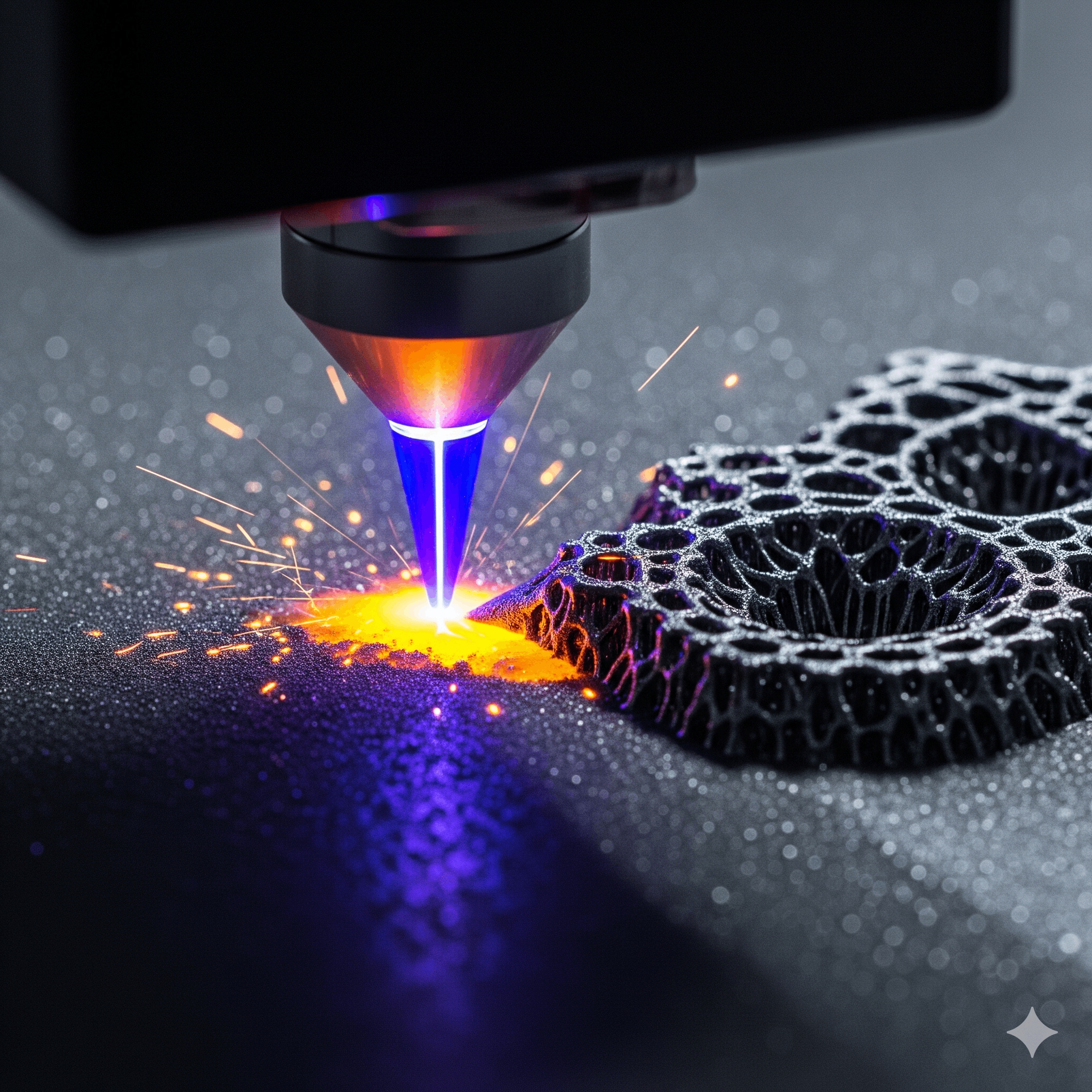
1. Introduction: SLM as a Strategic Supply Chain Asset in 2026
The global industrial landscape in 2026 is defined by a shift toward agile, data-driven fabrication. Selective Laser Melting (SLM) has transitioned from a niche prototyping tool to a high-volume digital fabrication standard. For overseas wholesalers, Selective Laser Melting (SLM) represents a strategic asset for supply chain resilience.
This technology utilizes a high-power laser to fully melt metallic powders, creating 100% dense functional parts that meet rigorous industrial standards. At YISHANG, with our 26-year heritage in metal products, we help global partners bypass traditional tooling constraints through advanced additive manufacturing.
This guide deconstructs the SLM process, focusing on how it optimizes procurement efficiency and material performance for large-scale buyers. We move beyond basic definitions to explore the metallurgical and economic factors that drive modern manufacturing success.
2. The Physics of Fusion: Achieving Batch Consistency through Thermodynamics
In B2B procurement, consistency is the ultimate currency for maintaining a reliable supply chain. To ensure that the 1,000th part is identical to the first, YISHANG masters the microscopic thermodynamics of the melt pool. The process must manage the Marangoni Effect—mass transfer due to surface tension gradients—to prevent porosity.
We focus on the Volumetric Energy Density (VED) to dictate the structural integrity of every component we produce. This metric is the cornerstone of quality control in metal additive manufacturing, ensuring that the energy input is perfectly balanced for the material type.
The core formula used by our engineers for VED calculation is: VED = P / (v * h * t) (P: Laser Power, v: Scanning Speed, h: Hatch Spacing, t: Layer Thickness)
Achieving the “Golden Window” of VED results in a refined crystalline grain structure with superior fatigue resistance. For the procurement manager, this translates to parts that meet the toughest industrial demands. Whether it is a stainless steel enclosure or a complex automotive bracket, our process ensures consistency across every production batch.
Beyond basic energy density, our engineering approach accounts for laser-material coupling efficiency. Different alloys, such as aluminum or copper, reflect laser energy at varying rates, requiring precise wave-length modulation. This technical depth allows us to deliver high-performance components that strictly adhere to international compliance standards.
3. Anatomy of an Industrial SLM System: Engineering for Scalability
For a wholesaler, the sophistication of a supplier’s hardware is a primary indicator of their production scalability. Our systems feature high-stability Ytterbium fiber lasers directed via high-speed galvanometers. These precision mirrors adjust the laser’s position at speeds exceeding 10 meters per second with micron-level accuracy.
The build platform laser interaction is managed by an F-theta Lens to maintain a consistent focal spot size. This hardware stability ensures that parts located at the edges of the plate have the same resolution as those in the center. This is vital for maintaining a low Defect Rate (PPM) for complex components like push button enclosure units.
The build chamber functions as a controlled, high-purity pressure vessel to prevent oxidation during the melting process. Our systems maintain oxygen levels below 100 ppm using high-purity Argon gas. This closed-loop atmosphere manages process by-products through sophisticated cooling and ventilation systems.
Equating to efficiency, the powder dispensing system must deposit a uniform layer of powder, often as thin as 20 microns. Whether utilizing a flexible silicone blade for a solar battery enclosure or a hard ceramic edge, the precision of this phase prevents recoater streaks. Modern industrial systems at YISHANG integrate AI-driven monitoring to detect irregularities in real-time.
4. The Industrial Lifecycle: From Digital Blueprint to Global Logistics
The journey of an SLM component for a wholesale partner begins with CAD model preparation and design validation. This stage involves slicing the 3D model into thousands of layers and determining the optimal build orientation. Orientation is a strategic decision that affects support material consumption and final strength and material properties.
By optimizing orientation, we significantly reduce material waste and additional post-processing steps. Once digital parameters are locked, the build chamber and powder bed preparation begins. The platform is typically preheated to between 100C and 200C to reduce thermal gradients and minimize residual stresses.
The laser then executes its intricate scanning pattern, layer by layer, in a process that can last several days for large components. Throughout this cycle, every parameter is logged, providing a “Digital Birth Certificate” for every batch. This level of traceability is essential for auditability in highly regulated industries like medical or aerospace.
The final phase involves part recovery and powder delivery and recovery. For a sustainable wholesale operation, powder recycling is mandatory but must be handled with care. We monitor powder morphology and chemical composition to ensure integrity is not degraded over multiple cycles, ensuring the 100th build is as strong as the first.
5. DfAM: Designing for Competitive Advantage and ROI
Design for Additive Manufacturing (DfAM) disrupts traditional cost models by removing the “complexity penalty.” In SLM, complexity is effectively “free,” allowing for topology optimization that traditional CNC cannot achieve. This allows our partners at YISHANG to remove non-essential material without sacrificing strength.
The result is brackets, housings, and junction box NEMA enclosures that are 40% lighter but significantly stronger. Another breakthrough for the wholesale sector is the integration of lattice structures. These architectures simulate the modulus of human bone or act as high-performance crash-absorption zones for solar battery enclosures.
Consider conformal cooling channels in injection mold inserts as a prime example of SLM utility. These channels follow the exact geometry of the mold cavity, ensuring uniform cooling. This can cut down on cycle times for our clients’ plastic production lines by up to 50%, providing a massive boost to their overall ROI.
However, a professional DfAM strategy also respects the physical limits of the material, such as the 45-degree rule. Surfaces angled at less than 45 degrees relative to the platform require support structures to dissipate heat. Our design team works closely with procurement engineers to minimize these supports through clever geometry, reducing labor-intensive post-processing.
6. Microstructure and Metallurgy: The Secret to High-Durability Components
One of the most critical aspects of SLM is the microstructural evolution during the melting phase. Unlike traditional casting, which features a slow cooling process, SLM involves rapid solidification. This leads to an ultra-fine, cellular-dendritic grain structure that improves yield strength and hardness.
For a wholesale buyer, this means the metal parts arriving at your facility possess superior mechanical properties. However, rapid cooling can also create “Anisotropy,” where material properties differ between axes. At YISHANG, we combat this through advanced scan strategies, rotating the laser path by 67 degrees between layers.
This ensuring that additive manufacturing variant components meet the tough demands of the energy and automotive sectors. We also apply specialized heat treatments to alloys like titanium to restore ductility. Understanding these metallurgical nuances is why we recommend YISHANG as your technical partner for critical components.
We don’t just “print” metal; we manage the molecular transformation of the material. This ensures that every galvanized steel enclosure or stainless steel enclosure by material stainless meets specific fracture toughness requirements. Our metallurgical depth allows us to serve the industrial needs of partners in over 50 countries.
7. Powder Stewardship: Ensuring Purity in High-Volume Procurement
The raw material—the metal powder layer—is the primary variable in the quality equation for wholesalers. Procurement managers often overlook the powder life cycle, but at YISHANG, it is central to our quality control. We source only spherical powders with a narrow particle size distribution (PSD) to ensure optimal flowability.
The challenge with recycling metal powder is the potential for oxygen and moisture pickup over time. Each time the powder is exposed to the laser, its surface chemistry can change slightly. For a wholesaler ordering in bulk, this could lead to “Batch Drift” if not managed with industrial-grade precision.
| Material Feature | Importance for Procurement | YISHANG Quality Standard |
|---|---|---|
| Sphericity | Ensures smooth powder recoating. | >90% High-sphericity particles |
| PSD (15-45um) | Dictates surface finish and resolution. | Strict sieve analysis per batch |
| Recycle Count | Prevents chemical degradation. | Logged and monitored per build |
| Flowability | Prevents air gaps in the bed. | Tested via Hall Flowmeter |
Proper powder handling and contamination control are non-negotiable in our facility. Even a tiny fragment of carbon steel dust in a titanium build can cause a catastrophic failure. Our facility uses dedicated powder delivery and recovery systems for different material groups to guarantee material purity for every stainless steel enclosure.
By maintaining a rigorous powder stewardship program, we ensure that you prevent build failures and incomplete layers. This transparency in raw material management is a key differentiator that protects your brand’s reputation. It ensures that the internal material integrity is as perfect as the external surface of your meter box units.
8. Troubleshooting: Mitigation of Potential Process Challenges
Professional manufacturing is defined by how a factory handles variables and prevents failures. Troubleshooting possible challenges is a core competency at YISHANG that ensures supply chain reliability. One common issue is the balling effect, which occurs when the molten track breaks into spheres due to high surface tension.
We mitigate this by optimizing the laser’s scanning strategy and ensuring the linear energy density is sufficient. Another challenge is keyhole porosity, where high-power lasers “drill” into the metal, trapping gas. We use in-process monitoring to detect these signatures and make adjustments to the laser power in real-time.
Residual stress and warpage are also significant concerns for large enclosures. Metal contracts as it cools, and without proper stress-relieving cycles, a part can warp. Our 26 years of heat treatment experience ensures that every carbon steel enclosure remains dimensionally stable. We address build failures through strict machine calibration and maintenance schedules.
Powder handling and contamination can lead to cracking and defects if not managed in an air-lock environment. By openly addressing these possible process challenges, we provide our partners with a transparent risk-management framework. We don’t just “print parts”; we engineer solutions that survive the rigors of heavy industrial use.
9. Comparison: SLM vs. Other Additive Manufacturing Techniques
For a wholesale buyer, choosing the right fabrication method is a balance of cost, speed, and material properties. How selective laser melting compares to other techniques like SLS or FDM is a common inquiry. Selective Laser Sintering (SLS) typically focuses on polymers, while SLM focuses on metal parts requiring high strength.
Stereolithography (SLA) is resin-based and often used for patterns rather than direct production of load-bearing parts. Fused Deposition Modeling (FDM), on the other hand, is cheaper but results in lower density and inadequate surface finish. FDM is suitable for jigs but not for a high-end push button enclosure.
| Feature | Selective Laser Melting (SLM) | Selective Laser Sintering (SLS) | Fused Deposition (FDM) |
|---|---|---|---|
| Primary Material | Metal Powder | Polymer / Nylon | Plastic Filament |
| Part Density | 99.9% (Full Melting) | 90-95% (Sintered) | Variable (Porous) |
| Surface Finish | Industrial (Ra 10-15) | Matte / Grainy | Ribbed / Layered |
| Strength | High (Forged equivalent) | Moderate | Low to Moderate |
At YISHANG, we find that the additive manufacturing variant you choose should depend on the end-use environment. SLM helps to cut down on lead times for complex parts that would otherwise require multiple machining steps. While equipment costs are higher, the ROI is found in the complexity and design freedom strength that other processes cannot match.
10. Post-Processing: Achieving the “Market-Ready” Finish
In our facility, the selective laser melting process is merely the first stage of production. To meet the aesthetic and functional requirements of overseas wholesale markets, a comprehensive post-processing suite is required. Every part undergoes machining and surface finishing to ensure it meets the desired part specifications.
For critical aerospace components, we employ Hot Isostatic Pressing (HIP) to close internal microporosity. This ensures the production of parts with 99.99% theoretical density. Surface finish SLM is often a concern for buyers accustomed to CNC parts. SLM parts typically have a roughness of 10-15 microns, which is suitable for industrial aesthetics but can be polished further.
We offer several finishing options to ensure that components meet your specific needs:
- CNC Post-Machining: For high-tolerance interfaces (H7/g6 fits).
- Sandblasting and Bead Blasting: For a uniform, matte industrial look.
- Chemical Polishing: For smoothing internal channels that are inaccessible by hand.
- Electroplating: To match the branding or environmental requirements of the end-user.
This “Hybrid Manufacturing” approach ensures that you receive a component that is a fully finished engineering product. Whether it’s a mount electrical enclosure or a custom electrical meter box, YISHANG ensures the final product is ready for assembly. This prevents supply chain delays and ensures high-quality part delivery.
11. Economic Logic for Wholesalers: TCO, ROI, and Digital Inventory
The most important question for a procurement manager is: Does the math work? While the per-unit price of an SLM part may be higher, the Total Cost of Ownership (TCO) is often lower. One of the primary benefits is the elimination of tooling costs, allowing you to launch a product with zero investment in molds.
Reduced lead times allow you to respond to market trends faster than your competitors. Wholesalers can also move toward a “Digital Inventory” model. Instead of storing 5,000 units of a push button enclosure, you store a digital file and print batches as the market demands, freeing up massive amounts of working capital.
| Strategic Metric | Traditional Fabrication | SLM Additive Manufacturing |
|---|---|---|
| Upfront Tooling | High ($10k – $50k) | Zero |
| Lead Time | 6–16 Weeks | 3–10 Days |
| Material Waste | High (Subtractive) | Low (95% Recyclable) |
| Inventory Risk | Physical Stock | Digital Inventory |
At YISHANG, we help you calculate the crossover point where SLM becomes more cost-effective than CNC or casting. Often, the ability to create and test parts with intricate geometries provides a competitive edge that justifies the cost. If you need to focus more on innovation rather than inventory management, SLM is the solution that allows you to iterate at speed.
12. Conclusion: Partnering for the Additive Future with YISHANG
As selective laser melting continues to mature, it is no longer a question of if it will disrupt your industry, but when. For global wholesalers and B2B procurement teams, SLM offers a powerful toolkit to reduce lead times and eliminate tooling costs. However, success depends on the manufacturing partner you choose.
With 26 years of experience in metal fabrication and a steadfast commitment to ISO 9001 and RoHS standards, YISHANG provides the metallurgical expertise required to scale your additive manufacturing steps. We invite you to explore how we can transform your supply chain from a cost center into a competitive advantage.
Whether you need a stainless steel enclosure, a junction box NEMA, or a complex solar battery enclosure, we have the hardware and the heart to make it happen. Making changes where necessary and focusing more on the development of your brand is easier with a reliable partner. Contact us today for a quick inquiry and let’s build the future together.
About the Author: YISHANG combines nearly three decades of traditional metalworking heritage with the latest in Tier-1 selective laser melting technology. Serving 50+ countries, we specialize in high-durability, industrial-grade metal solutions that meet the most stringent international standards for wholesale and OEM/ODM procurement.