
OEM Metal Assembly Services for Shipment-Ready Products
Yishang Metal supports assembly for custom metal cabinets, enclosures, frames, racks, panels, hardware, and OEM metal products. We help buyers combine fabrication, purchased components, final assembly, inspection, and export packaging into one managed production route.
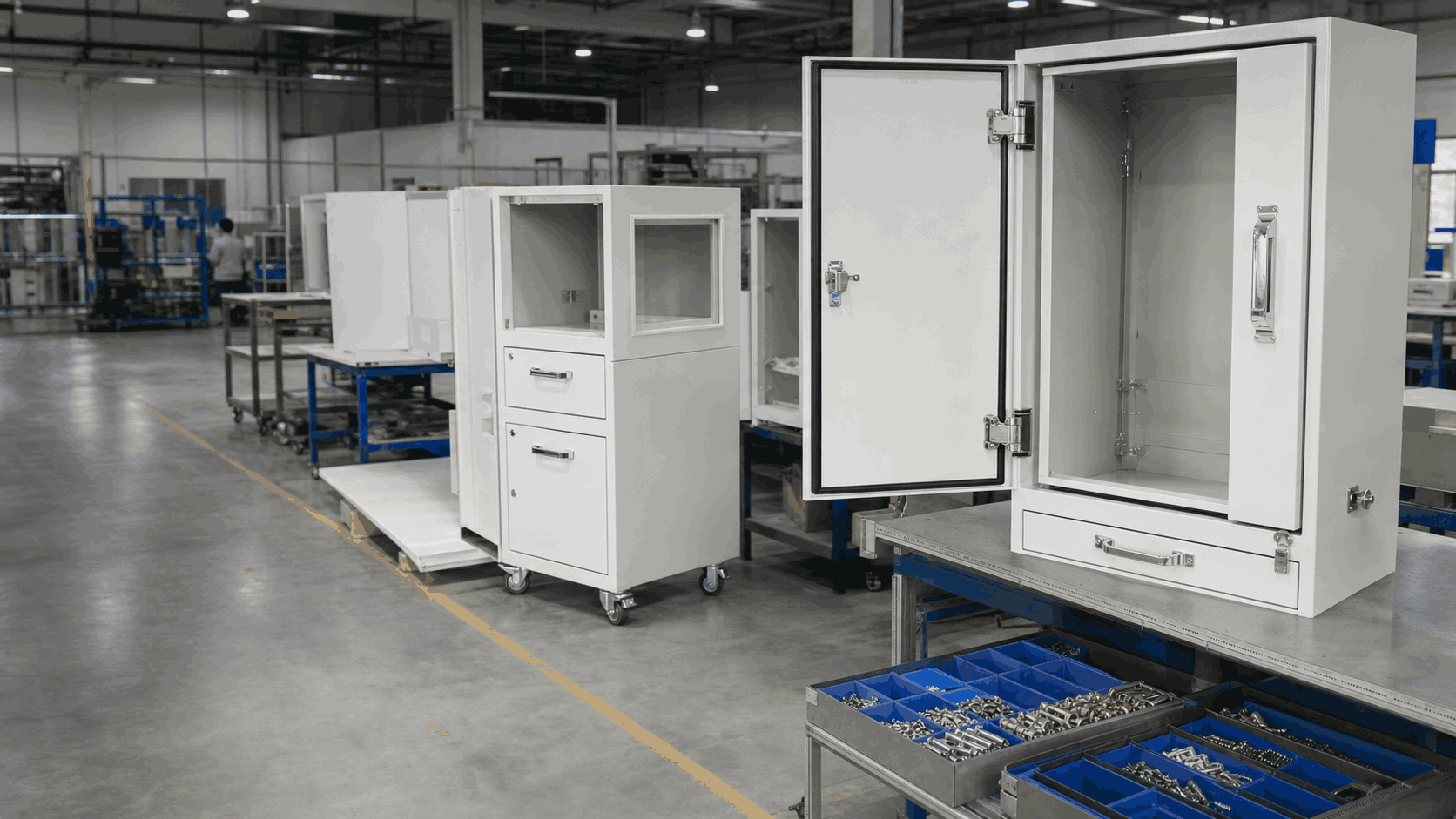
metal products from controlled files
approved hardware and components
defined sequence and checks
protect products for shipment
Stop Managing the Final Build Across Multiple Suppliers
When one supplier makes the metal parts, another provides hardware, and another handles assembly, small communication gaps can create delays, missing components, wrong fittings, or packaging problems. Yishang Metal helps buyers manage fabrication, component preparation, assembly, inspection, and packing through one coordinated route.
Assembly stops because a latch, hinge, gasket, slide or special fastener was not ordered against the approved BOM.
Metal products and purchased components may be correct individually but belong to different drawing or BOM releases.
Coated, brushed or polished surfaces can be scratched when unpacked, moved, reworked and packed again.
Hole position, gasket compression, door alignment or tool access may fail only when the full product is assembled.
Loose hardware and incomplete subassemblies shift sorting, rework and schedule pressure to your own team.
Mechanical Assembly Built Around the Finished Product
Choose the assembly depth that matches how you want the product to arrive, from installed hardware to a complete shipment-ready mechanical assembly.
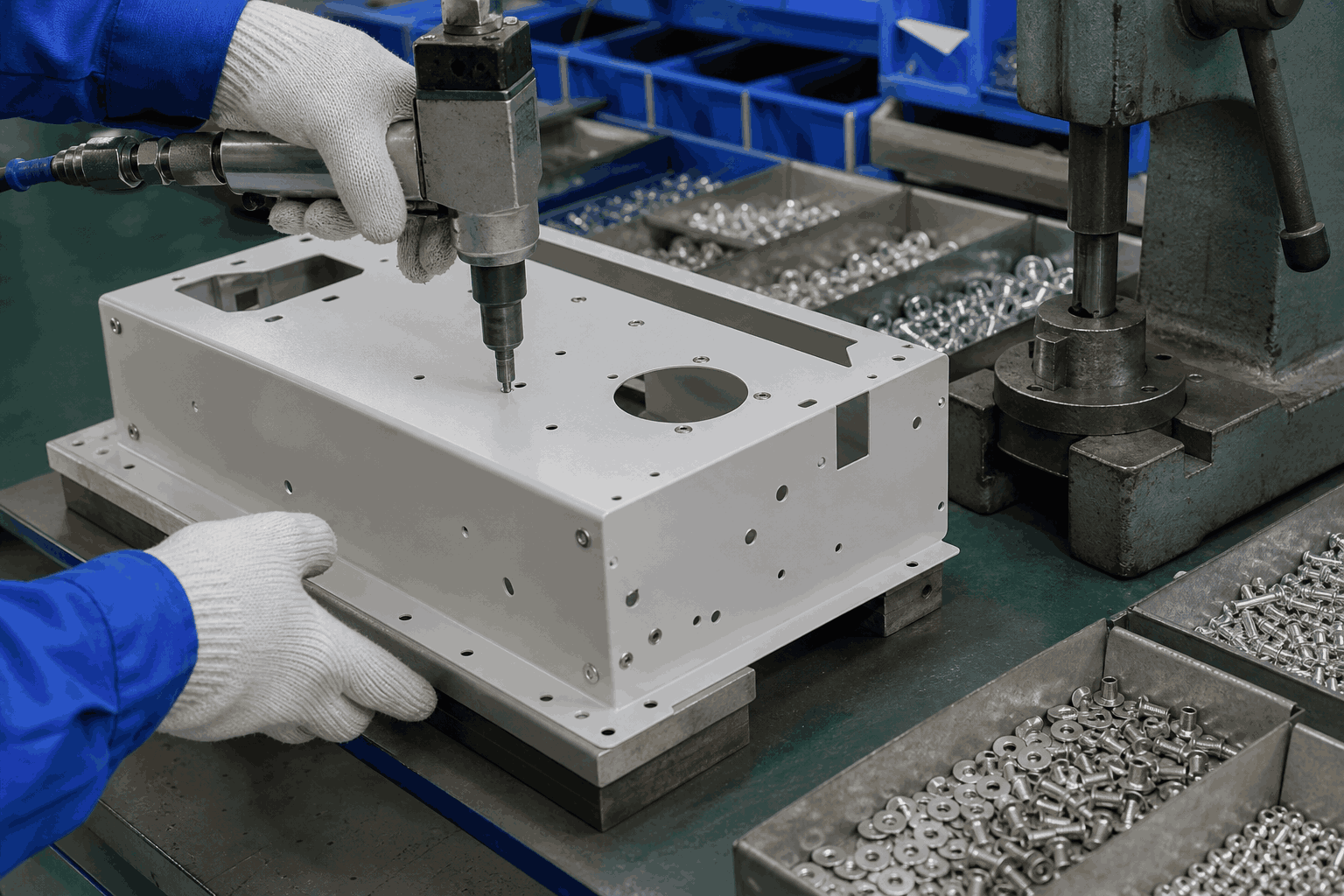
Fasteners & Joining Hardware
Install screws, nuts, washers, rivets, threaded inserts and self-clinching hardware with suitable access, tooling and installation sequence.
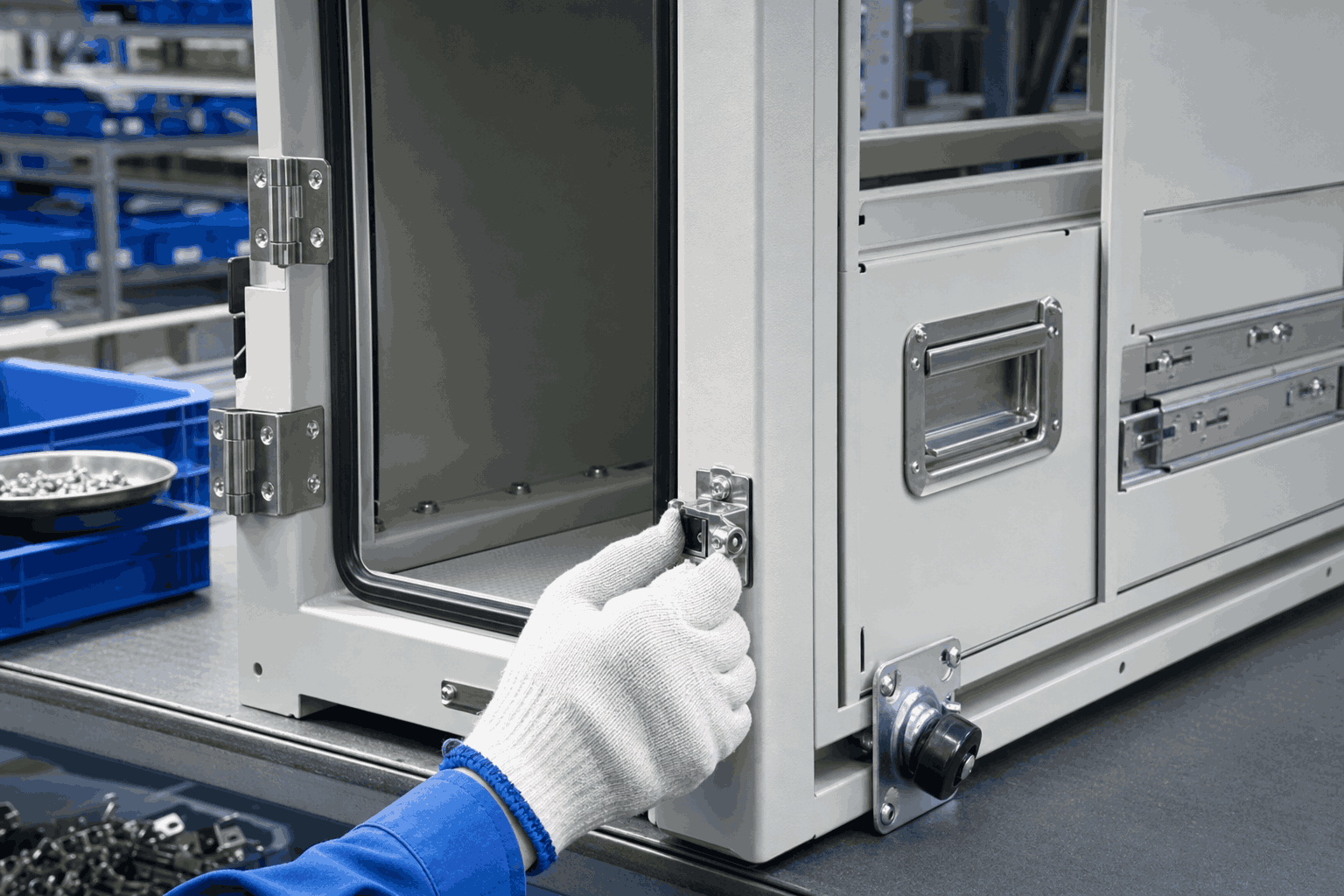
Functional Hardware
Fit hinges, latches, handles, gaskets, slides, rails, casters and mechanically mounted fans or modules without wiring.
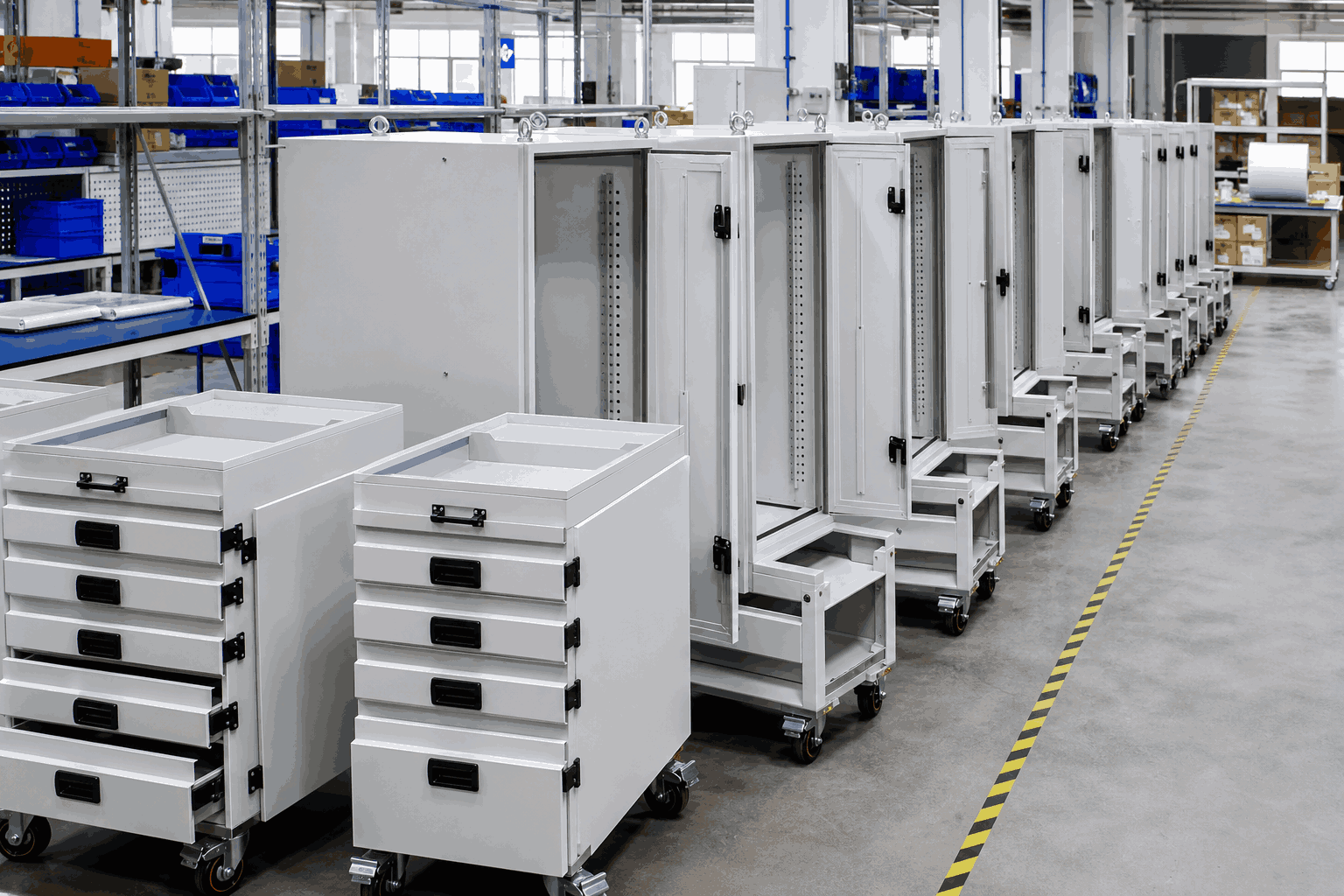
Complete OEM Assembly
Combine fabricated and finished metal products with approved purchased components, perform agreed checks and pack the completed product for delivery.
Project-specific scope: hardware suitability, installation method, access, acceptance checks and final shipment condition are confirmed from the drawing, BOM and approved assembly reference.
Choose How Components Enter the Build
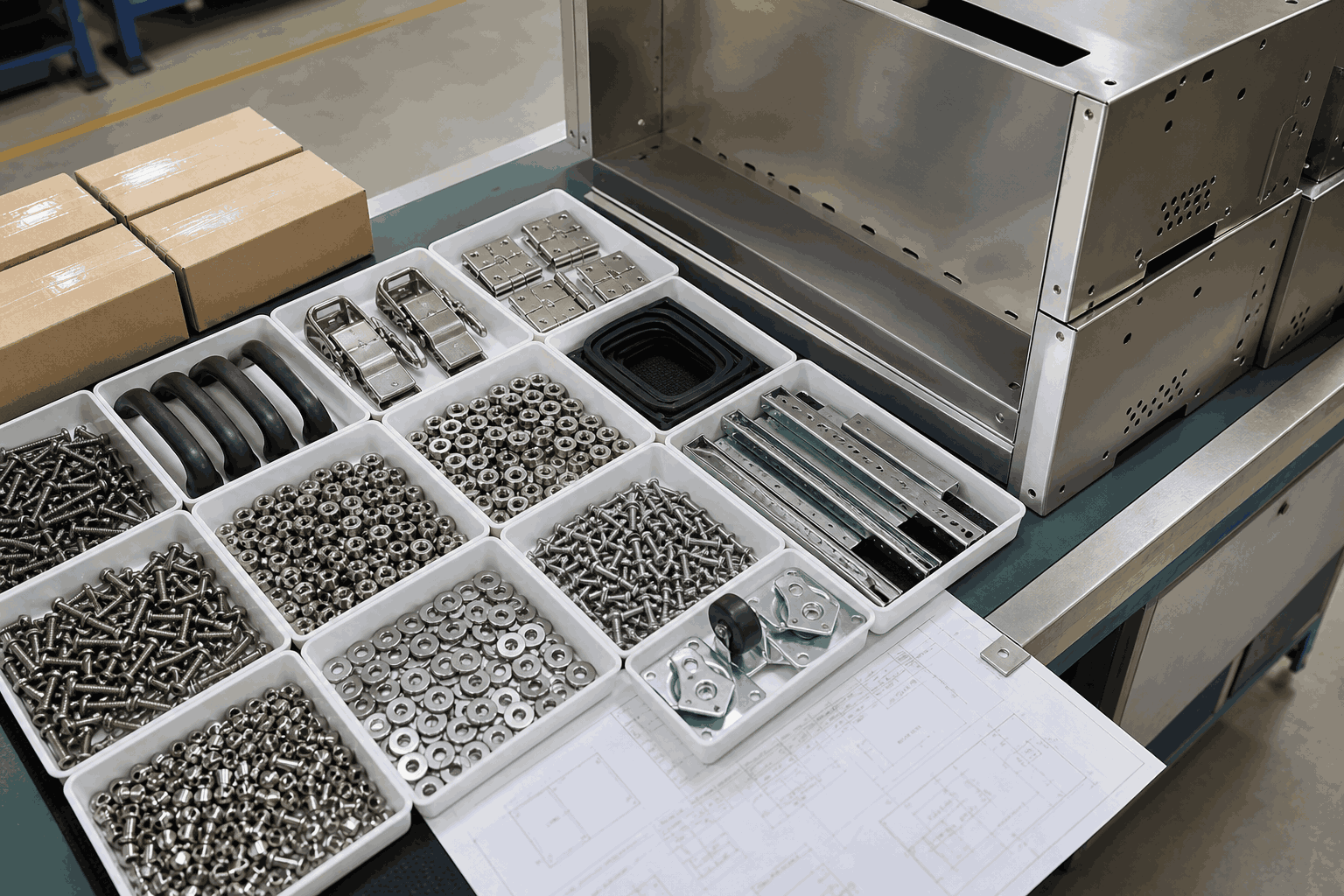
Assembly projects can start in different ways. Customers may send all components, ask us to fabricate metal parts, or let us help prepare standard hardware and accessories before final assembly.
Use supplied components, samples, or special parts provided by the buyer.
Produce sheet metal parts, frames, cabinets, panels, and other metal components in-house.
Prepare common fasteners, hinges, handles, locks, brackets, feet, wheels, or accessories when required.
Confirm assembly order, torque, labeling, packing, and inspection requirements before production.
A Product Can Be Easy to Fabricate and Still Be Expensive to Assemble
Fasteners hidden behind bends, gaskets with no retention, stacked tolerances and hardware installed after a sensitive finish can create repeat problems. Before batch release, we review the design as an assembly sequence rather than as separate drawings.
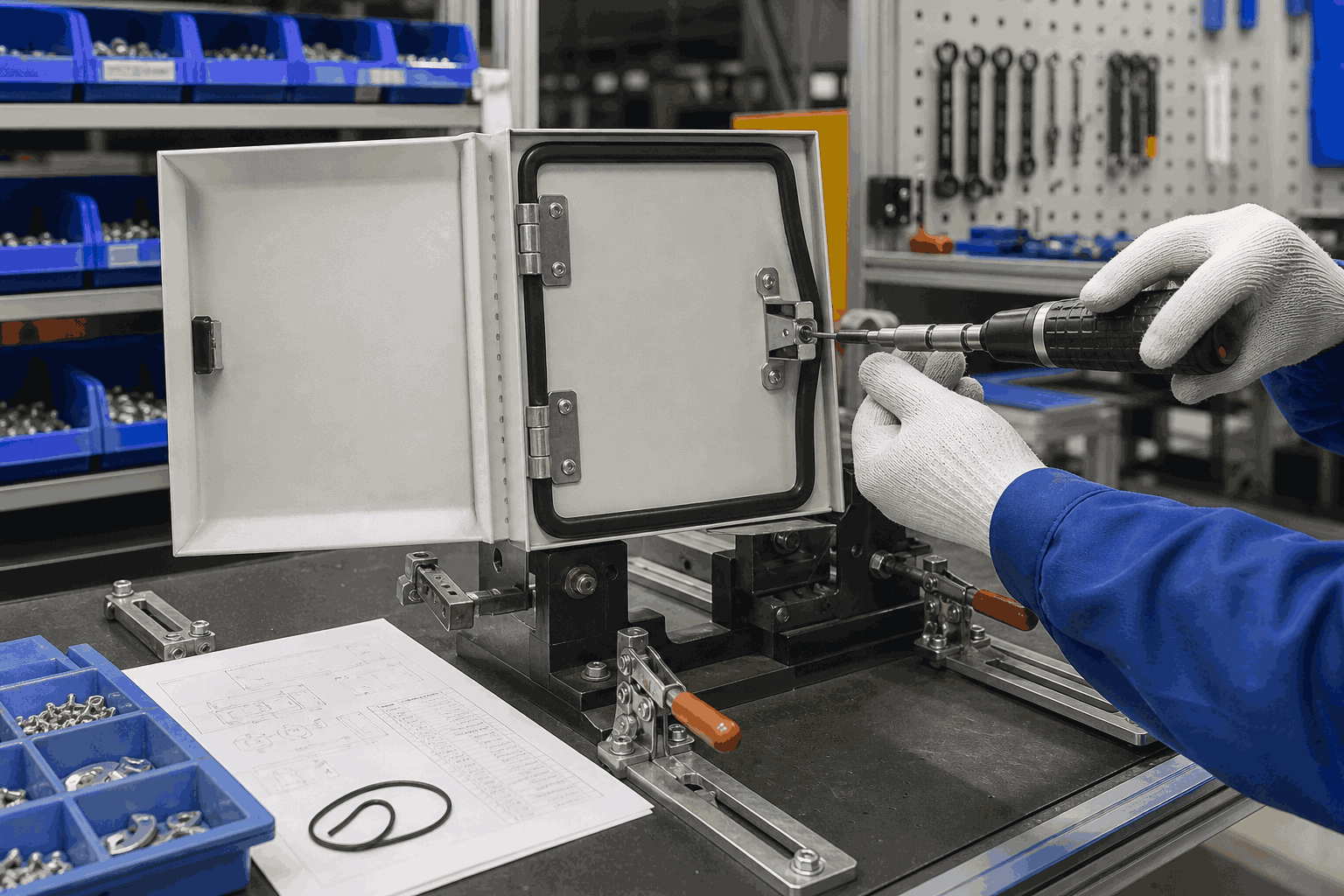
Provide practical clearance for drivers, rivet tools, presses, nuts, washers and removal where serviceability matters.
Identify the interfaces that control door gaps, slide movement, latch engagement, gasket seating and mating-product fit.
Decide which hardware is installed before or after coating, masking, welding and final surface protection.
Use tabs, stops, asymmetric features, fixtures or clear orientation where they reduce reversal and alignment risk.
Recommended geometry or sequence changes are sent for customer approval before controlled files are released.
Check the Complete Product, Not Only the Individual Components
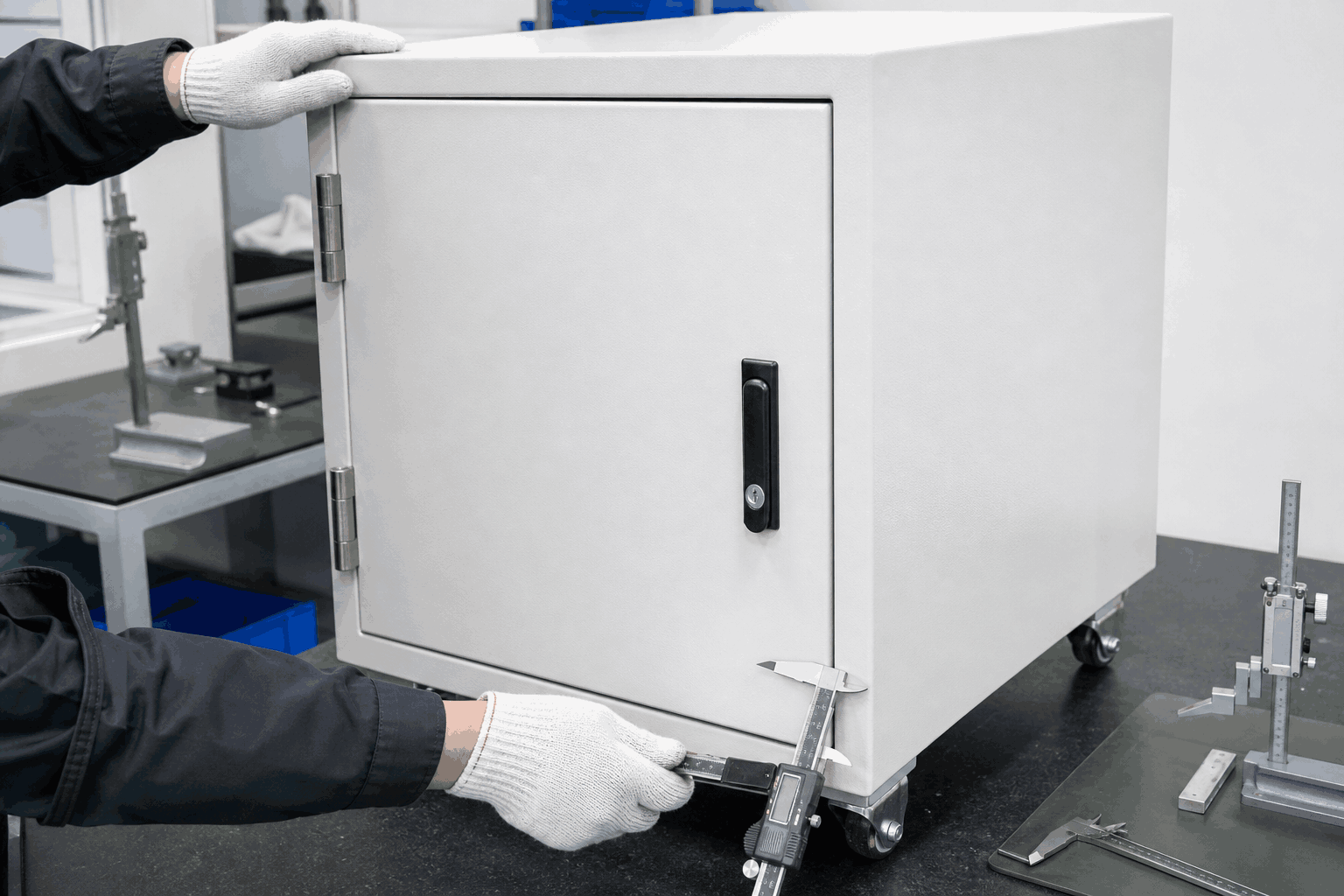
Mechanical assembly services are controlled against the agreed drawing, BOM, work instruction and approved first reference. Inspection focuses on the characteristics that affect receiving, installation and product appearance.
Verify the released drawing, component identity, approved substitutions and required quantities before assembly.
Check that specified hardware is installed in the correct location, direction and sequence.
Torque is controlled or recorded only when a value, tool method and acceptance requirement are specified and agreed.
Check agreed door, hinge, latch, slide, caster or handle movement, fit and gasket seating without electrical operation.
Inspect selected interfaces, alignment, finish damage and cosmetic areas using the agreed acceptance criteria.
Quality boundary: structural load, safety, regulatory, ingress protection, leak, life-cycle, vibration, thermal and certification testing are outside the standard scope unless separately specified and accepted.
Replace Five Purchase Orders with One Finished-Product Order
For OEM metal products, purchasing teams often manage metal parts, hardware, finishing, assembly, inspection, and packaging separately. Yishang Metal helps combine these steps into one finished-product order, reducing coordination work and supplier communication risk.
Assembly Services RFQ Checklist
Files & Revision
Assembly drawing, 3D CAD if available, product drawing, BOM, revision and any approved first reference.
Component Responsibility
Approved brands or model numbers, permitted alternatives and which items Yishang or the customer will supply.
Checks & Records
Critical interfaces, movement checks, appearance criteria, torque requirements and any requested inspection record.
Quantity & Delivery
Sample count, batch quantity, repeat forecast, assembled condition, packing method, labels and requested timing.
If an NDA is required, request it before transferring confidential drawings, BOMs or product information.
Before You Release an OEM Assembly
A reliable assembly quotation begins with one controlled revision, a clear component supply plan and agreement on what will be checked before packing.
The route can include fabricated and finished metal products, approved mechanical component sourcing, kitting, screws, rivets, self-clinching hardware, hinges, latches, handles, gaskets, slides, casters, complete mechanical assembly, agreed checks and custom packaging.
No. The standard scope is mechanical assembly only. We do not provide wiring, wire-harness installation, electrical box-build, electronics integration or electrical functional testing.
Yes. Yishang-sourced, customer-supplied and mixed programs are supported. The quotation defines approved brands or model numbers, alternatives, incoming responsibility, shortages and the approval route for changes.
Yes, after the hardware type is matched to the hole size, sheet material, thickness, hardness, edge distance and required installation method. Suitability is confirmed for the actual design rather than assumed universally.
Yes, when the drawing or approved work instruction defines the fastener, target value, tool method and acceptance requirement. We do not apply one universal torque value to different products and joints.
These materials can be applied only when the approved specification identifies the product, location, amount or method, surface compatibility and acceptance requirement.
Yes. A sample or first assembly can be used to confirm fit, sequence, component choice, appearance and packing before the approved method is carried into batch production.
Agreed checks may cover door and hinge movement, latch engagement, slide travel, caster movement, handle fit, gasket seating, hardware presence and selected mating interfaces. Test method and acceptance criteria must be defined for the project.
A requested inspection record, marked drawing, component checklist, photos or packing reference can be quoted when the required characteristics and reporting format are stated before production.
Yes. Packaging can include surface film, separators, bags, foam, corner protection, cartons, crates or pallets according to the approved shipment condition and handling needs.
No. Structural load, safety, regulatory, ingress protection, leak, life-cycle, vibration, thermal and certification requirements need separate test conditions, responsibility and qualified acceptance criteria.
Send Your Drawing and BOM for an Assembly Review
Tell us the required assembled condition, which components we should source, which items you will supply, the sample and batch quantities, the checks that matter and how the finished product should be packed.
sales@zsyishang.com