Metal Prototyping Services for Functional Product Validation
Move from an existing CAD model, drawing or developed sketch to a real metal prototype that answers production questions before you commit to tooling or an OEM batch. Yishang combines metal fabrication, machining, assembly, finishing and inspection in one prototype route, then carries approved revisions into pilot and repeat production.
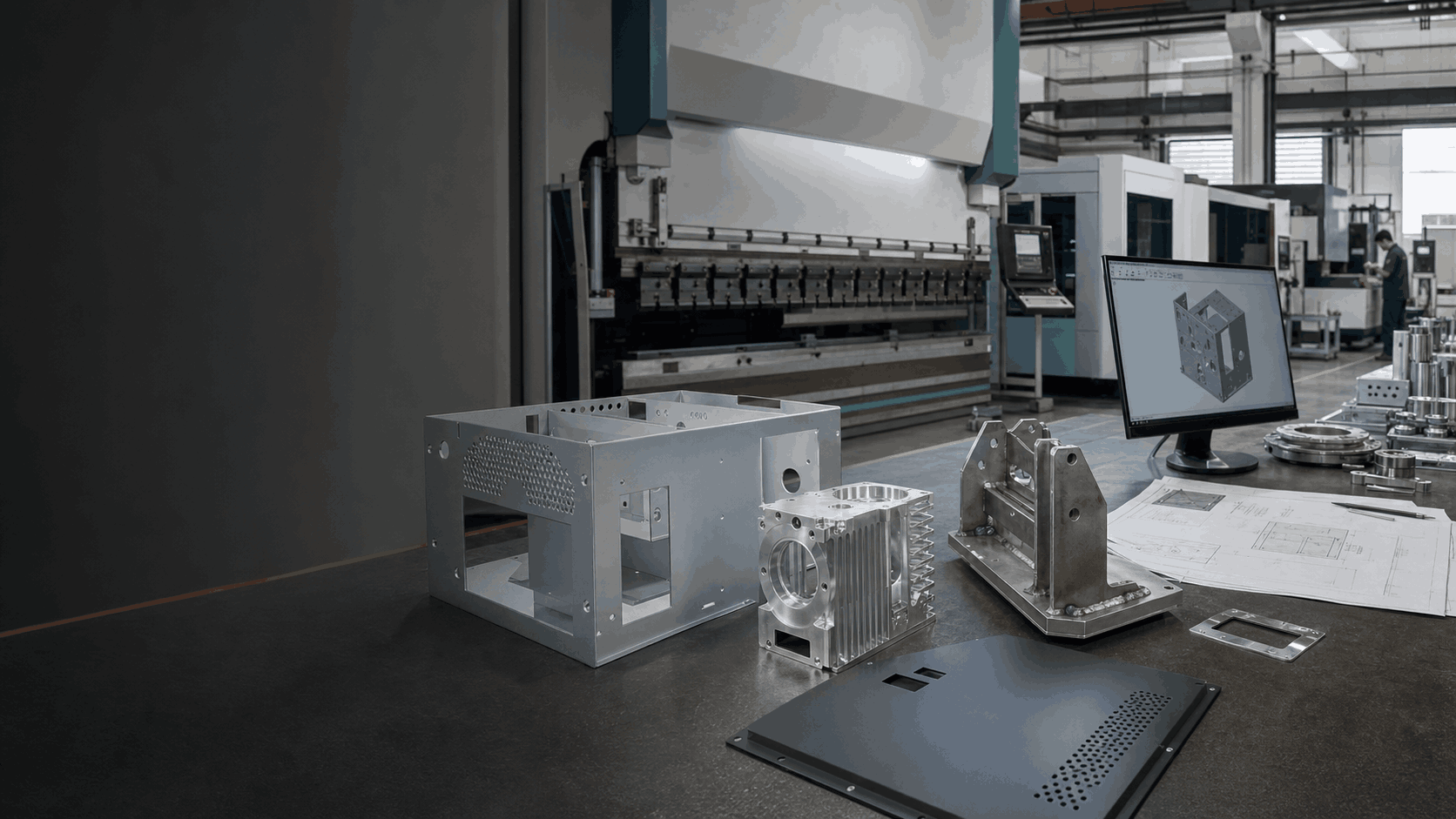
- Sheet metal, CNC-machined, welded and assembled metal prototypes
- DFM feedback before material and production time are committed
- Raw engineering builds, finished appearance samples and functional assemblies
- Prototype revisions transferred into pilot and repeat OEM manufacturing
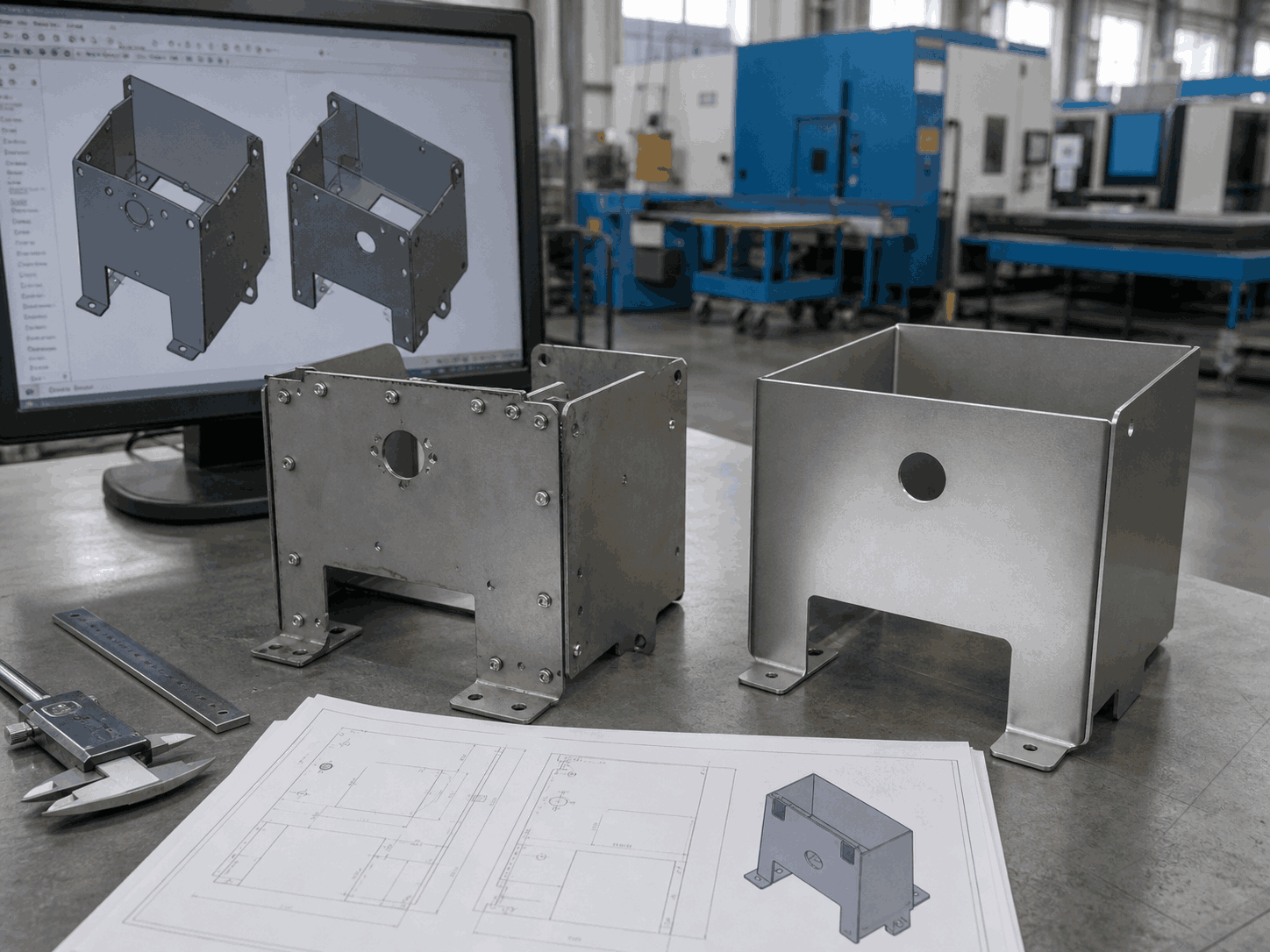
CAD, drawing or developed sketch
real production-intent metal
fit, function and manufacturability
pilot quantity to repeat OEM
One Metal Prototype Should Answer the Questions Blocking Your Order
A buyer does not need a sample that only looks impressive. You need evidence that the geometry can be manufactured, mating products fit, hardware is accessible, the selected material behaves as expected and the approved design can move toward repeat production.
Our metal prototyping service is organized around those purchasing decisions, so each build has a defined purpose and the next revision is controlled.
Different suppliers interpret missing dimensions, materials, weld notes, finish requirements or critical interfaces differently.
Holes, bends, fasteners, covers and mating products may work in CAD but conflict in the physical assembly.
A geometry intended for production may create unnecessary machining, welding, fixtures, tooling or handling.
A highly manual prototype can hide the real cost, repeatability and inspection needs of an OEM order.
Shop-floor corrections must be captured in the approved CAD, drawing and revision record before the next build.
Choose the Process Around the Product, Not the Prototype Label
Different products need different combinations of cutting, forming, machining, welding, finishing and assembly.
Sheet Metal Prototypes
Laser cutting or CNC punching, bending, hardware insertion, welding and finishing for enclosures, housings, panels, trays, brackets and cabinets.
CNC Metal Prototypes
Milled or turned aluminum, stainless steel, steel, brass and copper products where machined geometry, interfaces or precision features matter.
Welded & Assembled Prototypes
Multi-component frames, housings and functional assemblies used to verify locating, weld access, distortion, hardware and serviceability.
Special forming: Deep drawing or other tooling-dependent prototype routes are reviewed separately from the actual geometry, material, quantity and production plan.
What Should This Prototype Prove?
Not every prototype needs final appearance, tight inspection or production tooling. Agreeing on the question first prevents paying for features that do not support the current decision.
Confirm overall size, clearances, mounting locations, access openings and interfaces with the surrounding product.
Check fasteners, inserts, covers, brackets, cables, machined interfaces and the sequence required to assemble or service the product.
Review bend access, tool reach, weld sequence, machining setups, distortion, finish allowance and practical inspection.
Compare stiffness, weight, corrosion needs, texture, color, cosmetic faces and handling risk on real metal.
Identify which dimensions, fixtures, process notes, inspection points and packing requirements must be controlled for repeated builds.
A Metal Prototyping Workflow Buyers Can Control
Each stage has a clear review point before more material, finishing or pilot production is released.
1. Review the Input
Confirm CAD or drawing revision, intended function, material, quantity, critical interfaces, appearance and unresolved questions.
2. DFM & Quote
Select a practical process route and return questions or recommended changes that affect feasibility, cost or lead time.
3. Build the Prototype
Cut, form, machine, weld, finish and assemble only the operations required for the agreed prototype purpose.
4. Inspect the Build
Check agreed dimensions, fit, appearance and assembly characteristics with the requested inspection evidence.
5. Review & Revise
Separate design changes from manufacturing corrections and record the version approved for the next build.
6. Release Pilot or OEM
Carry the controlled files, process notes and inspection points into pilot quantity and repeat production.
Match Prototype Fidelity to the Question You Need Answered
A raw engineering build may be enough to check fit. A customer-facing housing may need production-intent material, color, texture and hardware. We define that level before quoting.
Useful where corrosion resistance, clean appearance, strength or real formed and welded behavior must be evaluated.
A practical route for structural housings, frames, brackets and products that will later receive a protective finish.
Common for lightweight enclosures, machined housings, panels and products where anodizing or thermal considerations may matter.
Available for selected electrical, thermal, decorative or corrosion-related prototype requirements after process review.
Raw, deburred, brushed, polished, blasted, powder coated, painted, anodized, plated or passivated as the material and prototype goal require.
Final selection: exact grade, temper, thickness and finish are confirmed from availability, geometry, prototype purpose and the intended production route.
Approve the Prototype Against Agreed Evidence
A prototype cannot pass a requirement that was never defined. Before inspection, identify the dimensions, interfaces, finish areas and assembly conditions that control the current decision.
- Selected dimensional and geometric checks from the approved drawing
- Mating-product, hardware and assembly fit review
- Bend, weld, machined-feature and finished-surface observations
- Inspection report or marked results when requested in the quotation
- Photos and revision feedback for customer approval
Drawing conventions such as ASME Y14.5 or ISO GPS can be followed when the required standard, edition, datums and acceptance method are stated.
Do Not Let the Prototype Become a Dead-End Sample
A one-off build can be made with manual corrections that are unsuitable for repeat production. Before approving the revision, we review which temporary decisions must become controlled manufacturing information.
- Capture every approved geometry change in CAD and drawing revisions
- Replace hand fitting with locating features, fixtures or defined assembly sequence
- Separate critical tolerances from dimensions that can use normal process capability
- Confirm hardware, material, finish and cosmetic requirements for purchasing
- Define inspection points and packaging-sensitive surfaces before the pilot quantity
The goal is not just to receive one acceptable prototype. It is to create a reliable basis for the next order.
Bridge the Gap Between Prototype and OEM Production
After the prototype proves the agreed design questions, a pilot quantity checks whether the revised files, production route, inspection and handling can be repeated.
One approved CAD and drawing version is used for purchasing, manufacturing, inspection and customer approval.
Tooling, fixtures, weld sequence, machine setups, hardware installation and finishing are reviewed for repeated builds.
First-build findings are converted into practical inspection points and recorded acceptance criteria.
Cosmetic surfaces, assembled products, loose hardware and export handling are protected according to the agreed shipment condition.
From Unproven CAD to a Production-Ready Metal Product
A buyer has CAD for a new equipment housing but has not confirmed assembly access, material behavior or the cost of the proposed weldments. DFM identifies the questions that must be answered, and a raw functional prototype checks fit with the internal equipment and mounting interface.
After the geometry is approved, a finished revision validates appearance and hardware. A pilot quantity then checks repeat assembly, inspection and packing before the OEM order is released.
This example explains the decision path; it is not a claim about a specific customer, fixed lead time or guaranteed savings.
Metal Prototype RFQ Checklist
CAD & Drawing
3D model, dimensioned drawing, revision, file format and any marked critical characteristics.
Prototype Purpose
Fit, function, material, appearance, assembly, customer approval or pilot-readiness decision.
Material & Finish
Preferred grade, thickness, color, texture, cosmetic faces, masking and acceptable alternatives.
Quantity & Acceptance
Prototype count, possible pilot quantity, mating products, inspection evidence, packing and requested timing.
If an NDA is required, request it before transferring confidential files. Structural, thermal, safety, regulatory and certification validation must be separately defined with suitable acceptance criteria.
Before You Release a Metal Prototype
A useful prototype begins with a specific decision, controlled input files and agreement on what will be inspected.
The route can include DFM review, cutting, punching, bending, CNC machining, welding, hardware, finishing, assembly and agreed inspection, depending on the product and prototype purpose.
Yes. A project can combine fabricated sheet metal, machined products, welded structures, purchased hardware and final assembly under one prototype route.
A developed sketch can be reviewed, but production normally requires confirmed dimensions and manufacturing files. Our design support service can help complete those inputs before the prototype is released.
Yes. Raw engineering builds and production-intent finishes are both possible. Specify whether the current decision depends on color, texture, corrosion protection, cosmetic quality or final hardware.
Potentially, but deep drawing and other tooling-dependent processes require a separate review of geometry, material, tooling approach, prototype quantity and later production demand.
Timing depends on drawing readiness, material, geometry, process, finishing, assembly, inspection and revision cycles. A useful schedule is confirmed after the actual files and scope are reviewed.
Tolerance depends on material, process, size, geometry, datum strategy and inspection method. Identify functional dimensions so the quotation can separate critical requirements from standard process capability.
State the required standard and edition, datums, critical characteristics and acceptance method. Inspection is quoted against those agreed requirements rather than an unstated universal tolerance.
Yes. Pilot and repeat OEM production are supported after revisions, material, process notes, inspection points and packing requirements are controlled.
No single prototype automatically proves structural capacity, thermal performance, safety, regulatory compliance or service life. Those validations require separately defined tests, conditions and qualified acceptance criteria.
Send Your CAD or Drawing for a Metal Prototype Review
Tell us what the prototype must prove, the preferred material and finish, the expected quantity and whether the next step is another revision, a pilot run or an OEM order.
sales@zsyishang.com