Custom Copper Parts Built for Fit, Finish, and Batch Consistency
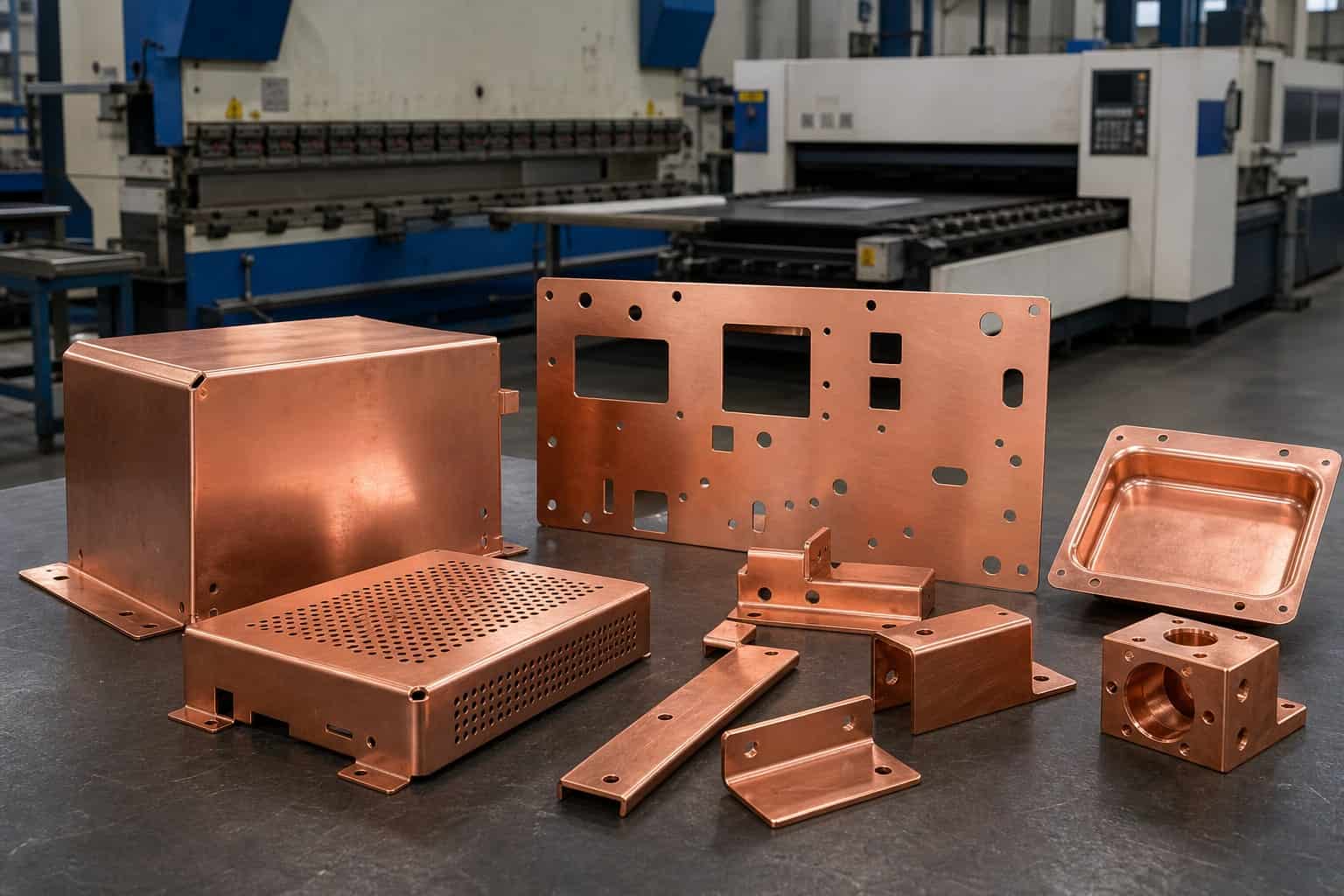
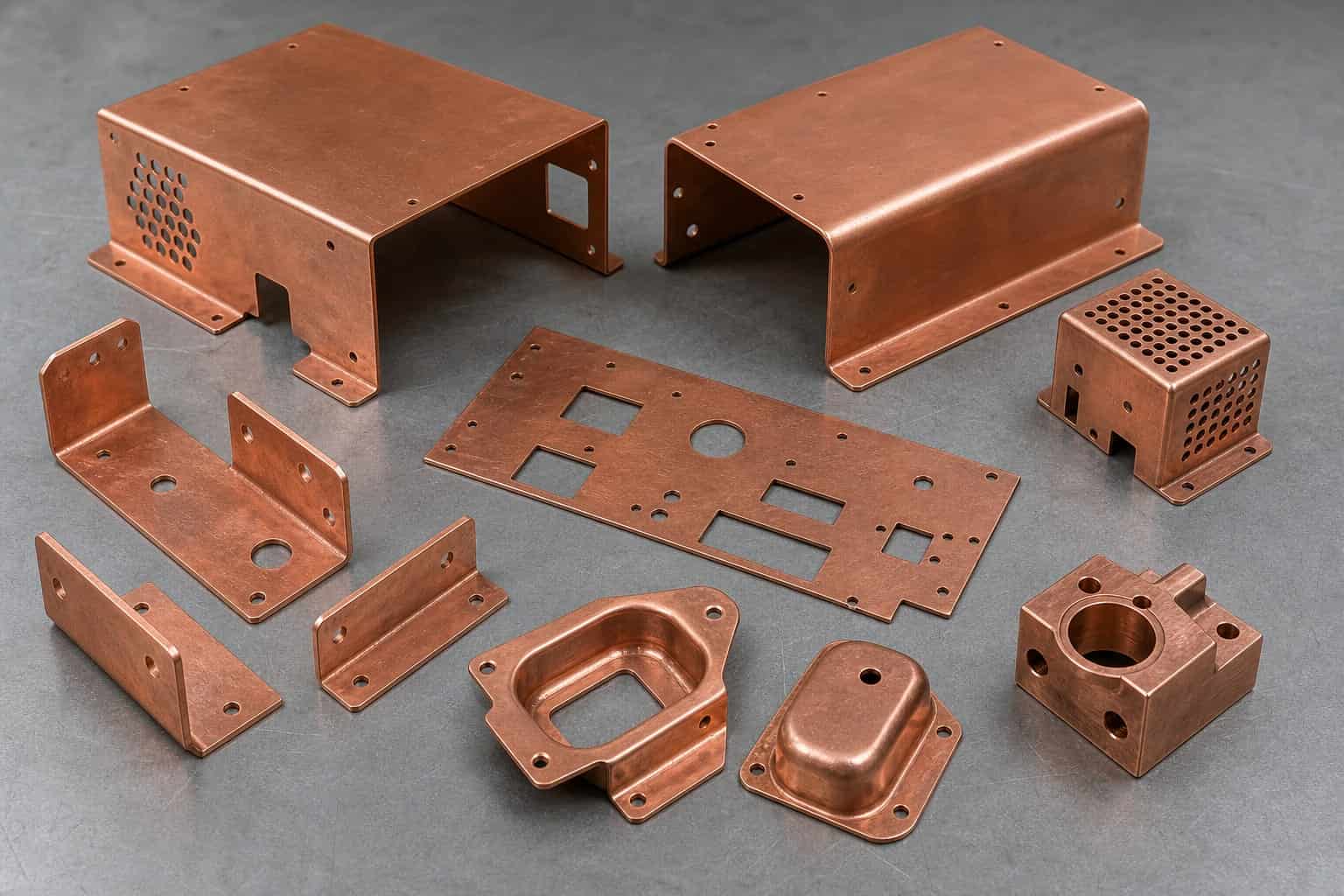
Yishang manufactures drawing-based copper sheet metal covers, shielding covers, panels, brackets, mounting plates, stamped parts, formed components and CNC-machined parts for bulk B2B orders. We control material condition, forming accuracy, surface protection and batch consistency so every part arrives ready for assembly.
The buyer usually rejects the finished part because it is scratched, distorted, discolored or difficult to assemble—not because the copper name on the certificate is wrong. We begin with the production risks the batch must avoid.
01
Scratches and fingerprints
Soft copper surfaces show handling marks quickly. Visible faces need agreed protection from cutting and forming through packing.
02
Distortion and flatness loss
Thin covers, broad panels and formed plates can twist or bow, causing gaps, rocking or forced assembly on the customer line.
03
Bend cracks and unstable springback
The wrong temper, bend radius or grain direction can crack the outside of a bend or move holes and mounting faces out of position.
04
Oxidation and color variation
Cleaning, humidity, bare-hand contact and packaging can change appearance before the parts reach the customer’s warehouse.
STEP 2 · DEFINE THE FINISHED PART
Show Us What Must Fit, Stay Visible, and Stay Stable
A useful RFQ explains how the copper part locates, fastens, joins and appears in the final product—not only its outside dimensions.
01
Assembly and datum scheme
Identify locating faces, fastening points, mating parts and the assembly sequence.
This tells us which dimensions, angles and flatness requirements must be controlled after forming.
02
Visible and protected surfaces
Mark cosmetic faces, no-scratch zones, grounding areas, masked areas and acceptable color variation.
Surface categories guide handling, cleaning, finishing, inspection and protective film use.
The end use affects grade review, surface protection, joining trials and packaging.
04
Order volume and delivery flow
Provide sample quantity, batch size, annual demand and delivery frequency.
Volume influences blank layout, tooling, inspection sampling, part separation and packing method.
Photos and physical samples help define appearance, but they do not replace measurable drawing requirements. Critical faces, dimensions, finishes and acceptance limits should be agreed before sample production.
STEP 3 · SELECT GRADE AND TEMPER
Choose Copper Grade and Temper Around the Final Geometry
Pure copper grades and material conditions are not interchangeable. The choice must support the required bends, stiffness, surface condition, joining method and machining features.
C11000 ETP copper
A common pure-copper choice for customer-specified sheet metal covers, panels, brackets, stamped parts and machined components when the forming and joining route is compatible.
C10200 oxygen-free copper
Consider when oxygen content, brazing conditions or a customer material specification makes oxygen-free copper appropriate.
C10100 or specified high-purity grade
Used only when the drawing calls for a controlled high-purity grade and the sourcing and certification requirements are agreed.
Annealed or soft temper
Supports demanding bends and forming, but the drawing must still account for distortion, handling marks and final stiffness.
Half-hard or harder temper
Can improve stiffness and handling, while requiring more careful bend-radius, grain-direction and springback review.
No unapproved substitution
Grade, temper and thickness stay tied to the approved specification. Any proposed change requires customer approval before production.
STEP 4 · DESIGN AROUND COPPER BEHAVIOR
Keep Bends, Holes, Flatness and Visible Faces Under Control.
The drawing should leave enough room for cutting, bending, machining, joining and inspection while accounting for copper’s softness and sensitivity to surface damage.
01
Bend Areas
Review bend radius, material thickness, deformation risk, and visible bending marks.
02
Hole Position
Check mounting holes, slots, countersinks, and assembly-related features.Hole-to-bend distance, slot ends and edge distance should be reviewed before release to reduce distortion and tearing.
03
Flatness
Control flat panels, covers, plates, and parts that need stable installation.
04
Visible Faces
Mark customer-facing surfaces where scratches, stains, oxidation, or tool marks matter.
STEP 5 · BUILD THE PROCESS ROUTE
One Route for Custom Copper Manufacturing
The process is chosen around geometry, surface requirements and order volume rather than forcing every copper part through the same equipment.
01
Verify material and cutting plan
Confirm grade, temper, thickness, certificate needs, grain direction and part orientation before cutting.
02
Laser cut or stamp the profile
Select the route according to geometry and volume while controlling heat marks, edge condition, hole accuracy and material yield.
03
Form and machine critical features
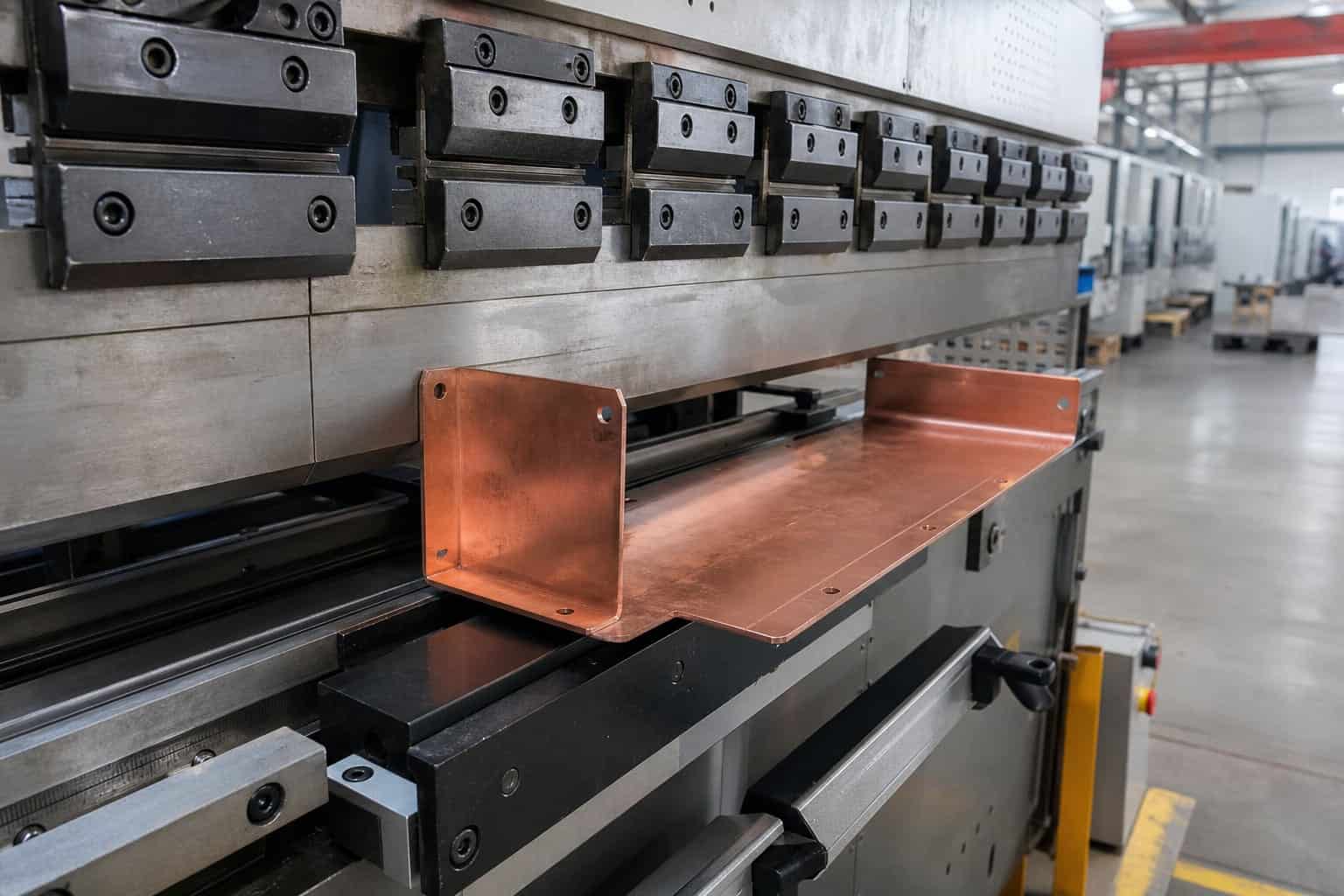
Bend, deep draw, stamp or CNC-machine the part with springback, flatness, thread quality and feature position under control.
04
Deburr, clean and protect surfaces
Remove sharp edges and residual contamination without rounding away critical geometry or scratching visible faces.
05
Finish, mask and assemble
Apply the approved plating, coating, polishing or protective method while keeping specified fits, holes and cosmetic faces controlled.
06
Inspect and protect for shipment
Check the agreed dimensions and surface conditions, then package parts against rubbing, moisture and uncontrolled oxidation.
APPLICATIONS WHERE COPPER PERFORMANCE MATTERS
Made for Industrial Products That Need Custom Copper Components.
We manufacture custom copper components to customer drawings for bulk OEM and ODM programs.
Electronics
Appliances
Energy storage
Automotive
Hardware
Construction
Pet products
Agriculture
Architecture
Vending machines
Advertising equipment
Advertising equipment
QUOTE WITHOUT HIDDEN ASSUMPTIONS
Send These Details for an Accurate Copper Part Quote
A complete RFQ helps us compare process routes, reduce avoidable clarification and quote the production standard you actually need.
01
Drawing and revision
Send 2D drawings, 3D files, tolerances, datums and the current revision.
02
Grade, temper and thickness
State the copper specification, material condition, certificate need and whether substitution is prohibited.
03
Assembly and end-use requirements
Share the mating parts, datum scheme, service environment, loading and customer assembly checks.
04
Visible surfaces, finish and joining
Mark cosmetic faces, protected areas, plating, coating, polishing, fasteners, inserts, soldering, brazing or welding requirements.
05
Volume and delivery plan
Provide sample quantity, batch quantity, annual demand, inspection records, packaging and delivery expectations.
BULK OEM & ODM COPPER MANUFACTURING
Send the Drawing—We Will Review the Copper Part and Its Production Route.
Tell us where the copper part fits, which faces must stay protected, how it is assembled and what must remain consistent across the batch.