
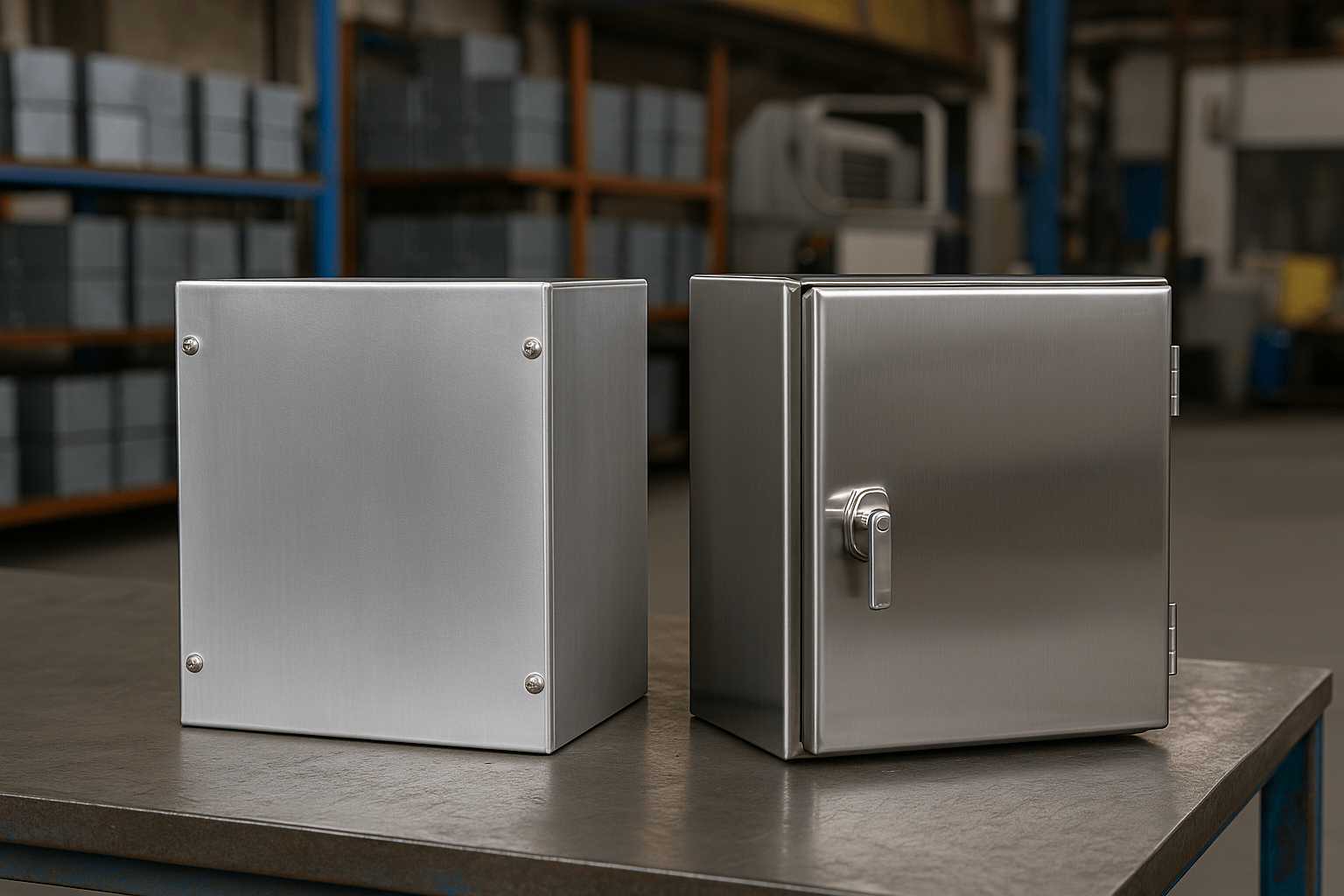
Why the Difference Between NEMA 4 and 4X Actually Impacts Procurement
In enclosure sourcing, especially for global OEM projects or industrial distribution, confusing NEMA 4 with NEMA 4X is not a small technical mistake. It can turn into warranty claims, delayed shipments, field replacements, and dissatisfied customers.
Procurement teams are not simply choosing a rating label. They are choosing how an enclosure will perform after months or years in a real operating environment. A NEMA 4 enclosure may handle water and dust well, but it can still fail early if exposed to salt spray, chemical cleaners, or corrosive industrial air. That is where the “X” in NEMA 4X becomes important.
For bulk buyers, the right question is not only “Does it pass the water test?” It is also: Where will this enclosure be installed? What happens if corrosion starts after delivery? How expensive would rework or replacement be across hundreds of units?
NEMA 4 vs. 4X: Technical Similarities, Procurement-Level Differences
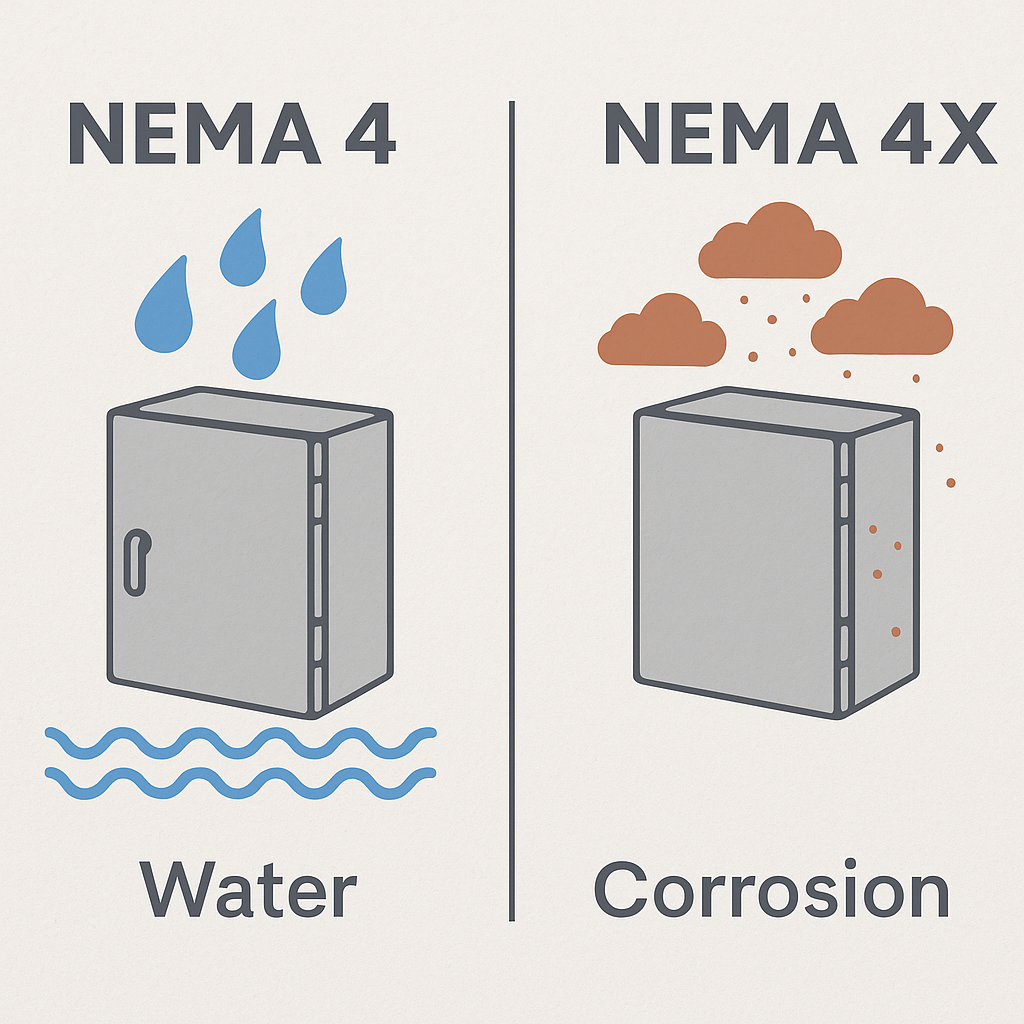
NEMA 4 and NEMA 4X enclosures share an important baseline. Both are designed to protect against water, hose-down conditions, sleet, and airborne dust. For wet or dusty environments, both can be suitable.
The difference is corrosion resistance. NEMA 4X adds protection against corrosive agents, including chemical exposure and saline environments. In food plants using chlorine-based cleaners, or port-side installations exposed to salty air, that added protection can make the difference between stable service life and early replacement.
| Feature | NEMA 4 | NEMA 4X |
| Ingress Protection | Yes | Yes |
| Dust Resistant | Yes | Yes |
| Resistance to Harsh Agents | Limited | Enhanced |
| Typical Material Options | Painted Steel, Aluminum | Stainless Steel 304/316, FRP |
| Use in Marine/Chemical Areas | Not Recommended | Recommended |
For buyers supplying corrosive environments, the stronger material and sealing logic behind a 4X-rated enclosure helps reduce field failure and strengthens service credibility.
Deeper Insight: Why the NEMA 4X Rating Exists in the First Place
NEMA 4 and NEMA 4X may look similar at first because both address water and dust ingress. But they are built around different durability assumptions.
NEMA 4X exists for industries facing repeated chemical exposure, salt-laden air, and harsh washdown conditions. In these environments, painted steel or basic sealing may not be enough. The “X” indicates that corrosion resistance is part of the evaluation, including ASTM B117 salt spray testing, which is not mandatory for NEMA 4 units.
For procurement teams, the practical distinction is simple: NEMA 4 focuses on ingress protection. NEMA 4X extends that protection into material longevity.
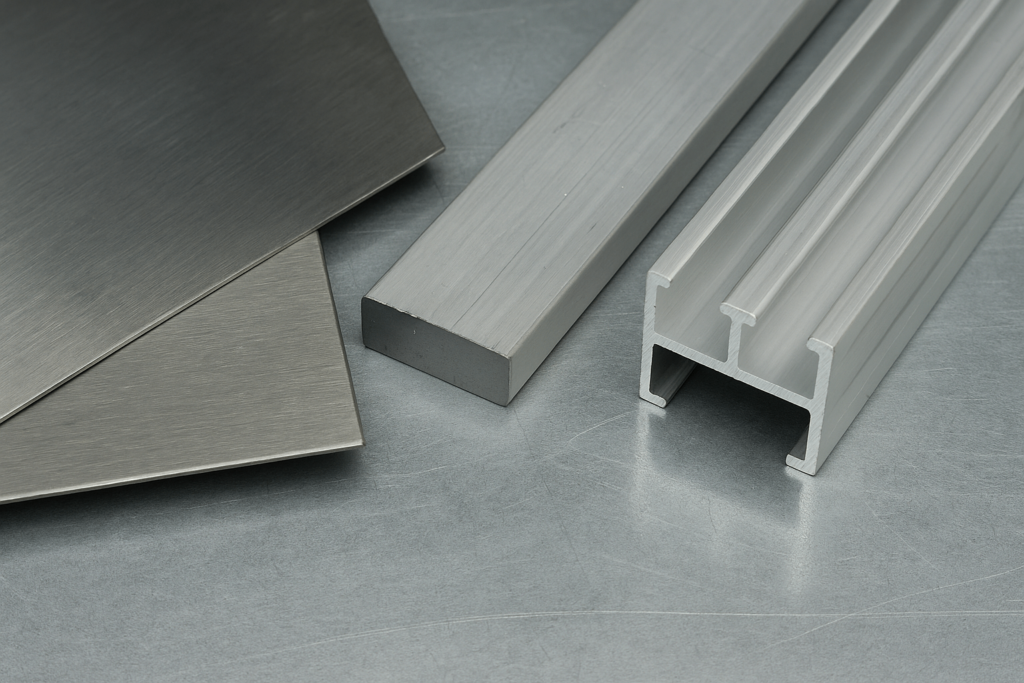
Material Drives Performance: Choosing What Lasts
The core value of a 4X enclosure is material resilience. Coated carbon steel may perform well against water exposure, but in corrosive or humid environments, its service life can drop quickly once the coating is damaged.
For NEMA 4X projects, buyers usually evaluate marine-grade 316 stainless steel, 304 stainless steel, FRP, or aluminum extrusion with certified sealing. Each material serves a different sourcing goal: corrosion resistance, weight reduction, chemical tolerance, or a better strength-to-cost balance.
YISHANG supports these enclosure options through CNC laser cutting, TIG welding, powder coating, and related fabrication processes. The material should be selected based on the installation environment, not just the lowest quotation.
Real Use Scenarios: When 4X Is the Reliable Choice
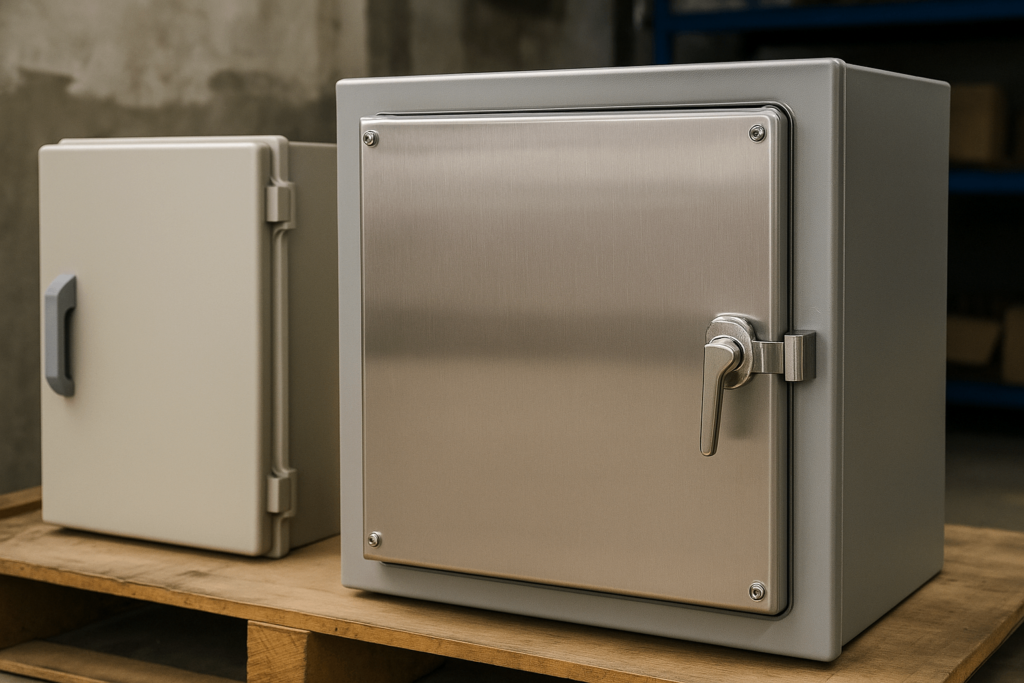
In some environments, NEMA 4X is not an upgrade. It is the safer baseline. Bakery production lines, sea transport hubs, agricultural pump stations, and similar applications expose enclosures to moisture, cleaning chemicals, salt, or corrosive airborne particles.
One client operating in Southeast Asia reduced repair costs by 40% after switching to YISHANG 4X stainless enclosures, avoiding repainting and sealing failures that were common in humid conditions.
NEMA 4X enclosures are especially suitable for:
food processing washdown zones;
seaside communications infrastructure;
pharmaceutical equipment enclosures;
high-fertilizer agriculture zones.
Beyond field performance, the right enclosure choice can also make UL, CE, and ISO inspections smoother by aligning the product with the expected operating environment.
Price vs. Lifecycle: What Sourcing Teams Really Track
The lowest upfront price does not always produce the lowest project cost. Sourcing teams also need to consider repair labor, replacement shipping, project downtime, inspection delays, and brand reputation.
| Application | Upfront Cost | Corrosion Risk | Service Disruption Cost | Ideal Rating |
| Indoor Offices | Low | Minimal | Low | NEMA 4 |
| Industrial Kitchens | Medium | High | High | NEMA 4X |
| Port Terminal Equipment | Medium | Very High | Very High | NEMA 4X |
When a project involves hundreds of units, field reliability becomes a financial metric. A slightly higher enclosure cost may be easier to justify than repeated maintenance visits or warranty replacement.
Global Relevance: Export Readiness and Certification Alignment
Global buyers often ask whether IP66 is the same as NEMA 4X. They overlap in water-ingress protection, but they are not identical. IP66 does not include the same corrosion-resistance requirements associated with NEMA 4X validation, such as ASTM B117 salt spray testing.
| Rating | Corrosion Resistance | IP Equivalent | Required Materials | Export-Friendly |
| NEMA 4 | No | IP66 | Coated Steel | Limited |
| NEMA 4X | Yes (ASTM B117) | IP66 + | SS304/316, FRP, Aluminum | Preferred |
For buyers serving regulated markets or harsh climates, NEMA 4X can simplify approval discussions and support better long-term warranty control.
Making the Right Choice: A Procurement Decision Guide
Good sourcing decisions usually come from asking a few practical questions early:
Operational Zone: Is the enclosure used in a dry, humid, wet, or corrosive environment?
Chemical/Fertilizer Proximity: Will it be exposed to cleaners, fertilizers, salt, or industrial chemicals?
Expected Unit Lifespan: Is the product expected to last months, or several years?
Client Quality Expectation: Is the project budget-driven, or positioned as premium?
YISHANG supports quick specification reviews and CAD-based quotation support for large or recurring enclosure orders. The earlier these questions are answered, the easier it is to avoid overspecifying—or worse, underspecifying—the enclosure.
What Quality Buyers Also Verify: Pre-Shipment QC Guidance
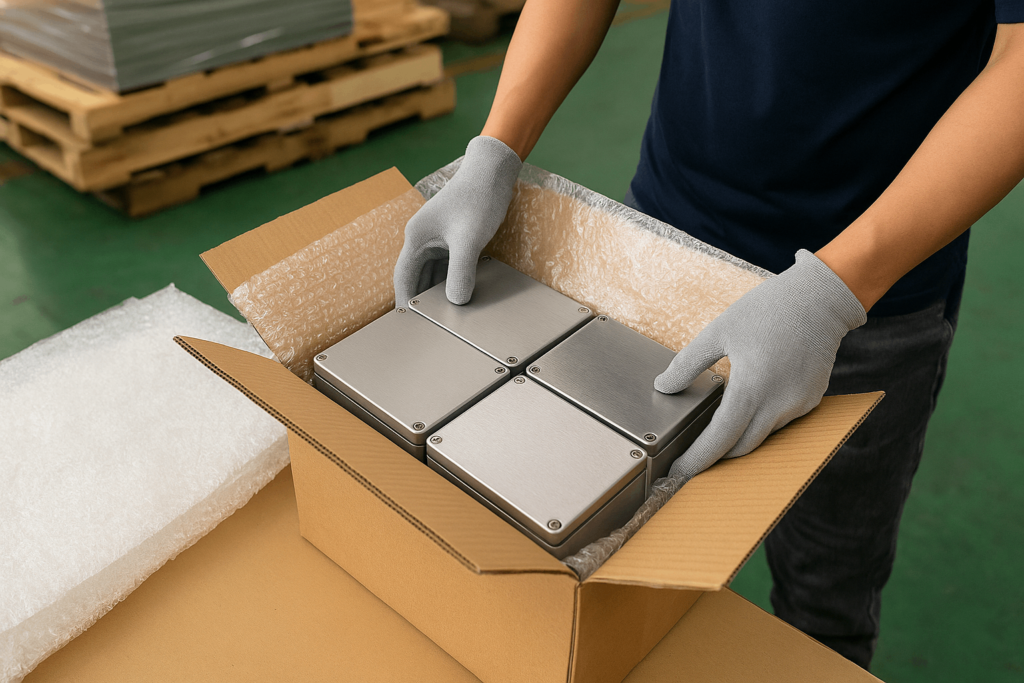
For bulk shipments, relying only on a product label is risky. Quality buyers usually verify the enclosure itself, the documentation, and the claimed rating before shipment.
Recommended checks include:
Visual Inspection: Check seals, coating uniformity, welding consistency, and surface condition.
Random Sampling: Use 10% physical test verification against the agreed specification.
Label & Documentation Matching: Confirm that NEMA rating, material grade, and CE/UL claims match the shipping documents.
Salt Spray Certificate: For 4X claims, request the ASTM B117 report.
YISHANG supports third-party QC processes and batch-level test summaries, helping importers confirm quality before containers leave the factory.
Summary: The 'X' That Reduces Field Failures
Procurement is not only about choosing the cheapest enclosure. It is about reducing project risk over the full service life.
NEMA 4 works for wet and dusty conditions where corrosion is not a major threat. NEMA 4X is the better choice when salt, cleaning chemicals, fertilizer, humidity, or corrosive exposure may shorten product life.
YISHANG supports OEM and bulk enclosure projects with material and fabrication options such as aluminum extrusion, SS316, polycarbonate, and FRP. For buyers, the point is not to choose 4X everywhere. It is to choose 4X where the environment makes the “X” matter.
FAQs for Sourcing Teams
Q: What’s the difference between NEMA 4 and 4X in field use?
NEMA 4 protects against water and dust. NEMA 4X adds corrosion-resistant materials and sealing strategies for chemical or saline exposure.
Q: Can aluminum enclosures qualify for 4X?
Yes, if they use suitable corrosion-resistant coating and pass the required ASTM testing. Buyers should request proof from the supplier.
Q: Do you offer spec sheets and pre-export support?
Yes. YISHANG can provide RoHS/ISO files, test reports, and standard international shipping documents.
Q: Is polycarbonate suitable for harsh conditions?
Only in lower-abrasion environments. For more demanding industrial zones, FRP or stainless steel is usually safer.