
Introduction
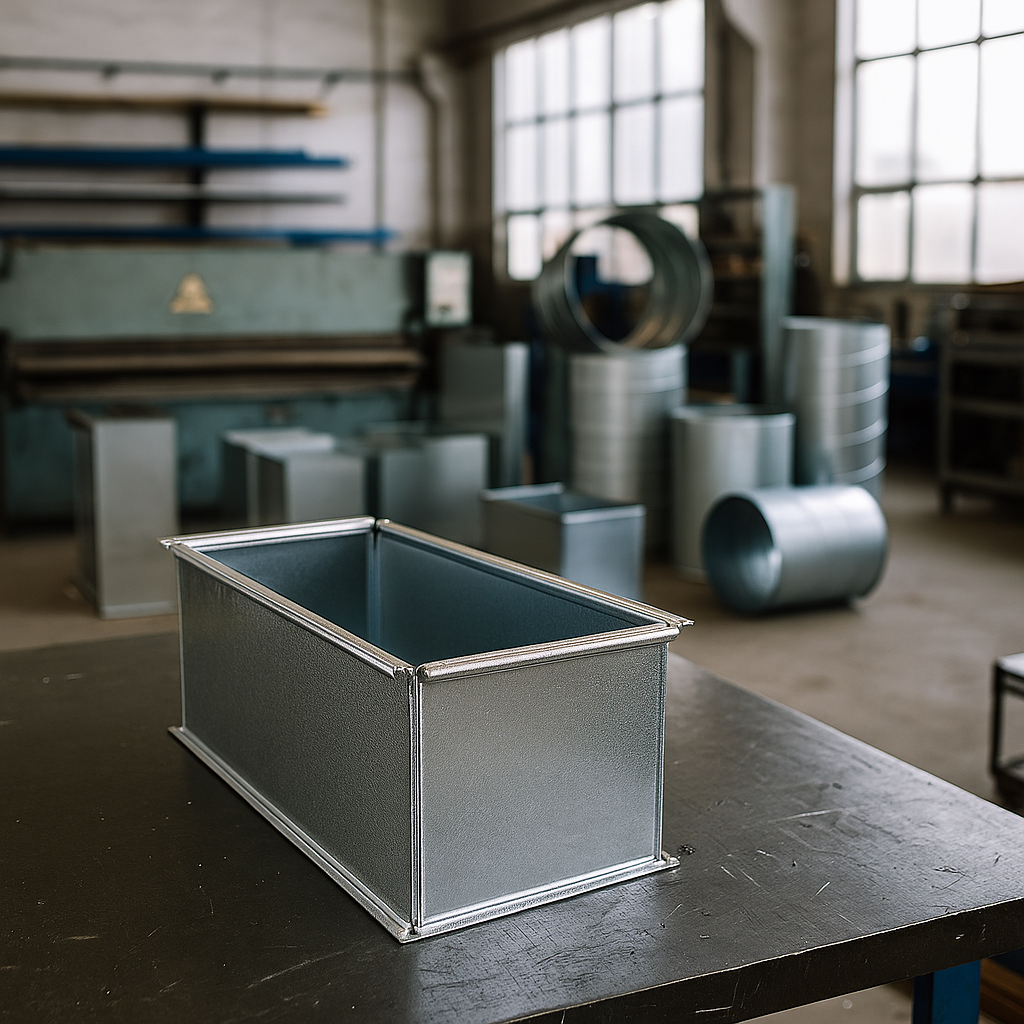
In HVAC and industrial ventilation projects, ductwork is often treated as a supporting component. In reality, it can determine whether the whole air system performs as designed.
For procurement teams, sourcing custom sheet metal duct fabrication is not only about comparing unit prices. A low-cost duct supplier can still become expensive if the parts leak, arrive damaged, fail compliance checks, or require heavy adjustment on site. Material selection, joint design, dimensional accuracy, surface treatment, packaging, and documentation all affect the final project cost.
YISHANG supports OEM and ODM duct fabrication projects for international buyers, including commercial HVAC systems, industrial exhaust lines, modular ventilation kits, and custom duct assemblies. This guide explains what buyers should pay attention to before placing an order, especially when performance, installation speed, and export reliability matter.
Why Sheet Metal Ducting Is Central to High-Performance Air Systems
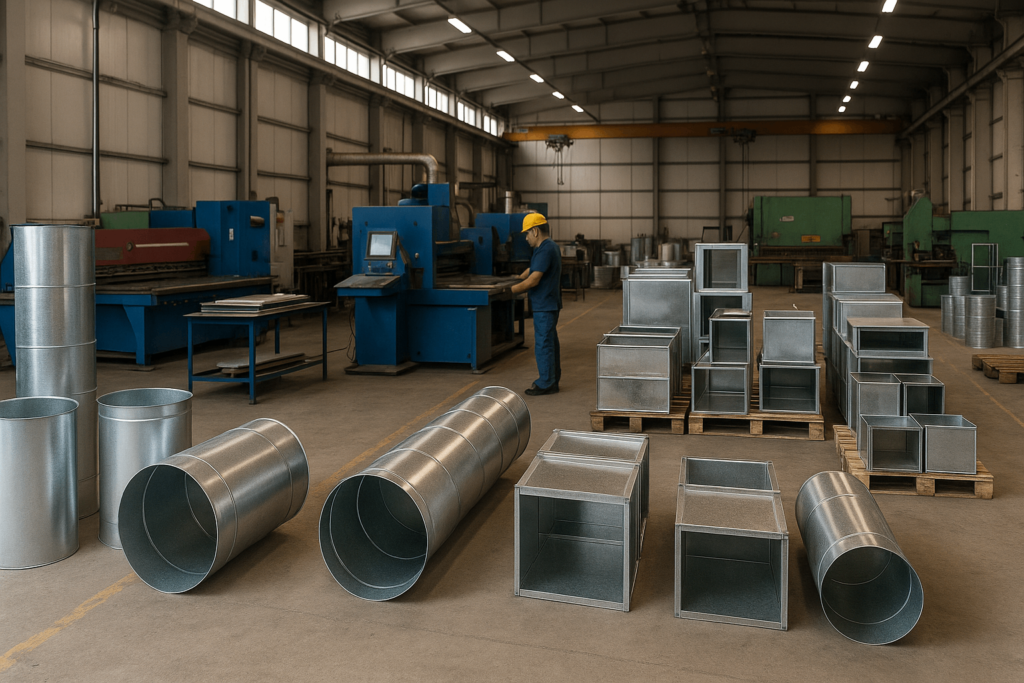
The performance of an HVAC or industrial ventilation system depends heavily on the quality of its ducting. Even when fans, filters, and control systems are well specified, poor duct fabrication can still cause air leakage, pressure loss, noise, and higher energy consumption.
According to the original article, leaky or poorly sized ducts may account for up to 30% of energy loss in commercial systems. For large buildings or industrial plants, that loss becomes more than a technical issue. It becomes a recurring operating cost.
Custom sheet metal ducting helps solve several practical problems:
- airflow can be matched to the building or equipment layout;
- joints and seams can be designed for lower leakage;
- material thickness can be selected according to pressure and environment;
- modular sections can reduce installation time;
- access panels and fittings can be planned before production.
In commercial buildings, well-designed ductwork helps maintain stable temperature zones. In cleanrooms, laboratories, food-processing areas, or medical environments, ducting may also support pressure control and contaminant management.
For procurement teams, precision ductwork means fewer installation surprises, less rework, easier integration with building automation systems, and better long-term system efficiency.
Choosing the Right Material for Your Duct Project
Material selection is one of the most important decisions in sheet metal duct fabrication. The wrong material can lead to corrosion, leakage, hygiene concerns, compliance issues, or unnecessary cost.
YISHANG helps buyers evaluate duct material based on installation environment, air quality requirements, corrosion exposure, cleaning needs, budget, and export standards.
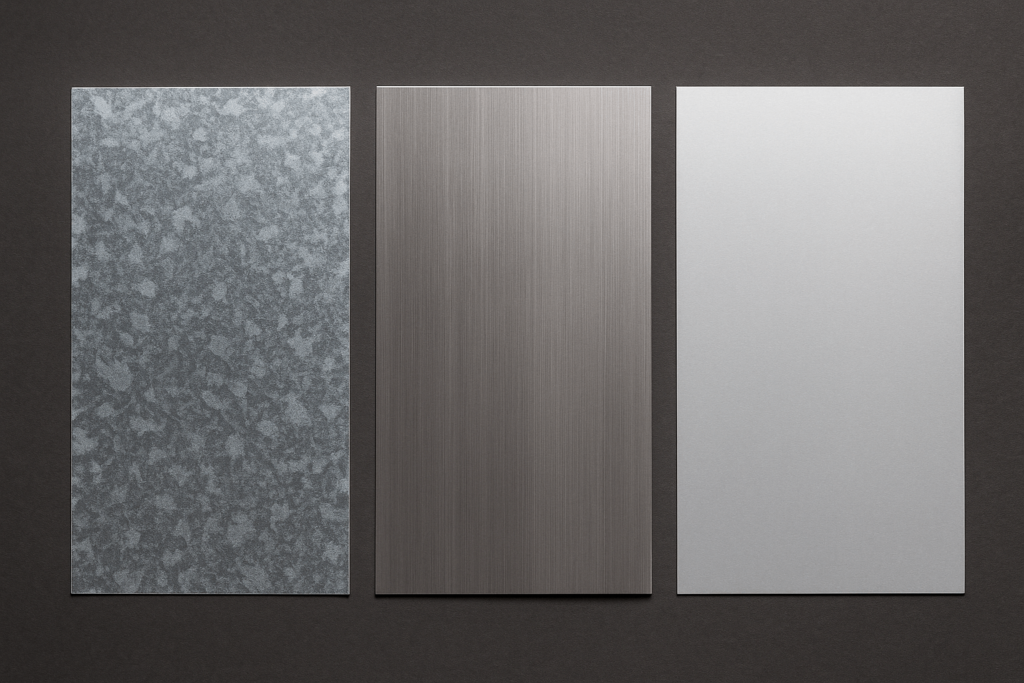
Galvanized steel is the most common choice for many indoor HVAC systems. It offers a good balance of cost, strength, and corrosion resistance.
Stainless steel, especially 304 or 316, is suitable for environments where hygiene, corrosion resistance, or frequent cleaning is required. It is often used in medical, cleanroom, food-production, or chemical-related duct systems.
Aluminum is useful when weight matters. It is often selected for modular systems, portable units, coastal environments, or installations where handling and corrosion resistance are important.
Carbon steel may be used for high-temperature industrial exhaust or heavy-duty ventilation applications, though it usually requires suitable coating or finishing.
Copper is less common because of cost, but it may appear in premium interiors, architectural HVAC, or specialized air systems where appearance is part of the design intent.
| Material | Resistance | Cost | Typical Use Cases |
|---|---|---|---|
| Galvanized Steel | Moderate | Low | Indoor HVAC, Commercial Ventilation |
| Stainless Steel | High | High | Medical, Cleanrooms, Food Production |
| Aluminum | High | Medium | Modular Units, Coastal or Humid Locations |
| Carbon Steel | Low | Medium | Industrial Exhaust, High Heat Environments |
| Copper | Very High | High | Luxury Interiors, Designer HVAC Systems |
International buyers should also consider RoHS, CE, fire-rating requirements, hygiene standards, and local installation regulations. A material that works in one region may not automatically be suitable for another.
The best RFQs do not simply say “ductwork.” They define the environment, airflow purpose, material expectation, joining method, surface finish, and documentation requirements from the beginning.
From CAD Drawing to Finished Duct: A Look at Our Fabrication Workflow
A reliable duct project starts before cutting begins. Professional buyers often provide 2D or 3D drawings, but those drawings still need manufacturing review.
YISHANG supports formats such as STEP, DWG, and PDF. During the early review stage, engineers check key details such as duct dimensions, flange positions, seam types, bend allowances, welding requirements, and installation interfaces.
The typical fabrication workflow includes:
- Drawing review and DFM check
Engineers confirm whether the design can be fabricated efficiently and whether adjustments are needed for bending, welding, packaging, or site installation. - Material preparation
Material type, thickness, coating condition, and certification requirements are confirmed before production. - Cutting
Laser cutting is used for clean edges and precision features. For thicker-gauge material or specific industrial duct requirements, plasma cutting may be used depending on the project. - Bending and forming
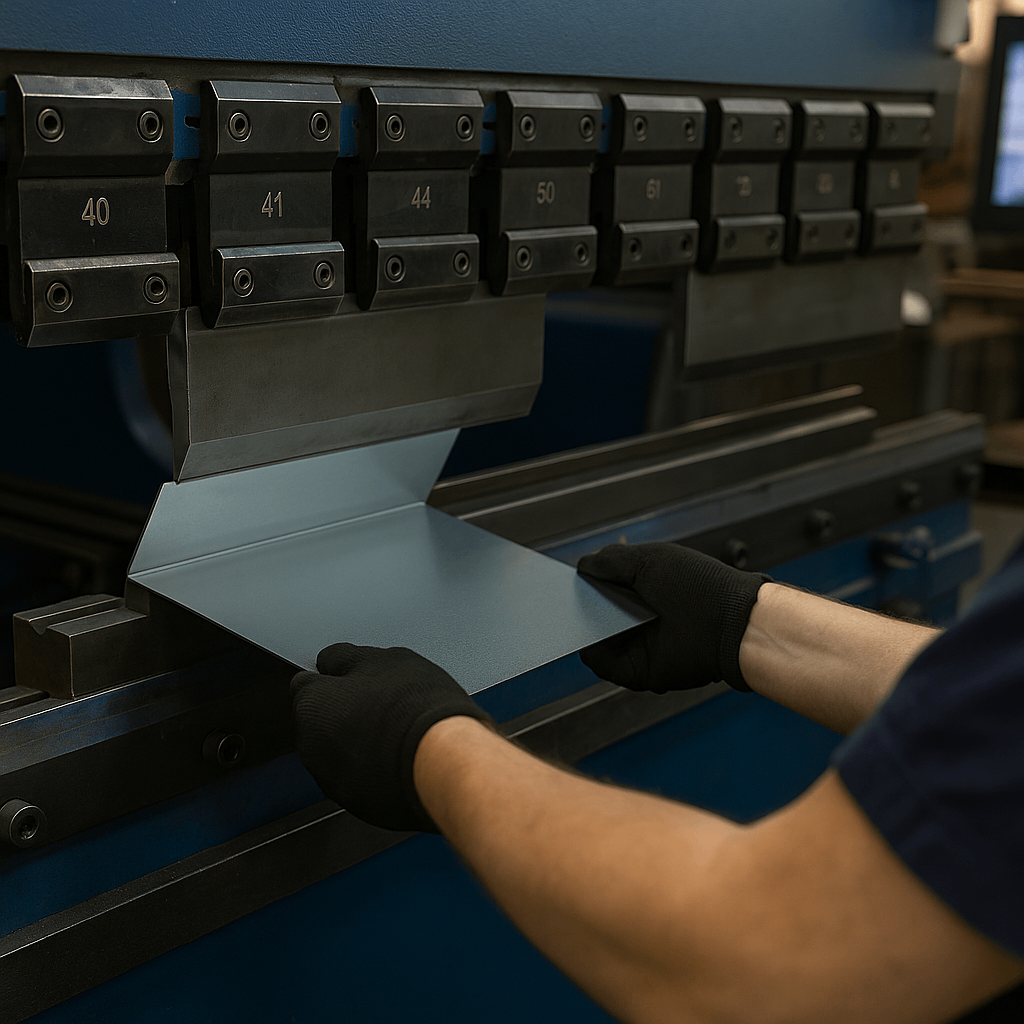
CNC press brakes handle straight bends, while roll-forming equipment is used for curved or round duct sections. - Joining and assembly
Rectangular ducts may use Pittsburgh seams, sealants, flanges, or slip-fit designs. High-seal or hygiene-critical parts may require welding. - Surface treatment
Depending on the environment, ducts may require powder coating, galvanizing, passivation, or other protective finishes. - Inspection and packing
Dimensional checks, seam inspection, labeling, and packaging are completed before shipment.
For export buyers, repeatability matters. A sample duct may look fine, but bulk production must match the same flange alignment, seam condition, and fit-up quality across the full order. That is why process control and documented inspection are essential.
How Design Affects Airflow and Installation Time
Duct design affects more than appearance. Shape, size, joint position, and layout influence air velocity, pressure drop, noise level, energy use, and installation labor.
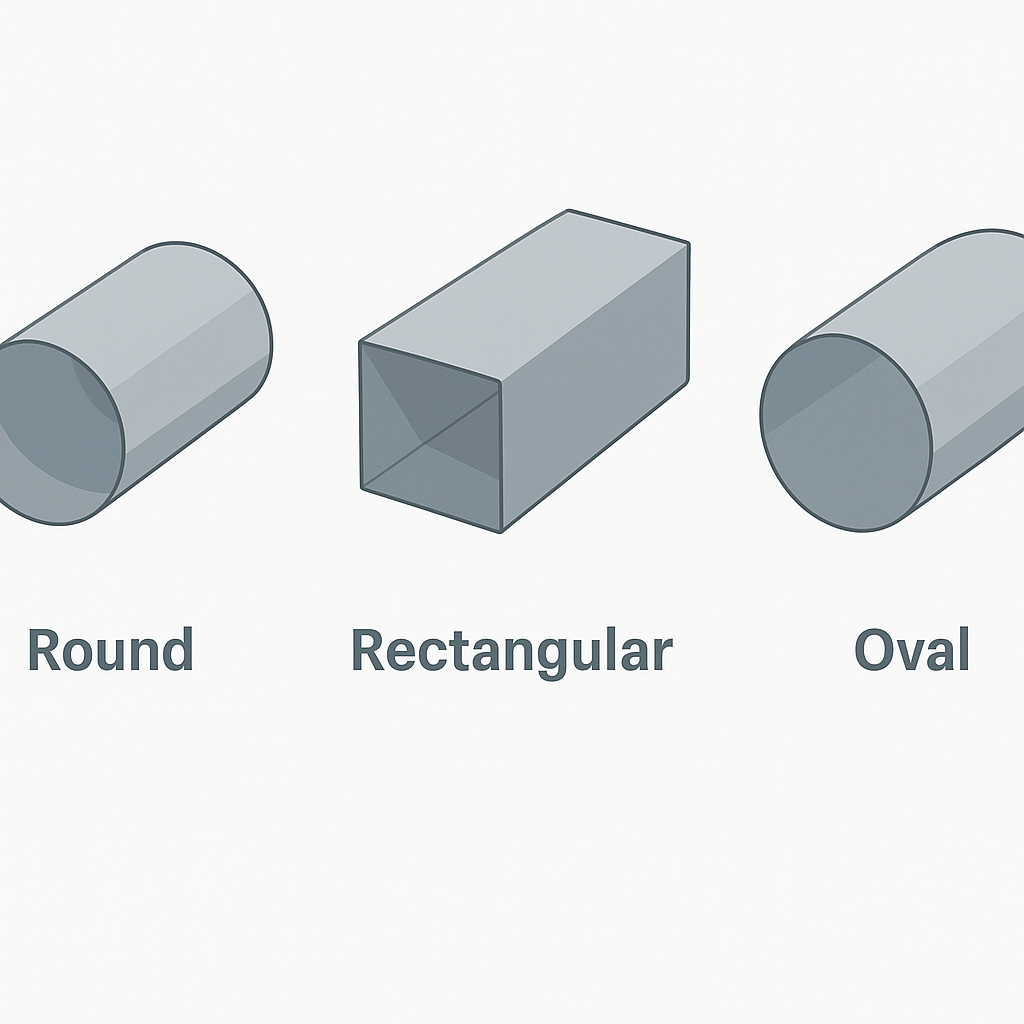
Round ducts usually offer better airflow efficiency because they reduce friction loss. Rectangular ducts are easier to fit into ceiling spaces, wall cavities, and equipment rooms, but they may require internal stiffeners when dimensions become large. Oval ducts can provide a useful compromise where space is limited but airflow performance still matters.
Sizing is equally important. Undersized ducts increase static pressure, create noise, and make fans work harder. Oversized ducts increase material cost and may complicate installation.
YISHANG engineers can support duct design discussions based on methods such as Equal Friction and Static Regain calculations when required by the project. More importantly, we work with buyers and MEP teams to make sure the design can actually be installed.
That includes checking:
- access points;
- flange direction;
- fitting layout;
- modular section size;
- shipping and lifting limits;
- site assembly sequence;
- clearance around ceilings, walls, or machinery.
A duct system that is easy to fabricate but difficult to install still creates problems. Good design should consider both manufacturing and the job site.
Avoiding Costly Errors in Duct Sourcing
Many duct sourcing problems begin with incomplete specifications. The drawings may look simple, but missing details can lead to mismatched materials, wrong connection types, or installation delays.
Common procurement errors include:
- using galvanized steel in coastal, humid, or chemical-exposed environments where stainless steel or aluminum may be safer;
- failing to confirm fire-rating, hygiene, or regional certification requirements;
- ordering pre-flanged sections when the site requires welding or a different connection method;
- ignoring access doors, inspection points, or maintenance clearance;
- underestimating packaging needs for long or easily deformed duct sections;
- focusing only on unit price while ignoring installation labor and lifecycle cost.
For example, galvanized steel may be economical for general indoor ventilation. But in a chemical plant or coastal facility, it may corrode too quickly. Likewise, a duct section that saves a few dollars in fabrication may cost far more if installers need to cut, drill, or modify it on site.
YISHANG uses pre-production review to reduce these risks. We confirm material suitability, joint compatibility, dimensional logic, and modular packing requirements before production starts. For complex projects, DFM and DFA review can help buyers avoid expensive mistakes early.
The real sourcing target should not be the lowest duct price. It should be the lowest reliable installed cost.
Applications Across Industries with Different Procurement Demands
Different industries need different duct solutions. Understanding the application helps buyers define better specifications and avoid over- or under-engineering.
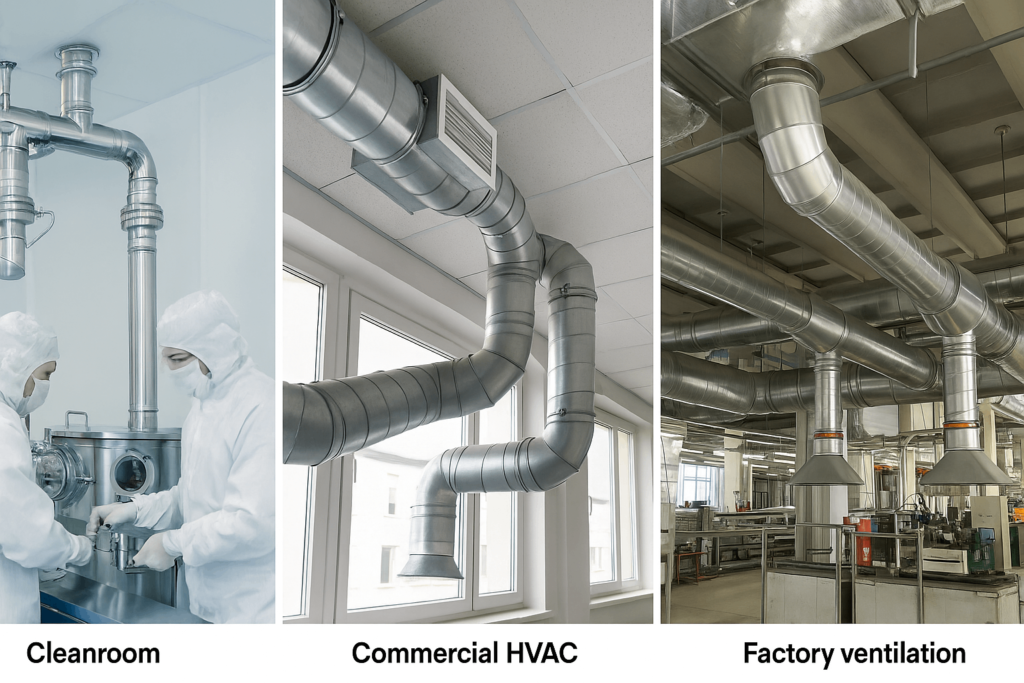
In commercial HVAC, ductwork must balance airflow efficiency, noise control, ceiling integration, and installation speed. Appearance may also matter in exposed-ceiling designs.
In industrial ventilation, ducts may handle dust, fumes, hot air, oil mist, abrasive particles, or chemical vapors. These systems often require thicker material, special coatings, reinforced joints, or easier maintenance access.
In healthcare, laboratories, and cleanrooms, stainless steel ducts and airtight seams may be needed to support hygiene, filtration, and pressure control. Surfaces should be easy to clean and inspect.
In food production, ducts must often resist moisture, cleaning chemicals, and hygiene-related contamination risks. Stainless steel is frequently preferred.
In retail or architectural spaces, exposed ductwork may become part of the interior design. Brushed aluminum, powder-coated finishes, or clean seam detailing may be part of the specification.
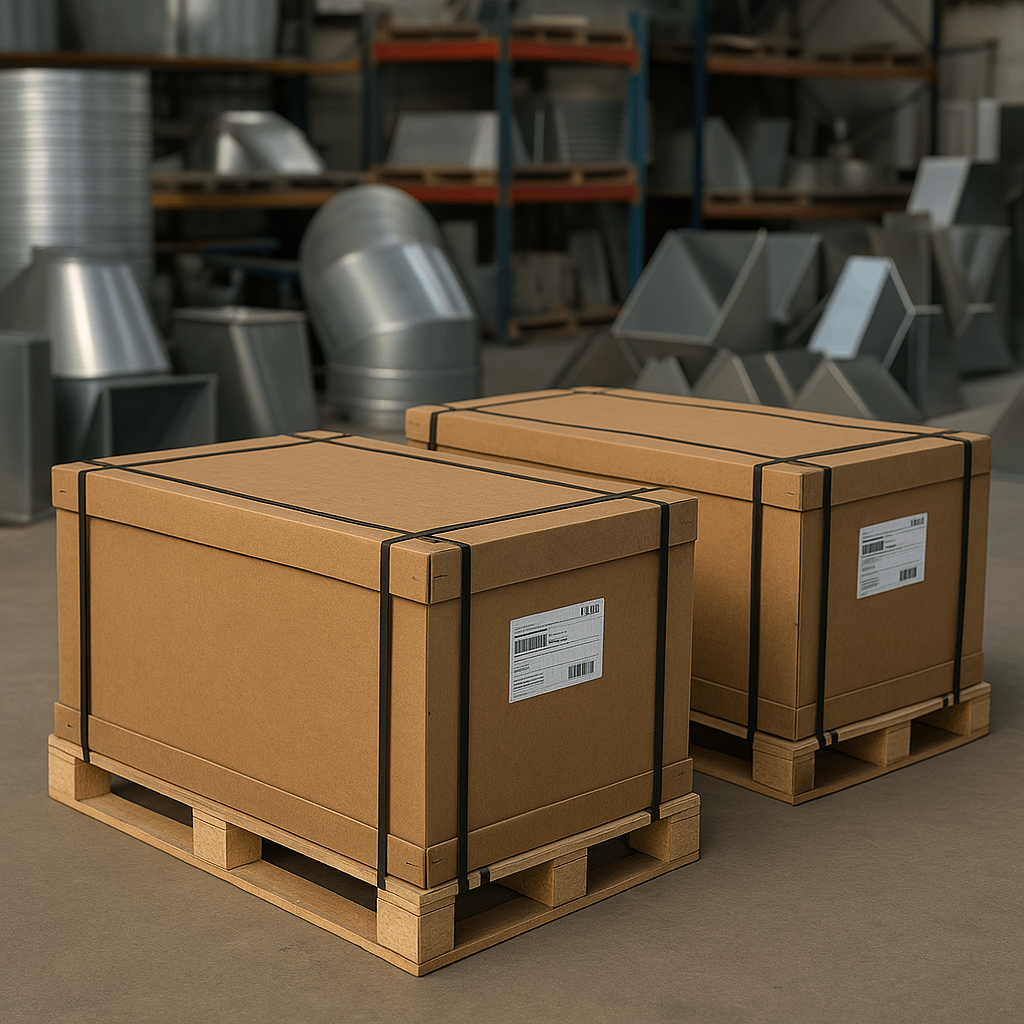
For modular construction and overseas projects, packaging and installation logic become especially important. Pre-labeled duct kits, protected corners, clear assembly instructions, and export-grade crates can reduce site confusion and damage during transport.
YISHANG supports these different procurement demands with customized fabrication, labeling, and packaging solutions for international duct projects.
Quality Assurance Buyers Can Count On
For long-term duct sourcing, quality consistency is more important than one successful sample. Buyers need confidence that the full shipment will match the approved design and arrive ready for installation.
YISHANG follows ISO 9001-based quality procedures and can support inspection points such as:
- material origin tracking through Mill Test Reports;
- in-process dimensional checks;
- seam and weld inspection;
- leakage-related checks where required;
- final inspection before packing;
- random audits for dimensional conformity.
For export orders, documentation may include RoHS declarations, CE-related files where applicable, packing lists, labels, and shipment records. Barcoded carton labels, moisture-barrier packaging, reinforced pallets, and wooden crates can be arranged according to project needs.
Third-party inspections such as SGS or BV are also welcomed when required by the buyer or end customer.
Good QA is not just about rejecting bad parts at the end. It is about controlling material, process, dimensions, seams, finish, and packaging throughout production.
Frequently Asked Questions for International Buyers
Can you support large OEM orders based on custom CAD drawings?
Yes. YISHANG supports OEM duct fabrication based on custom CAD drawings, including drawing review, prototype support, and repeat production for HVAC, telecom, industrial, and commercial ventilation projects.
How do you protect goods during overseas shipping?
Ducts can be shrink-wrapped, reinforced, and packed with corner protectors, pallets, or wooden crates. Packaging is planned according to duct size, surface finish, deformation risk, and container loading requirements.
Can you meet regional fire or hygiene codes?
YISHANG can help select materials and fabrication methods that align with project-specific fire, hygiene, or food-grade requirements. Required certifications or supporting documents should be confirmed during the RFQ stage.
What drawing formats do you accept?
Common formats include STEP, DWG, PDF, and other engineering files. 3D files are especially useful for complex duct assemblies or modular systems.
Can you provide surface finishing for ductwork?
Yes. Depending on the material and application, options may include powder coating, galvanizing, passivation, polishing, or other protective finishes.
Conclusion
Sheet metal duct fabrication has a direct impact on airflow performance, installation efficiency, compliance, and long-term operating cost. For procurement teams, the right supplier should provide more than cut-and-bend production.
Good duct sourcing starts with clear material selection, practical design review, accurate fabrication, reliable QA, and packaging that protects the product during international shipping.
YISHANG supports custom duct fabrication for global buyers by combining engineering review, scalable production, export documentation, and project-specific packaging. For buyers managing HVAC, industrial ventilation, cleanroom, or modular duct projects, early technical alignment is the best way to reduce sourcing risk and improve project delivery.