
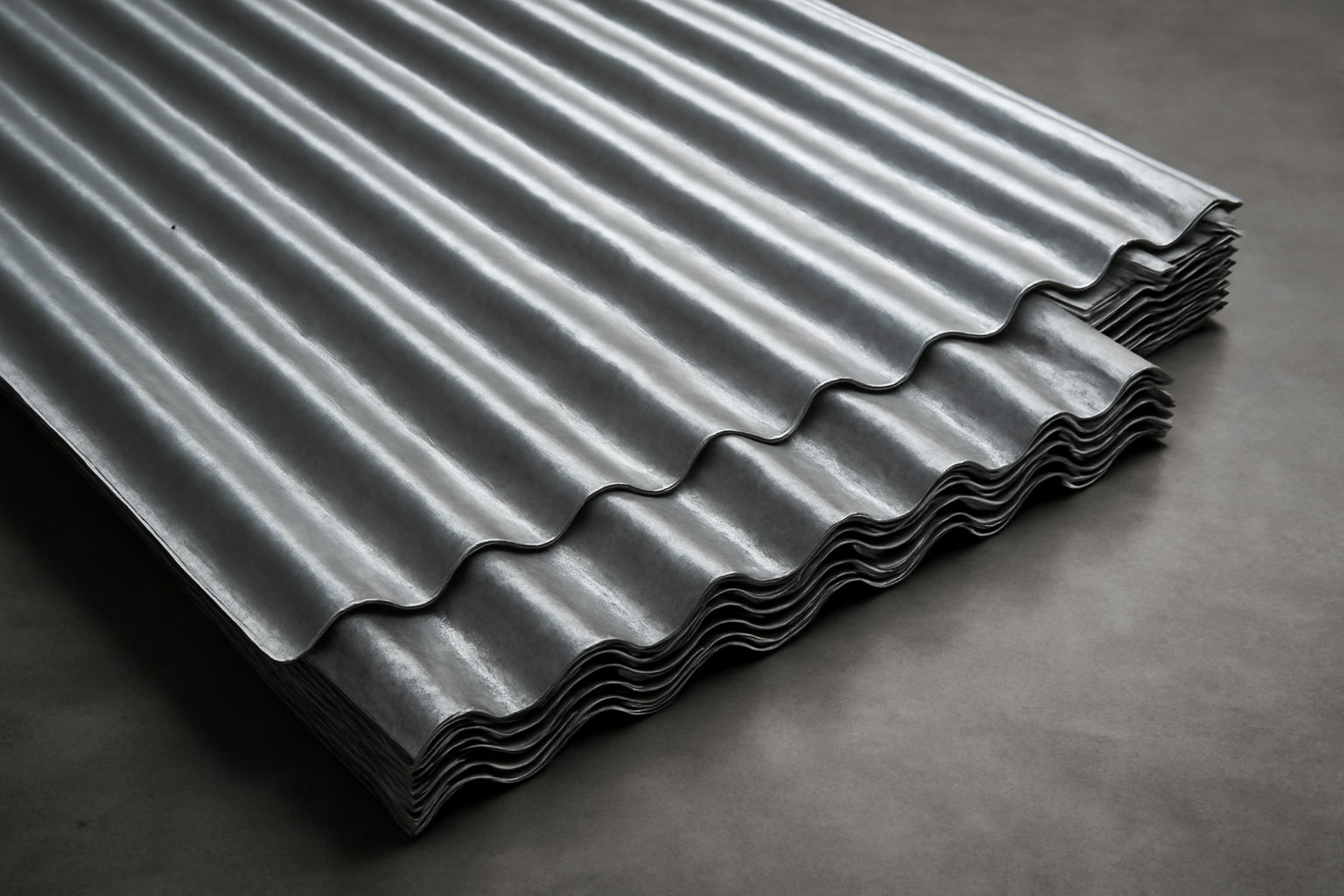
For professional buyers, corrugated metal roofing sheets are not just commodity products. They are long-term materials decisions that affect service life, freight efficiency, warranty exposure, installation reliability, and total project cost.
What these sheets are made of—and how the coating system is specified—has a direct effect on how they perform in different climates and markets. That is why material selection should be treated as a procurement decision, not just a pricing exercise.
Material Foundations: What Are Corrugated Panels Made Of?
Understanding the Base Metals
The base metal defines the starting point for strength, corrosion behavior, weight, and cost.
Mild steel remains the most common option for large-volume roofing orders because it is widely available, easy to form, and cost-efficient. Aluminum is often chosen where lower weight and stronger corrosion resistance matter more, especially in humid or coastal markets. Stainless steel and copper-based options exist for more specialized industrial or architectural use, but they are usually selected only when the operating environment or project value clearly justifies the cost.
For buyers, substrate choice should always match the expected service environment and project life, not just the first unit price.
Coating Systems and Protective Layers
On steel-based corrugated roofing, the coating system is often the real durability driver.
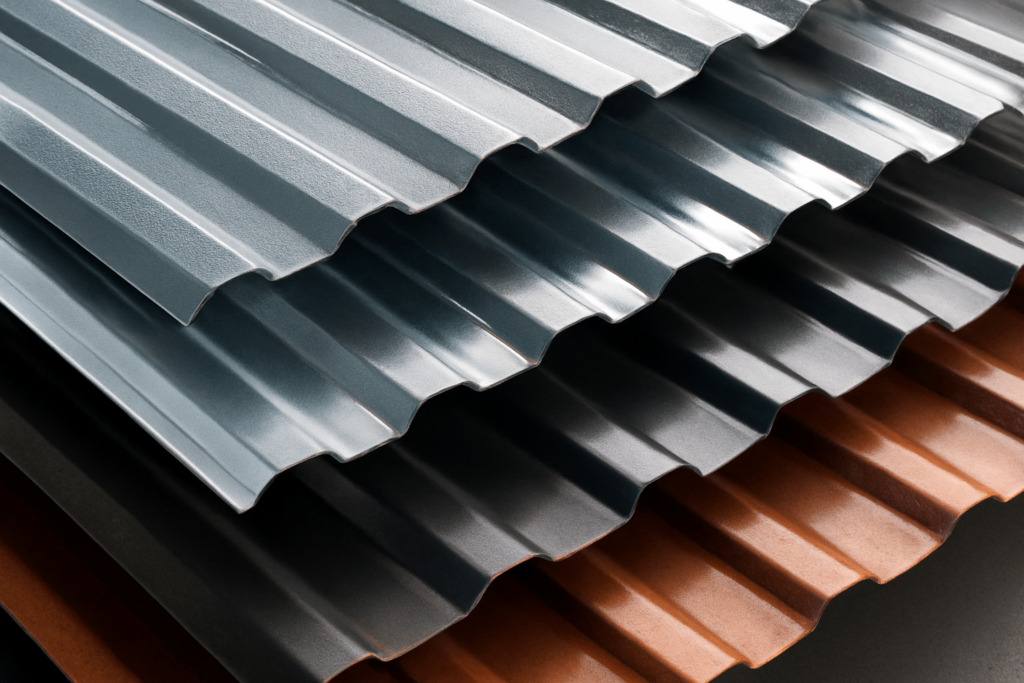
Galvanized coating remains widely used for inland or moderate environments, while galvalume is often preferred where buyers need longer life and better corrosion performance. Paint systems such as polyester, SMP, and PVDF further change weather resistance, color stability, and long-term maintenance expectations.
For procurement teams, coating weight, paint chemistry, and coating brand are not minor details. They are part of the real performance specification.
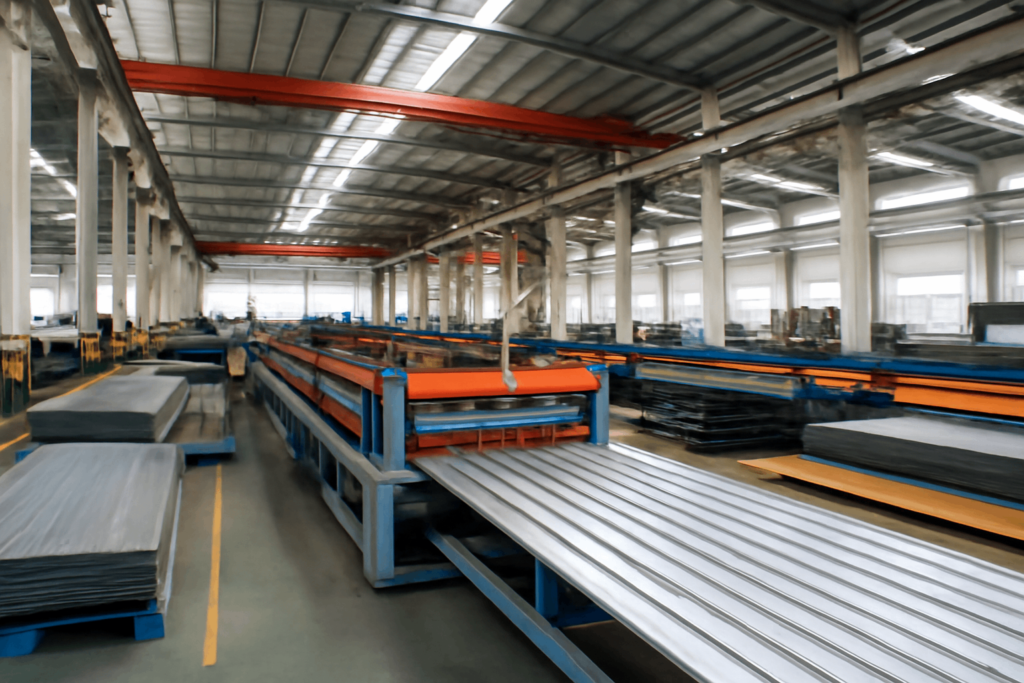
From Coil to Corrugated Strength
Corrugation is what gives thin sheet its structural usefulness. The forming profile adds stiffness, improves span performance, and helps the sheet function as a practical roofing material without excessive weight.
For buyers, roll-forming quality and dimensional consistency matter because they affect installation fit, overlap performance, packing efficiency, and waste at the job site.
Performance Impact: How Material Choice Influences Longevity
Material choice directly affects how long corrugated roofing sheets will perform before corrosion, deformation, coating failure, or maintenance cost begins to rise.
Corrosion and Durability Metrics
Corrosion resistance is one of the main reasons buyers move from a low-cost option to a better-specified one. Inland projects may accept standard galvanized systems, but coastal, tropical, industrial, or chemically aggressive environments usually demand stronger coating protection or a different substrate altogether.
For procurement teams, service life estimates should always be tied to environment, not treated as universal numbers.
Structural and Installation Factors
Roofing sheets must also match structural and installation conditions. Thickness, profile depth, span requirements, weight, and thermal behavior all influence whether the product works well at the project site.
Steel may offer stronger rigidity for some spans, while aluminum may reduce handling weight and freight burden. Buyers should compare these factors with the actual installation method instead of selecting only by material category.
Cost vs Lifetime Value
Lowest price rarely means lowest lifecycle cost. A cheaper sheet may look attractive at quotation stage, but if it needs repainting, replacement, or creates claims earlier than expected, the total cost can be much higher.
For buyers, lifetime value should include material durability, coating life, maintenance interval, and replacement risk—not just FOB price.
Sustainability and Compliance
Sustainability and compliance are also becoming stronger purchasing filters in global roofing supply. Recyclability, RoHS or REACH alignment where relevant, and coating chemistry transparency all matter more now than they did in the past.
For export-focused buyers, compliance is not only about regulation. It is also about smoother documentation and lower market-entry risk.
Manufacturer Insights: What Buyers Often Overlook
Many roofing problems begin not with the material itself, but with details that buyers and suppliers did not align clearly enough during sourcing.
Customization Variables That Matter
Length, profile depth, gauge, coating system, and paint finish often need to be adapted to the real market and shipping plan. These details can affect container efficiency, installation practicality, and local acceptance standards.
Processing Compatibility
Different substrates behave differently in forming, cutting, and handling. Aluminum scratches more easily, stainless is harder on tooling, and pre-painted sheets require tighter processing control to avoid visible damage.
For buyers, this matters because product selection and factory process capability need to stay aligned.
Common Mistakes and Quality Assurance
A common sourcing mistake is ordering by generic label only—such as “corrugated galvanized roofing sheet”—without confirming coating class, thickness tolerance, paint system, or packaging expectations.
Quality assurance should verify substrate, coating, dimensions, adhesion, and visible finish consistency before shipment.
Logistics and Export Considerations
Freight efficiency and packaging protection matter more than many buyers first expect. Roofing sheets can suffer from abrasion, moisture exposure, or edge damage during long-distance shipping if the packing method is weak.
That is why export packaging, pallet stability, anti-rust protection, and moisture control should be discussed before order confirmation—not after production is complete.
Procurement Framework: Choosing the Right Material
A practical roofing material decision should move through a simple procurement framework.
Define Project and Market Context
Start with climate, corrosion exposure, project life expectation, maintenance capability, and target market standards. These factors should shape the material decision from the beginning.
Match Material and Coating
After defining the environment, match the base metal and coating system accordingly. Inland projects may accept simpler systems, while coastal or industrial environments usually require stronger substrate and coating combinations.
Ask Suppliers Smarter Questions
Buyers should ask about substrate grade, coating weight, paint system, thickness tolerance, test reports, and packaging method. Clear technical questions usually produce better sourcing outcomes than broad requests for “best quality.”
Evaluate Total Cost of Ownership
A useful TCO view combines purchase price with freight impact, coating life, maintenance cost, replacement cycle, and claim risk. That gives buyers a stronger basis for comparing competing offers that may look similar at first.
Verify Before Shipment
Before shipment, buyers should verify samples, thickness, coating adhesion, packaging, and moisture protection. Final pre-shipment control is one of the simplest ways to reduce downstream claims.
Conclusion
Understanding what corrugated roofing sheets are made of gives buyers a real commercial advantage. Once substrate, coating, forming, and export handling are reviewed together, procurement becomes more predictable and less reactive.
At Yishang Metal Products Co., Ltd., we support OEM and wholesale customers with custom metal fabrication and export-oriented production support for roofing-related and other industrial metal products. With 26+ years of manufacturing experience, we support processes including roll-forming-related fabrication support, laser cutting, bending, stamping, welding, CNC machining, surface treatment, assembly, packaging, inspection, and shipment.
📩 If you are evaluating corrugated metal roofing materials for your next project, send us your requirements to discuss the most suitable substrate, coating, and export packaging approach.