
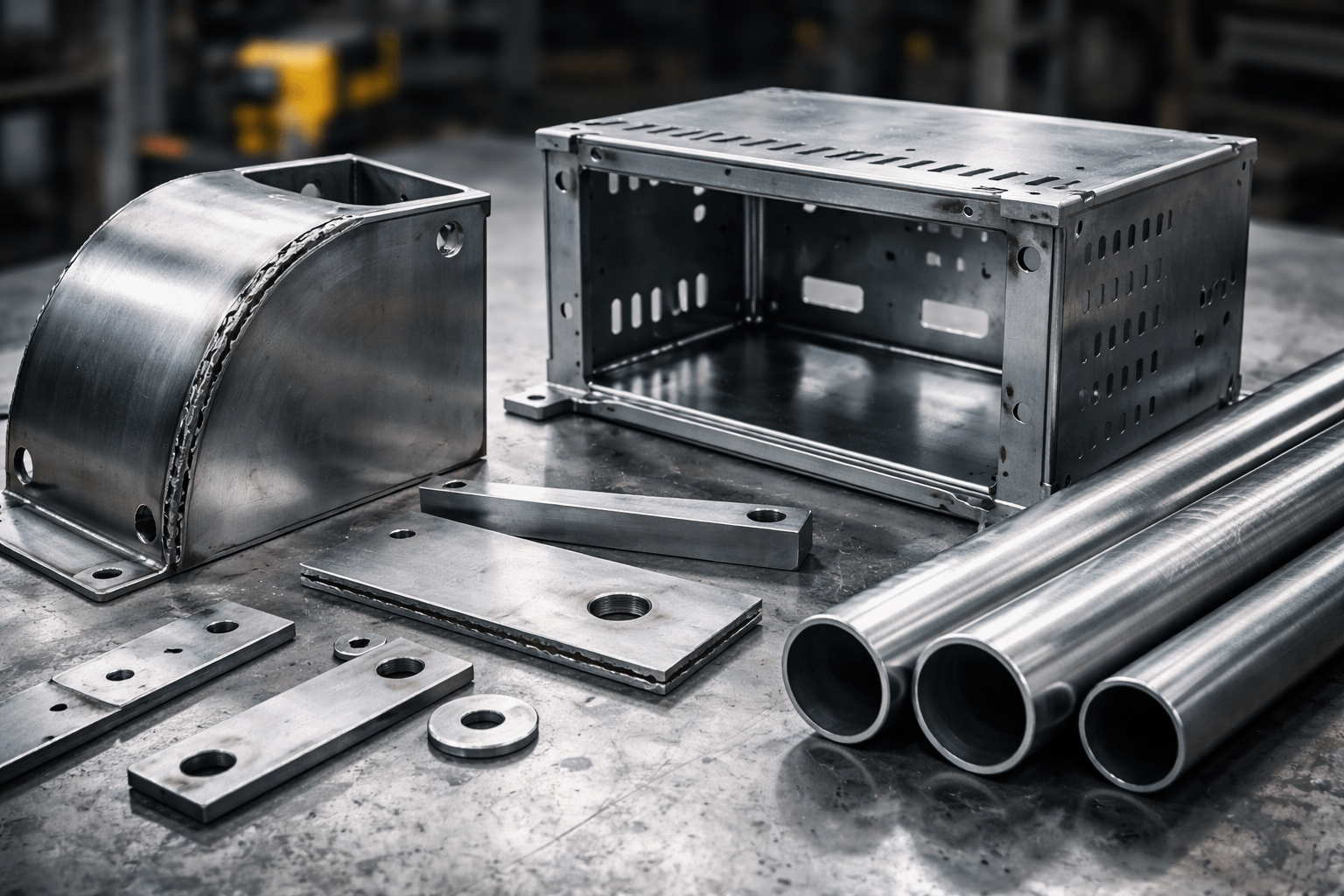
For overseas wholesale buyers, a useful material article should do one thing well: help with a sourcing decision without wasting time. In simple terms, 1006 carbon steel is a low-carbon mild steel that works best in formed and welded parts where processability matters more than high strength. The real issue is not whether the grade sounds good on paper, but whether it can support stable forming, predictable welding, consistent finishing, and repeatable batch production without bringing extra cost or avoidable quality problems with it.
Why Buyers Consider 1006 Carbon Steel in the First Place
Most buyers do not look at 1006 carbon steel because they want the strongest mild steel available. They look at it because the grade offers a practical mix of low carbon content, workable ductility, and production-friendly behavior. When carbon stays low, steel is usually easier to form and easier to join. From a purchasing standpoint, that matters more than it may seem at first glance. Material cost is never just the coil price. It is also shaped by forming risk, weld stability, scrap rate, throughput, and how consistently the same part can be produced across repeat orders.
That is where formability and weldability stop being abstract technical terms and start becoming commercial advantages. A grade with excellent formability and weldability can make the whole production route feel less fragile, especially for parts with multiple bends, light welded joints, or cosmetic requirements after powder coating or plating. In practical terms, that can mean fewer interruptions during pilot production, more stable output between batches, and less friction between sample approval and shipment.
The same logic shows up clearly in enclosure-related products. In many projects, the material choice is tied to whether a part will become a wall-mounted electrical enclosure, a junction box NEMA housing, an electrical meter box, a push button enclosure, a solar battery enclosure, or other control station enclosures. In these categories, buyers are usually not chasing the hardest mild steel in the catalog. They are looking for a material that can be laser cut, bent, welded, finished, and assembled with dependable results.
That is a much more useful way to think about 1006 than a generic list of industries. The real value of the grade is easier to understand when it is linked to the fabrication route. For 1006, the fit is strongest when shaping and joining are central to the project and the service load stays within a moderate range.
How the Chemical Composition of 1006 Carbon Steel Affects Purchasing Decisions
Why the chemistry matters in production
The chemical composition of 1006 carbon steel matters because it shapes how the material performs during fabrication. The defining feature is the very low carbon level. Carbon has a strong effect on hardness, strength, and the way steel responds to deformation and heat. In a grade like 1006, the low carbon level gives the material its good ductility and weldability. In everyday fabrication terms, it is more cooperative in forming and less likely to make routine joining unnecessarily difficult than a higher-carbon alternative.
The composition of 1006 carbon steel also includes manganese in a modest range, while phosphorus and sulfur stay low or appear only in trace amounts. Buyers do not need a deep metallurgy lecture to make use of that information. What matters is the practical takeaway: the chemistry supports steadier bending, more predictable welding, and better overall control in normal fabrication work.
What buyers should verify before release
At the same time, good supplier content should not make the material sound more uniform than it really is. Generic online composition tables are useful as a starting point, but they are not purchase specifications. Buyers still need to check final material decisions against the applicable standard, the agreed product form, the thickness range, and the supplier’s mill test certificate. Sheet, coil, and wire do not always behave the same in production, and hot rolled stock will not necessarily respond the same way as cold rolled stock under the same grade designation.
Typical chemistry reference for 1006 steel
| Element | Typical range | Why it matters in fabrication |
|---|---|---|
| Carbon | up to about 0.08% | Core reason for easier forming and generally good weldability |
| Manganese | about 0.25–0.40% | Helps support toughness and processing balance |
| Phosphorus | typically low | Controlled because excess can hurt bend performance |
| Sulfur | typically low | Controlled to protect ductility and weld consistency |
| Iron | balance | Base metal structure |
How to read the property data
Buyers also search carbon steel properties because they want a quick comparison point, and that is reasonable. But numbers are only useful when they are tied back to manufacturing reality. The better question is what those values allow the supplier to do safely and consistently in production.
Typical mechanical reference values
| Mechanical property | Typical reference value | Practical meaning |
|---|---|---|
| Tensile strength | around 330 MPa | Suitable for many formed and light-duty welded parts |
| Yield strength | around 285 MPa | Adequate where service demand is moderate |
| Elongation | around 20% | Indicates good ductility for bending and forming |
| Brinell hardness | around 95 HB | Relatively soft and workable |
Use these values as screening data, not as final approval criteria. In wholesale procurement, buyers can use reference values to narrow the options and then confirm the exact condition through the agreed specification, certificate, and sample validation.
When 1006 Is a Smart Choice and When It Stops Making Sense
Where 1006 works well
In practical sourcing, 1006 makes sense when the project rewards easy forming, routine weldability, and cost-efficient production more than hardness or heavy-duty strength. That makes it relevant for many light-duty fabricated parts, enclosure panels, welded housings, and components that will receive powder coating, plating, or another finish as part of the final build. Compared with a harder mild steel, 1006 often gives the supplier a wider process window and gives the buyer more confidence that the part can be repeated successfully at scale.
This becomes especially clear in enclosure manufacturing. A buyer comparing carbon steel enclosures, galvanized steel enclosures, and stainless steel options is not really comparing names alone. The real comparison is between fabrication ease, corrosion exposure, finish requirement, and total cost. For indoor equipment or protected service conditions, a well-finished mild steel enclosure can be the more economical route. In more demanding environments, a galvanized steel enclosure or stainless steel enclosure may be the better choice.
Welding, machining, and nearby grades
The same balanced view applies to questions about suitable welding methods for 1006 and its main machining limitations. In routine sheet metal work, methods such as MIG, TIG, or resistance welding can be suitable depending on thickness, joint design, output volume, and finish expectations. On the machining side, the grade remains workable, but buyers do not usually choose it because it feels especially easy to machine. Softer low-carbon steels can sometimes create built-up edge or less efficient chip control if tooling and cutting conditions are not well matched.
Another point buyers often weigh is whether 1006 is the best choice compared with nearby mild steel grades.
- If the project needs maximum forming ease, 1006 can be very appealing.
- If it needs a slightly more balanced mix of strength and workability, 1008 or 1010 may be more suitable.
- If the project needs somewhat higher strength or better machinability, teams often move to 1018 instead.
That is why mild steel selection works best when it is tied to the actual manufacturing route and service environment rather than treated as interchangeable.
Quick screening guide for buyers
| Technical point | Typical guidance for 1006 | Why buyers care |
|---|---|---|
| Material family | plain low carbon steel | Common, practical, and fabrication-friendly |
| Main strength | forming and joining efficiency | Helps reduce process risk in production |
| Typical best-fit use | formed and welded parts | Supports repeatability in batch manufacturing |
| Main limitation | not for high wear or high load | Prevents overuse in the wrong application |
| Corrosion strategy | usually depends on finish | Affects total cost and material comparison |
What Matters Most for Wholesale Buyers Evaluating a Supplier
What buyers want to confirm before they contact a supplier
For a wholesale buyer, the most valuable supplier content is not necessarily the longest article. It is the article that answers the right questions with enough depth to support a decision. In the case of 1006, that means explaining why the grade is chosen, where it performs well, where it becomes risky, and what should be confirmed before purchase.
That is why this topic needs to stay close to fabrication reality all the way through. The chemistry section matters because it explains forming and welding behavior. The enclosure examples matter because they show how purchasing logic plays out in real parts. The notes on welding, machining, and corrosion matter because buyers need to understand limits before releasing an order. Taken together, these points help the reader judge whether 1006 carbon steel is the right fit for a specific project rather than simply recognizing the grade name.
How this kind of content supports supplier evaluation
For YISHANG, that is the right role for a technical blog article. It should not read like a sales brochure, and it should not read like a materials encyclopedia either. It should help buyers think more clearly about material choice, production risk, and fit with the intended manufacturing route.
If your project involves formed sheet metal parts, enclosures, or light welded assemblies, a focused technical review can shorten the sourcing cycle. Send your inquiry to YISHANG with your drawing, target thickness, finish requirement, and estimated volume, and our team can review whether 1006 is the right match for your part and production plan.