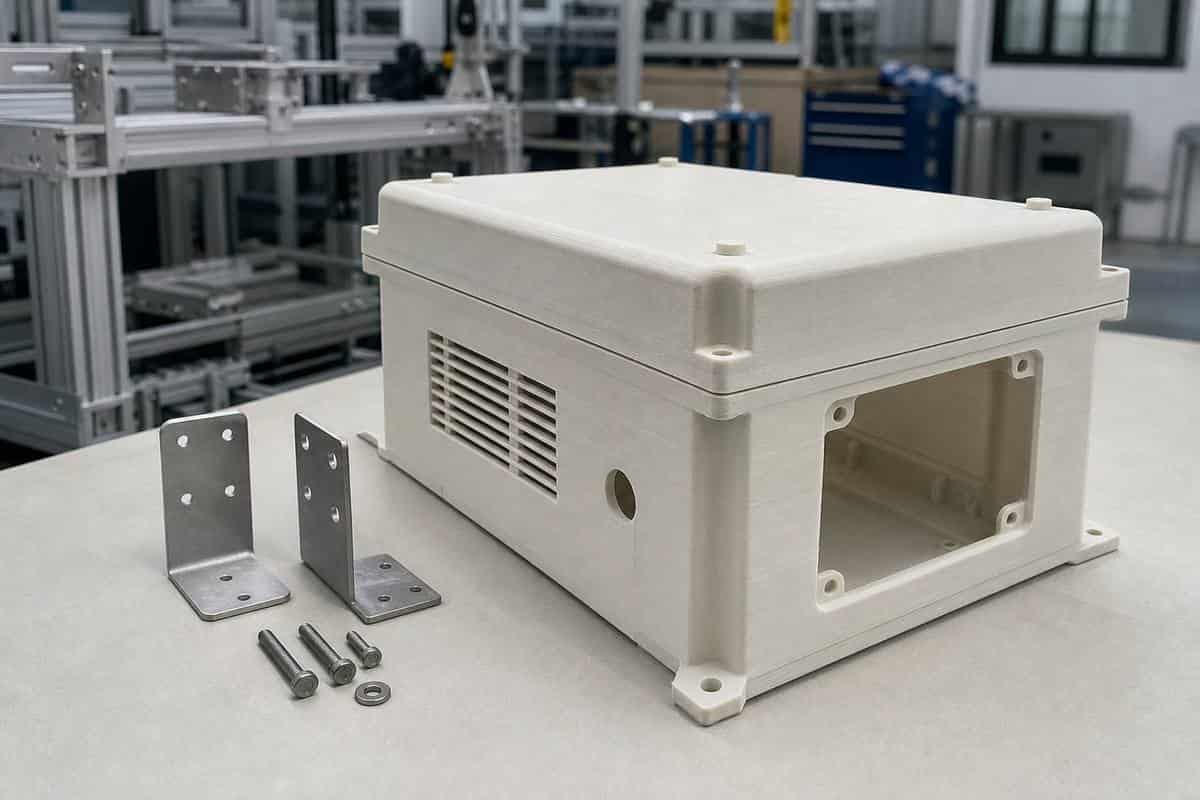
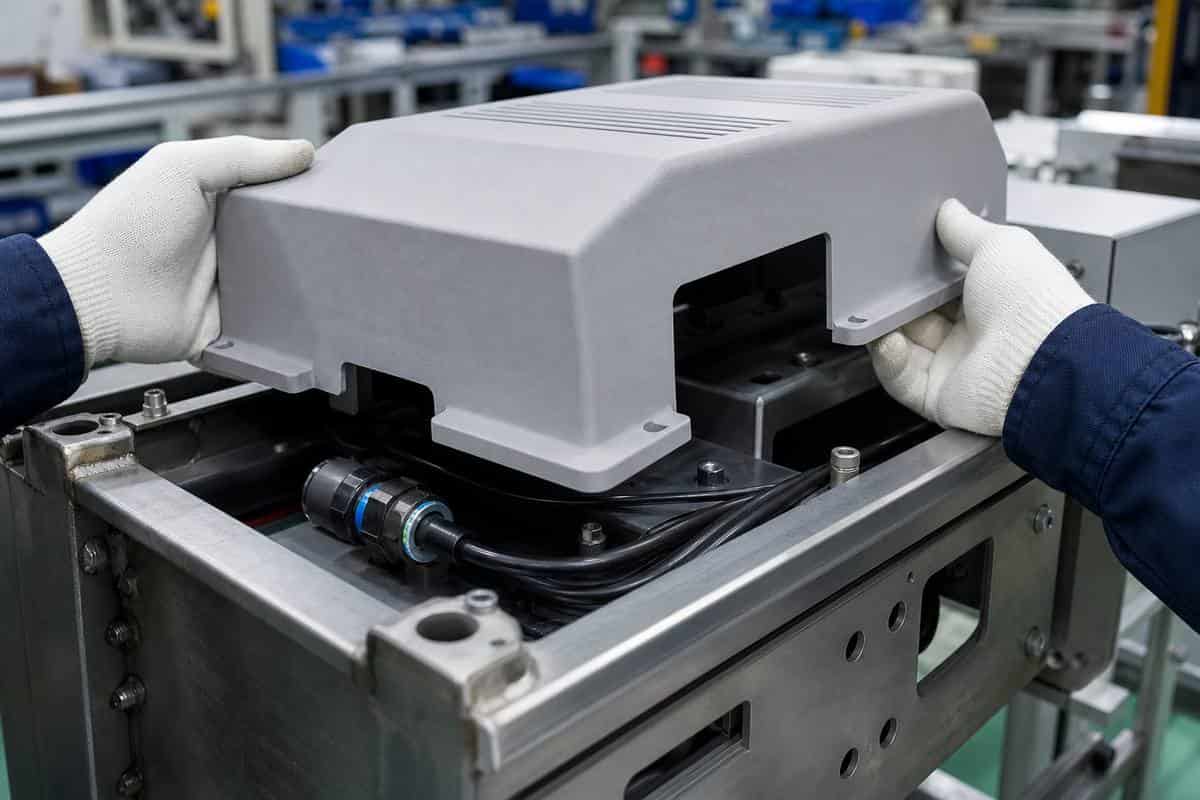
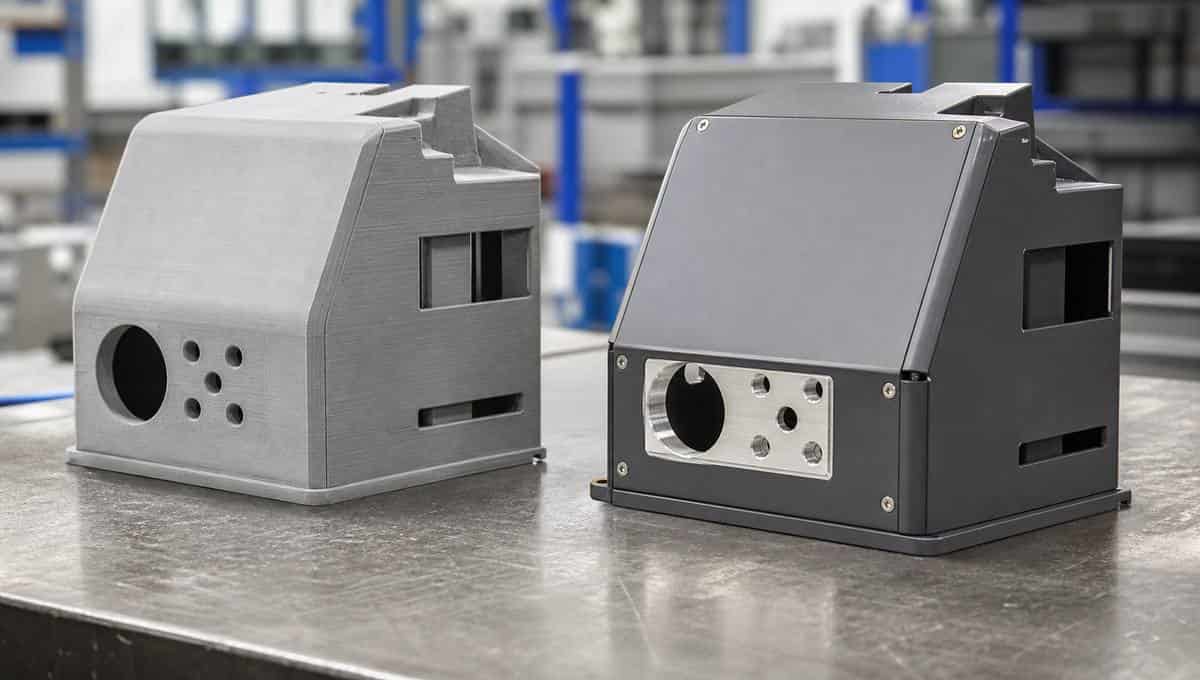
Find the Design Problem Before Tooling, Fabrication or Assembly Does.
A hidden interference, inaccessible fastener or incorrect enclosure proportion is inexpensive to change in a prototype—and expensive to discover after production begins. Yishang coordinates 3D printing for B2B product teams that need a physical answer before committing to the next manufacturing step.
CNC and sheet metal support when the design is ready
START WITH THE DECISION
A Useful Prototype Should Answer a Specific Production Question.
Printing a model without defining the decision can produce a good-looking sample that teaches your team very little. We begin with what you need to confirm next.
01
Will It Fit?
Check external dimensions, mounting points, clearances and the relationship to surrounding components.
02
Can It Be Assembled?
Test fastener access, insertion direction, hand clearance and the order in which components must come together.
03
Can It Be Used and Serviced?
Review openings, controls, cable paths, maintenance access and areas a user or technician must reach.
04
Does the Product Look Right?
Evaluate proportion, visible gaps, surface transitions and the overall form before a costly production commitment.
SEND THE CONTEXT, NOT JUST THE MODEL
A 3D File Shows the Shape. Your Assembly Context Shows What Must Work.
A useful review needs the current model plus the components, interfaces and decision surrounding it.
01
Current 3D Model
Provide the latest file revision and identify any areas still under development.
02
Mating Components
Share drawings, models, samples or dimensions for the items that connect to the prototype.
03
Critical Interfaces
Mark mounting points, openings, fits, contact surfaces and clearances that affect the decision.
04
Use Conditions
Explain the handling, load, temperature, environment or limited test the sample must support.
05
Quantity and Timing
Tell us how many samples are needed, who will review them and when the decision is required.
06
Approval Question
State what your team must be able to approve after receiving the prototype.
CATCH THE PROBLEM WHILE IT IS STILL CHEAP TO CHANGE
Printed Samples Can Reveal the Assembly Problems a Screen Often Hides.
A model may look correct in CAD while still being awkward, inaccessible or incompatible in the real product.
01
Fasteners Cannot Be Reached
The screw exists in the model, but the tool or operator cannot approach it during assembly.
02
Cables and Connectors Collide
Nominal space is available, but bending radius, connector length or routing blocks installation.
03
Doors and Covers Interfere
Hinges, removable panels or service covers do not have enough motion or removal clearance.
04
Hands Cannot Complete the Assembly
There is room for the hardware but not enough space for fingers, tools or the required assembly movement.
05
Visible Gaps Look Wrong
A technically acceptable gap or transition appears inconsistent when the physical product is viewed from normal angles.
06
Mating Features Use Different Assumptions
Two components were designed around different references, leaving holes, surfaces or clips out of alignment.
USE THE PROTOTYPE FOR THE RIGHT EVIDENCE
A Printed Sample Can Prove Fit—but It Cannot Automatically Prove Production Performance.
We distinguish what the prototype can demonstrate from what must still be confirmed in the final material and manufacturing process.
THE PRINT CAN HELP YOU CONFIRM
Overall size and proportion
Basic assembly fit
Fastener and service access
Cable and component clearances
Assembly sequence
Visible form and gap direction
THE PRINT DOES NOT AUTOMATICALLY CONFIRM
Final sheet metal or machined strength
Production machining tolerances
Sheet metal springback or weld distortion
Final coating or polished appearance
Long-term heat, chemical or wear performance
Production batch repeatability without process validation
This distinction prevents a successful prototype from creating false confidence about the final manufactured product.
MOVE FROM PROTOTYPE TO MANUFACTURABLE METAL
When the Design Is Approved, We Help Translate It Into CNC and Sheet Metal Production.
A printable shape is not automatically an efficient metal product. Yishang reviews the approved design again for the material, fabrication route, interfaces and order volume required for production.
01
Rebuild Walls and Features for Metal
Printed walls, clips and internal supports may need to become bent panels, welded structures, machined blocks or separate components.
02
Define the Joining Strategy
Fasteners, inserts, welding and assembly access are reviewed around service needs and the real production sequence.
03
Protect the Critical Interfaces
Mounting faces, holes, shafts and mating features are assigned suitable manufacturing and inspection requirements.
04
Plan Finish, Assembly and Packing
Visible surfaces, coating, labels, hardware, trial assembly and export protection are included in the production review.
MAKE THE FIRST REVIEW USEFUL
Send the Information That Explains What the Prototype Must Prove.
We can review the project more accurately when the file, assembly context and approval decision arrive together.
The current model plus any drawing or notes that control key dimensions.
02
Prototype Purpose
Fit check, assembly review, appearance approval, limited function or another defined decision.
03
Mating Information
Surrounding components, fasteners, cables, hardware and interfaces involved in the review.
04
Use Conditions
Any handling, load, temperature, environment or test conditions relevant to the sample.
05
Quantity and Deadline
Required sample quantity, review date and expected next manufacturing stage.
06
Future Production Plan
Whether the approved design may later move to CNC machining, sheet metal, assembly or another process.
BEFORE YOU SEND THE MODEL
Questions Your Team May Have Before Ordering a Prototype.
Can we order one sample before repeat production?
Yes. A sample order can be the first step in a B2B development or production program. The prototype can be reviewed before another sample or the next manufacturing stage is approved.
Which printing process and material should we choose?
The appropriate route depends on what the prototype must prove, its geometry, use conditions, finish expectations, quantity and timing. We confirm suitable options after reviewing the model and application instead of using one recommendation for every project.
Can Yishang help convert the approved prototype into metal?
Yes. When the project is suitable, we can review the design separately for CNC machining, sheet metal fabrication, welding, finishing, assembly, inspection and export packing.
B2B PROTOTYPE AND DESIGN VERIFICATION
Send the Model—and Tell Us What Your Team Must Be Able to Approve.
Include the revision, sample quantity, mating information, use conditions, deadline and expected next manufacturing step. We will review the questions required for a useful prototype quotation.