
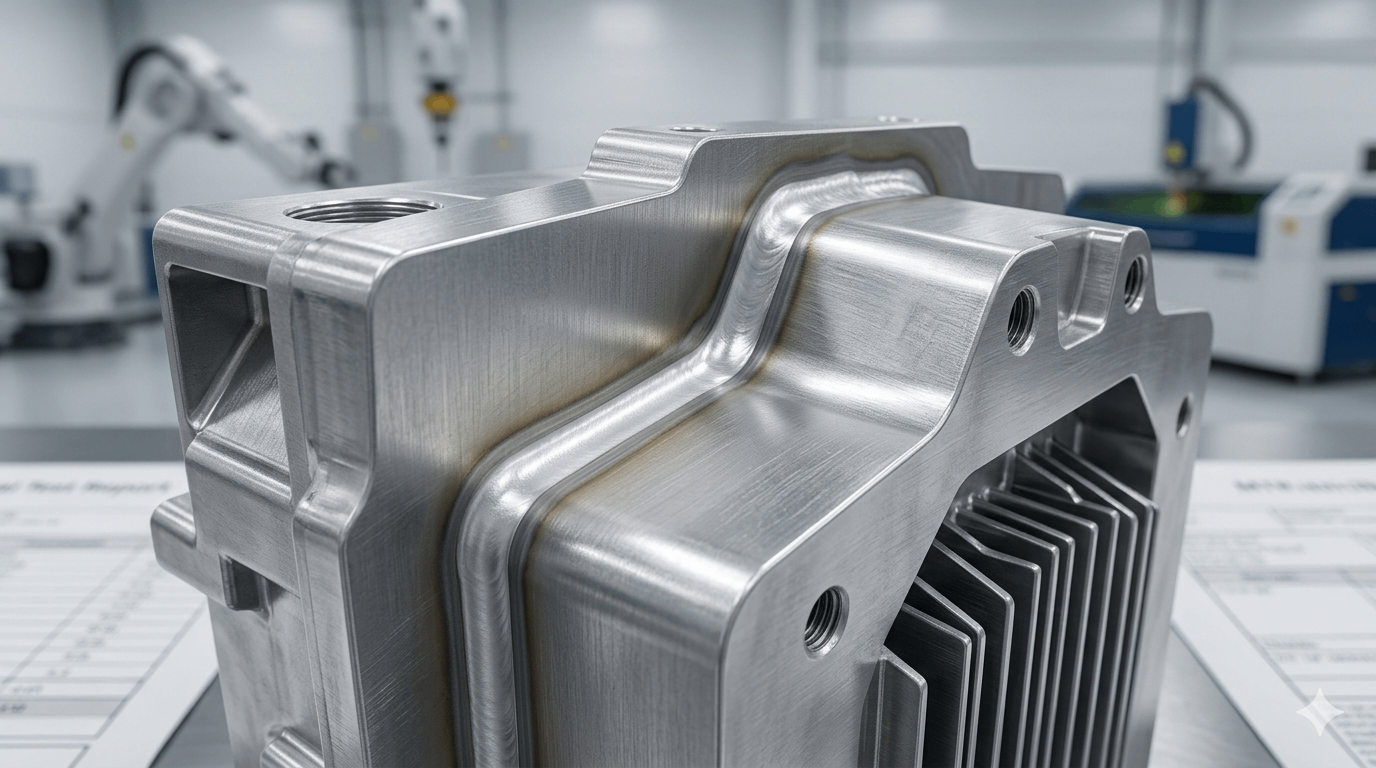
High-stakes procurement isn’t just about finding a vendor; it’s about avoiding that one phone call no one wants to take—the one where a batch of critical enclosures starts leaking in the field. For overseas wholesale buyers, choosing 4047 aluminum isn’t a mere line item on a material list. It is a calculated move that safeguards your manufacturing yield and keeps your supply chain from grinding to a halt. Often labeled AlSi12 in technical circles, this alloy is the quiet powerhouse behind the joints that simply cannot afford to fail.
When you are sourcing for something as intricate as a solar battery enclosure or a high-spec electrical meter box, the metal’s behavior under heat dictates your bottom line. At YISHANG, we’ve seen how the right material can turn a logistical nightmare into a smooth production run. This guide cuts through the academic jargon to explain why this specific alloy works the way it does, helping you bypass the expensive trial-and-error phase that plagues so many high-volume projects.
What started as a niche brazing filler has now moved to the center stage of EV infrastructure and telecommunications. The magic of 4047 lies in its silicon content, which creates a narrow solidification range that other aluminum alloys can’t match. This isn’t just a fun fact for metallurgists; it is the physical reason why your high-volume orders won’t suffer from the dreaded hot cracking that ruins structural durability.
1. The Physics of a Perfect Joint: Why AlSi12 Lowers Your Production Risk
The Eutectic Point sounds like a term for a lab, but in a busy factory, it’s a lifesaver. Aluminum-silicon alloys like 4047 hit their melting point at a sharp 577°C. This means the metal transitions from liquid to solid almost instantly. For anyone making a quick inquiry about manufacturing efficiency, this rapid “freeze” is exactly why 4047 is so much more forgiving to weld and braze than the 5xxx or 6xxx series.
From a procurement perspective, this translates into fewer parts ending up in the scrap bin. Imagine you are producing a junction box NEMA enclosure with razor-thin tolerances. You need a filler that acts more like water and less like molasses. 4047 flows into those microscopic gaps through capillary action with ease. This ensures that every enclosure electrical meter box leaves your warehouse with an airtight seal, keeping moisture exactly where it belongs: outside.
There is another side to this alloy that often gets overlooked: how it treats the parts it’s joining. Because 4047 melts at a lower temperature than pure aluminum, you are putting far less thermal stress on the rest of the assembly. The Heat-Affected Zone (HAZ) stays small, which is a major win for anyone worried about the warping that can ruin a control station enclosure. Keeping the frame’s original geometry means a much faster pass rate when the quality inspectors show up.
Technical Data: Chemical Composition (%)
| Element | Silicon (Si) | Iron (Fe) | Copper (Cu) | Manganese (Mn) | Magnesium (Mg) | Aluminum (Al) |
|---|---|---|---|---|---|---|
| Value | 11.0 – 13.0 | 0.8 max | 0.30 max | 0.15 max | 0.10 max | Remainder |
The volume stability of 4047 is where things get really interesting. Most metals shrink as they cool, which creates internal tension. Silicon, however, expands slightly during solidification. In the 4047 matrix, this expansion effectively “plugs the holes” left by the aluminum’s contraction. For a solar battery enclosure that faces constant temperature swings, this internal balance is what prevents the micro-fractures that eventually lead to system-wide failures.
At YISHANG, we’ve watched companies transform their field reliability just by making the switch to 4047 for their mount electrical enclosure designs. It’s essentially buying insurance against future warranty claims. Taking this proactive stance on material science is the hallmark of a professional procurement strategy in an age where energy storage and high-tech housing demand perfection.
2. Choosing Your Battle: 4047 vs. 4043 in Real-World Manufacturing
When you’re staring at a blueprint for an electrical enclosure, the temptation is to stick with what you know—maybe a stainless steel enclosure or a carbon steel enclosure. Stainless is great for rust, sure, but it’s a heavyweight that’s notoriously stubborn to shape. 4047 aluminum offers a lightweight path that, when brazed correctly, gives you that same “zero-leak” performance without the brutal logistics costs that come with heavier metals.
If you’re comparing this to a galvanized steel enclosure, 4047 brings superior thermal conductivity to the table. This is a non-negotiable feature for enclosures solar battery systems that run hot. While enclosure carbon steel might look cheaper on a quote, the hidden costs of post-processing, galvanization, and powder coating quickly eat into those savings. 4047 usually requires less finishing, which gets your industrial projects out the door and into the market much faster.
The real debate usually comes down to 4043 vs 4047. 4043 is the common “handyman” of fillers, but it lacks the precision needed for high-pressure seals. For a push button enclosure that needs to survive high-pressure jet washes, 4047’s 12% silicon is the technical baseline for meeting NEMA 4 or 4X standards. That small difference in silicon is often the only thing standing between a successful export and a shipping container full of rejected parts.
Comparative Matrix: 4047 vs. 4043
| Feature | 4047 Aluminum (AlSi12) | 4043 Aluminum (AlSi5) | Procurement Impact |
|---|---|---|---|
| Silicon Content | 12% | 5% | 4047 has 30% higher fluidity |
| Melting Range | Narrow (577°C – 582°C) | Wide (573°C – 632°C) | 4047 minimizes hot cracking |
| Corrosion Resistance | Excellent | Good | 4047 is better for marine/outdoor |
| Anodizing Color | Gray/Black | White/Light Gray | 4047 is for performance, not decor |
We often talk to our wholesale partners about the Total Cost of Ownership. It’s easy to get fixated on the raw material knowledge center stats, but the real profit is in the reduction of late-stage defects. Even if 4047 carries a slight premium, the ROI becomes obvious when you factor in the energy saved from lower brazing temperatures and the sheer drop in rework.
Using 4047 aluminum for manufacturing is really about removing the variables that keep production managers up at night. In a global market where supply chains are unpredictable, having an easy-to-weld material keeps your lines moving. Whether you’re working on a hybrid steel enclosure aluminum project or a dedicated AlSi12 station, YISHANG is here to help you navigate these technical trade-offs to ensure the final product hits every safety and performance mark.
3. Engineering Excellence: What Happens Inside the Workshop
The biggest hurdle with 4047 aluminum is hydrogen porosity. Because the alloy solidifies so quickly, any moisture or oil on the surface gets trapped, turning into tiny gas bubbles that stay “locked” in the joint. This means your quality is only as good as your fabricator’s cleaning habits. A procurement manager should verify that their supplier uses a strict degreasing and oxide-removal protocol; otherwise, the joint integrity is a roll of the dice.
At YISHANG, we rely on specialized Vacuum Brazing and Controlled Atmosphere Brazing (CAB) to get the most out of 4047. In a vacuum, the metal flows perfectly without the need for corrosive fluxes. This is a huge deal for the medical and semiconductor industries where even a trace of flux residue can lead to post-production corrosion. For high-volume solar battery enclosure orders, this clean process is the difference between a long-lasting product and one that fails prematurely.
Mechanical Properties (Typical)
- Tensile Strength: 130 – 150 MPa
- Yield Strength: ~60 MPa
- Brinell Hardness: 45 – 55 HB
- Electrical Conductivity: 41% IACS
- Density: 2.68 g/cm³
Sourcing high-quality 4047 aluminum usually comes down to one thing: batch consistency. If the silicon content drifts by even 1%, the melting characteristics change, and your automated lines will start producing inconsistent results. Wholesale buyers should expect a Material Test Report (MTR) with every single shipment. That transparency is your shield against unexpected downtime and ensures the alloy behaves exactly the same way every time it hits the production floor.
4. Questions We Hear Every Day About 4047 Aluminum
Can we heat treat 4047 for more strength? Not really. 4047 gets its strength from the high silicon content and how it hardens as a solid solution. It’s built for flow and sealing, not for carrying heavy structural loads like a crane beam.
Is it okay for welding 6061-T6? Actually, it’s one of the best moves you can make. Using 4047 takes the sting out of the heat-sensitivity issues common with 6xxx series alloys, significantly lowering the risk of cracks during cooling.
What standards should I be looking for? At a minimum, ensure the material meets AWS A5.8 (BAlSi-4) and AMS 4185. We also make sure every batch at YISHANG is RoHS compliant, which is mandatory for any serious global export operation.
Why does it look so dark after anodizing? That 12% silicon doesn’t play well with anodizing solutions. It leaves behind a dark gray or black “smut.” If the look of the part is the top priority, 4043 is your friend. If you need a leak-proof seal, stay with 4047 and consider a different finish.
Getting the best result often starts long before the first spark flies. Talking to your manufacturing partner during the design phase can reveal small adjustments—like joint clearances—that make a massive difference in how 4047 performs. With 26 years in the trenches, YISHANG specializes in turning those blueprints into real-world products without the technical friction.
If you are looking to step up your product game with materials that actually perform under pressure, let’s talk. From high-tech meter boxes to rugged control station enclosures, 4047 aluminum is the reliability your customers are waiting for. Reach out to YISHANG today, and we can figure out how to weave this alloy into your next run.
Ready to see what precision material selection can do for your bottom line? Send your inquiry today to YISHANG and let’s get to work.