
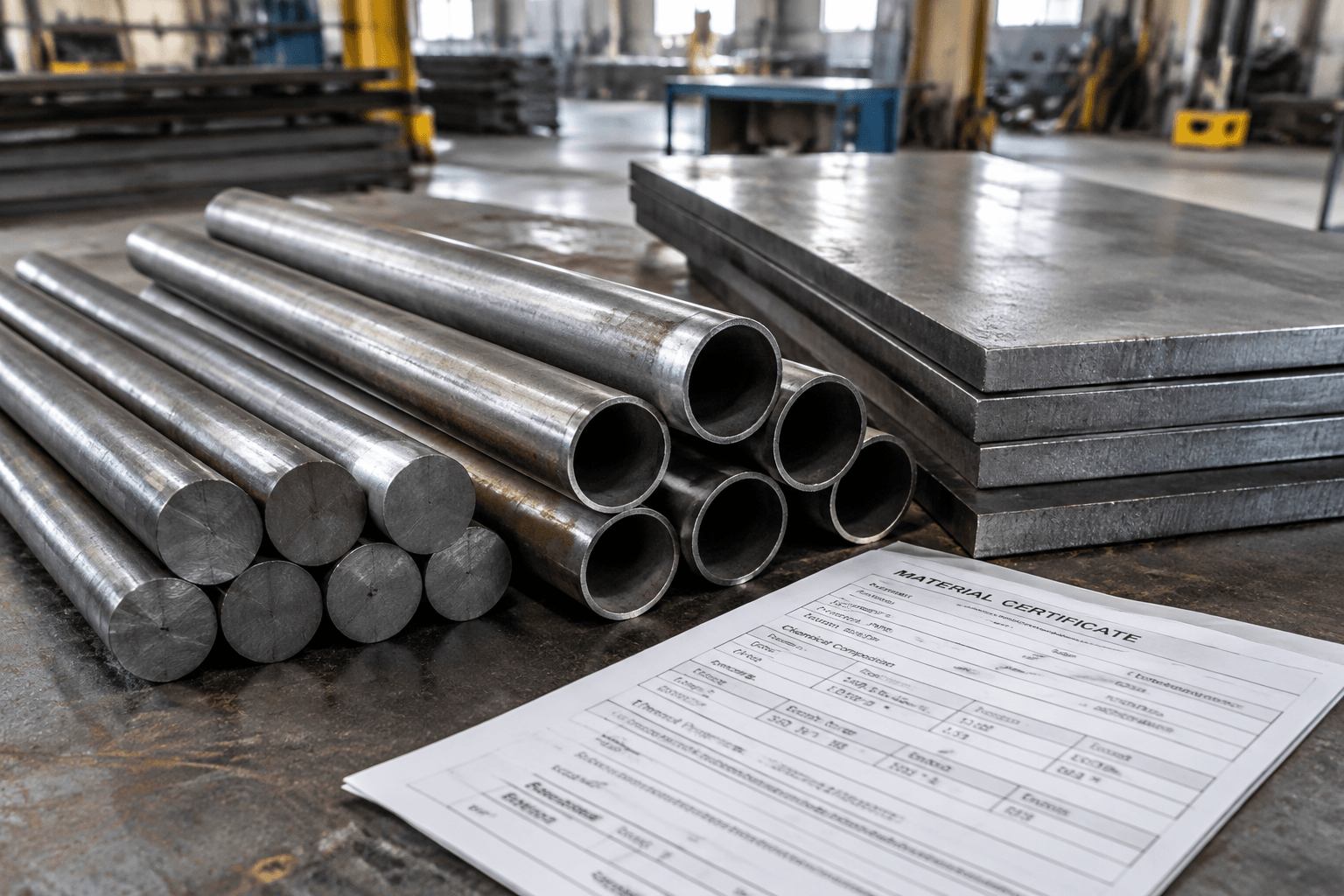
4130 metal is a low-alloy chromium-molybdenum steel commonly supplied as bar, tube, or plate. The name identifies an alloy grade, not a guaranteed set of mechanical properties: the product standard, dimensions, and delivered condition determine what a buyer should expect and verify.
In brief: AISI 4130, often called 4130 chromoly, is a chromium-molybdenum steel used for components that need a considered balance of strength, toughness, and fabrication options. It may suit structural, transportation, or machinery parts, but suitability depends on the design loads, product form, condition, joining route, and verified material documentation.
What 4130 Means: Grade, Standard, Form, and Condition
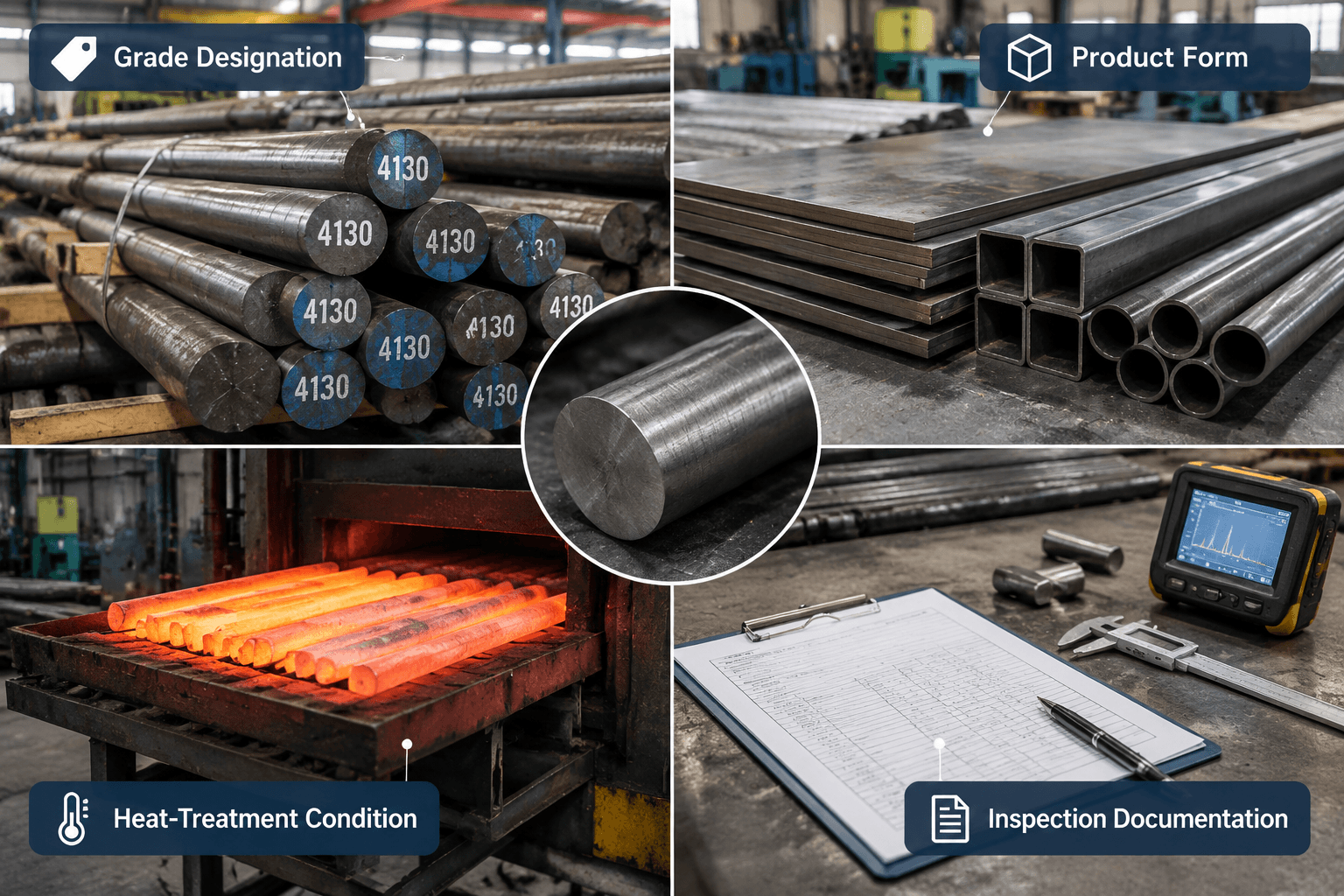
“4130” is a material designation in the AISI/SAE alloy-steel naming system. “Chromoly” is a common shortened name referring to the chromium and molybdenum alloying elements; it is not, by itself, a complete purchase specification. A designation identifies the intended alloy family, while the applicable product standard defines requirements for a particular product and supply route. The product form describes whether the material is bar, tube, plate, or another shape. The delivered condition describes how it has been processed and what properties must be demonstrated.
These distinctions matter because a drawing that says only “4130” can leave open which product requirements apply, what condition is acceptable, and what evidence must accompany the material. ASTM A29 is one specification buyers may encounter for hot-wrought alloy-steel bars, but naming it does not make every 4130 product form subject to the same requirements. Confirm the standard that applies to the purchased form and the project’s acceptance criteria.
The following chemistry ranges are a general reference reported for 4130; they are not a substitute for the governing product specification or the supplied heat analysis:
| Element | General composition reference, % |
|---|---|
| Carbon | 0.28–0.33 |
| Manganese | 0.40–0.60 |
| Phosphorus | Below 0.035 |
| Sulfur | Below 0.040 |
| Silicon | 0.15–0.35 |
| Chromium | 0.80–1.10 |
| Molybdenum | 0.15–0.25 |
Acceptance depends on the applicable specification, product form, and purchase requirements. 25CrMo4 and other international grades are sometimes used as cross-references to 4130, but similar alloy descriptions do not establish automatic equivalence. Compare the governing standards, composition limits, product requirements, condition, and required test results before approving a substitution.
Product Forms and Conditions Change the Decision
4130 is encountered in forms such as bar, tube, and plate. Form affects more than how a part is cut: it changes the starting geometry, the relevant product requirements, and potentially the properties measured through a section. A tube used for a fabricated assembly, for example, is not interchangeable by default with bar stock specified by an alloy name alone. Confirm form and dimensions against the design and the applicable standard.
Condition is equally important. Material described as annealed, normalized, quenched and tempered, or simply “as supplied” may have different hardness, strength, toughness, machinability, and weldability. The exact meaning and verification requirements should be established by the governing specification and order documents. Section size and the location from which a test specimen is taken can also affect reported results. Therefore, a value from a data sheet should not be treated as a guarantee for every size, form, or production lot.
| Design or production need | What to resolve before selecting material |
|---|---|
| Extensive machining | Confirm the supplied condition and required final properties; determine whether machining occurs before or after any property-changing treatment. |
| Welded assembly | Review the material condition, joint design, welding procedure requirements, and any specified post-weld controls. |
| Load-bearing service | Set mechanical acceptance criteria for the relevant product and section, then verify test documentation. |
| Close-fitting or finished part | Specify dimensions, surface requirements, and inspection points independently of the alloy designation. |
Choosing an easier-to-machine starting condition may help with material removal, but the complete manufacturing route must still deliver the condition and properties required in service. Where heat treatment or welding is part of the route, plan its effects on dimensions, distortion, inspection, and final acceptance rather than treating material selection as a standalone decision.
Comparing 4130 With A36, 4140, and 4340
These grades serve different design and supply needs. A comparison should start with the specified requirements, not with a claim that one grade is universally stronger, easier to weld, or an acceptable replacement. The table is a qualitative screening guide, not a property ranking.
| Material | General distinction | Questions before substitution |
|---|---|---|
| A36 | A general-purpose carbon structural steel designation, rather than the same chromium-molybdenum alloy family as 4130. | Does the design require the alloy composition, condition, or mechanical acceptance criteria specified for 4130? |
| 4130 | Chromium-molybdenum low-alloy steel commonly considered where a balance of strength, toughness, and fabrication options is sought. | Which form, condition, standard, section, and test requirements apply to the actual part? |
| 4140 | A related chromium-molybdenum alloy with a higher carbon range than 4130 in common grade descriptions; this can change hardenability and fabrication behavior. | Can the joint and manufacturing procedure accommodate the selected grade and condition, and do verified properties meet the design? |
| 4340 | A nickel-chromium-molybdenum alloy with a different alloy balance and hardenability profile from 4130. | Are its composition, processing route, availability, and specified properties approved for this application? |
4130 may be a candidate when the design calls for an alloy steel and the component’s fabrication route is compatible with its specified condition. A36 may be appropriate where the governing structural requirements call for that material, while 4140 or 4340 may be considered for other property or hardenability needs. None is a drop-in replacement based on grade name alone. Engineering approval should account for loads, geometry, joining, environment, inspection, and the purchase standard.
Fabricating 4130: Separate the Process Decisions
Machining
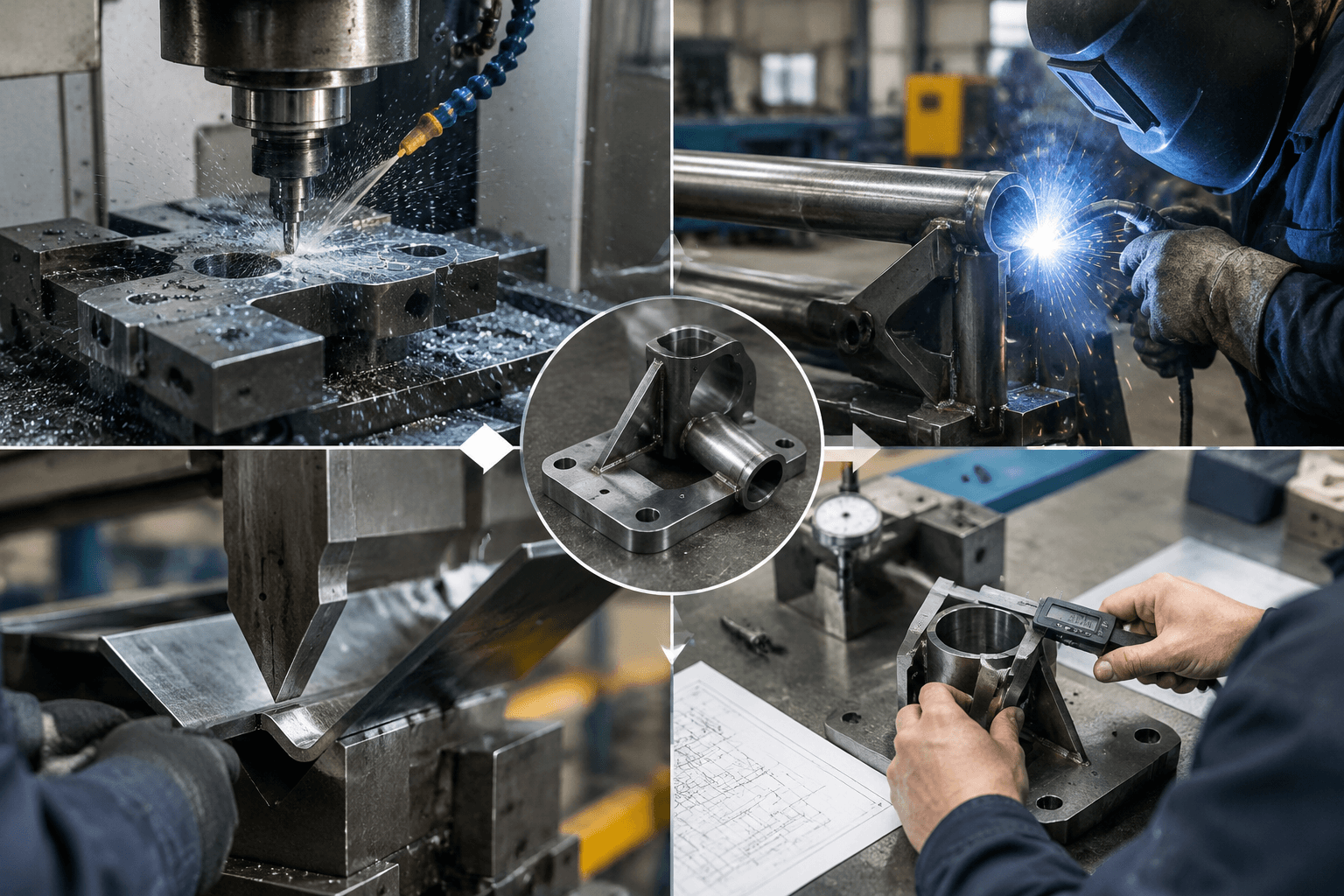
Machining response depends on condition, hardness, section, and the operation. Softer supplied conditions are generally considered more workable than harder treated material, but no single machinability rating or cutting setup applies to all 4130 stock. Plan the sequence around the required final condition: removing material before treatment may reduce machining difficulty, while later processing may affect dimensions and require finishing or reinspection. For custom CNC machining, provide the grade, form, condition, drawing, and any property requirements together.
Welding
4130 can be welded, but the grade name alone does not define a production procedure. Weld planning should address procedure qualification where required, preheat and interpass control, compatible filler selection, hydrogen control, joint details, restraint, and any required post-weld treatment. The applicable controls depend on material condition, thickness, geometry, service requirements, and project code or specification. Do not adopt a universal temperature or filler recommendation without engineering review of the actual joint.
Forming
Formability depends on product form, condition, thickness or section, bend geometry, and the amount of deformation. Confirm that the selected starting condition and process can achieve the intended shape without compromising required properties. For critical bends or formed sections, establish the method and acceptance criteria during design review rather than assuming all material sold as 4130 will respond identically.
Inspection
Inspection should follow the purchase and drawing requirements. Depending on the job, this may include material identification and chemistry, mechanical test results, hardness where specified, dimensional checks, surface condition, weld examination, and traceability to the supplied material. A certificate or report is useful only when it corresponds to the actual product, heat or lot, form, condition, and required acceptance criteria.
4130 Metal Purchase Specification: Five Fields to Confirm
| Field | What to state or verify |
|---|---|
| 1. Grade and standard | Identify the material designation and applicable product specification. Define how proposed cross-standard substitutions will be reviewed and approved. |
| 2. Form and dimensions | Specify bar, tube, plate, or other required form; include dimensions, tolerances, and any relevant surface or cut-piece requirements. |
| 3. Delivered condition | State the required condition and any constraints on processing. Make clear whether properties apply as supplied or after the specified manufacturing route. |
| 4. Required properties and route | List mechanical or hardness criteria when required, along with machining, welding, forming, finishing, and service considerations that affect acceptance. |
| 5. Evidence and acceptance | Define required chemistry and mechanical reports, traceability, dimensional or weld inspection, and the documents needed for review before production release. |
Price and weight cannot be established from “4130 metal” alone. They depend on product form, dimensions, quantity, condition, and the market quotation. Likewise, an equivalent-grade proposal should be assessed against the complete specification rather than accepted from a cross-reference label.
For an engineering review or custom-part inquiry, share the drawing or 3D file, required product form and dimensions, material condition and applicable standard, target mechanical or hardness requirements, intended service conditions, fabrication route, assembly requirements where applicable, and required inspection documents and acceptance criteria. Yishang supports OEM and ODM B2B projects and can review these details before production planning to align the material choice, manufacturing route, and verification requirements.
Frequently Asked Questions
What design conditions make 4130 steel suitable for a component?
It is used in components where the design supports a chromium-molybdenum steel and the selected form and condition meet the required loads and fabrication needs. Structural, transportation, and machinery parts are possible examples, but application approval depends on geometry, service environment, joining, and verified properties.
Is 4130 the same as 25CrMo4?
They are often cross-referenced, but the names do not make them automatically interchangeable. Compare the applicable standards, chemistry limits, product form, condition, mechanical requirements, and documentation, then obtain approval for any substitution.
What is the practical difference between 4130 and A36, 4140, or 4340?
A36 is a general-purpose carbon structural steel, 4140 is a related chromium-molybdenum alloy with a different carbon range, and 4340 has a nickel-chromium-molybdenum alloy balance. These differences affect specification and processing decisions; select or substitute only after checking the design requirements and verified material condition.
Can 4130 be welded?
Yes, but production controls must be set for the specific grade, condition, section, joint, and service requirements. Confirm the applicable welding procedure, preheat and interpass controls, filler compatibility, hydrogen controls, and any required post-weld treatment before production.