
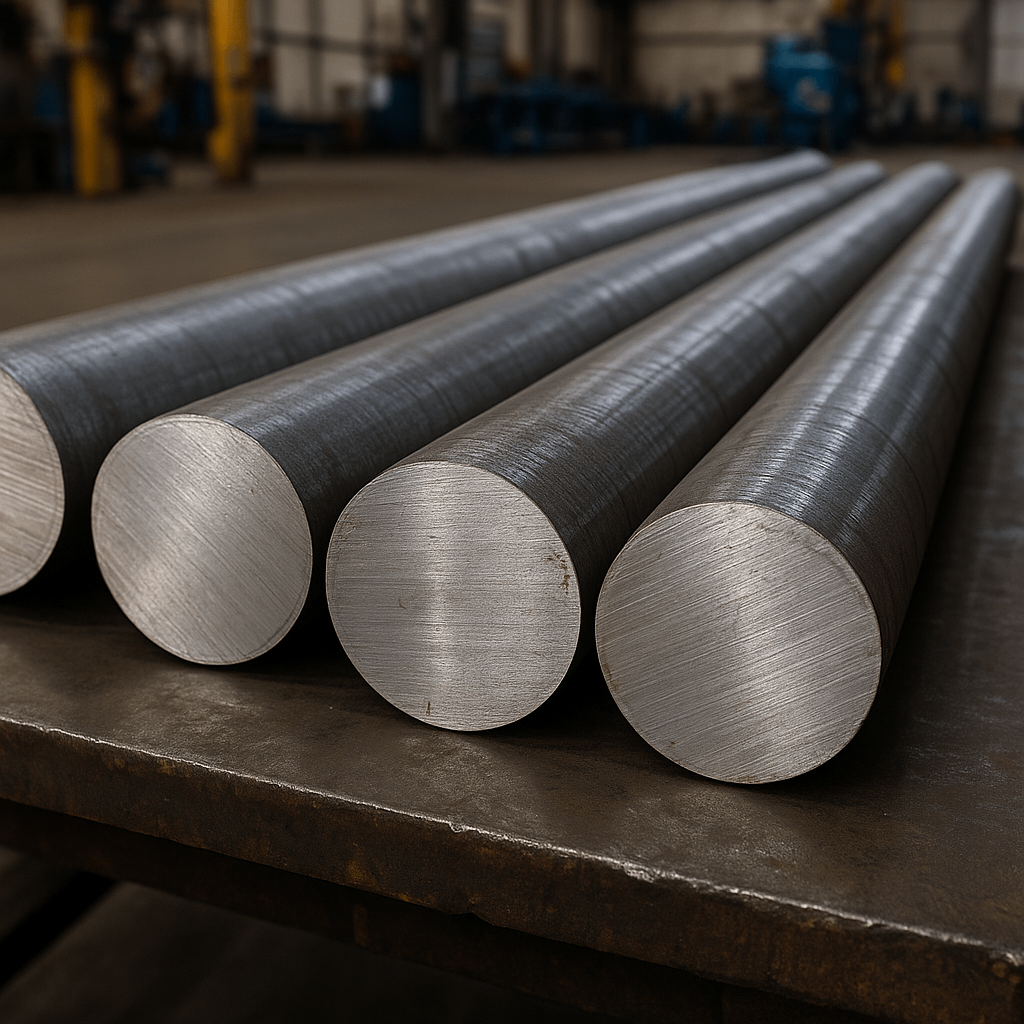
Introduction: Why Material Selection Matters in Industrial Procurement
For industrial procurement professionals, choosing the right steel alloy is rarely just a material decision. It affects mechanical performance, production compatibility, cost control, machining time, and delivery stability. Among chromium-molybdenum steels, 4130 and 4140 are two of the most common options in global sourcing. They may look similar at first glance, but they are not interchangeable.
This guide compares 4130 and 4140 from a practical production perspective. It focuses on fabrication behavior, mechanical performance, heat treatment, and the sourcing questions buyers often raise before placing orders. At YISHANG, we support OEMs and industrial buyers working with these materials across automotive components, agricultural tooling, energy systems, and structural fabrication. The goal here is simple: reduce selection risk and make alloy choice easier to justify.
Composition Differences: 4130 vs 4140 Steel Chemistry in Context
4130 steel, often classified as AISI 4130 or ASTM A519, contains approximately 0.30% carbon. Chromium and molybdenum improve strength, fatigue resistance, and hardenability, while the lower carbon level helps preserve ductility, weldability, and machinability. That is why 4130 is often used when fabrication and welding are important parts of the production route.
4140 chromoly steel, commonly designated as AISI 4140 or ASTM A29 / SAE 4140, contains around 0.40% carbon. That additional carbon gives it higher tensile strength, deeper hardening response, and better surface durability. It is well suited for press-fit shafts, tool bodies, high-torque gears, and other components that must resist heavy loads or wear.
For procurement teams, this chemistry difference is not academic. The higher carbon and alloy content in 4140 affects weldability, heat treatment control, machining difficulty, and material cost. In simple terms, 4130 is often friendlier for welding and fabrication, while 4140 demands more process control but delivers stronger mechanical performance.
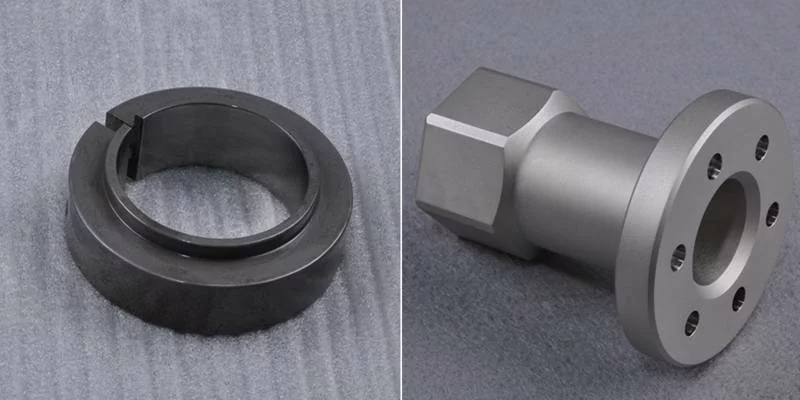
Mechanical Behavior: Performance Under Load and in the Field
After heat treatment, 4140 steel tensile strength typically reaches 950–1100 MPa. Its Rockwell hardness can exceed 50 HRC, which makes it suitable for wear-resistant tooling, mechanical power transmission, press-molded dies, and load-bearing joints. Its higher yield strength also gives it better resistance under static load.
4130 steel is not as strong as heat-treated 4140, but it offers a different advantage: toughness and flexibility. In normalized condition, 4130 tensile strength is usually around 560–670 MPa, and it can reach up to about 850 MPa when hardened. Its higher elongation, roughly 20–25%, improves shock absorption and cyclic fatigue behavior. This makes it useful for UAV frames, robotic assemblies, aerospace support parts, and similar structures that need strength without excessive brittleness.
| Property | 4130 Steel (AISI 4130) | 4140 Steel (AISI 4140) |
| Carbon Content (%) | ~0.30% | ~0.40% |
| Tensile Strength (MPa) | 560–670 (up to 850 HT) | 950–1100 (heat treated) |
| Yield Strength (MPa) | ~460 | ~650–700 |
| Hardness (HRC) | 18–28 (annealed) | 28–32 (annealed), 50+ (HT) |
| Elongation (%) | ~20–25% | ~10–15% |
| Weldability | Excellent | Moderate (requires preheat) |
Processing and Fabrication: Weldability, Machinability, and Heat Treatment
4130 steel is generally easier to weld. It needs minimal preheat in many applications, and post-weld cracking is less common when the process is controlled properly. This is why 4130 is widely used for aerospace tubing, roll cages, and industrial frame assemblies. Recommended TIG welding parameters include 90–130 amps for 1.6–2.4 mm thickness using ER80S-D2 filler, with interpass temperature controlled below 150°C.
4140 steel requires more caution. Preheating to 200–400°C is essential to reduce hard zones and cracking risk, especially for sections above 6 mm. TIG or MIG welding with ER110S-G filler is common. Suggested parameters include 140–180 amps for 3.0 mm+ sections, followed by post-weld tempering at 540–650°C to restore ductility.
Machinability is acceptable for both materials, but their behavior differs. 4130 machines well in its annealed state, with smoother chip formation and lower tool wear. 4140, especially in heat-treated condition, usually requires slower feeds, more rigid setups, and sharper tooling.
Both steels respond well to oil quenching and tempering. 4130 heat treatment helps balance strength and flexibility. 4140 offers deeper hardening and better toughness, which is useful for load-critical components.
Supply Chain and Procurement Considerations
4140 usually carries a 10–20% price premium over 4130 because of its higher alloy content and processing requirements. Even so, it can reduce total cost in some applications if its higher strength or wear resistance eliminates secondary operations.
4130 often saves cost through easier fabrication, lower machining difficulty, and faster sourcing. Its weldability and adaptability make it useful when speed, design flexibility, and batch-based prototyping matter. For buyers, the decision should not be based on unit material price alone. It should consider processing cost, lead time, service life, and the risk of failure in the final application.
Common Mistakes in Alloy Selection and Fabrication
A European chassis manufacturer once used 4140 for a welded frame without proper preheat. Weld failures rose to 12%. After switching to 4130, the issue was resolved.
In another case, an industrial client used 4130 for high-load shafts. Premature wear appeared in service. The better solution was 4140 steel with localized induction hardening, which improved durability by 400%.
These examples show why alloy selection should be tied to actual function. 4130 and 4140 both have clear strengths, but using either one in the wrong role can lead to redesign, downtime, or scrap.
Application Matrix: 4130 vs 4140 Steel by Use Case
| Application Scenario | Recommended Steel |
| Welded tubular structures | 4130 |
| Induction-hardened tool spindles | 4140 |
| Low-volume, adjustable tooling | 4130 |
| Surface-wear-critical dies | 4140 |
| Aerospace-grade framework | 4130 |
| High-precision shafts (pre-hardened) | 4140 |
| Robotic joints and frame links | 4130 |
This matrix gives buyers a quick reference, but it should not replace engineering review. Load path, machining sequence, weld setup, heat treatment, and final operating conditions all influence the best alloy choice.
FAQ: Buyers’ Most Common Questions About 4130 and 4140 Steel
Q1: Is 4130 easier to weld than 4140?
Yes. 4130 usually requires little or no preheat, while 4140 needs stricter heat control to avoid cracking.
Q2: Can both be heat treated?
Yes. 4130 responds well to normalization or tempered cycles, while 4140 is well suited for quench and temper.
Q3: What’s the difference in machinability?
4130 is easier to machine in annealed form. Pre-hardened 4140 requires slower feed rates and better tooling.
Q4: Are they interchangeable in all applications?
No. They are similar, but their mechanical and processing traits make each alloy better suited to different use cases.
Q5: What are the international equivalents?
4130 ≈ 25CrMo4 (EN); 4140 ≈ 42CrMo4 (EN), 1.7225 grade.
Summary: Choosing Between 4130 and 4140 for Industrial Projects
There is no universal winner between 4130 and 4140. 4130 is usually better for weldable structures, prototyping, and fabrication-friendly designs. 4140 is stronger in high-load, wear-critical applications where deeper hardening and surface durability matter.
For procurement teams, the safest choice comes from matching the alloy to the actual function: welding, machining, heat treatment, load level, and service environment.
If your project requires 4130 or 4140 steel parts, YISHANG can review your BOM, CAD files, or drawings and help identify the more practical alloy direction before production begins.