
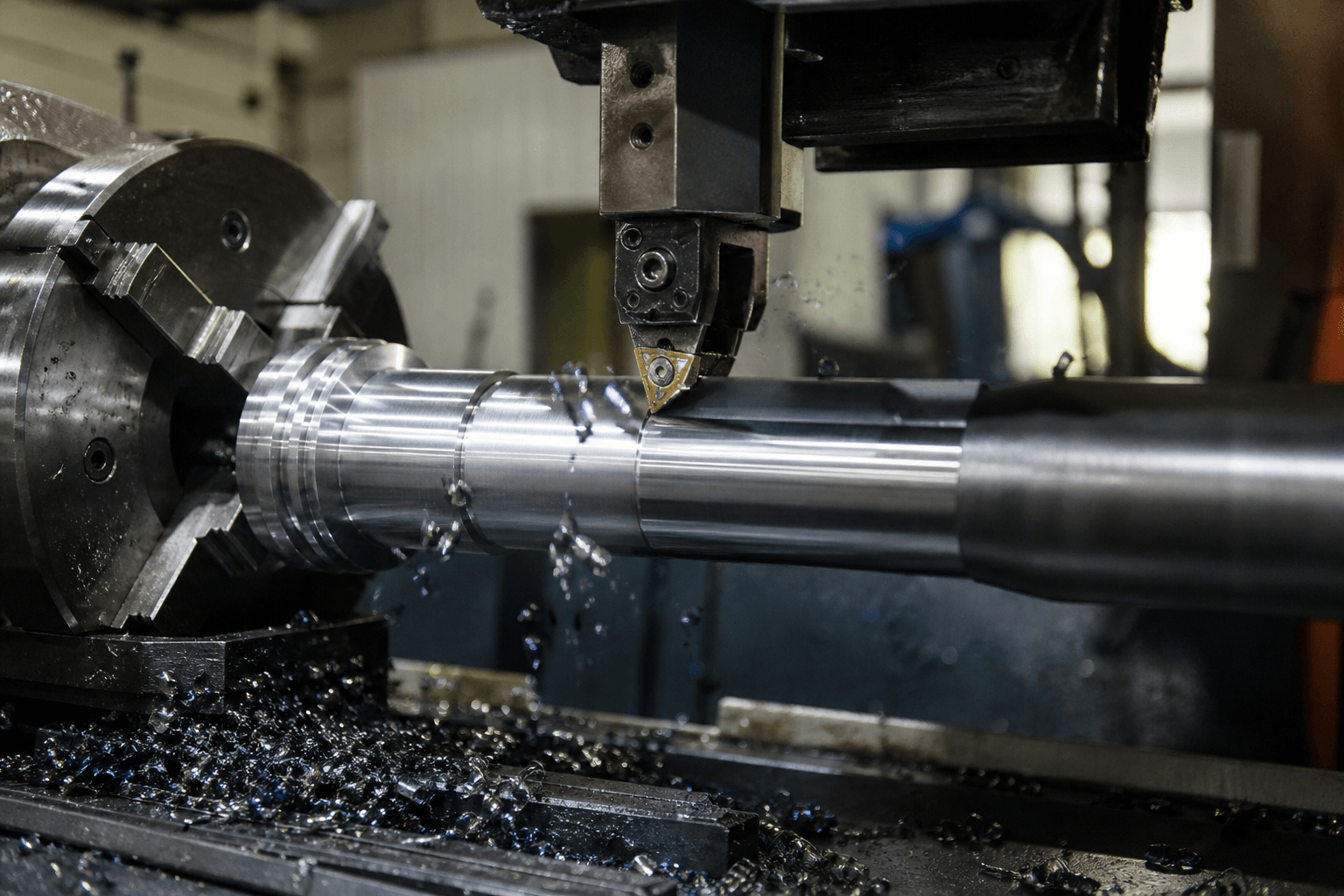
4140 steel has moderate-to-good machinability for a chromium-molybdenum alloy steel, especially when supplied in an annealed condition. It is not as easy to cut as common free-machining steels, and its behavior can change substantially with hardness, heat treatment, section size, and prior processing.
For engineers and buyers, this means that the grade name alone is not enough to estimate machining time or cost. A useful evaluation of 4140 machinability must identify the supplied condition, required final properties, machining operations, tolerances, surface finish, and heat-treatment sequence.
What Does the Machinability of 4140 Mean in Practice?
Machinability describes how a material responds to cutting operations such as turning, milling, drilling, boring, threading, and tapping. It is not a single physical property. Tool life, cutting force, chip formation, achievable finish, heat generation, and the power required by the machine all contribute to the practical result.
Published machinability tables commonly rate annealed 4140 at approximately 65% to 66% when a designated free-machining reference steel is assigned a value of 100%. The exact number depends on the reference material, test method, hardness, and product condition, so it should be treated as a comparison rather than a guaranteed shop result.
This rating places annealed 4140 below free-machining carbon steels but within a manageable range for conventional production machining. Its alloy content and strength generally create higher cutting forces and more tool wear than mild steel. However, stable equipment, suitable carbide tooling, controlled engagement, and effective cooling can produce predictable results.
Material Condition Can Change the Machining Strategy
The most important question is not simply, “Can 4140 be machined?” It is, “In what condition will it be machined?” Annealed stock is normally selected when substantial material removal, deep drilling, complex milling, or extensive threading is required. Its lower hardness generally reduces cutting force and tool wear compared with prehardened or quenched-and-tempered material.
Prehardened 4140 may be appropriate when the design needs established mechanical properties without heat treatment after machining. It can also reduce the risk of post-machining dimensional movement. The trade-off is slower cutting, greater tool wear, and more demanding control of vibration, tool geometry, and heat. The actual machining response depends on the specified hardness range rather than the informal label “prehard.”
Normalized 4140 can machine differently from annealed material because of its microstructure and higher typical hardness. Hot-rolled bar or plate may also have scale, surface decarburization, residual stress, or dimensional variation that affects the first cutting pass. Forged stock introduces another variable because grain flow, stock allowance, and heat-treatment history influence how the part behaves as material is removed.
If a finished component must be hardened after machining, a common route is rough machining, heat treatment, and finish machining or grinding. This sequence leaves stock for correcting distortion and removing affected surface material. The appropriate allowance cannot be universal: it depends on component size, wall thickness, geometry, heat-treatment method, and final tolerance.
How Tooling and Cutting Conditions Affect 4140
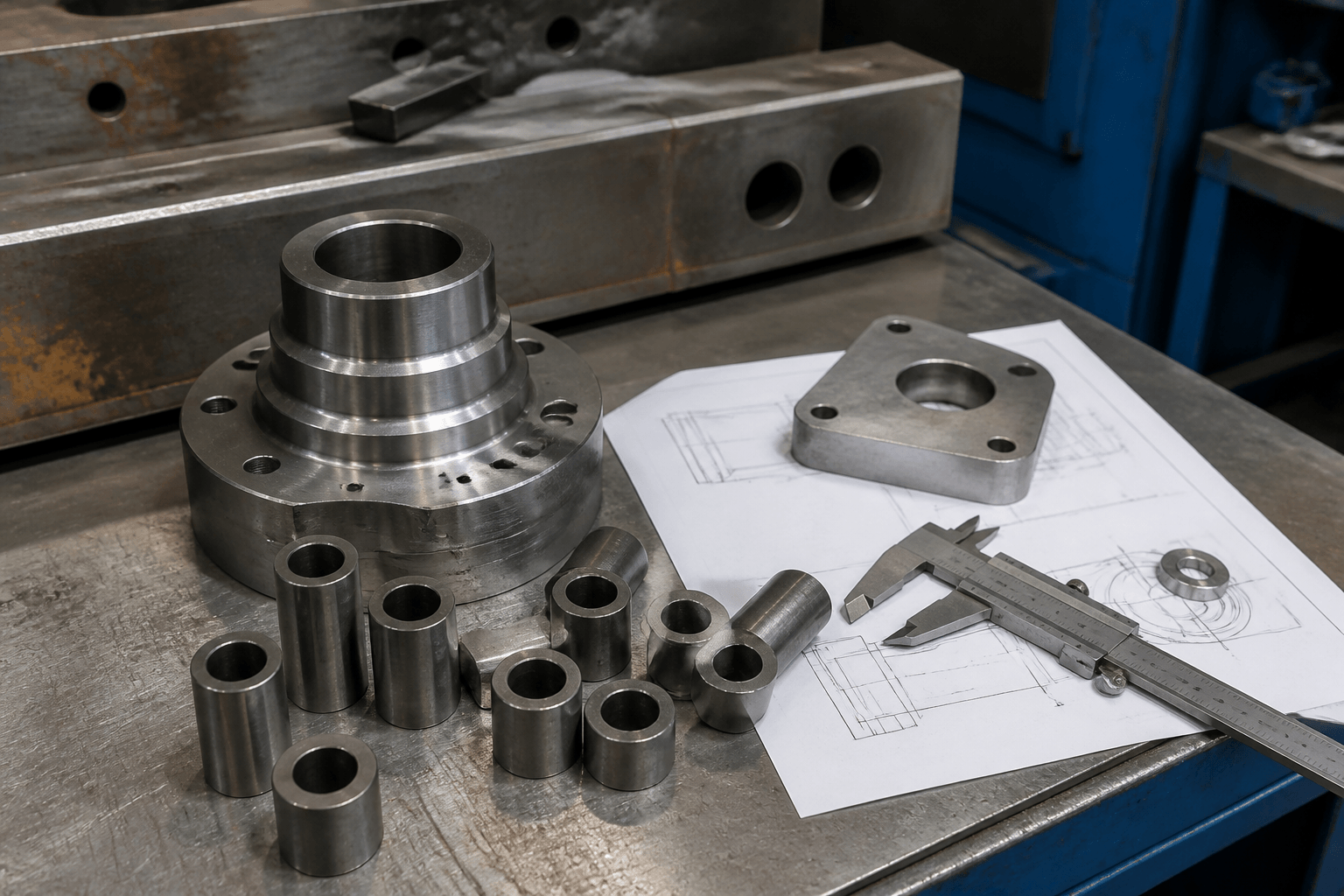
There is no single correct 4140 cutting speed, feed, or depth of cut. Recommendations must be tied to hardness, tool material, insert grade, coating, operation, rigidity, coolant strategy, and whether the cut is continuous or interrupted. A speed intended for annealed bar can be unsuitable for hardened stock, and turning data should not be applied directly to milling or drilling.
Carbide tools are widely used for production machining because they support higher cutting speeds and resist wear better than conventional high-speed steel in many operations. High-speed steel and cobalt tools can still be useful for particular drills, taps, low-speed operations, or less rigid setups. Final parameters should begin with the cutting-tool manufacturer’s data for alloy steel at the actual workpiece hardness, followed by controlled adjustment on the machine.
Turning
In turning, rigidity and chip control are central concerns. A positive, sharp cutting edge can reduce cutting force, while the insert geometry must still be strong enough for the depth of cut and any interruptions. Excessively light finishing passes may rub rather than cut, particularly if the surface has hardened locally. Long chips can create safety and surface-finish problems, so the feed, depth of cut, and chip-breaker geometry should work together.
Milling
Milling 4140 involves repeated tool entry and exit, making insert toughness and secure workholding important. Uneven stock, scale, slots, and thin walls can produce impact loads or vibration. Consistent cutter engagement is generally preferable to abrupt changes in radial engagement. For prehardened material, tool runout and machine rigidity become especially influential because one cutting edge can otherwise carry a disproportionate load.
Drilling, reaming, and tapping
Deep holes require attention to chip evacuation, coolant access, drill geometry, and pecking strategy where appropriate. Chips trapped in the hole can damage the cutting edges and bore surface. Reaming should use a controlled and consistent machining allowance; a reamer is not intended to correct major location or straightness errors left by drilling.
Tapping combines high contact stress with limited chip space. Correct pilot-hole size, tap geometry, lubrication, and alignment are therefore important. Thread milling may be considered for selected CNC applications, especially where thread control, chip evacuation, or reduced risk from a broken tap justifies the additional programming and tooling.
Heat Treatment, Tolerance, and Distortion Must Be Planned Together
4140 is often chosen because heat treatment can provide a useful balance of strength, hardness, and toughness. That benefit also creates manufacturing decisions. Heat treatment after machining can cause dimensional change, distortion, scale, or decarburization. The degree of movement varies with geometry, section thickness, prior stress, furnace practice, quenching conditions, and the required final properties.
| Production route | Potential advantage | Main issue to evaluate |
|---|---|---|
| Machine in the annealed condition, then heat treat | Easier heavy material removal | Post-treatment distortion may require finishing operations |
| Rough machine, heat treat, then finish machine | Final cuts can correct some dimensional movement | Finishing harder material increases tooling demands |
| Machine prehardened stock to completion | Avoids a later hardening cycle | Higher hardness can increase machining time and tool wear |
| Heat treat, then grind critical features | Supports close control of selected surfaces | Grinding access, allowance, and cost must be planned |
Thin walls, asymmetric pockets, long shafts, and components with large differences in section thickness are more sensitive to stress release. Removing a large amount of stock from only one side can also change flatness or straightness. Roughing opposite surfaces in stages, allowing for stress relief where technically required, and leaving appropriate finishing stock may improve dimensional control, but the process must be developed for the actual part.
Surface-finish requirements should identify which faces are functional. A broad requirement for a fine finish on every surface may add machining time without improving assembly performance. Bearing seats, sealing surfaces, threads, bores, and mating faces may each need different controls. Inspection planning should likewise focus on datums, fits, geometric requirements, hardness, and any features that will change during heat treatment.
What Should a 4140 Drawing or Purchase Request Specify?
A clear material callout should state more than “4140.” It should identify the required product form and supplied condition, such as annealed or quenched and tempered, together with the required hardness or mechanical-property requirement where applicable. The governing material specification should be stated by the buyer when one is required; nominal grade names should not be assumed to be interchangeable across every standard or supplier.
The drawing should also make the manufacturing sequence understandable. If heat treatment occurs after rough machining, identify the final property requirements and which dimensions must be achieved afterward. Indicate critical tolerances, datum relationships, surface finishes, coating or other finish requirements, and areas that must remain free of scale or decarburization where relevant.
For assembly interfaces, define fits rather than relying on general notes. A 4140 shaft, pin, insert, wear component, or machined block may interface with bearings, bushings, or purchased hardware, so the drawing should clearly identify mating dimensions, datums, and functional surfaces.
Cost is often driven by starting-stock availability, total material removal, hardness during machining, deep holes, difficult tool access, tight geometric tolerances, fine finishes, heat treatment, grinding, inspection, and batch quantity. Prototype settings may also require adjustment before repeat production, particularly when stock condition or heat-treatment lots change. Buyers should therefore confirm whether substitutions in material condition are permitted rather than leaving the decision unstated.
Frequently Asked Questions
Is 4140 harder to machine than mild steel?
Generally, yes. 4140 normally has greater strength and alloy content than common mild steels, which can increase cutting forces, heat generation, and tool wear. The difference depends heavily on condition. Annealed 4140 is considerably easier to machine than hardened or prehardened 4140.
What cutting speed should be used for carbide machining of 4140?
No single surface-speed value applies to every 4140 job. Select an initial value from the carbide manufacturer’s recommendations using the actual workpiece hardness, insert grade, coating, operation, engagement, and coolant method. Turning, milling, drilling, and interrupted cutting require different starting parameters.
Is annealed or prehardened 4140 easier to machine?
Annealed 4140 is generally easier to machine because its lower hardness reduces cutting forces and tool wear. Prehardened 4140 may avoid a later hardening cycle, but it usually requires more conservative cutting parameters, rigid setups, and closer attention to tool wear. The specified hardness range should guide the comparison.
Should 4140 be heat treated before or after machining?
The sequence depends on material removal, final hardness, geometry, and tolerance requirements. Heavy roughing is often easier before hardening, while finish machining or grinding after heat treatment may be needed to correct dimensional movement. Prehardened stock can avoid a later hardening cycle, but it increases machining demands.