
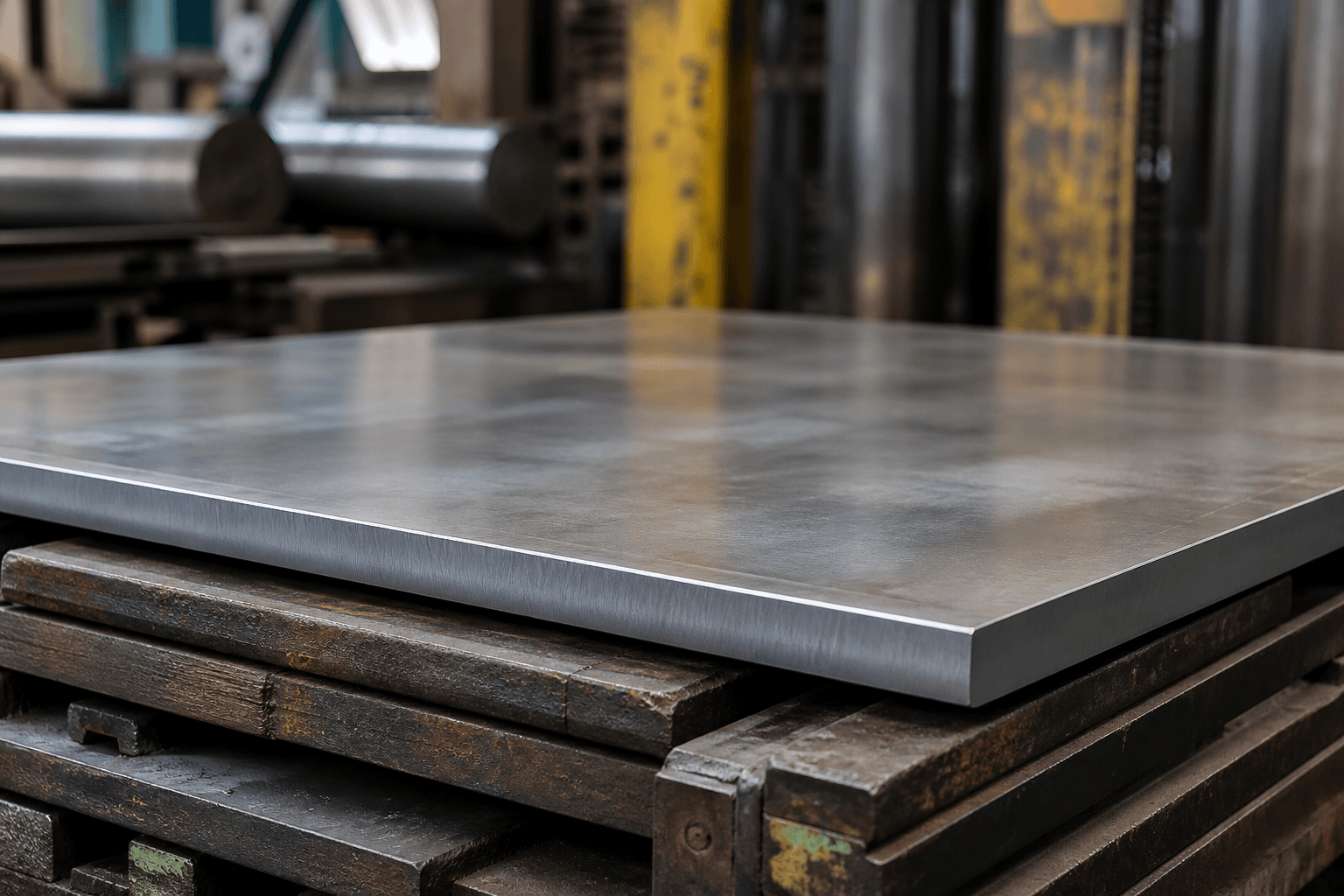
4140 is a chromium-molybdenum alloy steel valued for its combination of strength, toughness, hardenability, fatigue resistance, and wear resistance. Its actual mechanical properties depend heavily on product form, section size, heat treatment, and tempering temperature, so the grade name alone does not define how a finished component will perform.
For engineering and purchasing teams, the main decision is not simply whether 4140 is “strong.” It is whether the specified material condition provides the hardness, toughness, machinability, weldability, and dimensional stability required by the application.
What Is AISI/SAE 4140 Steel?
AISI/SAE 4140 is a medium-carbon, low-alloy steel containing chromium and molybdenum as its principal alloying elements. The “41” identifies the chromium-molybdenum alloy family, while “40” indicates a nominal carbon content of approximately 0.40%.
The carbon provides strength and response to hardening. Chromium contributes to hardenability, strength, and wear resistance, while molybdenum supports hardenability and helps maintain useful strength after tempering. Together, these elements allow 4140 to achieve a better strength-and-toughness balance than many plain carbon steels.
Common product forms include round bar, flat bar, plate, tubing, forgings, and machined blanks. It is frequently considered for shafts, pins, gears, spindles, tooling components, high-load fasteners, couplings, and structural machine parts. Although plate is available, 4140 is not normally the first choice for deeply formed sheet metal enclosures or covers. Low-carbon sheet is generally easier to bend and weld for those applications.
4140 Chemical Composition and the Role of Each Element
The following ranges are commonly associated with AISI/SAE 4140. Exact limits must be confirmed against the material specification, product form, and supplier documentation used for the purchase.
| Element | Typical content by weight | Practical effect |
|---|---|---|
| Carbon | 0.38–0.43% | Raises strength, hardness, and heat-treatment response, but reduces weldability as content increases. |
| Manganese | 0.75–1.00% | Supports strength and hardenability and assists steelmaking. |
| Silicon | 0.15–0.35% | Acts as a deoxidizer and contributes moderately to strength. |
| Chromium | 0.80–1.10% | Improves hardenability, wear resistance, and strength. |
| Molybdenum | 0.15–0.25% | Improves hardenability and tempering response and helps limit temper brittleness. |
| Phosphorus | Typically limited to 0.035% maximum | Controlled because excessive content can reduce toughness. |
| Sulfur | Typically limited to 0.040% maximum | May aid machinability in some steels but is restricted because it can affect ductility and toughness. |
Chemical composition confirms the alloy family, but it does not establish the final hardness or tensile strength. Two parts made from chemically compliant 4140 can behave differently if one is annealed and the other is quenched and tempered. Buyers should therefore request a material certificate and define the required delivery condition separately.
Mechanical and Physical Properties of 4140
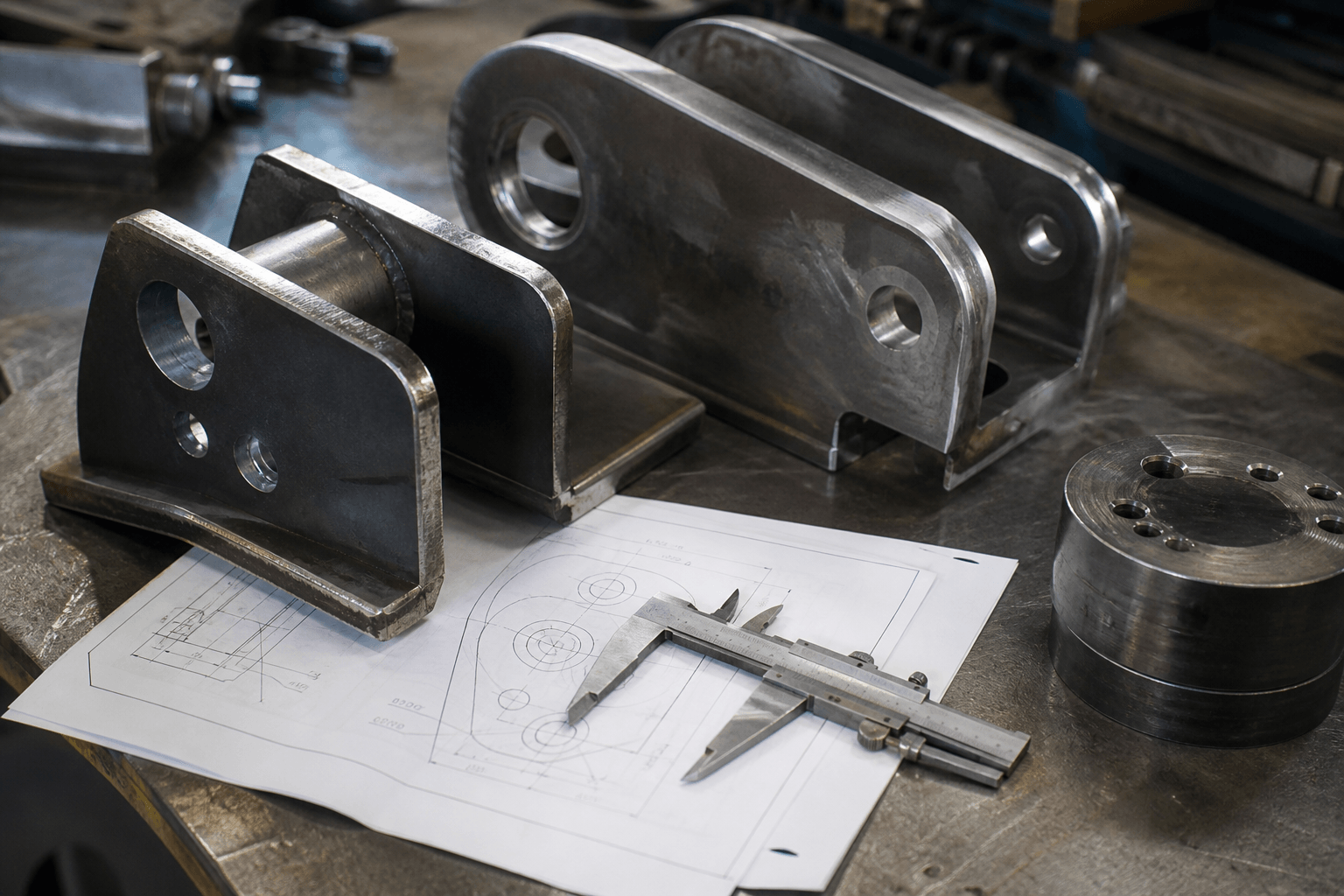
Mechanical values for 4140 vary substantially with heat treatment and section size. Annealed material offers comparatively good machinability and lower strength, while quenched-and-tempered material can provide much higher strength and hardness. A larger cross-section may also cool more slowly during quenching, resulting in different properties between its surface and core.
| Property | Representative value or behavior | Selection note |
|---|---|---|
| Density | Approximately 7.85 g/cm³ | Similar to most carbon and low-alloy steels; useful for weight estimates. |
| Elastic modulus | Approximately 200–205 GPa at room temperature | Heat treatment greatly changes strength but has relatively little effect on elastic stiffness. |
| Poisson’s ratio | Approximately 0.29 | Used in elastic deformation and simulation calculations. |
| Thermal conductivity | Approximately 42 W/m·K near room temperature | Changes with temperature and material condition. |
| Thermal expansion coefficient | Approximately 12 µm/m·°C near room temperature | Relevant to assemblies exposed to changing temperatures. |
| Annealed hardness | Often around 170–220 HB | Actual values depend on annealing practice and governing requirements. |
| Quenched-and-tempered strength | Can range from moderate to very high | A specific strength cannot be selected without defining tempering condition, section size, and test requirements. |
Strength and hardness usually rise together, but toughness and ductility generally decline as hardness increases. The hardest available condition is therefore not automatically the best one. A shaft exposed to shock loading may require a lower hardness and greater toughness than a wear pin operating under steady contact.
Fatigue performance also depends on more than the base material. Fillet radii, keyways, thread roots, machining marks, decarburization, surface treatment, residual stress, and corrosion can all become fatigue initiation sites. Published tensile data should not be treated as a complete prediction of component life.
How Heat Treatment Changes 4140 Properties
4140 may be supplied annealed, normalized, cold-finished, prehardened, or quenched and tempered. Terminology should be supported by measurable requirements because labels such as “prehardened” can cover different hardness ranges among suppliers.
- Annealing softens the material, improves machinability, and prepares it for later hardening. This condition can be useful when extensive drilling, milling, or turning is required before final heat treatment.
- Normalizing refines the structure and provides a more uniform condition than uncontrolled cooling after hot working. It generally produces higher hardness and strength than full annealing.
- Quenching after austenitizing creates a hard martensitic structure. Oil is commonly used as a quench medium, although the appropriate cycle depends on geometry, section size, equipment, and the applicable specification.
- Tempering reduces brittleness and adjusts the final balance of strength, hardness, and toughness. Higher tempering temperatures generally reduce hardness while improving ductility and toughness.
- Surface hardening, including induction hardening or nitriding in suitable applications, can create a wear-resistant surface while retaining a tougher core. Process choice depends on case-depth, distortion, contact-stress, and finishing requirements.
Heat treatment can cause scale, decarburization, warping, and dimensional movement. Components with tight tolerances may need rough machining before treatment and finish machining or grinding afterward. Critical dimensions should be identified on the drawing so the process sequence accounts for potential distortion.
When 4140 Is—and Is Not—a Suitable Choice
4140 is a strong candidate when a component needs higher strength, hardenability, or wear resistance than typical low-carbon steel can provide. It is especially relevant to load-carrying parts with machined features, bearing surfaces, impact loads, or cyclic stresses.
It may be unnecessarily expensive or difficult to process for lightly loaded brackets, guards, cabinets, and decorative panels. These parts often benefit more from formable low-carbon steel, stainless steel, or aluminum. In a fabricated assembly, a machined 4140 pin or shaft may interface with a sheet metal frame, but CNC turning and milling remain machining processes rather than sheet metal fabrication.
Manufacturing considerations include:
- Machining: Annealed 4140 is generally easier to machine than hardened material. Tooling, speed, feed, and coolant must reflect the actual hardness and operation.
- Welding: 4140 is weldable with controlled procedures, but its carbon and alloy content create a greater risk of heat-affected-zone hardening and hydrogen cracking than low-carbon steel. Preheat, consumable choice, interpass control, and post-weld treatment depend on thickness, restraint, material condition, and service requirements.
- Forming: Bending force and cracking risk increase with strength and hardness. Grain direction, bend radius, thickness, and heat-treated condition should be reviewed before forming.
- Corrosion: 4140 is not stainless steel. It can rust when exposed to moisture or aggressive environments, so oil, paint, plating, conversion coating, or another suitable protection may be required.
- Inspection: Material identity, certificate data, hardness, dimensions, and any required mechanical or nondestructive tests should be defined before ordering.
Equivalent-grade tables can help identify possible alternatives, but names such as 42CrMo4 should not be accepted as automatic one-to-one substitutions. Composition limits, delivery conditions, test locations, heat-treatment requirements, and dimensional standards may differ. Engineering approval should be based on the complete specification rather than a cross-reference chart alone.
How to Specify 4140 Without Leaving Critical Gaps
A purchase description should do more than state “4140 steel.” Identify the product form and dimensions, applicable material specification, delivery condition, required hardness or mechanical properties, heat-treatment stage, and certificate requirements. If properties must be verified, define the test method, sampling location, and acceptance criteria through the governing specification or drawing.
Also indicate whether dimensions apply before or after heat treatment, coating, plating, grinding, or other finishing. For an assembly, distinguish the 4140 component from adjoining sheet metal or purchased parts. This prevents the alloy requirement from being applied to the entire product by mistake.
A useful specification is performance-driven but not contradictory. Calling for maximum hardness, extensive welding, severe forming, high impact toughness, and close dimensions without defining a manufacturing sequence can create avoidable conflict. Early review helps establish which features should be machined before heat treatment and which require final finishing.
Frequently Asked Questions
What is AISI/SAE 4140?
It is a medium-carbon chromium-molybdenum alloy steel designed to provide useful strength, toughness, hardenability, and wear resistance. Its final properties depend on heat treatment and section size.
What is the best way to heat treat 4140 steel?
There is no single best cycle. Annealing suits extensive machining, while quenching and tempering is commonly used for higher strength. The correct temperatures, quench method, and temper depend on geometry, required properties, distortion risk, and the applicable specification.
Is 4140 steel stainless?
No. Its chromium content improves hardenability but is far below that normally associated with stainless behavior. Unprotected 4140 can corrode and may need a coating, plating, oil, or another protective finish.
Is 4140 the same as 42CrMo4?
They are often treated as broadly comparable chromium-molybdenum steels, but they are not automatically interchangeable. Buyers should compare composition, mechanical-property requirements, delivery condition, dimensions, testing, and the governing specifications before approving a substitution.