
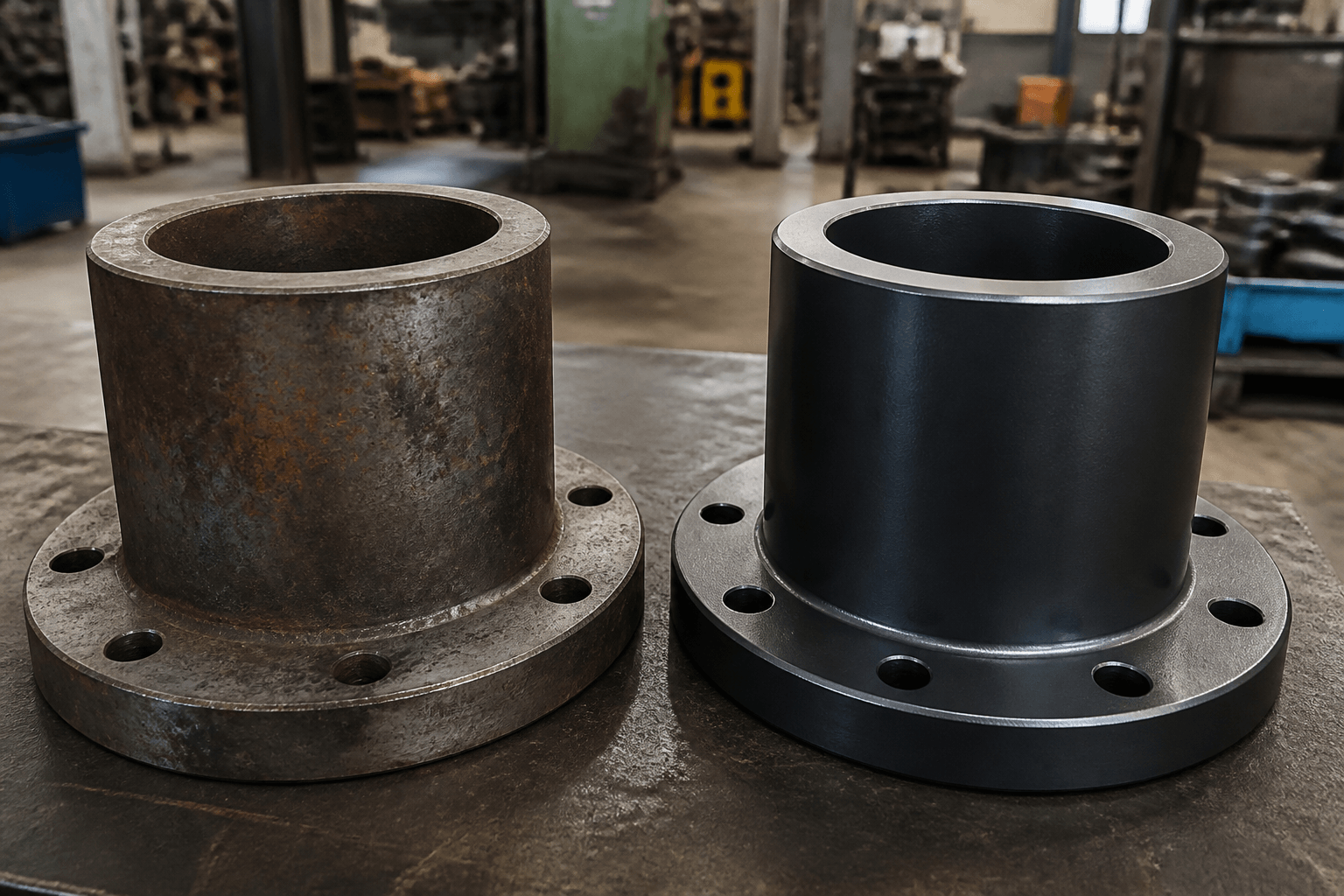
Quick answer: 4140 is a chromium-molybdenum alloy steel, not a stainless steel. The chromium and molybdenum in its composition do not give it the same corrosion behavior as stainless steel; exposed 4140 can rust when moisture and contaminants remain on the surface. The correct decision depends on the environment, material condition, exposed geometry, finish, dimensional requirements, and inspection plan. There is no universal 4140 corrosion-resistance rating without defined test conditions.
For an OEM part, corrosion resistance should therefore be treated as a design and specification question rather than as a simple property of the grade. A supplier needs to understand where the part will operate, how it will be handled, which surfaces must remain functional, and whether the finish must be validated for a particular exposure.
How Much Corrosion Protection Does 4140 Provide in Practice?
4140 is generally selected for its combination of strength, toughness, and hardenability rather than for inherent corrosion resistance. It is an alloy steel used in machined and manufactured components, while stainless steel is specifically designed around a higher level of resistance to corrosion through its alloy system and surface behavior. Treating 4140 as “almost stainless” can lead to an unsuitable material choice or an incomplete finishing specification.
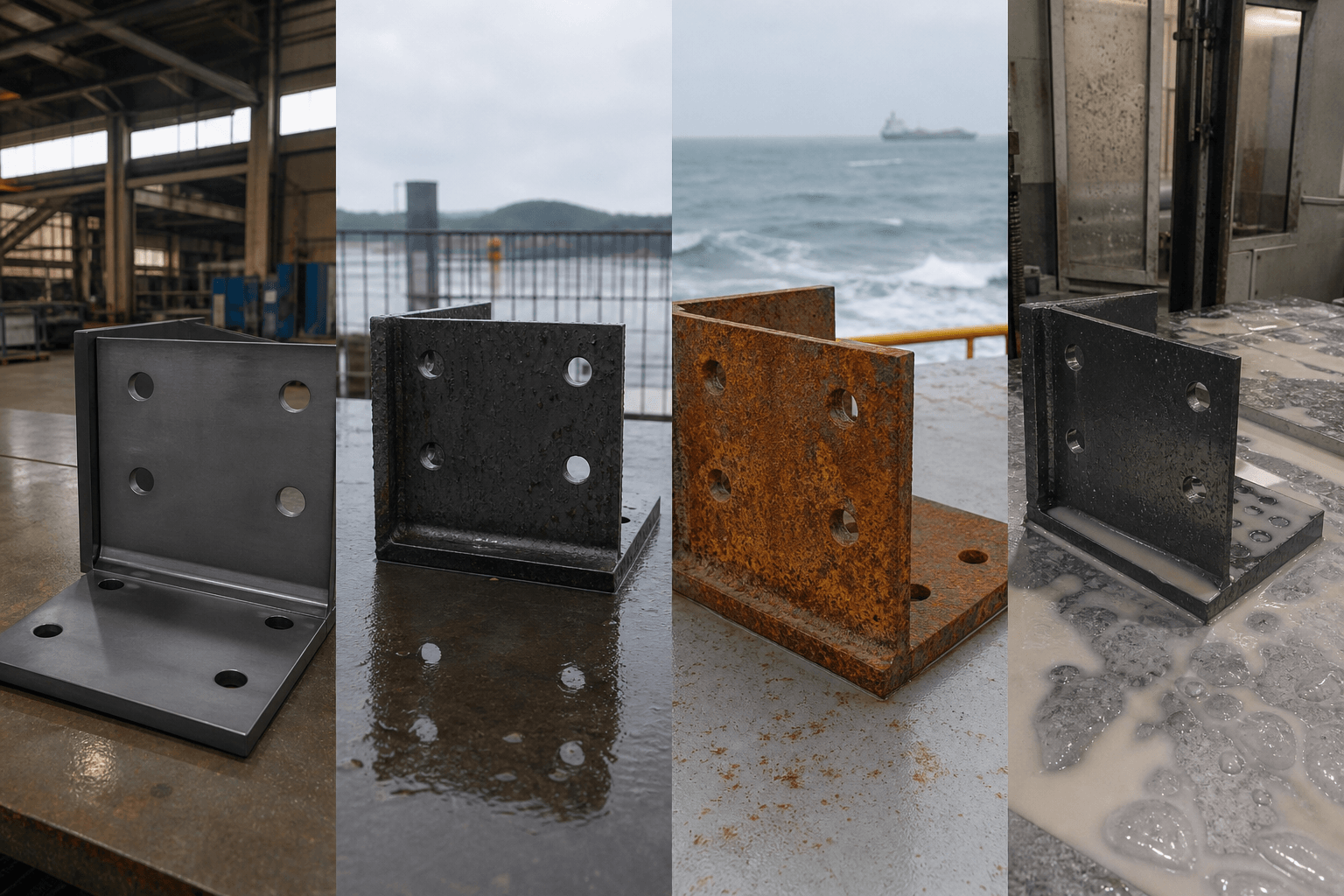
That does not mean every 4140 part needs the same coating. A clean component kept indoors in a dry, controlled environment may have a different risk profile from a part installed outdoors, exposed to road salt, or mounted inside a joint that traps water. Storage, transport, cleaning agents, fingerprints, abrasive handling, and contact with dissimilar materials can also affect the exposed surface.
For this reason, a corrosion requirement should identify the expected exposure and the acceptance method. A statement such as “corrosion resistant” is incomplete unless the drawing or purchasing document explains what environment is expected, which surfaces are exposed, what protection is required, and how the result will be assessed.
Environment Determines the Corrosion Risk
Moisture is the central concern, but the way moisture reaches and remains on the component matters. A surface that dries quickly is not equivalent to a crevice that retains water, dirt, salt, or process residue. The table below provides a qualitative starting point, not a corrosion-resistance chart or service-life prediction.
| Exposure condition | Practical risk for unprotected 4140 | Questions to resolve |
|---|---|---|
| Dry, controlled indoor storage | Lower relative risk, although handling and condensation can still affect the surface | Can humidity, condensation, or temporary storage expose the part to moisture? |
| Humid indoor or outdoor use | Increased risk because wetting and drying cycles can repeat | Will the part drain and dry, or will moisture remain around interfaces and edges? |
| Rain, weather, or garden and outdoor exposure | Higher risk, especially where dirt and water collect | Are exposed faces, holes, threads, and joints protected and accessible for cleaning? |
| Salt or road-salt exposure | More demanding than ordinary outdoor exposure because deposits can remain after water evaporates | What cleaning, finish, and validation approach is appropriate for the actual use? |
| Chemically aggressive service | Application-specific and potentially severe; the chemical, concentration, temperature, and contact time are important | Has the material and finish been assessed against the actual chemical exposure? |
Crevices deserve particular attention. A washer interface, threaded hole, overlapping bracket, pressed joint, or partially sealed assembly can hold moisture even when the visible exterior appears dry. Edges and scratches may expose fresh steel, while trapped contamination can make local corrosion more likely. Cleaning and drainage should be considered alongside the material and finish.
For outdoor equipment, the relevant requirement may not be “use 4140 with coating” in isolation. It may instead be a combination of material, geometry, drainage, masking, finish, cleaning access, and inspection. Weather and moisture exposure should be translated into requirements for the actual part and assembly.
Why Two 4140 Parts Can Corrode Differently
The steel grade is only one part of the exposed condition. Two parts made from 4140 can present different corrosion risks because their surfaces were processed, stored, handled, and assembled differently.
Mill scale and starting condition: The incoming surface may include mill scale, oxides, oils, or other residues. These are not a substitute for a defined corrosion-protection system. If a finish is required, the specification should identify the expected surface preparation before coating, plating, painting, or another treatment.
Machining: Turning, milling, drilling, and grinding change the exposed surface through tool marks, edge formation, scratches, and local changes in roughness. Machining does not change 4140 into another steel grade, nor does it automatically make the part corrosion resistant. However, the resulting surface can influence how moisture and contaminants remain on the part and whether a finish can be applied consistently.
Heat treatment: 4140 may be supplied or processed in different material conditions, including conditions selected for strength or hardness. Through hardening can change the mechanical condition, but hardening should not be treated as a corrosion-protection process. The required condition needs to be stated separately from the corrosion or finish requirement.
Handling and assembly: Bare surfaces can be affected by fingerprints, contact with wet packaging, shop residues, storage humidity, or scratches introduced during transport. Mating areas, threads, holes, and masked regions may have different requirements from broad external faces. Where a finish is applied after machining, its effect on fits and interfaces must be considered.
Welding or localized heating may also create local condition changes in a fabricated assembly. If 4140 is joined to other components, the joint design, heat input, post-process condition, and finish continuity should be reviewed rather than assuming the entire assembly behaves like an untouched machined bar.
Match 4140 Protection to Exposure, Surface, and Dimensions
There is no universal “best coating for 4140.” The appropriate protection method depends on the exposure, substrate preparation, heat-treatment condition, dimensional limits, functional surfaces, and required validation. A finish that suits a broad external face may be unsuitable for a precision bore, thread, bearing seat, or sliding interface.
| Decision factor | What to evaluate |
|---|---|
| Environment | Humidity, weather, salt, chemicals, temperature, cleaning, and whether moisture can remain trapped |
| Substrate | Machined, ground, scaled, heat-treated, welded, or previously finished condition |
| Dimensions | Allowable coating or finish buildup on bores, threads, mating faces, edges, and critical fits |
| Functional surfaces | Whether a surface must remain conductive, wear-resistant, low-friction, weldable, or free of finish |
| Process validation | Whether samples, inspection records, or application-specific testing are needed before production release |
The finish specification should also address preparation, coverage, color or appearance where relevant, protected areas, and repair of handling damage. Masking is especially important for threads, holes, datum faces, sealing surfaces, and assembly interfaces. If the part will be installed in a transportation product, the expected exposure and finish requirements should be defined together with the assembly conditions.
Stainless steel or another corrosion-resistant material should enter the comparison when the environment is persistently wet, salt-laden, chemically demanding, difficult to inspect, or too costly to protect reliably through a finish. The decision still depends on strength, hardness, wear, weldability, machinability, availability, and interface requirements. Changing material may solve one risk while introducing another, so it should be reviewed against the full part function.
Turn Corrosion Expectations into a Production-Ready Specification
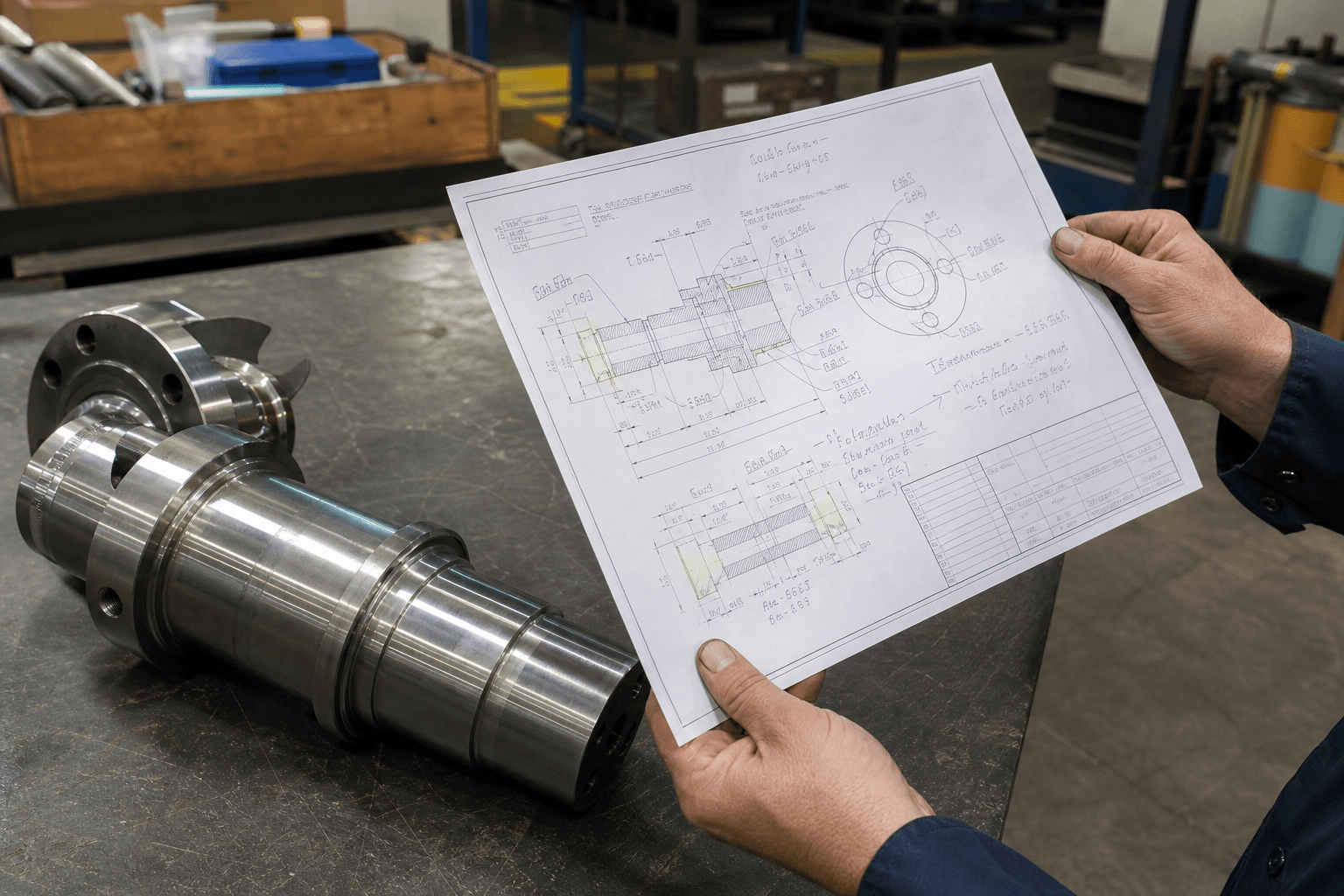
A drawing or purchase specification should make the intended condition reproducible from prototype through repeat production. The following information is usually more useful than a general statement that the part must be corrosion resistant:
- Material: Identify 4140 and the required supply or heat-treatment condition. Keep mechanical requirements separate from surface-protection requirements.
- Surface preparation: Define whether mill scale, oil, oxides, heat-treatment residue, burrs, or other contaminants must be removed before finishing.
- Finish: State the required coating, plating, treatment, or temporary protection only after considering the environment and dimensional constraints. If the finish is not yet selected, identify the performance question that the supplier must help resolve.
- Coverage and masking: Mark exposed surfaces, protected areas, threads, holes, sealing faces, datum surfaces, and mating interfaces. Specify whether edges and internal features require coverage.
- Inspection: Define visual acceptance, dimensional checks after finishing, thread and fit verification, adhesion or other finish checks where applicable, and any application-specific validation. Do not rely on an unnamed corrosion test as a substitute for an acceptance definition.
- Documentation and consistency: Identify required material and process records, the sample or approval stage, and how the same material condition and finish are to be maintained across production batches.
Dimensional inspection should occur with the finish state understood. A coating or treatment can affect a critical diameter, thread engagement, edge condition, or assembly fit. For parts requiring controlled dimensions and repeatable production, custom CNC machining from first sample to repeat production can be part of a broader discussion covering material condition, finishing, and inspection together.
For a technical review, provide the part drawing or 3D model, the specified 4140 condition, the service environment, the required finish or current finish assumption, critical dimensions and mating features, and the inspection or batch-consistency requirements. Yishang supports OEM and ODM custom manufacturing and can help translate these inputs into a production-ready manufacturing discussion. The corrosion decision should remain tied to the actual part and exposure.
Frequently Asked Questions
What factors determine the best coating for 4140 steel?
There is no universal best coating. The choice depends on exposure, substrate preparation, heat-treatment condition, dimensional buildup, threads and mating surfaces, chemical compatibility, and the validation required for the application. The finish should be selected after these conditions are defined.
Is 4140 stainless steel, and when should stainless steel be considered instead?
4140 is a chromium-molybdenum alloy steel, not stainless steel. Stainless steel should be considered when the part faces persistent moisture, salt, aggressive chemicals, or an inspection and maintenance environment in which protecting ordinary alloy steel would be impractical. Strength, hardness, wear, machining, welding, and cost must also be compared.
Can 4140 be through hardened, and does hardening improve corrosion resistance?
4140 can be supplied or processed in a through-hardened condition when the required mechanical properties call for it. Hardening changes the material condition and mechanical behavior; it should not be treated as a corrosion-protection method. Surface protection and environmental suitability still need to be specified separately.
What is the practical difference between 4140 and 4130 for corrosion and material selection?
Both are alloy steels rather than stainless steels, so neither should be assumed to provide stainless-like corrosion resistance. The choice between them should be based on the required mechanical condition, geometry, joining and machining needs, availability, and the intended protection strategy. Corrosion performance still depends heavily on exposure and surface treatment.