
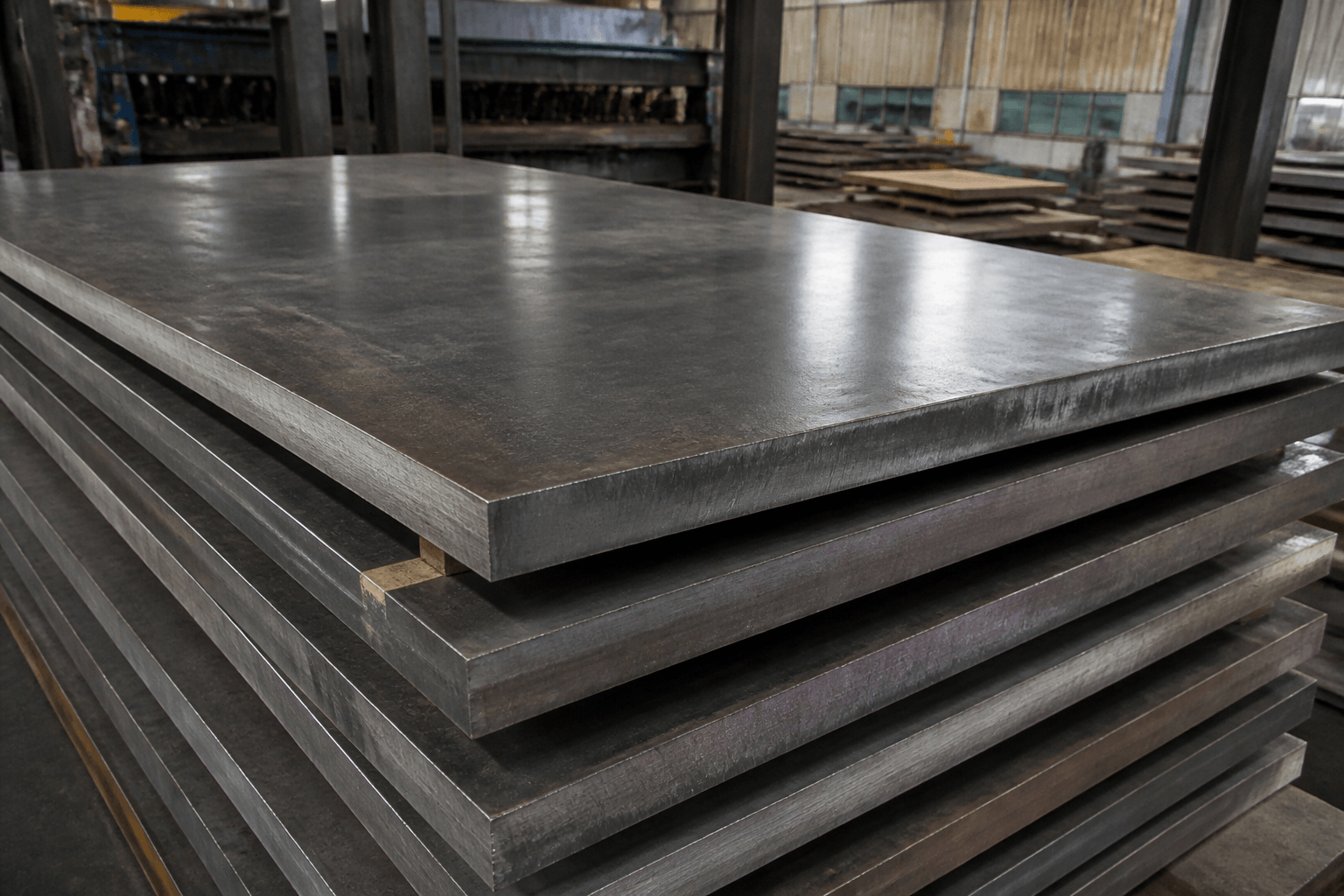
The commonly cited international grades for a 4140 steel equivalent are 42CrMo4, SCM440 and the British designation 708M40. These are comparable chromium-molybdenum steels, but substitution requires verification of the governing specification, chemistry, delivery condition, section size and required properties.
AISI/SAE 4140 is a medium-carbon chromium-molybdenum alloy steel. Use the following cross-references to identify candidates for engineering review; a matching entry in an equivalence chart does not authorize a material change.
Which international grades are comparable to 4140?
The designations below belong to different standards systems. Their similarities make them useful starting points for international sourcing, while their differences prevent an unconditional equivalence statement.
| Designation | Standards context and product scope | Substitution qualification |
|---|---|---|
| AISI/SAE 4140 | US alloy-steel grade designation; ASTM A29/A29M includes 4140 chemistry for steel bars. | The grade name alone does not establish delivery condition or finished-component properties. |
| 42CrMo4 / 1.7225 | European steel designation; included in EN 10083-3:2006 for alloy steels for quenching and tempering. | Check its chemistry limits and condition-specific requirements against the original specification. |
| SCM440 | Japanese designation in JIS G 4053:2016, covering low-alloyed steels for machine structural use. | Verify the applicable product requirements and subsequent heat treatment. |
| 708M40 | Historical British designation in BS 970-1:1991 for wrought steels for mechanical and allied engineering purposes. | Confirm the dated specification behind the designation, particularly its molybdenum range. |
These dated editions provide a defined comparison basis, not a statement that every edition remains current. EN 10083-3:2006 has been superseded by EN ISO 683-2; legacy drawings and stock certificates may still reference older documents. Regional availability can make one candidate practical to investigate, but availability does not establish technical acceptability.
Where do the specified chemistry limits differ?
The table compares specified heat-analysis limits, expressed as mass percentages. A range defines allowable composition; a material certificate reports the measured chemistry of a particular heat. Product-analysis tolerances, where applicable, must be assessed separately under the governing specification.
| Element, mass % | 4140 ASTM A29/A29M-20 |
42CrMo4 EN 10083-3:2006 |
SCM440 JIS G 4053:2016 |
708M40 BS 970-1:1991 |
|---|---|---|---|---|
| Carbon | 0.38–0.43 | 0.38–0.45 | 0.38–0.43 | 0.36–0.44 |
| Manganese | 0.75–1.00 | 0.60–0.90 | 0.60–0.85 | 0.70–1.00 |
| Silicon | 0.15–0.35 | 0.40 maximum | 0.15–0.35 | 0.10–0.40 |
| Chromium | 0.80–1.10 | 0.90–1.20 | 0.90–1.20 | 0.90–1.20 |
| Molybdenum | 0.15–0.25 | 0.15–0.30 | 0.15–0.30 | 0.25–0.35 |
| Phosphorus, maximum | 0.035 | 0.025 | 0.030 | 0.035 |
| Sulfur, maximum | 0.040 | 0.035 | 0.030 | 0.040 |
Source scope: The columns refer respectively to alloy-steel bars, alloy steels for quenching and tempering, low-alloy machine structural steels, and wrought engineering steels. Read the grade tables together with each standard’s general requirements, footnotes and applicable product provisions.
The differences are meaningful. A 42CrMo4 heat containing 0.44% carbon lies within that grade’s range but above the listed 4140 maximum. Similarly, 708M40 permits molybdenum above the 4140 limit. Overlapping ranges therefore do not mean that every heat meets both specifications.
Residual elements also need attention. JIS G 4053:2016 specifies maximum nickel and copper contents of 0.25% and 0.30%, respectively, for SCM440. Requirements for unlisted elements and intentional additions differ between standards; the seven rows above are not a complete chemical acceptance specification. Review the full analysis and applicable residual-element provisions before claiming dual compliance.
When is a comparable grade an acceptable substitute?
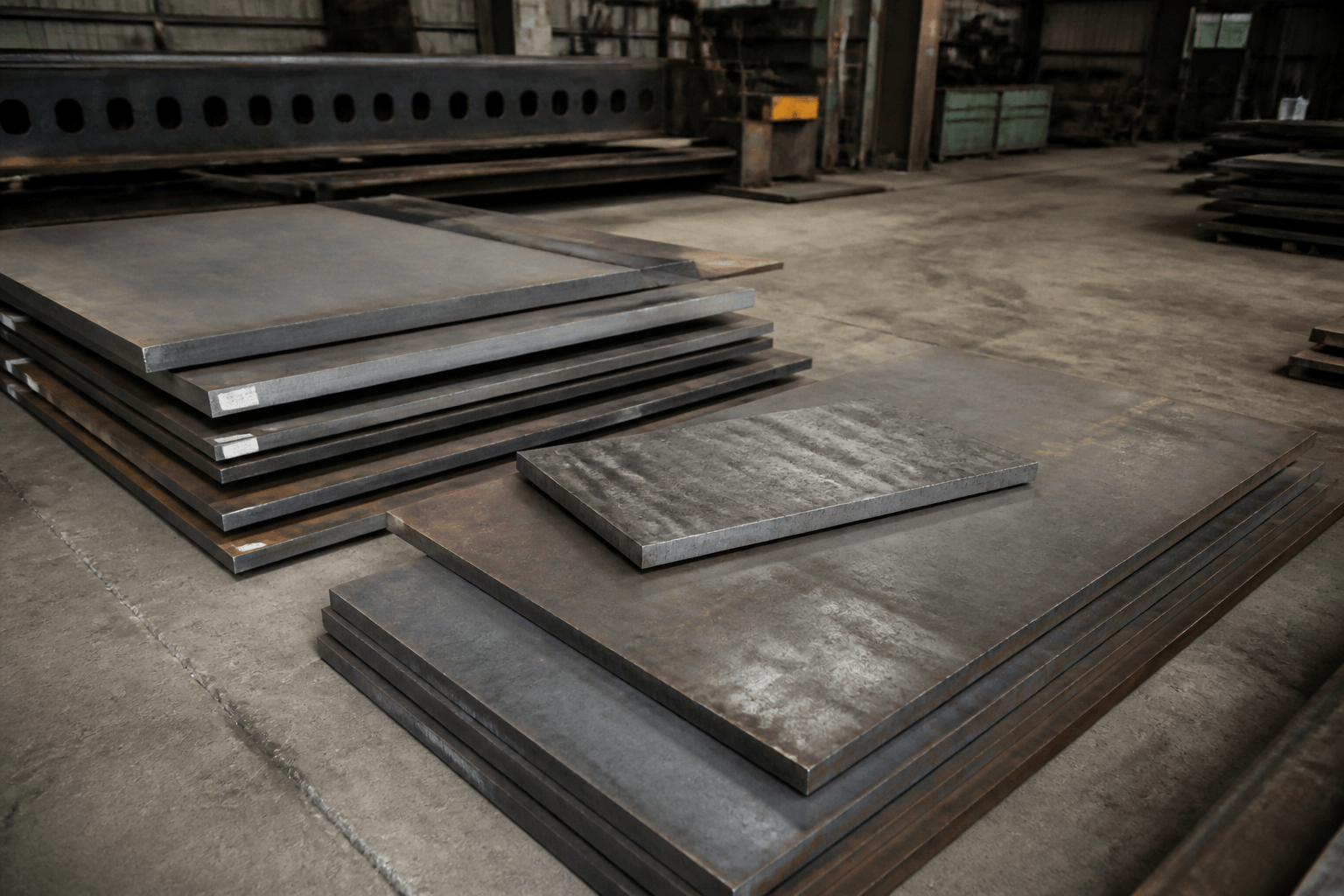
A cross-reference identifies a candidate material. An acceptable substitute satisfies the component’s requirements and receives the required engineering approval. Chemistry is only one part of that decision.
For example, EN 10083-3:2006 lists a minimum yield strength of 650 MPa and tensile strength of 900–1,100 MPa for quenched-and-tempered 42CrMo4 in the applicable ruling-section range above 40 mm through 100 mm. These values belong to that specified condition and section category. They cannot be assigned to annealed stock, every product form, or all material sold as 4140.
No universal matched-condition strength ranking follows from the chemistry table. ASTM A29 chemistry alone supplies no corresponding quenched-and-tempered strength guarantee. A valid comparison needs the original material’s specified properties and candidate data for comparable heat treatment, product form, section and sampling conditions.
| Requirement | Evidence to compare | Decision consequence |
|---|---|---|
| Governing specification | Drawing, material specification, edition and permitted alternatives | A prohibited or unapproved alternative requires formal engineering disposition. |
| Chemistry | Heat analysis, residual limits and applicable analysis tolerances | Overlapping grade ranges support evaluation; actual compliance must be established. |
| Delivery condition | Annealed, normalized, or quenched-and-tempered condition; treatment records where required | Different conditions require a processing plan or further property assessment. |
| Section and hardenability | Ruling section, heat-treatment geometry and specified hardenability requirements | Small-section results do not establish properties through a larger section. |
| Required properties | Strength, hardness, toughness and any fatigue or through-section requirements | Missing or noncomparable evidence requires further evaluation or testing. |
| Acceptance | Inspection records, traceability and responsible engineering authority’s decision | Documented approval is required before implementing the substitution. |
For a shaft with a substantial ruling section, surface hardness alone may leave core strength unresolved. Hardenability requirements and representative section data matter because cooling rate changes through the section.
Processing also deserves review. A different stock hardness or sulfur level can affect machining response. If welding is required, assess the actual chemistry, restraint, preheat, consumables and any post-weld treatment under the applicable procedure requirements. Similar grade names do not validate an existing welding procedure.
What does an ASTM equivalent request actually mean?
There is no single ASTM designation that serves as a universal replacement name for AISI 4140. A grade identifies a material chemistry family; an ASTM specification defines requirements within a particular product scope.
ASTM A29/A29M covers general requirements for hot-wrought carbon and alloy steel bars and includes grade chemistry. ASTM A322 covers standard grades of alloy steel bars. ASTM A193/A193M, by comparison, addresses alloy-steel and stainless-steel bolting for specified service categories. Its grades cannot be assigned to arbitrary 4140 components simply because their chemistry appears similar.
A useful material callout combines the applicable product specification and edition, grade, dimensions, delivery condition, and any required mechanical tests or supplementary requirements. Whether those requirements belong in one specification or several linked documents depends on the product.
If a drawing says only “4140,” the unresolved question is what condition and acceptance requirements the designer intended. Replacing that incomplete callout with an unrelated ASTM number does not resolve the missing information. Likewise, a manufacturer’s quality-system certification does not establish material equivalence.
Are 1045 and A36 direct alternatives to 4140?
1045: a different chemistry and hardening response
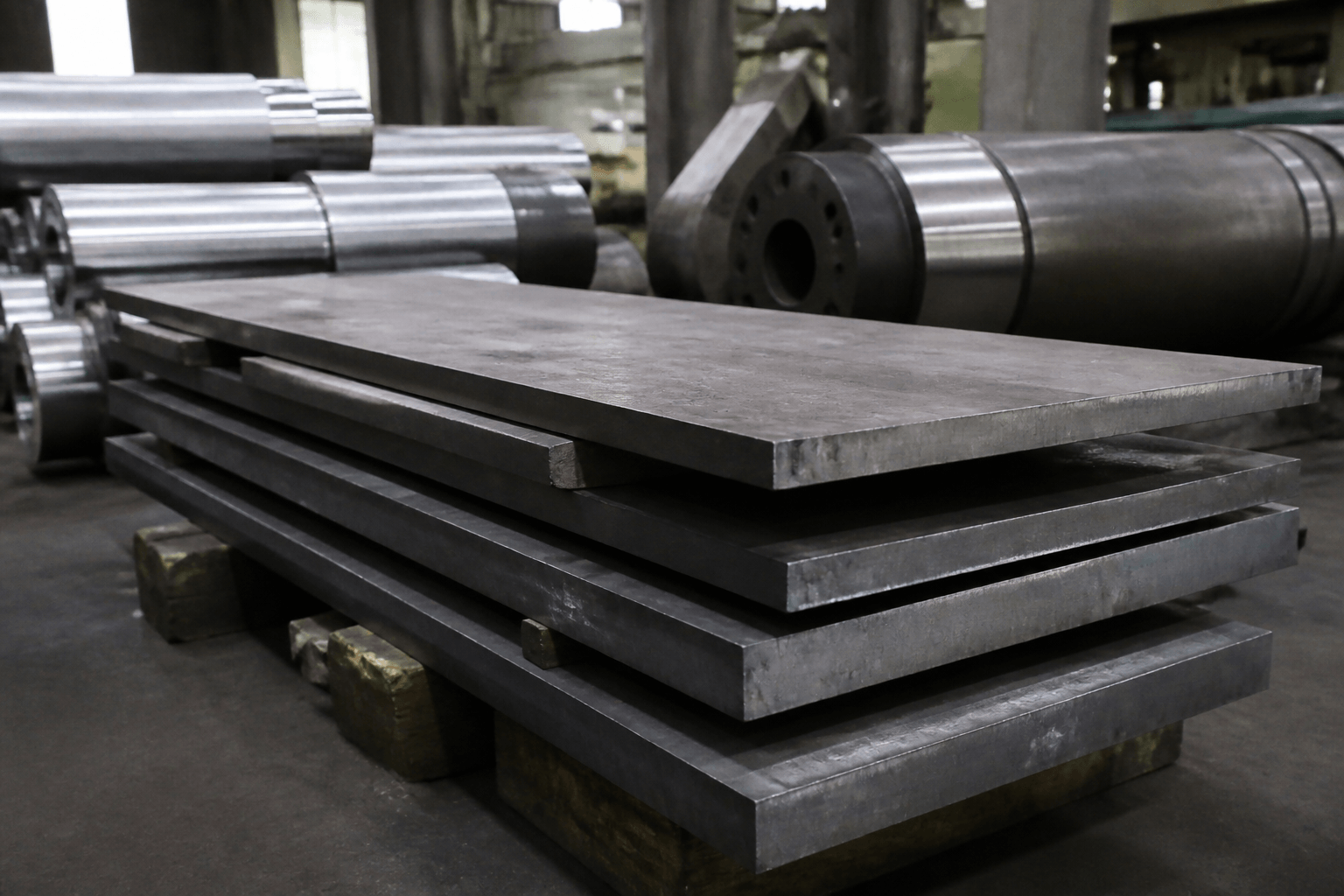
1045 is a medium-carbon plain-carbon steel, whereas 4140 intentionally contains chromium and molybdenum. ASTM A29/A29M-20 lists 1045 carbon at 0.43–0.50%, compared with 0.38–0.43% for 4140. Higher carbon alone does not establish higher component strength.
4140’s alloying supports greater hardenability, which matters when properties must extend through a substantial section. However, “4140 is stronger than 1045” needs defined conditions: quenched-and-tempered 1045 cannot be fairly ranked against unspecified annealed 4140 using grade names alone. Any substitution must address the actual strength, toughness, hardness distribution and processing requirements.
A36: a structural specification with different requirements
ASTM A36/A36M covers carbon structural steel shapes, plates and bars. Its product requirements and chemistry provisions differ from those associated with 4140 alloy-steel bar. It is not another regional name for 4140, and its structural acceptance requirements do not establish comparable hardenability or heat-treated component performance.
A36 could be considered only if an engineering assessment shows that its specified properties satisfy the application. That is a material change requiring review, rather than a direct equivalence.
For a defined OEM or ODM project, share the drawing and specified material designation, proposed alternative and delivery condition, required properties, and governing specification with Yishang when discussing a custom-machined component. This provides a basis for technical discussion; any substitution remains subject to the responsible engineering authority’s approval.