
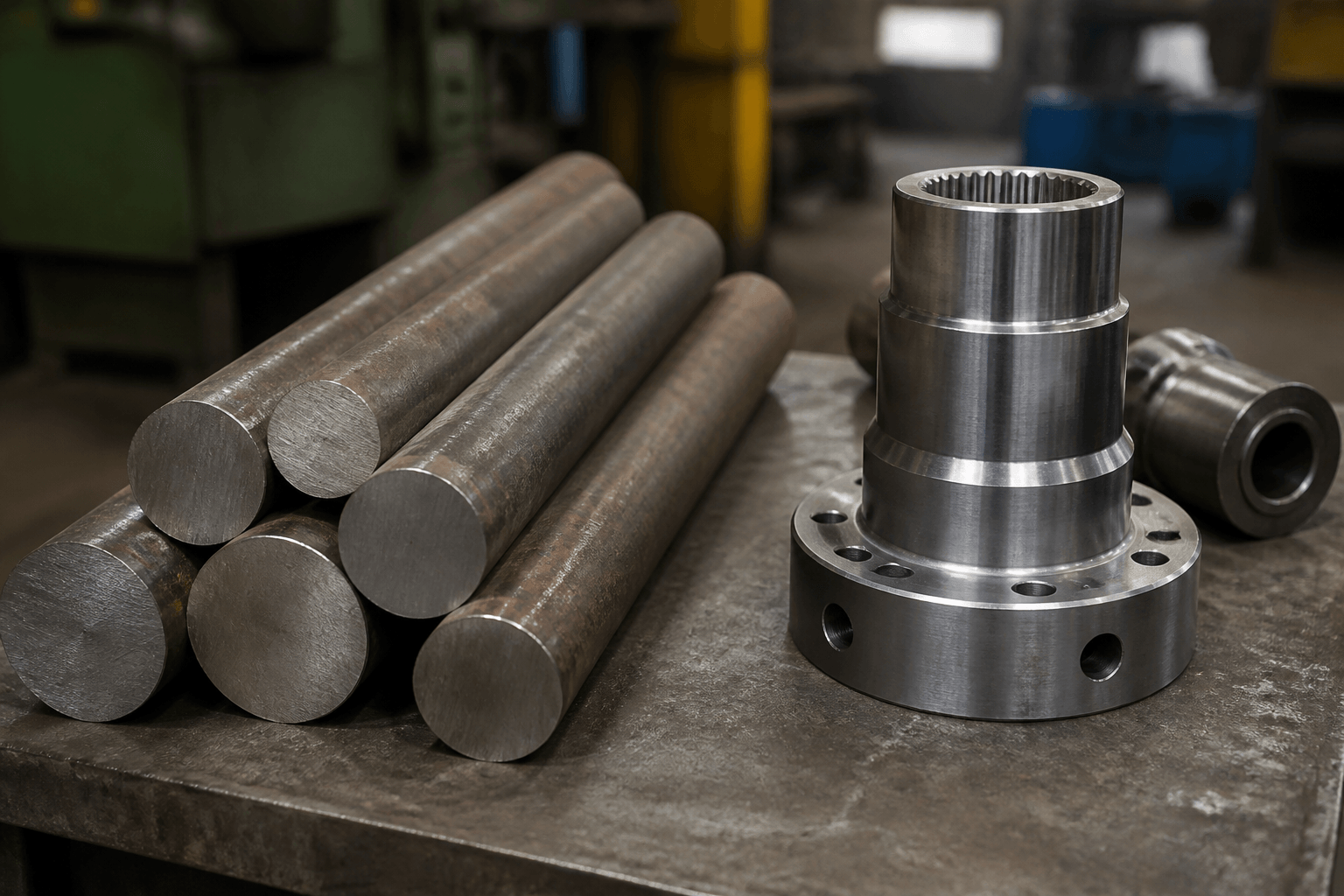
What does the name 4140 steel tell you?
4140 steel is a chromium-molybdenum low-alloy steel, not stainless steel. Its designation identifies a chemical composition family, but does not by itself establish hardness, strength, delivered condition, or suitability for a component.
In the SAE designation system, described in SAE J402, the “41” identifies the chromium-molybdenum alloy family, while “40” indicates a nominal carbon content of approximately 0.40%. That final number is a designation convention, not an exact analysis of every supplied heat.
For an identified composition reference, ASTM A29/A29M lists grade 4140 with carbon at 0.38–0.43%, chromium at 0.80–1.10%, and molybdenum at 0.15–0.25%, by mass. These are selected limits, not the complete chemistry requirements. Confirm the applicable specification edition and product requirements when using them for purchasing or acceptance.
Carbon supports hardness and strength after suitable heat treatment, while also increasing welding challenges. Chromium and molybdenum improve hardenability: the ability to develop hardness below the surface during quenching. Molybdenum also helps resist softening during tempering. These additions do not give 4140 the corrosion resistance associated with stainless steel.
The distinction matters when interpreting a material label: chemistry establishes the grade, while processing and testing establish much of its usable engineering behavior.
How can the same grade arrive with different properties?
Two bars marked 4140 can have different hardness, strength, toughness, and machining behavior because their thermal history differs. Annealed stock, normalized stock, and quenched-and-tempered stock should therefore be treated as different material conditions.
Section size also matters. During quenching, the center of a thick section cools differently from its surface. Alloying improves the potential for through-hardening, but does not guarantee uniform properties through every diameter or geometry.
| Condition | Treatment description | General tendencies | Information needed |
|---|---|---|---|
| Annealed | Heated and cooled under a controlled annealing cycle. | Generally supplied for a softer, more machinable condition before subsequent processing. | Annealing specification, product size, and measured or required hardness. |
| Normalized | Austenitized and cooled in air under defined conditions. | Often stronger and harder than fully annealed stock; results depend on section size and cooling. | Section dimensions, treatment requirements, and applicable test results. |
| Quenched and tempered | Austenitized, quenched, and then tempered. | Can provide higher strength with toughness adjusted through the treatment; machining becomes more demanding as hardness rises. | Required hardness or strength, section size, test location, and treatment specification. |
These qualitative relationships are consistent with the treatment principles described in ASM Handbook, Volume 4, Heat Treating. They are not guaranteed property limits for a particular delivery.
A datasheet value needs its context: product form, dimensions, condition, specimen location, and test method. A typical tensile strength from one heat-treated bar should not become an acceptance requirement for another product without engineering review. Likewise, a surface hardness result alone does not establish core toughness or fatigue performance.
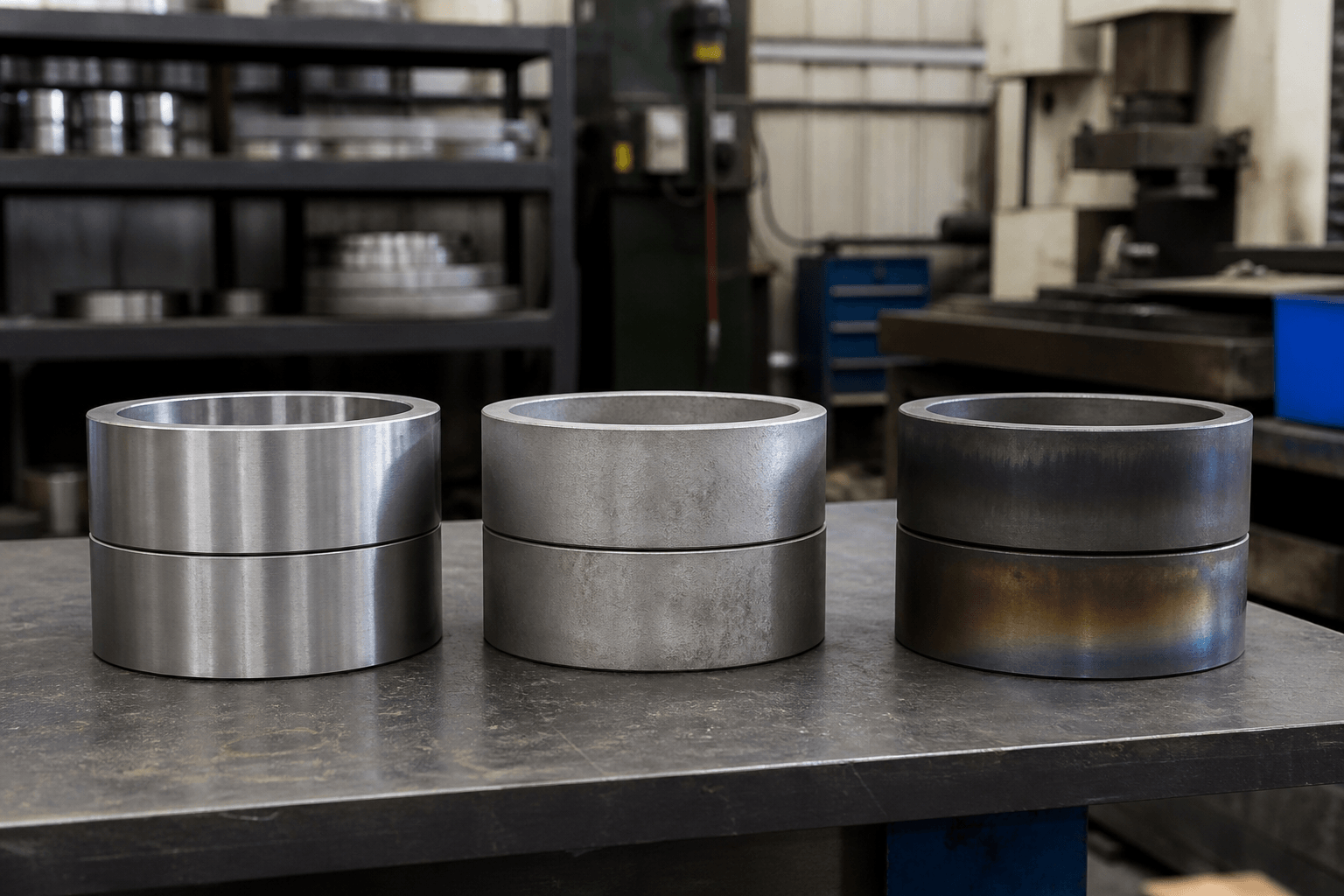
What changes when you choose 4140 instead of 1018?
1018 is a low-carbon steel; 4140 contains more carbon and deliberate chromium-molybdenum additions. SAE J403 and SAE J404 provide chemistry references for carbon and alloy steels respectively. Their different compositions produce different responses to processing.
Hardenability: Comparing normalized 1018 with normalized 4140, the latter has greater potential for subsequent quench hardening through a section. Ordinary quenching does not make 1018 behave like quenched-and-tempered 4140. Surface-hardening routes are a separate comparison.
Machining: Compare actual delivered conditions. Annealed 4140 and cold-drawn 1018 differ in both chemistry and processing history. Cold drawing can increase 1018 strength and introduce residual stress; higher-hardness, quenched-and-tempered 4140 generally places greater demands on cutting tools. Neither grade name alone predicts finish, chip control, or distortion.
Welding: 1018 generally presents fewer hardening-related welding difficulties than 4140. Welding 4140 requires closer attention to heat-affected-zone hardness, hydrogen, restraint, and the properties required after welding.
Typical engineering roles: Machinery references commonly associate 1018 with general brackets, pins, and lightly loaded components, and 4140 with shafts, gears, and more highly stressed machine parts. These are application categories, not evidence that either grade meets a particular design. Loads, geometry, condition, and inspection requirements still govern selection.
What should you consider during machining, welding, and service?
Machining follows the material condition
Confirm hardness before choosing tools and cutting parameters. Annealed stock may permit substantial machining before hardening; prehardened stock may reduce later processing but require different tooling and cutting strategies. Removing material can also release residual stresses and change straightness or dimensions.
Where heat treatment follows rough machining, the process plan should address distortion and any finishing allowance. For broader process context, see this overview of custom CNC machining.
Welding needs a procedure suited to the joint
4140 can form hard, crack-sensitive regions during welding. As discussed in ASM Handbook, Volume 6, Welding, Brazing, and Soldering, procedure decisions depend on chemistry, thickness, joint restraint, hydrogen control, heat input, and required final properties.
Those factors determine whether preheating, controlled cooling, or post-weld treatment is appropriate. A single preheat temperature cannot cover every joint. Welding quenched-and-tempered material can also alter its existing properties locally, so the original material certificate does not establish the finished weldment’s performance.
Moisture exposure requires separate protection decisions
Bare 4140 can rust in humid, wet, or salt-contaminated environments. Protective oil, paint, plating, or another coating may be appropriate depending on exposure, wear, dimensional allowances, and maintenance access.
For high-strength conditions, some cleaning and electroplating processes introduce hydrogen-embrittlement concerns. Specify the coating process and any required controls alongside the material condition; corrosion protection is part of the component design.
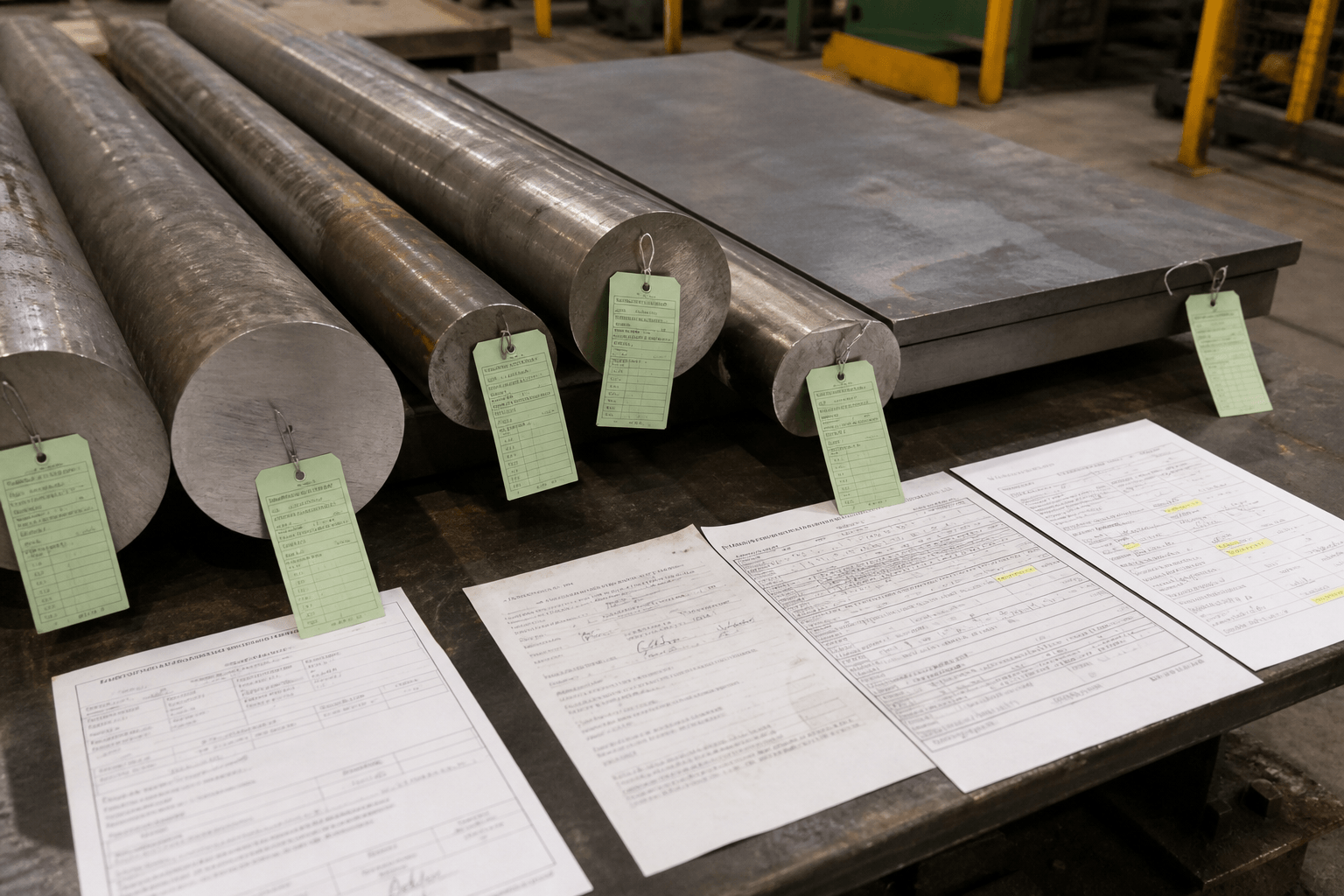
What information completes a 4140 material description?
A useful material description connects the grade to its product form, governing specification, delivered condition, and acceptance requirements. The following is an illustrative description, not a complete purchase specification:
4140 round bar — applicable product specification and edition identified — quenched and tempered — required hardness or mechanical properties stated — heat identification maintained — specified inspection documentation supplied.
Each phrase answers a different question. “Round bar” identifies the product form. The specification defines applicable requirements; ASTM A29/A29M addresses general requirements for hot-wrought carbon and alloy steel bars. The condition describes processing, while acceptance requirements establish what must be demonstrated.
A material test report typically connects a heat number with reported chemistry and any mechanical tests required by the order and specification. Read the actual report: an unreported impact test, core hardness, or fatigue property has not been established simply because the document says “4140.” Traceability must also connect that report to the supplied stock and, where required, the finished component.
EN19 and SCM440 are often discussed as comparable grades, but their names do not establish interchangeability. Compare the applicable standards, chemistry limits, product form, condition, test requirements, and design approval before substitution. Supplier quality-system certificates likewise do not replace material-specific evidence.
For an early application discussion with Yishang about a possible OEM or ODM custom component, share its intended use, a drawing or relevant dimensions, and the specified condition or unresolved material question. The custom machining overview provides context for discussing whether the project fits its manufacturing scope.