
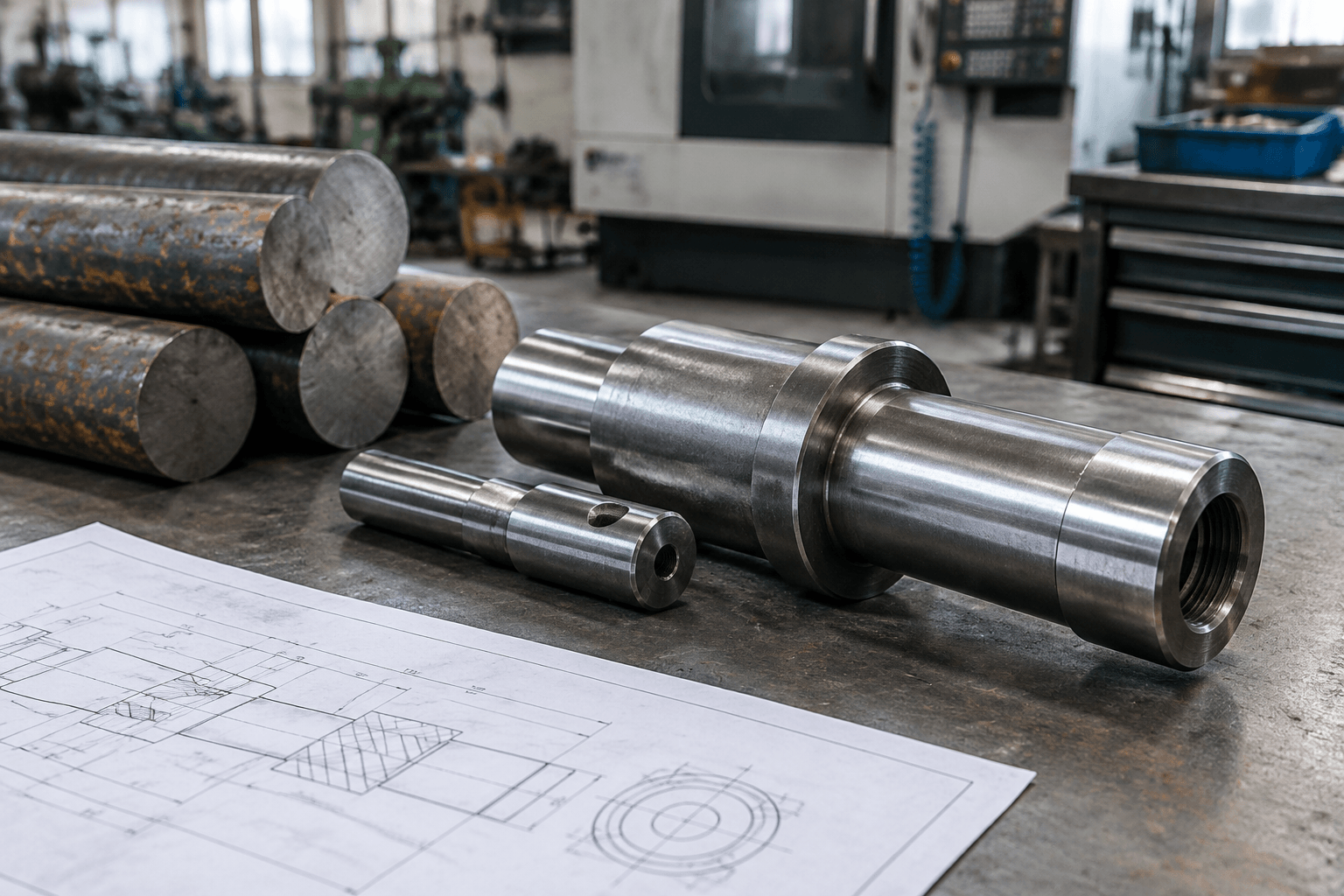
4140 steel is commonly considered for load-bearing and wear-related machined components such as shafts, pins, gears, bushings, couplings, tooling components, and other parts exposed to meaningful mechanical loading. The correct use depends on more than the 4140 grade: material condition, heat treatment, geometry, service loads, environment, machining route, and documentation requirements must all match the application.
For an OEM buyer or engineer, the practical question is not simply whether 4140 is a strong alloy steel. It is whether a specified condition of 4140 provides an appropriate balance of strength, toughness, wear resistance, fatigue resistance, machinability, and production consistency for the part being designed.
Where Is 4140 Steel Commonly Used?
4140 is generally selected for industrial components that need more mechanical capability than a basic low-carbon or mild steel may provide, while still allowing the part to be produced through conventional machining and, where appropriate, additional heat treatment. Typical application examples include transmission shafts, drive pins, axles, gears, bushings, couplings, studs, tooling components, and machine elements that transfer force or support repeated movement.
These are application examples, not automatic recommendations. A shaft may need resistance to bending and fatigue, while a bushing may be governed more by contact wear, dimensional stability, lubrication, and the mating material. A pin may require toughness under impact, whereas a tooling component may require a particular hardened condition and careful control of distortion. The same 4140 grade can therefore be suitable for one design and unsuitable for another if the condition or service requirement changes.
4140 parts are most often encountered as machined components made from bar, plate, or other suitable stock forms. Turning and milling may be used to create the component geometry; those are machining operations rather than sheet metal fabrication. If the finished part is installed in a fabricated assembly, its interfaces with brackets, housings, weldments, fasteners, or other components should be reviewed separately.
Match the 4140 Application to the Actual Performance Requirement
Choosing 4140 should begin with the failure mode the part must resist. Strength alone does not determine suitability. Loading direction, impact, cyclic duty, contact surfaces, temperature, corrosion exposure, surface condition, heat treatment, and geometric stress concentrations all influence the decision.
| Application requirement | Why 4140 may be considered | What still needs engineering confirmation |
|---|---|---|
| Load-bearing shafts, pins, and axles | The alloy may offer a useful combination of strength and toughness when the component transfers force or carries bending loads. | Load spectrum, shaft diameter, keyways, fillets, fatigue design, and the selected material condition. |
| Gears, couplings, and drive components | Strength, toughness, and resistance to mechanical wear may be relevant where parts transmit torque or contact one another. | Tooth or contact stresses, lubrication, surface treatment, mating materials, alignment, and required service life. |
| Bushings, guides, and pins | 4140 may be evaluated for components subject to repeated contact, sliding, or impact. | Clearance, lubrication, hardness requirement, surface finish, load cycles, and whether another material is better for the wear pair. |
| Tooling and fixtures | The grade can be considered when a fixture or tool must retain shape under clamping, cutting, or repeated use. | Dimensional stability, distortion risk, machinability in the selected condition, and the required working surface. |
| Corrosion-exposed components | 4140 may still be used when its mechanical characteristics fit the design and a suitable protection strategy is available. | Corrosion severity, coating or finishing requirements, maintenance, and whether a corrosion-resistant alloy is more appropriate. |
4140 is not universally superior to mild steel, 4130, stainless steel, or another alloy. Mild steel may be adequate where loads are modest and cost or weldability dominates. Stainless steel may be a better starting point where corrosion resistance is the primary requirement. 4130 may be selected when its specific balance of alloy content, processing, weldability, and mechanical requirements fits the design. These comparisons require a defined requirement rather than a general ranking.
Welding also deserves separate consideration. A machined 4140 component that interfaces with a welded structure is not the same thing as a sheet metal or welded part. If welding, post-weld treatment, finishing, or assembly affects the component’s condition or dimensional accuracy, those operations should be included in the design review instead of assumed to be interchangeable with machining.
How 4140 Material Conditions Affect Use and Machining
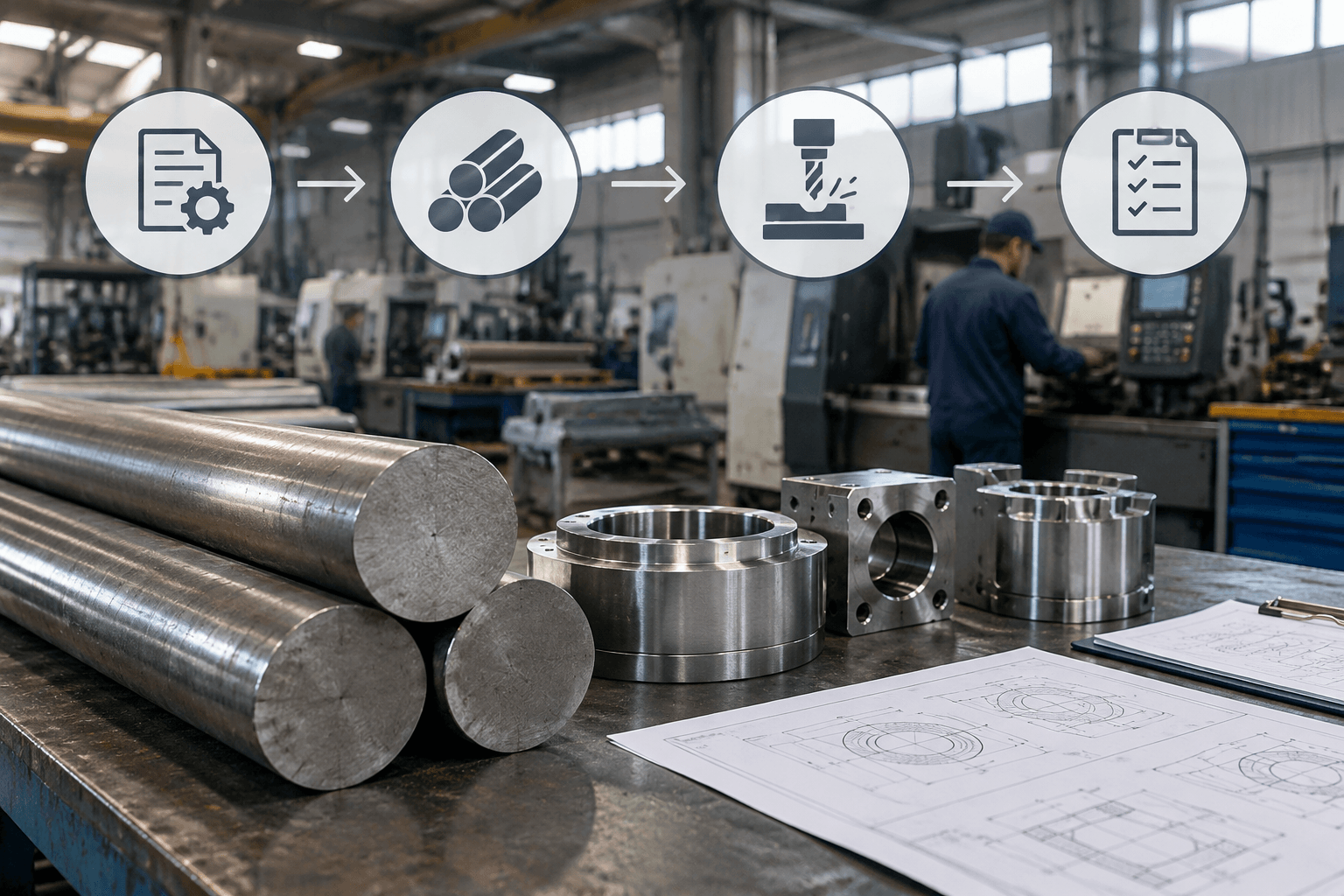
Grade selection and condition selection are two different decisions. “4140” identifies the alloy family; it does not, by itself, fully describe the material state that a supplier should provide. Terms such as standard, annealed, normalized, and quenched-and-tempered describe different processing conditions, but the exact meaning of “standard” should be confirmed against the customer’s governing material specification or supplier documentation.
| Condition | Typical production implication | Application and purchasing consideration |
|---|---|---|
| Standard or as-supplied 4140 | The condition may depend on the stock producer and ordered specification. Machining behavior and final performance should not be assumed from the grade name alone. | Define the condition explicitly if it affects the part. Ask the supplier to confirm the supplied state and supporting documentation. |
| Annealed 4140 | Annealing is generally selected to make the material more workable for machining and subsequent processing compared with a harder condition. | Useful where the part will be substantially machined or where later heat treatment is planned. The final service requirement may not be met by annealed material alone. |
| Normalized 4140 | Normalizing changes the material structure and can provide a more defined starting condition than an unspecified supply state. | Consider it when the drawing or process route calls for a normalized starting material. Confirm machining behavior, section effects, and the required documentation. |
| Quenched and tempered 4140 | This condition is selected when the component needs a controlled combination of strength and toughness for service. | Specify the required hardness or mechanical property range and the governing requirement. Review distortion, machining allowances, and inspection after treatment. |
The table is deliberately qualitative. Exact hardness, strength, fatigue, wear, and machinability values depend on the applicable specification, section size, processing route, and customer requirement. A deeper reference on condition-specific properties or hardness may be useful during design, but those values should not be copied into a drawing without confirming that they apply to the selected condition and geometry.
Condition affects machining strategy as well. Annealed stock may be easier to remove material from, while quenched-and-tempered stock may require a different tool strategy, allowance planning, or finishing sequence. Heat treatment can also affect dimensional stability. A supplier reviewing a complex turned or milled part should know whether machining occurs before or after heat treatment, which dimensions are critical, and whether a finishing operation is required afterward.
How to Specify a 4140 Component on a Drawing or RFQ
A clear specification reduces the risk that purchasing, engineering, and the manufacturing supplier interpret “4140” differently. Include the following information where it applies:
- State the grade and condition. Write the required 4140 grade together with standard, annealed, normalized, quenched-and-tempered, or another condition defined by the governing customer specification. Do not rely on the grade name alone.
- Define the performance requirement. If hardness or mechanical properties matter, identify the target or allowable range and the specification that governs it. The requirement should match the intended service condition, not just a preferred material label.
- Describe the part form and quantity. Identify whether the supplier is making a prototype, a finished machined component, or a production batch. State the expected blank or stock form where it affects purchasing and process planning.
- Mark critical features. Call out dimensions, fits, interfaces, threads, bores, runout, surface finish, and other characteristics that affect assembly or function. Inspection effort should follow functional risk.
- Add finishing and joining requirements only when needed. Identify any coating, protection, welding, heat-treatment sequence, or assembly operation that changes the part requirement. A finish should not be treated as a substitute for corrosion-resistant material selection.
- Specify documentation. State what material certificate, heat-treatment record, inspection report, or other documentation is required. The supplier should confirm that the documents identify the ordered material condition and correspond to the supplied material.
- Confirm production consistency. Ask whether the requested condition is available for both prototype and production quantities, and how the supplier will maintain consistency when stock or processing changes. A prototype made from one condition should not silently become a production part made from another.
Incoming documentation is part of the technical control, not merely purchasing paperwork. The buyer should compare the certificate and supplier confirmation with the drawing or purchase order before machining begins. For a repeat part, retaining the approved material condition and inspection requirements helps prevent avoidable changes in machining behavior, fit, or downstream treatment.
When a Custom Manufacturing Review Adds Value
A supplier discussion is worthwhile when the part combines demanding geometry, a defined 4140 condition, tight assembly interfaces, heat treatment, or a transition from prototype to production. Review the stock form, material availability, machining route, treatment sequence, datum structure, inspection points, and assembly interfaces together. This can expose a conflict early, such as a critical dimension that may shift after treatment or a condition that is appropriate for service but inefficient for rough machining.
The manufacturing route should be selected for the actual part. CNC turning is relevant to rotational geometries, while CNC milling supports prismatic features, pockets, and non-round interfaces. The machining sequence, heat-treatment timing, finishing requirements, and inspection plan should remain tied to the specified 4140 condition and the part’s functional requirements.
For an OEM or ODM project, you can share the part drawing or 3D file together with the required 4140 grade and condition, prototype and production quantities, critical dimensions, hardness or mechanical requirements, finish, and documentation expectations. Yishang has more than 26 years of experience manufacturing custom sheet metal parts and metal products and exports custom products to more than 50 countries. Its B2B OEM and ODM work can be discussed alongside a technical review of the specified material and production requirements. The custom CNC machining review is the relevant starting point for a machined component.
Frequently Asked Questions
Is 4140 harder than mild steel, and does that alone make it the better choice?
4140 is often selected for more demanding mechanical applications than basic mild steel, but hardness alone does not determine suitability. Loading, toughness, fatigue, wear, corrosion exposure, weldability, geometry, condition, and cost must be considered together.
What is the difference between 4140 and 4130 for typical component applications?
They are different alloy steels with different balances of composition, processing behavior, weldability, strength, and toughness. The better choice depends on the design requirement and specified condition. A general statement that one is always better is not technically reliable.
Is 4140 stronger than stainless steel?
There is no universal answer because stainless steel includes multiple grades and conditions. Some stainless options may be preferred for corrosion resistance, while a specified 4140 condition may fit a mechanical requirement more closely. Compare the actual grade, condition, environment, and required properties.
Is 4140 considered high-carbon steel?
4140 is generally discussed as a chromium-molybdenum alloy steel rather than as a plain high-carbon steel. Its alloy classification matters because material selection depends on the combined effect of composition, processing, heat treatment, and service requirements.
In short, the main 4140 steel uses are load-bearing, wear-related, and mechanically demanding machined components, but the grade is only the starting point. Define the condition, required performance, manufacturing sequence, inspection documentation, and prototype-to-production expectations before treating 4140 as the final material choice.