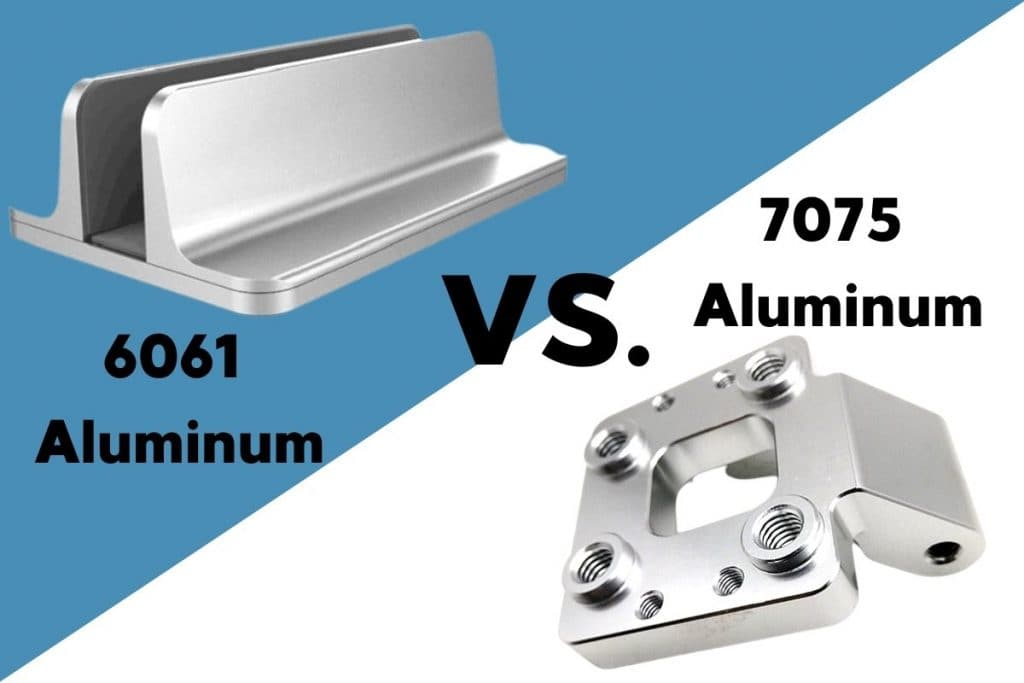
When buyers compare 7075 T6 vs 6061 T6 aluminum, they are rarely asking a purely technical question.
They are usually trying to make a commercial decision with real consequences:
Which alloy gives the right strength without overpaying?
Which one is easier to machine, weld, anodize, or source at scale?
Which material will create fewer production problems once the order moves from drawing to batch manufacturing?
Which choice makes more sense for the actual application, rather than just on paper?
That is why this comparison matters.
Both alloys are widely used, but they solve different problems. 7075 T6 is chosen when high strength and low weight matter most. 6061 T6 is often the more practical answer when buyers need a balance of strength, corrosion resistance, weldability, finish quality, and procurement flexibility.
This article looks at the comparison from a buyer’s perspective, not just a datasheet perspective. The goal is to help OEM teams, sourcing managers, and industrial buyers understand where 7075-T6 genuinely earns its premium—and where 6061-T6 is the smarter business choice.
1. 7075 vs 6061 Strength: The Difference Is Real, but So Is the Trade-Off
The biggest reason buyers look at 7075 T6 vs 6061 T6 is strength.
And here, 7075 clearly leads.
In T6 temper, 7075-T6 typically delivers tensile strength around 572 MPa and yield strength near 503 MPa, while 6061-T6 is usually around 310 MPa tensile strength with much lower yield performance by comparison.
On a strength-only basis, the gap is not subtle. 7075 is the alloy buyers choose when they need a high strength-to-weight ratio and cannot afford structural compromise.
That said, procurement decisions are rarely made on strength alone.
The moment production enters the picture, the comparison becomes more complicated:
7075 T6 is stronger, but harder to machine efficiently and less friendly to welding
6061 T6 is weaker, but easier to source, easier to process, and more forgiving in finishing and assembly work
So the real question is not simply, “Which alloy is stronger?”
It is:
“Does this project benefit enough from 7075’s extra strength to justify its higher cost and narrower manufacturing window?”
2. Understanding the Core Personality of Each Alloy
2.1 6061 T6 Aluminum
6061 T6 is often the practical all-rounder.
Buyers choose it because it offers a useful combination of:
good corrosion resistance
solid but not extreme strength
strong weldability compared with 7075
better processing flexibility in CNC, extrusion, forming, and finishing workflows
This is why 6061 keeps appearing in:
structural supports
enclosures and housings
marine-adjacent components
consumer and industrial equipment casings
anodized aluminum parts where visual consistency matters
For procurement teams, the biggest advantage is not that 6061 is the “best” alloy in every category. It is that it is predictable, scalable, and commercially efficient across a wide range of OEM applications.
2.2 7075 T6 Aluminum
7075 T6 sits in a different category.
It is widely chosen for applications where structural demand is high and the design is trying to save weight without giving up mechanical performance.
Typical reasons buyers choose 7075 include:
high tensile and yield strength
excellent strength-to-weight ratio
strong fatigue performance in demanding service conditions
That makes it highly relevant in:
aerospace and UAV structures
robotics
high-performance transport components
heavily loaded precision parts
The trade-off is equally important:
it is less weld-friendly
it usually needs more careful machining strategy
it can create higher tooling wear and longer cycle time
it often raises the total cost of production, not just the raw material cost
3. 7075-T6 vs 6061-T6: Side-by-Side Property Comparison
Feature / Spec
6061 T6
7075 T6
Tensile Strength
~310 MPa
~572 MPa
Yield Strength
Lower than 7075
~503 MPa
Brinell Hardness
~95 HB
~150 HB
Corrosion Resistance
Better overall balance
More limited, needs closer application review
Weldability
Good
Limited
Anodizing Consistency
Generally better
More sensitive in appearance and finish behavior
CNC Productivity
Easier, faster, lower tooling stress
Slower, harder on tools
Bulk Cost Efficiency
Stronger for scalable production
Higher cost in both material and processing
MOQ Flexibility
Usually easier
Often less flexible
What This Table Really Means for Buyers
A datasheet table can make the decision look simple, but in sourcing work the difference goes beyond numbers.
If the project is strength-critical, 7075 has a clear advantage
If the project is process-heavy, finish-sensitive, or cost-controlled, 6061 often becomes the better option overall
If the project will involve welding, anodizing, cosmetic consistency, or large-batch production, 6061 usually reduces manufacturing risk
In other words, 7075 wins on raw strength. 6061 often wins on total manufacturing practicality.
4. Strategic Trade-Offs That Actually Affect Procurement Decisions
4.1 Strength vs Manufacturing Freedom
This is the central trade-off.
7075 T6 gives buyers more strength margin. 6061 T6 gives engineering and production teams more flexibility.
That difference affects:
design freedom
welding options
part count strategy
fixture complexity
rework risk
4.2 Machining Cost Is Often More Important Than Buyers Expect
Many buyers focus on alloy price first, but machining cost can shift the decision quickly.
In real production:
6061 usually runs faster
tool wear is easier to manage
setups are more forgiving
surface finish is generally easier to control
With 7075, the higher strength comes with a processing price. Tool life, cycle time, and setup care all become more important.
4.3 Finishing and Cosmetic Stability Can Change the Best Choice
For visible parts, 6061 often has a quiet advantage.
It typically gives buyers:
better anodizing consistency
more stable appearance across batches
easier control in powder coating and cosmetic finishing
7075 can still be finished successfully, but it usually demands tighter process control and more attention to surface preparation.
4.4 Lifecycle Cost Matters More Than Material Cost Alone
7075 can reduce weight or allow smaller sections in some designs, which may create value.
At the same time, buyers need to weigh that against:
higher raw material cost
more expensive machining
increased tooling demand
potentially slower throughput
tighter process windows in production
In many OEM programs, the more “expensive” alloy is not the one with the higher price per kilogram. It is the one that quietly increases total manufacturing cost.
5. Additional Factors Procurement Teams Should Not Ignore
5.1 Surface Treatment Compatibility
6061 is often the more forgiving alloy for:
anodizing
powder coating
decorative finishing
batch-to-batch surface consistency
7075 generally needs more deliberate pretreatment and tighter control when finish quality is critical.
5.2 Supplier Capability and Tolerance Strategy
The alloy decision should also depend on the supplier’s real process capability.
A strong supplier should be able to advise on:
machining strategy by alloy hardness
tolerance feasibility at batch scale
whether the part really needs 7075, or whether 6061 can meet the requirement more economically
5.3 Sustainability and Material Recovery
Both alloys are recyclable, but 6061 often performs better in scrap efficiency and process economy at scale. That can matter for buyers working on sustainability metrics or long-term cost control.
6. Industry-Specific Recommendations: Where Each Alloy Makes Better Sense
6.1 Aerospace, UAV, and Weight-Critical Structures
This is where 7075 T6 often earns its place.
If the design needs high strength under tight weight limits, 7075 can justify the extra material and machining cost.
6.2 Electronics, Enclosures, and Finish-Sensitive Products
Sensitive Products
For housings, enclosures, and parts that need stable cosmetic finishing, 6061 T6 is often the safer choice.
It typically gives better consistency in:
anodizing appearance
surface finish control
enclosure-grade CNC and finishing workflows
6.3 Automotive and Transport Components
This category often needs both alloys, depending on the role of the part.
6061 fits brackets, supports, trim structures, and many general transport components
7075 is more appropriate for highly stressed, weight-sensitive parts where premium strength is actually needed
6.4 Renewable Energy and Equipment Frames
In battery cases, inverter frames, and aluminum enclosure systems, 6061 is often preferred because it balances structural performance with better weldability, finishing behavior, and cost control.
6.5 Medical and Precision Equipment
When buyers need reliable finish quality, corrosion resistance, and cleaner manufacturing consistency, 6061 is usually the more practical fit.
7. Decision Pitfalls Buyers Should Avoid
A few mistakes appear again and again in aluminum sourcing:
7.1 Over-Specifying Strength
Some projects move to 7075 simply because it sounds more advanced. If the application does not truly need that level of strength, the buyer may end up paying more for no real commercial benefit.
7.2 Assuming Finishes Behave the Same Across Alloys
Anodizing and cosmetic treatment results are not identical across 6061 and 7075. That difference can matter a lot in visible products.
7.3 Ignoring Tooling and Throughput Cost
The raw material quote is only part of the cost story. Cycle time, tool wear, and finishing yield can change the real economics of the project.
7.4 Skipping Export and Compliance Review
For certain industries and jurisdictions, alloy choice can influence documentation, scrutiny, and approval workflows. Buyers should review this early instead of treating it as a shipping-stage issue.
8. Why Global Buyers Work with YISHANG
At YISHANG, we support OEM and industrial buyers with aluminum component production across a wide range of project types and export markets.
Our capabilities include:
6061 and 7075 aluminum machining and fabrication
CNC machining, forming, finishing, and assembly support
surface treatments such as anodizing, conversion coating, and related industrial finishing
engineering-oriented support for tolerance, finish, and manufacturability decisions
We work with customers across industries including electronics, medical, transport, equipment, and structural fabrication, helping them choose materials based on what works in production, not just what looks strong in a chart.
9. FAQ: Buyer Essentials
Which is stronger, 7075 T6 or 6061 T6?
7075 T6 is clearly stronger in both tensile and yield performance.
Which is easier to machine and finish?
In most high-volume manufacturing environments, 6061 T6 is easier and more economical to machine, finish, and process consistently.
Which alloy is better for welding?
6061 T6 is generally the better option where welding is part of the project.
Which alloy is better for anodizing appearance?
For many finish-sensitive and cosmetic applications, 6061 T6 usually offers more stable anodizing behavior.
Should buyers always choose 7075 for premium products?
No. A premium product does not automatically require 7075. The right alloy depends on the actual load case, geometry, process route, and cost target.
10. Final Thoughts
Both alloys are valuable, but they belong in different purchasing conversations.
Choose 7075 T6 when strength, fatigue resistance, and weight reduction are the real drivers
Choose 6061 T6 when the project depends on broader manufacturing flexibility, better finishing consistency, easier sourcing, and more balanced total cost
The best alloy is not the one with the highest number in the strength column. It is the one that fits the application, the process, and the commercial reality of the project.
That is where YISHANG adds value—by helping buyers move beyond simple material comparison and make decisions that work in actual production.
If you have any questions or need a quote, please send us a message. One of our specialists will get back to you within 24 hours and help you select the correct valve for your needs.