
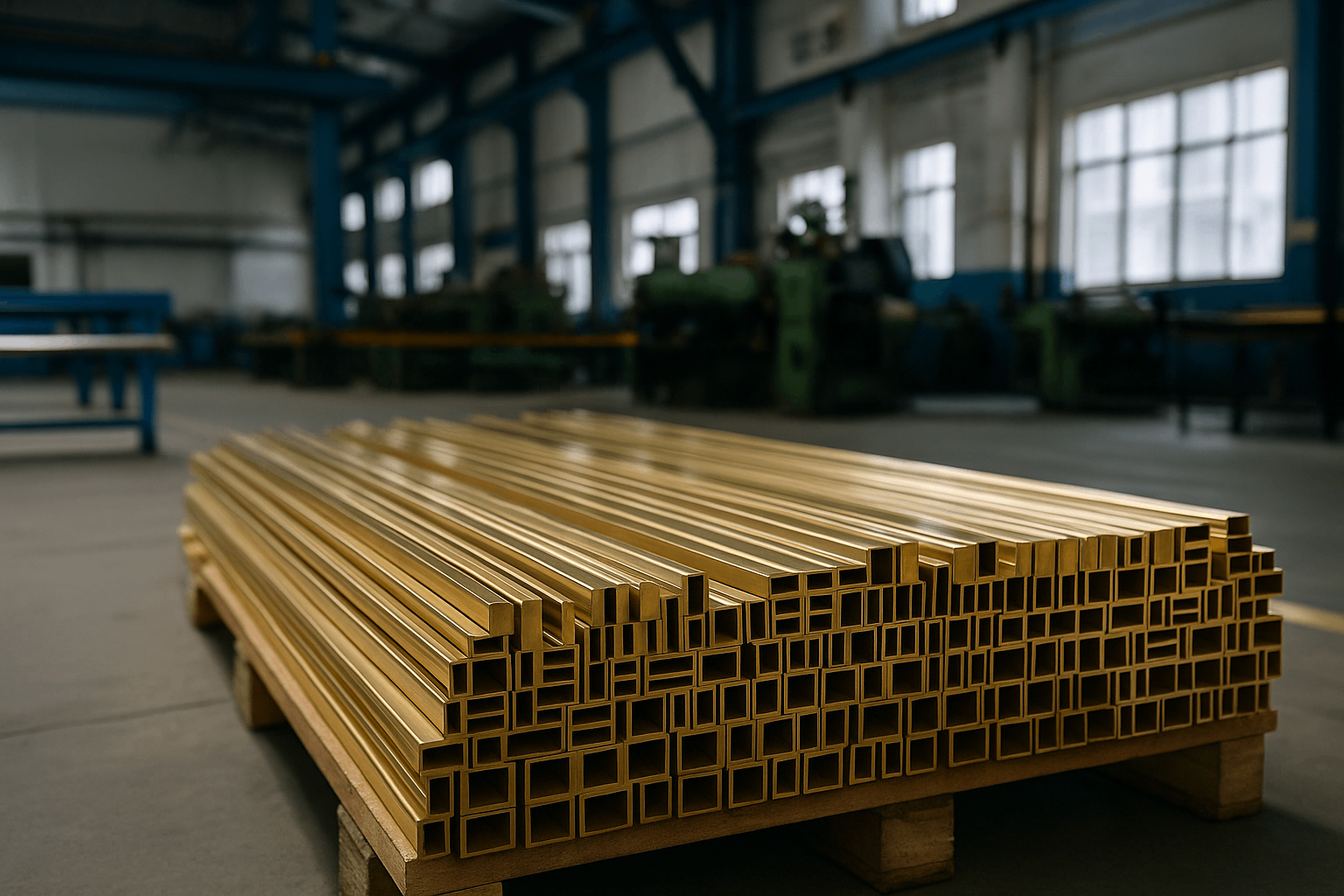
Why Brass Extrusion Matters to B2B Buyers
Brass extrusion is more than a shaping process—it’s a key enabler of scalable, high-performance metal parts for industries like automotive, construction, energy storage, and architectural hardware. For international procurement managers, brass extrusion offers a unique balance of formability, corrosion resistance, conductivity, and finish quality, especially in OEM or ODM contexts.
With over 26 years in metal fabrication and exports to 50+ countries, YISHANG delivers brass extrusion solutions that integrate design, production, finishing, and final packaging—all optimized for bulk procurement.
The Brass Extrusion Process: From Billet to Finished Profile
Brass extrusion begins with heating a billet and forcing it through a precision die to create a consistent cross-sectional profile. It accommodates both simple shapes (rods, tubes, angles) and complex geometries tailored to the product’s end use.
There are four major brass extrusion methods:
Direct (Forward) Extrusion
The billet and ram move in the same direction. Simple and cost-effective, but high friction between billet and container may require stronger presses and more lubricant.
Indirect (Backward) Extrusion
The die moves toward the billet. Lower friction and better surface finish, but cross-section size is limited by stem diameter.
Impact Extrusion
Used for producing thin-walled brass tubes or cups. Low-cost tooling and fast for small, hollow parts.
Hydrostatic Extrusion
Pressure is transmitted via fluid around the billet. Ideal for delicate alloys or intricate profiles with minimal surface damage.
Each method has implications for lead time, extrusion force, surface finish, and tooling cost—all factors procurement teams should evaluate.
How Brass Extrusion Design Impacts Cost and Lead Time
For B2B buyers, especially in bulk procurement, the design of a brass extrusion profile isn’t just about geometry—it’s about downstream efficiency. Thoughtful design decisions made early can significantly reduce post-processing time, tooling wear, and lead time.
What Makes a Design Cost-Efficient?
Balanced Wall Thickness: Avoids deformation and speeds up cooling during production.
Streamlined Profile Geometry: Minimizes machining passes and surface finishing steps.
Die-Friendly Features: Fillets, radii, and draft angles prolong die life and reduce rework.
Whether you’re transitioning from aluminum extrusion suppliers or shifting from 80/20 aluminum framing systems, brass demands a different design logic to maintain tolerances and surface integrity.
From Profile to Material: Selecting the Right Brass Alloy
Once the shape is defined, material selection becomes a critical lever. Not all brass is the same—its performance, machinability, corrosion resistance, and compliance vary greatly by alloy.
| Alloy | Key Features | Common Use Cases |
|---|---|---|
| C360 | High-speed machinability, low tool wear | Sensor connectors, plumbing sleeves |
| C385 | Great for extruding, aesthetic finishes | Decorative frames, window fittings |
| ECOBRASS | Lead-free, DZR-compliant | Potable water systems, exports |
📎 Recommended profile sketches and dimensional guidelines available upon request.
Designers accustomed to aluminum extrusion tubes or CNC aluminum frames often underestimate the dimensional consistency that brass can deliver—especially in load-bearing or fluid-dynamic systems.
Post-Processing: Where Design Meets Functionality
Why Design Decisions Affect Cost Later
Complex designs often mean additional machining, longer tool paths, or precision deburring. In contrast, clean extrusion-ready profiles streamline everything—from polishing to packaging.
At YISHANG, we integrate post-processing into the quoting stage. You’ll know early how design tweaks affect cost and feasibility.
Core Finishing Services
Polishing: Mirror or matte finish for visible assemblies
Electroplating: Chrome/nickel options for conductivity or wear
Powder Coating: Weatherproofing for exterior use
Optional Add-On Services
Precision CNC holes or thread tapping
Laser engraving for traceability
Custom foam or carton packaging with anti-oxidation bags
We consistently hit ±0.15 mm tolerances, and for tighter specs, tooling customization is available. That’s why sourcing from YISHANG means fewer surprises post-approval.
Use Cases: From Power Systems to Precision Components
YISHANG supplies brass extrusion parts to a wide variety of sectors:
Automotive: Housing brackets, busbar enclosures, vibration-resistant terminals
Electronics: Custom pins, grounding tabs, brass electrical connectors
Architectural: Decorative brass channels, stair edging, partition bars
Plumbing: RoHS-compliant couplings, DZR fittings for global standards
Energy: Structural brass extrusions for battery storage and solar grid enclosures
We support 2mm brass sections up to 80 mm thick extrusions depending on profile type and project volume.
Choosing the Right Supplier: From Certification to Scalability
What Makes a Brass Supplier Reliable for Long-Term Sourcing?
For overseas buyers, selecting the right brass or aluminum extrusion manufacturers goes beyond price. Ask:
Does the supplier meet ISO 9001 and provide alloy composition reports?
Can they deliver at MOQ from 1,000 pcs to 100,000+ without quality variance?
Do they offer DFM guidance and sampling under 10 days?
Are quotes transparent—do they specify whether mold/tooling costs are included?
Can they support FOB/CIF terms and provide consolidated export documentation?
What is the charge and timeline for first-time sampling and mold setup?
YISHANG does. We serve customers across 50+ countries, delivering over 10,000 extruded profiles annually. Whether you need a brass metal supplier or automated aluminum trim extrusion equivalent, we provide transparency, speed, and reliability.
FAQs for B2B Buyers
Q: Do you support confidentiality for drawings or NDA agreements?
Yes. We are open to signing NDAs and keep all drawings securely stored within a restricted team.
Q: What are your cooperation steps after an inquiry?
Quotation → Confirmation → Sample → Mass Production → Inspection → Delivery. We guide you through every stage clearly.
Q: Can I request samples before placing bulk orders?
Yes, sample orders are available. Tooling and sample fees are clearly quoted in advance.
Q: What are typical lead times for brass extrusion tooling and delivery?
Tooling: 7–12 working days. Mass production: 15–25 days based on volume and finish.
Conclusion
Brass extrusion enables scalable, durable, and precision-shaped parts across industries. For B2B procurement teams, success lies in understanding how design, alloy choice, and supplier capability combine to influence long-term cost, performance, and delivery stability.
YISHANG offers a vertically integrated brass extrusion solution—from CAD review to packed, labeled export cartons—under a single roof. Ready to quote? Contact us to discuss your custom project.