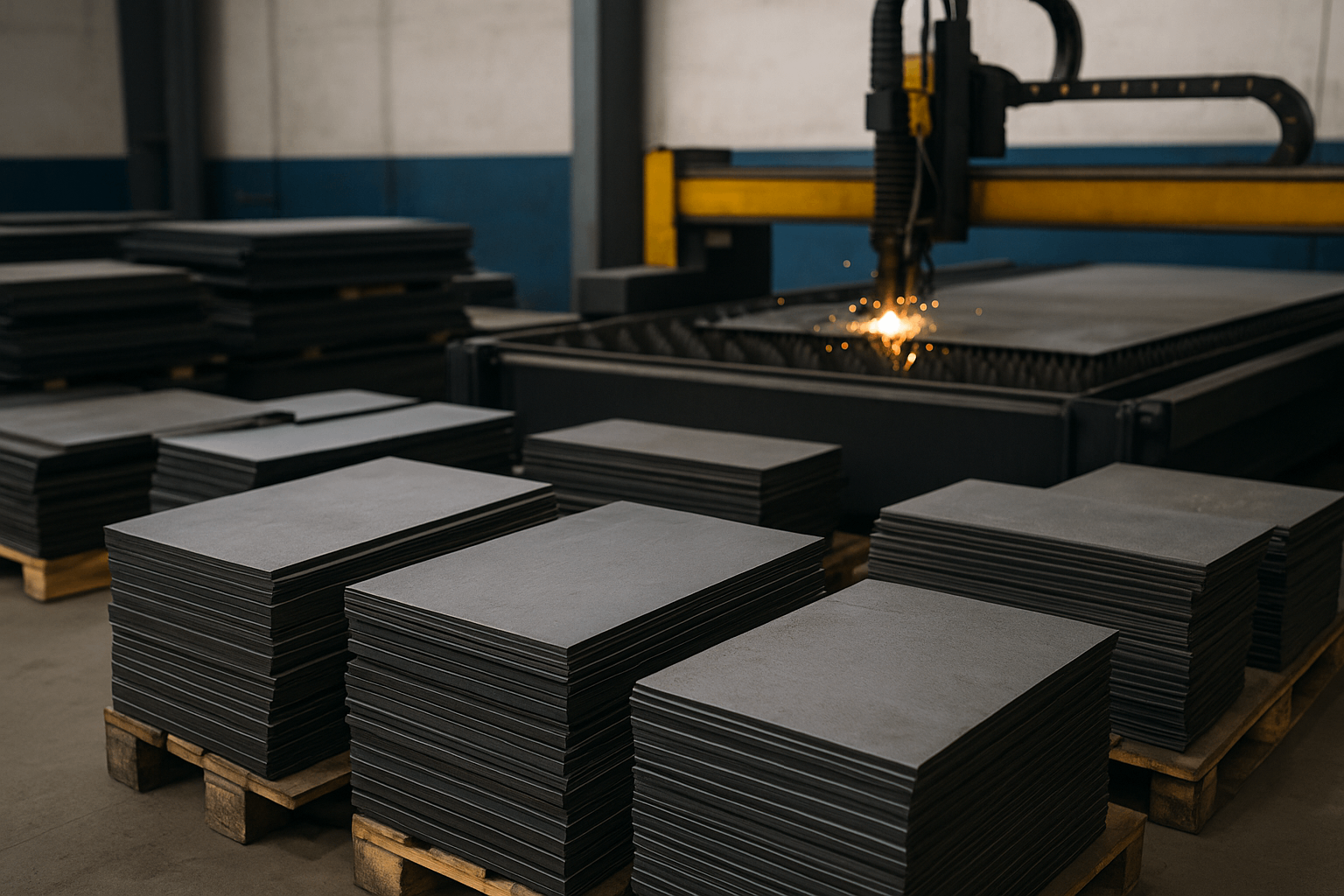
Why 1055 Carbon Steel Matters for Industrial Buyers
1055 carbon steel remains relevant in industrial procurement because it offers a practical balance of hardness potential, wear resistance, processability, and cost control. For buyers who do not need the added cost of alloy steel but still need stronger performance than low-carbon grades can provide, 1055 often sits in a useful middle position.
In sourcing terms, that balance matters. Buyers are often looking for materials that can support repeatable forming, controlled heat treatment, and dependable mechanical performance without creating unnecessary price pressure across high-volume orders.
What Is 1055 Carbon Steel Really Offering for B2B Procurement?
1055 is a medium-carbon steel, typically built around about 0.55% carbon, which gives it stronger hardening potential than mild steel while remaining more workable than very high-carbon grades.
For B2B buyers, this usually means a material that can support better wear resistance, stronger hardness after heat treatment, and more robust service performance than lower-carbon alternatives such as 1018 or 1045 in certain use cases.
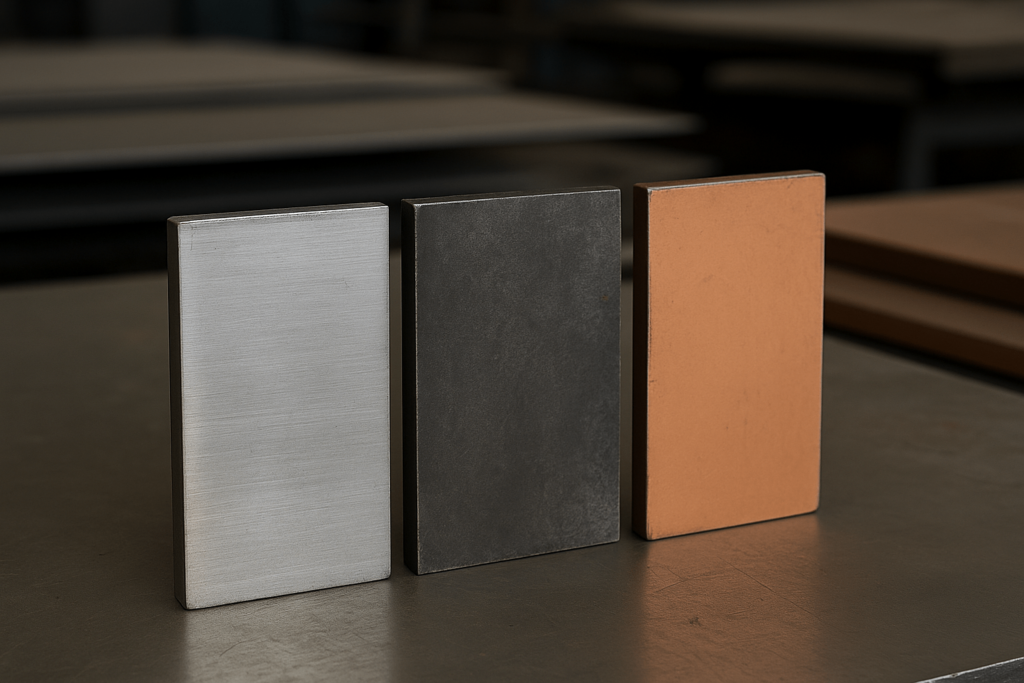
Comparative View for Sourcing Decisions
A simple sourcing comparison looks like this:
| Steel Grade | Carbon Content | Typical Hardened Range (HRC) | Common Use Case |
|---|---|---|---|
| 1045 | ~0.45% | Lower than 1055 | Shafts, gear blanks |
| 1055 | ~0.55% | Mid-to-high hardness potential | Blades, tools, wear-related parts |
| 1095 | ~0.95% | Higher hardness potential | Precision cutters |
For buyers, 1055 often stands out because it offers stronger hardening potential than 1045 without immediately moving into the narrower process window of very high-carbon grades such as 1095.
Heat Treatment: Engineering Performance into the Supply Chain
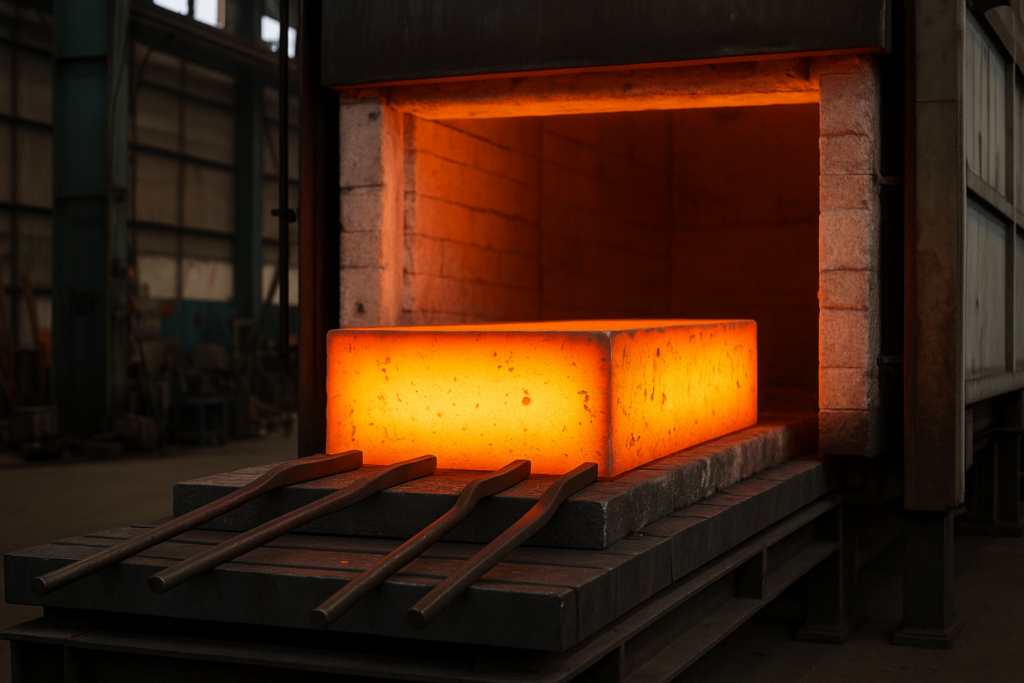
The real performance of 1055 carbon steel is strongly tied to heat treatment. Austenitizing, quenching, and tempering determine whether the final part will favor hardness, toughness, or a more balanced mechanical profile.
For procurement teams, this matters because the same base material can serve different applications depending on the heat-treatment target. That can simplify sourcing when buyers want one steel family to cover multiple related components.
Mechanical Properties and Buyer Engineering Priorities
For buyers, mechanical value is not just about headline strength. It is about how the material performs in the actual part.
1055 is often chosen where the part needs a useful combination of strength, hardness response, impact tolerance, and machining practicality before final hardening. Compared with more highly alloyed steels, it can offer a simpler and often more cost-stable route when extreme heat resistance or deep-section hardenability is not required.
Application Logic: Where 1055 Delivers the Most Value
Knives, Blades, and Tools
1055 is often used in cutting and impact-related tools because it can develop useful hardness while still retaining more toughness than very high-carbon alternatives in some applications.
Agricultural and Construction Parts
In agricultural and construction-related hardware, 1055 can offer better wear and impact performance than mild steel where parts face abrasion, bending stress, or repeated field use.
Automotive and General Hardware
For brackets, levers, retainers, and medium-duty hardware, 1055 may be suitable when buyers need stronger performance than low-carbon steel but do not need to move into a more expensive alloy grade.
Trade-Offs and Engineering Cautions
1055 also comes with limitations that buyers should understand clearly.
It does not provide inherent corrosion resistance, so finish selection matters in outdoor or humid environments. Its weldability is more limited than low-carbon steel, especially if heat treatment and final performance are important. It is also not the best choice for applications that require strong performance at sustained high temperature.
These trade-offs do not make 1055 a poor material. They simply define where it fits well and where another material may be more suitable.
Strategic Fit for Industrial Buyers
For many industrial buyers, 1055 fits best where the project needs repeatable performance, moderate cost discipline, and flexible heat-treatment options.
It can be especially useful in sourcing strategies where buyers want to reduce unnecessary alloy cost while still supporting stronger wear and hardness requirements than mild steel can usually provide.
Ordering 1055 Carbon Steel Parts with YISHANG
At Yishang Metal Products Co., Ltd., we support OEM and wholesale customers with custom metal fabrication for industrial parts that may include forming, machining, finishing, and assembly needs around carbon steel and other common engineering materials.
With 26+ years of manufacturing experience, we support processes including laser cutting, bending, stamping, welding, CNC machining, surface treatment, assembly, packaging, inspection, and shipment. For carbon steel parts, we help customers evaluate whether the material, heat-treatment route, and surface finish align with the real service requirement.
FAQs
Is 1055 suitable for outdoor products?
Yes, but only with the correct protective finish. Since 1055 is not corrosion-resistant on its own, outdoor use usually requires an appropriate coating or surface treatment.
Can it replace 4140 steel?
In some medium-stress applications it may be a practical substitute, but where higher hardenability, deeper section performance, or greater heat resistance is needed, 4140 still has advantages.
What’s its machinability rating?
Machinability is generally more manageable before hardening. After heat treatment, tooling strategy becomes more important.
Does it suit structural applications?
It can suit medium-load structural or impact-facing parts, provided the design, heat treatment, and finishing route all match the application.
Why choose YISHANG for 1055 components?
Because we support vertically integrated custom metal manufacturing with a focus on process coordination, quality control, export packaging, and practical sourcing support.