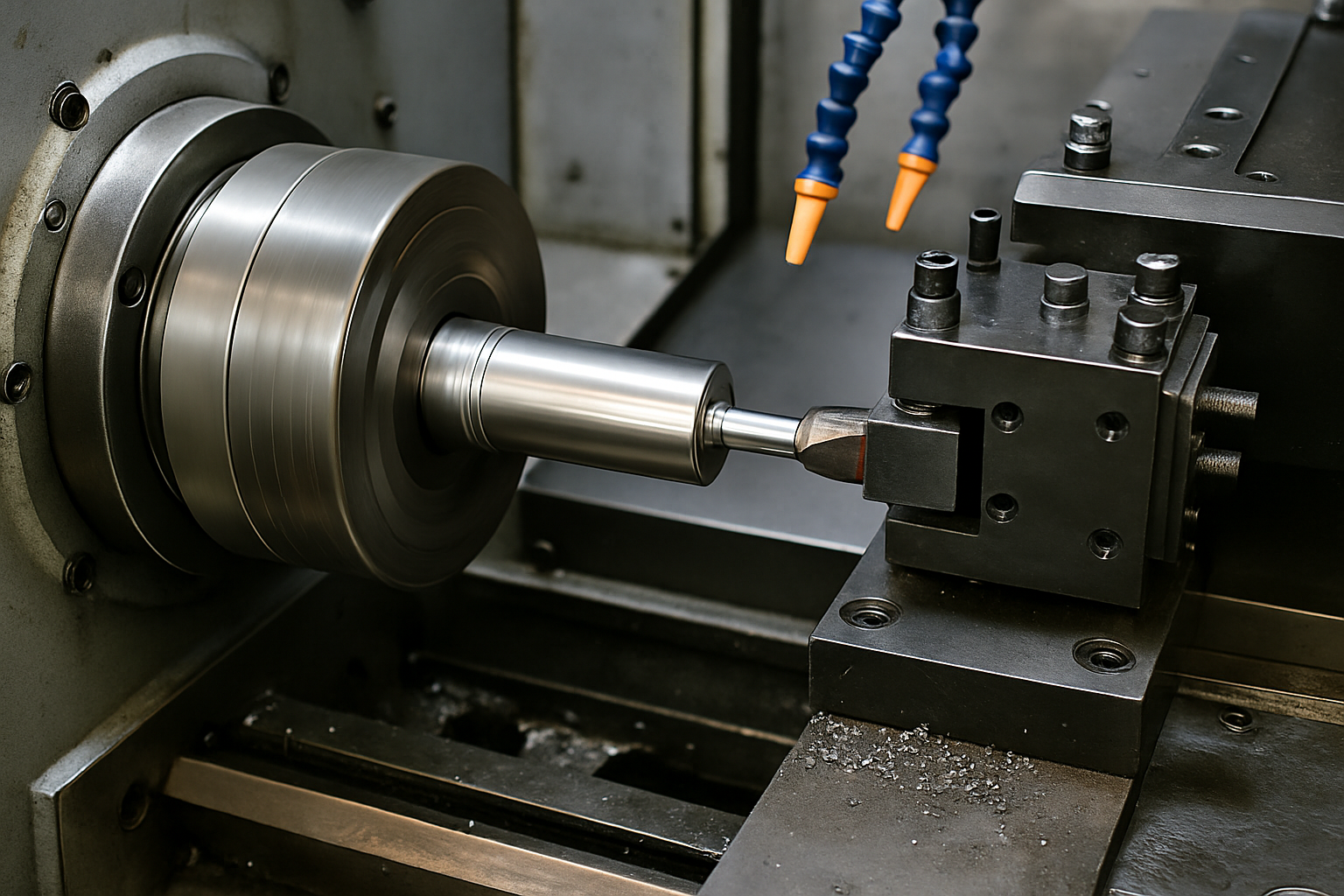
CNC turning is one of the most efficient processes for producing parts with cylindrical or concentric geometry, but the answer to “what parts can CNC turning make?” is broader than many buyers expect.
Turning is not limited to simple round pieces. Modern lathes can produce shafts, bushings, threaded connectors, hollow parts, and components that also include secondary features such as cross-holes, grooves, and slots.
For buyers, the real question is not just what turning can make in theory, but which part geometries are most efficient, stable, and cost-effective when produced by turning instead of milling or another process.
What CNC Turning Is Really Best At
CNC turning is most efficient when a part’s main geometry is organized around a center axis. That is why the process is so effective for diameter control, concentricity, and repeatable round features.
Modern turning centers can go beyond simple round parts by adding live tooling, drilling, grooving, and limited milling operations. Even so, the strongest fit is still a part whose primary logic is cylindrical.
Core Categories of CNC Turned Parts
1. Precision Shafts and Rotors
Shafts, pins, axles, and rotors are among the most common turned parts because they depend on diameter control, runout, and concentricity.
2. Threaded and Hollow Components
Fittings, nozzles, connectors, valve seats, and hollow threaded parts are also strong turning candidates because the process controls both internal and external cylindrical features well.
3. Bushings, Sleeves, and Spacers
These parts may appear simple, but they often require reliable ID/OD alignment and repeatability across large quantities, which makes turning a practical choice.
4. Turned Parts with Secondary Features
With live tooling, some turned parts can also include drilled holes, grooves, slots, or flats. This can reduce the need for secondary milling when the extra features are limited and the part remains fundamentally cylindrical.
When CNC Turning Is Not the Right Choice
CNC turning is highly efficient, but it is not universal. Some part geometries are better handled by milling, laser cutting, or additive methods.
Typical Poor Fits for Turning
flat or prismatic parts with little cylindrical logic;
components with important features on multiple unrelated faces;
thin sheet-like parts that may deform under clamping;
highly organic internal structures that cutting tools cannot access.
| Part Type | Better-Fit Process |
| Square or prismatic block | CNC milling |
| Thin flat sheet part | Laser cutting or sheet fabrication |
| Complex internal organic geometry | 3D printing |
For buyers, this matters because the wrong process choice often increases cost, setup time, and tolerance risk before production even begins.
Where CNC Turning Adds the Most Value
Automotive and Motion Components
Turning is especially valuable for shafts, pins, spacers, threaded fittings, and other rotational parts produced in large quantities.
Medical and Precision Components
In medical and other high-precision industries, turning is useful where small cylindrical parts require controlled surfaces, stable geometry, and documented tolerances.
HVAC, Fluid, and Aerospace-Related Uses
Fittings, rings, nozzles, valve-related parts, and other concentric components often benefit from turning because the geometry fits the process naturally.
A Quick Fit Checklist
Before requesting a quotation for a turned part, buyers can ask:
Is the part primarily organized around a center axis?
Are the most critical features diameters, threads, bores, or grooves?
Can live tooling handle the secondary features, if needed?
Would milling create unnecessary transfers or higher cost?
| Part Feature | Good Fit for Turning? |
| Round shaft | Yes |
| Concentric threads | Yes |
| Large milled pocket | Usually no |
| Multi-face bracket | Usually no |
Turning Within the Wider Workflow
Turning often works best when evaluated as part of the full manufacturing route. In some projects, turning handles the core geometry while live tooling, secondary machining, finishing, inspection, or kitting complete the part.
For buyers, this matters because the value of CNC turning is not only the cutting operation itself, but also how it reduces transfers, simplifies quality control, and improves repeatability across the whole workflow.
FAQ
Can CNC turning produce aluminum parts in high volume?
Yes. Aluminum shafts, bushings, spacers, and similar cylindrical parts are commonly produced through turning at scale.
Can turned parts include more than round features?
Yes. Live tooling can add certain drilled, slotted, or milled features, but the part is still best suited for turning when its main geometry remains cylindrical.
What tolerances are common for CNC turned parts?
That depends on material, size, geometry, and inspection requirements, but turning is often chosen where diameter control and concentricity are especially important.
Can turning and secondary operations be combined?
Yes. In many projects, turning is only one step within a broader workflow that may also include secondary machining, finishing, inspection, or assembly preparation.
Final Thoughts
CNC turning is most valuable when the part geometry matches the process. It is especially effective for shafts, bushings, threaded connectors, hollow components, and other parts built around concentric or cylindrical features.
For buyers, the best question is not only “can this part be turned?” but also “is turning the most efficient way to make it with the required geometry, tolerance, and workflow stability?”