
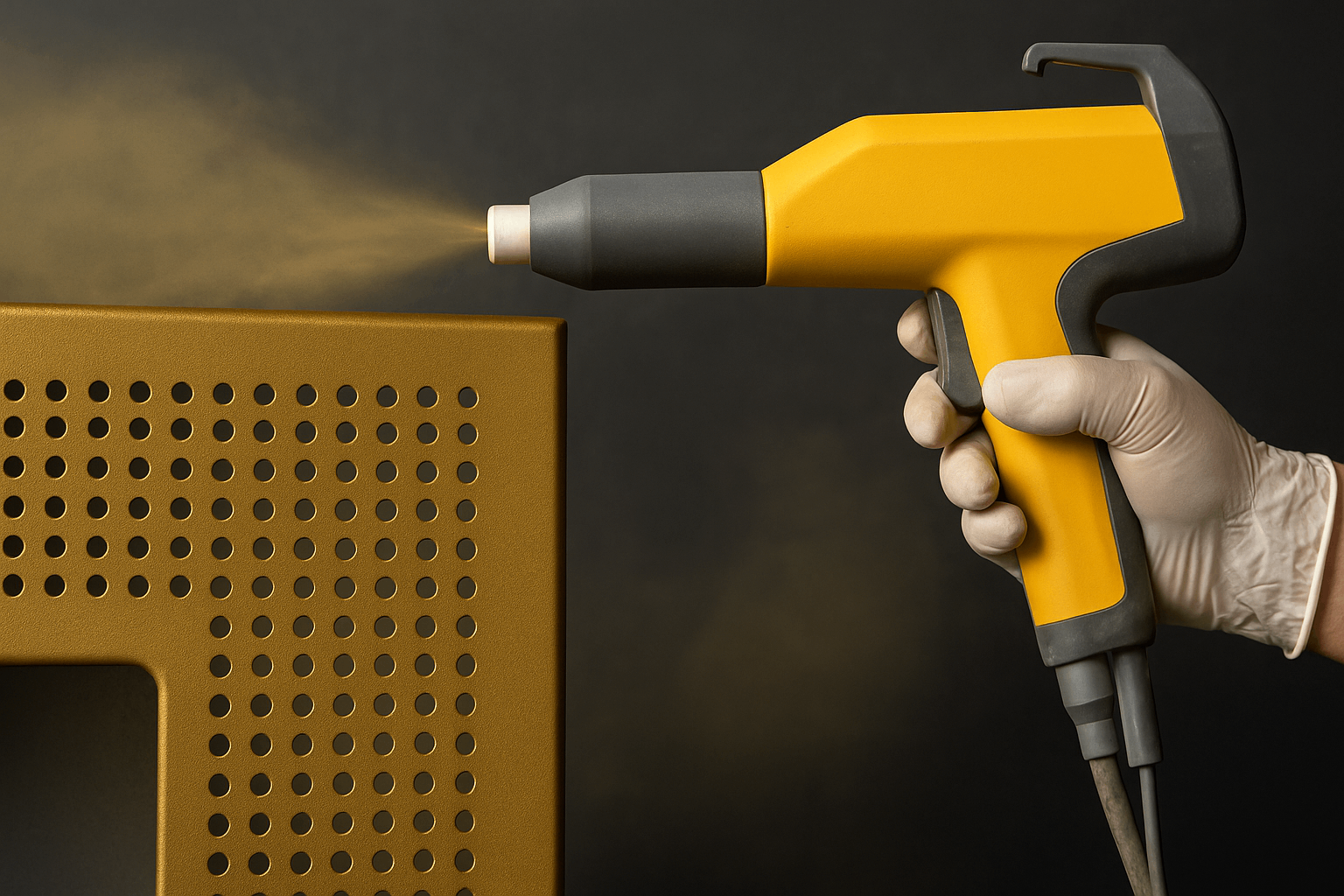
Introduction: Beyond the Trend – Why Brass Finishes Demand Engineering-Grade Solutions
A powerful aesthetic shift has marked the landscape of contemporary design, signaling a definitive return to the warmth and classic elegance of brass.
This revival is evident in high-end architecture, luxury appliances, and premium retail fixtures, creating strong demand for durable coatings that deliver this sophisticated look.
For engineers, designers, and procurement professionals, the challenge is translating this trend into a reliable, scalable product. The goal is to specify and produce brass powder coating finishes that are not only beautiful but also functionally robust.
This guide is a technical resource for navigating these complexities. We explore the material science, process engineering, and quality control systems behind long-term coating performance—helping you minimize field failures and maximize product value.
Section 1: Decoding "Brass Powder Coating": Key Interpretations for Industry
The term “brass powder coating” is often used broadly, but for engineering and procurement, it refers to two distinct industrial processes. Understanding what is brass powder coating is critical to selecting materials and ensuring quality standards.
Coating on a Brass Substrate
This definition refers to applying powder coat—of any type—onto solid brass or copper-zinc alloy components.
It is possible to powder coat brass, but it presents unique challenges. The goal is often to enhance durability, improve corrosion resistance, or apply a clear coat to prevent tarnishing. This is a common powder coating over brass approach in decorative and functional product lines.
Brass has a lower melting point and different thermal behavior than steel. Curing schedules must be precisely controlled to avoid damaging part structure.
Because brass oxidizes easily, surface preparation is critical. Without proper treatment, adhesion failure is likely. This process requires technical finishing expertise.
Creating a Brass-Effect Finish
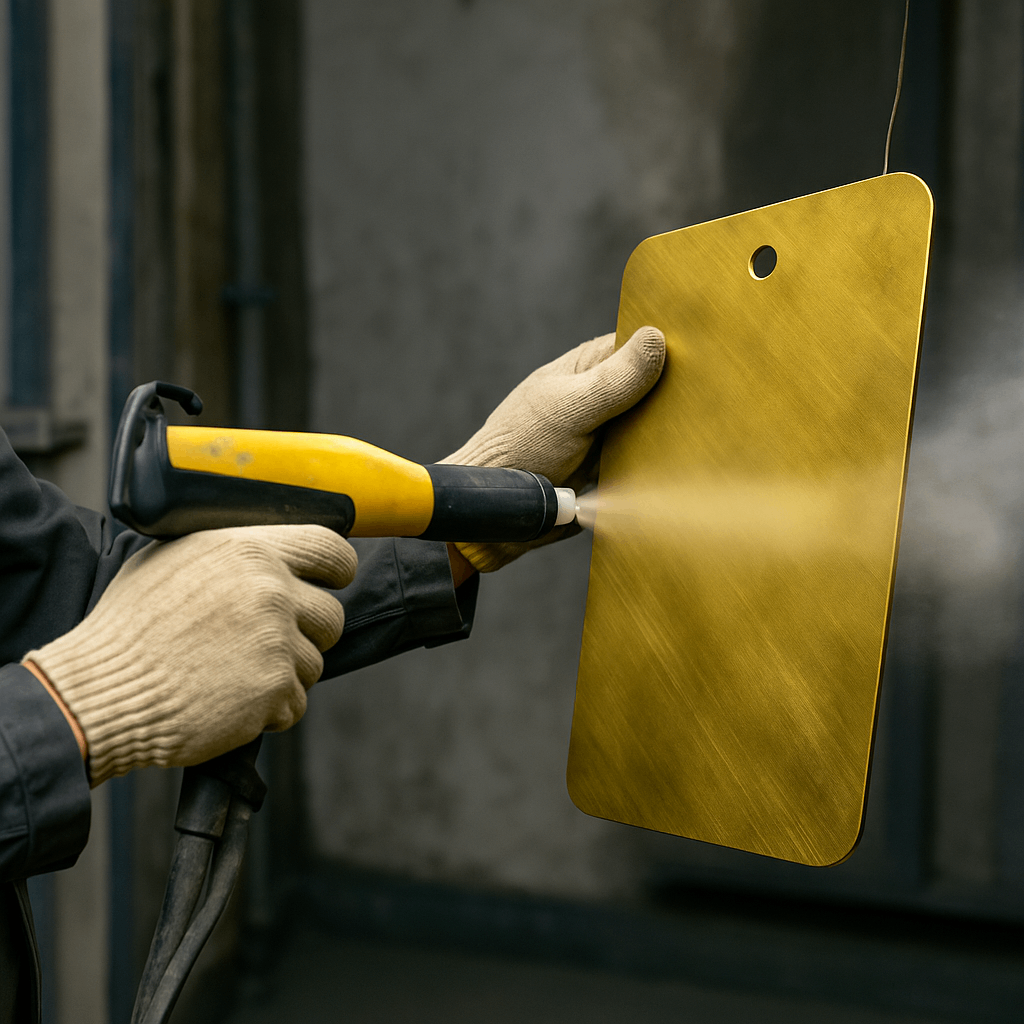
This more common use refers to applying brass effect powder coat to substrates like steel or aluminum.
It enables the look of brass—such as polished or antique brass powder coat—on products where solid brass is impractical due to cost or weight. In fact, many projects opt for brass look vs real brass finish options to balance aesthetics and performance.
This requires advanced knowledge of metallic powder coat colors. It’s not just about mimicking a color, but replicating the texture and depth of a brushed brass finish.
This process enables scalable production of components that combine luxury aesthetics with industrial-grade durability.
Section 2: The Science Behind the Finish – Formulating for Performance and Cost
The final quality of a brass powder coating depends on chemistry. Understanding powder coating formulation helps evaluate supplier competence and control lifecycle costs.
The polymer resin and metallic pigment system are the two most important decisions—they determine field performance, warranty life, and production yield.
Choosing the Right Polymer: Resin Comparison for Specific Applications
Polymer resins form the coating film and define durability. Matching the powder coating resin types to the use environment prevents failures.
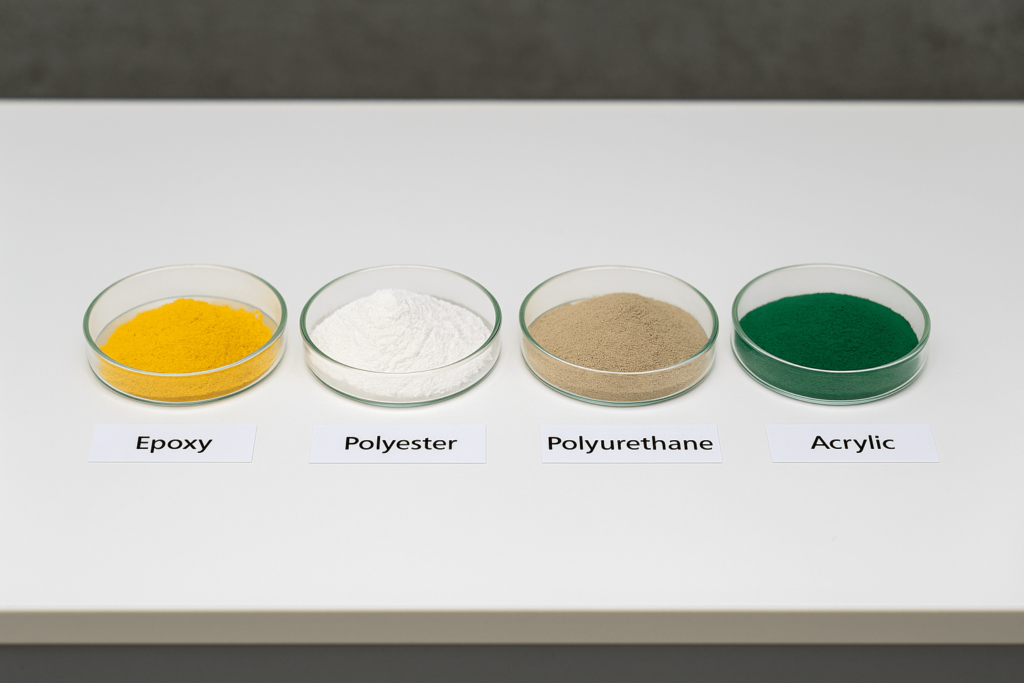
The epoxy vs polyester powder coat debate is foundational. Epoxies offer excellent chemical resistance but poor UV performance—ideal for indoor use. Polyesters are preferred for outdoor exposure due to strong UV resistance.
For architectural needs, “Super Durable” polyesters (AAMA 2604 compliant) ensure long-term gloss and color retention.
Polyurethane coatings bring added chemical resistance, and Epoxy-Polyester Hybrids balance cost and function for indoor decorative goods.
| Resin Type | UV Resistance (1–5) | Chemical Resistance (1–5) | Procurement Use Case |
|---|---|---|---|
| Epoxy | 1 (Poor) | 5 (Excellent) | Best for primers and hidden indoor parts needing chemical protection. |
| Polyester | 4 / 5 (Super Durable) | 3 (Good) | Preferred for outdoor products; AAMA 2604 powder coating is critical for architectural warranty requirements. |
| Epoxy-Polyester Hybrid | 2 (Fair) | 4 (Very Good) | Balanced solution for decorative indoor items like furniture, fixtures, and appliances. |
| Polyurethane (PU) | 5 (Excellent) | 4 (Very Good) | Premium option for architectural or automotive uses needing high durability and flawless appearance. |
Metallic Powder Types: Choosing Bonded Over Dry Blend
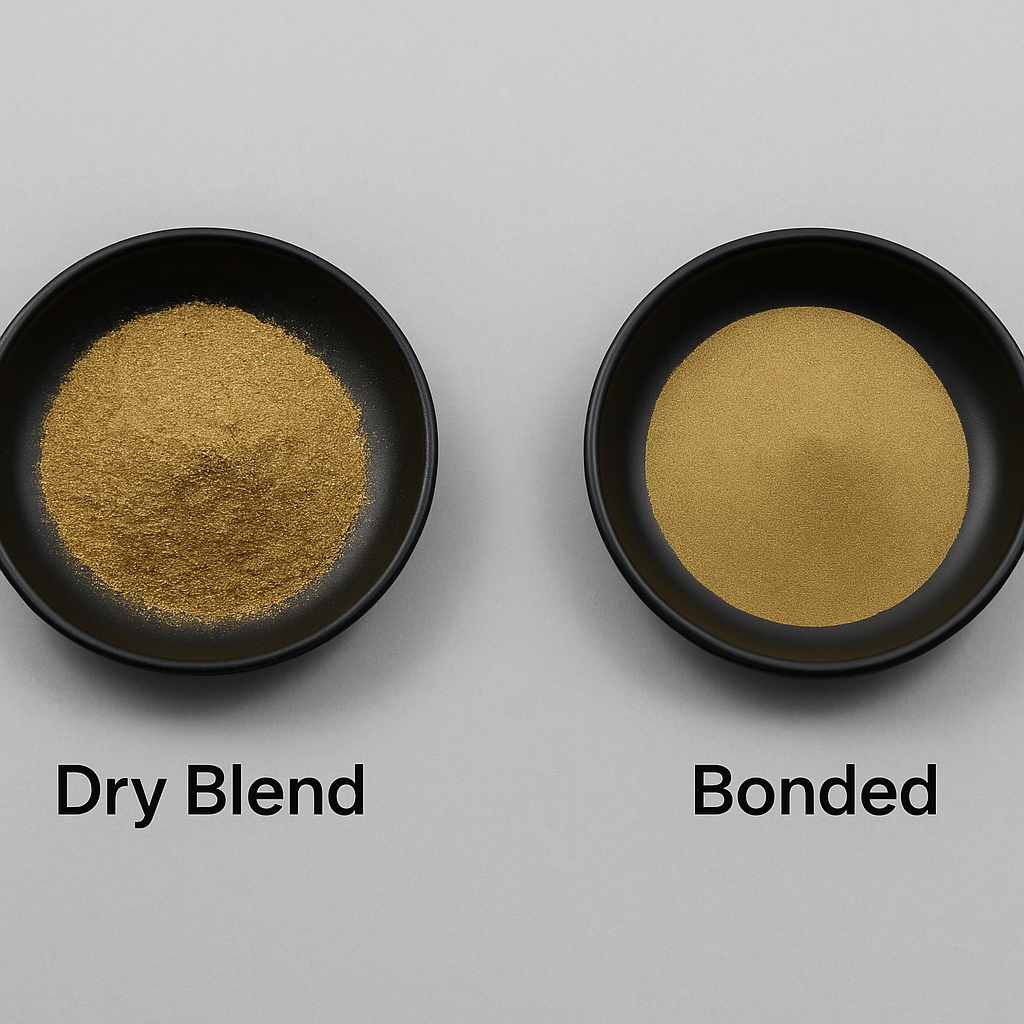
For metallic finishes, choosing between bonded and dry-blend powder has major cost and quality implications.
Dry blend metallic powder is a simple mixture of base resin and metallic flakes. During application, separation causes inconsistent appearance and prevents powder coat recycling, increasing waste and reducing consistency.
Bonded metallic powder coating thermally fuses flakes to resin particles, solving these problems:
Uniform Application: Reduces reject rates with repeatable finish quality.
Reclaimable Overspray: Up to 30% of unused powder can be recycled, lowering costs.
Color Consistency: Ensures new orders match previous runs exactly.
For scalable, reliable production, bonded powder is the strategic choice for wholesale buyers selecting metallic powder coating types.
Section 3: Durability Starts Here – Pre-Treatment Essentials
Inadequate powder coating pre-treatment is a leading cause of failure. Understanding a supplier’s surface prep method reveals their commitment to quality.
The metal finishing process determines adhesion and corrosion resistance.
Universal Process: Clean and Profile
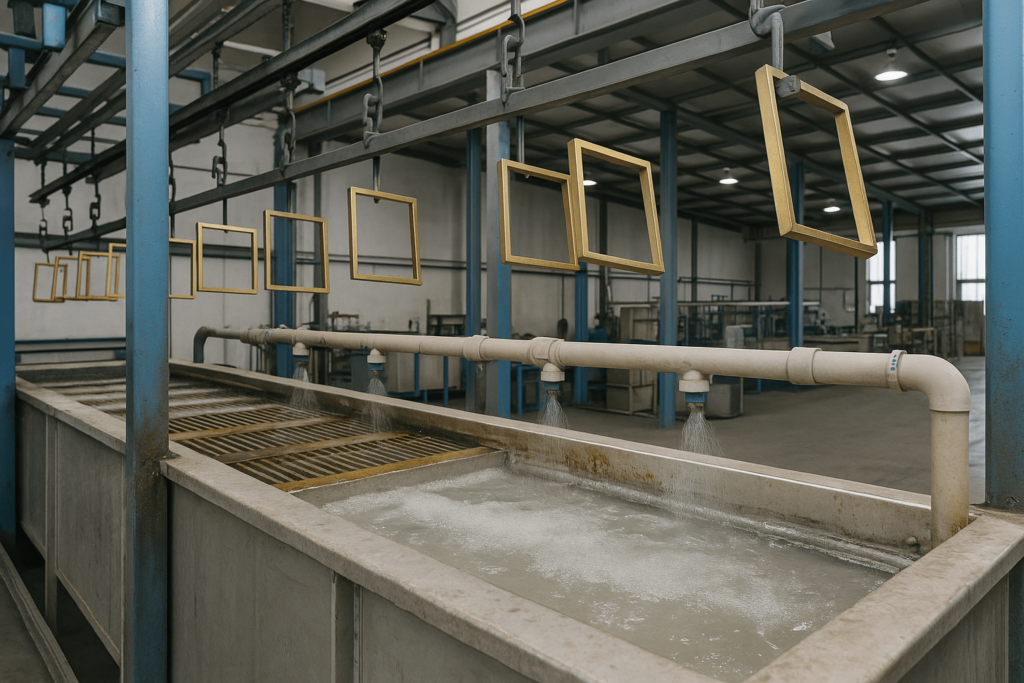
Pre-treatment has two goals: clean the metal and create a bonding profile.
Cleaning metal before powder coating removes contaminants (oils, oxides) using multi-stage chemical washes. Profiling introduces texture using abrasive blasting or conversion coating (like zinc phosphate or zirconium-based).
These treatments improve adhesion and protect against corrosion.
Specific for Brass: Handling Oxidation Risks
Brass oxidizes quickly, creating adhesion problems. Proper pre-treatment for brass involves acid etching or conversion coatings for copper alloys.
A self-etching primer for brass can be added to maximize adhesion. Suppliers not following these brass-specific protocols may produce substandard results.
Section 4: Application & Curing – Precision in Execution
Once prep and formulation are in place, the focus turns to application.
For wholesale orders, supplier control of the powder coating application process ensures consistent quality.
Application Techniques
Electrostatic spray (ESD) is most common. Charged powder adheres to grounded metal. Alternatively, fluidized bed coating dips pre-heated parts into powder.
Controlling voltage, airflow, and gun distance improves transfer efficiency. Particle size impacts powder flow and finish uniformity.
Curing Process
The powder coating curing process involves heating to trigger resin cross-linking. Typical powder coat oven temperature is 325°F–400°F (163°C–204°C), with bake times around 20–25 minutes.
Proper curing is vital. Under-curing weakens coating; over-curing causes brittleness. Quality suppliers log oven data to maintain process accuracy.
Section 5: Troubleshooting Powder Coating Defects – A Technical Overview
Expert suppliers anticipate and resolve powder coating defects. Their approach to powder coating troubleshooting reflects manufacturing expertise.
Outgassing: Managing Porous Substrates
Outgassing in powder coating causes pinholes from trapped air released during curing. Common when powder coating cast metal.
Three solutions to prevent outgassing:
Pre-bake the part at higher-than-cure temperatures.
Use Outgas Forgiving (OGF) powders with extended flow time.
Apply a sealing primer to block pores.
Faraday Cage Effect & Metallic Inconsistency
The Faraday cage effect prevents full coverage in recesses and corners. Skilled application using voltage adjustments and specialized nozzles ensures coverage.
For metallics, consistency matters. An uneven metallic finish or mottling powder coat can indicate process gaps. Experienced suppliers ensure uniformity across runs.
Section 6: Brass Powder Coating for Key Industry Applications
Real-world use proves coating quality. Understanding brass powder coating applications helps buyers choose suppliers familiar with industry demands.
Architecture
In architectural powder coating, UV resistance and durability are vital. Standards like AAMA 2604 and AAMA 2605 are benchmarks for public-facing, weather-exposed structures.
Retail Fixtures
Powder coating retail fixtures combines looks and toughness. Brass finish creates a premium feel; consistency across multiple units is crucial.
Automotive & Transport
Automotive powder coating must withstand salt, heat, and abrasion. Used on wheels, engines, and frames for aesthetics and longevity.
Appliances & Consumer Goods
Premium appliances use brass effect powder coating for durable, elegant finishes on handles and trim. It must resist fingerprints, chemicals, and cleaning agents. These custom powder coated finishes often blend utility with visual appeal.
Conclusion: Delivering Real Value with Brass Powder Coating
Successful brass powder coating results from optimized chemistry, surface prep, and application.
For wholesale buyers, the right partner offers more than price—they provide process mastery.
Yishang Metal combines experience, technical capability, and custom manufacturing to help you turn concepts into reliable, scalable brass-coated products.