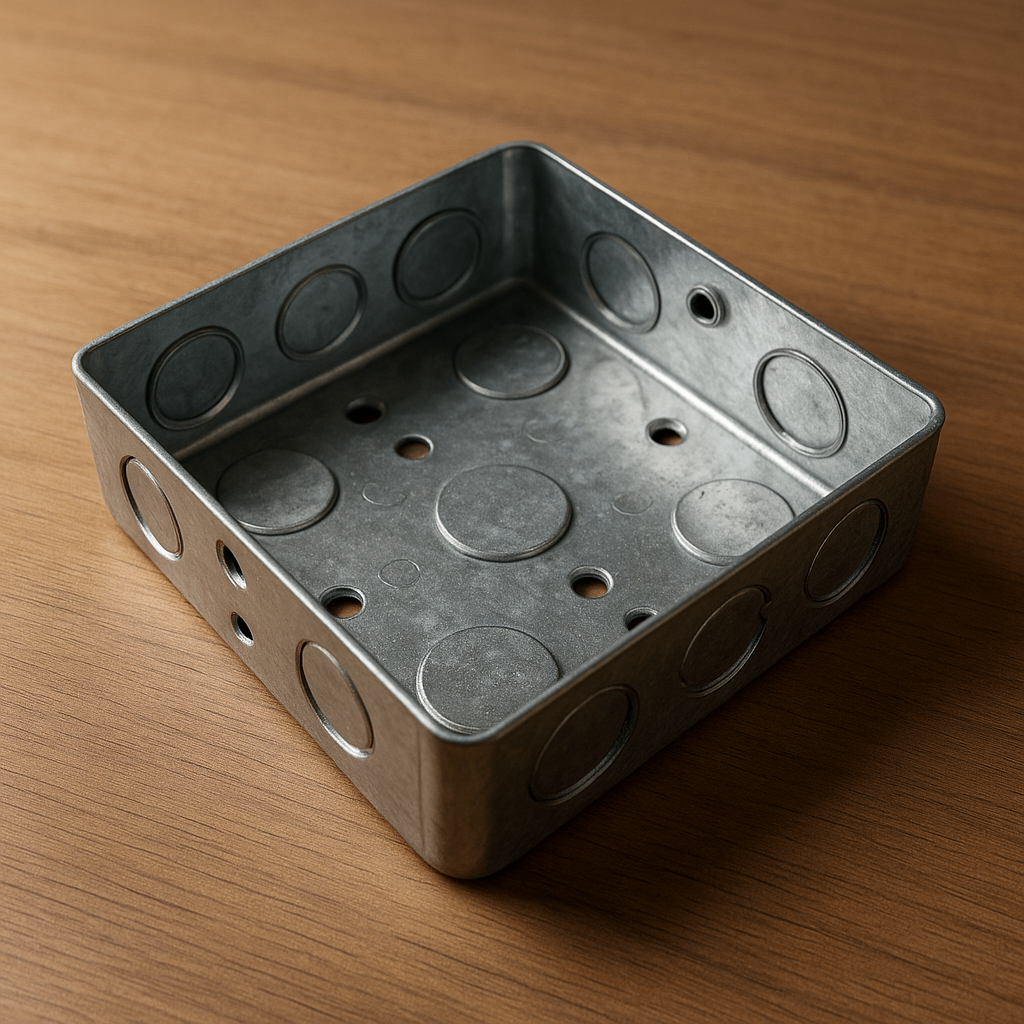
Introduction: Why B2B Buyers Are Rethinking Shallow Enclosures
In today’s B2B electrical supply chain, shallow electrical boxes are no longer simple metal containers—they are engineered systems that determine the long-term reliability and efficiency of entire installations. Whether the project involves solar inverters, EV charging systems, or compact control cabinets, a single dimension error or untested coating can trigger large-scale operational costs.
Procurement engineers and sourcing managers across Europe, North America, and the Middle East increasingly evaluate suppliers not by price, but by their ability to deliver traceable quality, IP-certified performance, and dimensional repeatability. For global buyers, choosing the right shallow electrical box factory in China means selecting a partner that can manage precision, documentation, and scalability.
Why Shallow Boxes Remain Essential in Modern Engineering
The Engineering Logic Behind Compact Depth
Shallow enclosures serve specific technical needs: reduced cavity occupation, improved airflow, and simplified wall-mount installations. In building automation, kiosk integration, or retail display terminals, shallow boxes reduce wiring congestion and enable easy maintenance access.
A 45mm or 60mm shallow profile provides just enough clearance for terminal blocks and wiring, minimizing footprint while maintaining cable bending radius. This dimension is vital when hundreds of enclosures must be installed in tight, standardized grid layouts.
The Hidden Efficiency in High-Density Layouts
When hundreds or thousands of boxes are deployed across sites, dimensional variance—even a millimeter off—causes alignment failures in pre-cut wall templates. Predictable uniformity ensures:
- Faster installation cycles
- Consistent sealing in flush-mount applications
- Reduced rework in HVAC or control system retrofits
Procurement Tip: Always send 3D STEP or DXF files during the RFQ phase. It eliminates 60% of potential fitment errors downstream.
What Procurement Engineers Should Clarify Before Ordering
Dimensional Tolerances and Structural Integrity
A box’s nominal depth is only part of the story. The key performance indicators are:
- Back-wall flatness: within ±0.5mm
- Mounting flange symmetry: deviation ≤1.0mm
- Door closure pressure: verified through torque testing
YISHANG uses CMM measurement, SPC analysis, and FAI validation on each new design, ensuring consistent quality even at 5,000+ unit batches.
Ingress Protection Validation (IP & NEMA Ratings)
Too many suppliers advertise “IP66” but skip validation under IEC 60529 protocols. Real IP testing involves calibrated water jets, dust chambers, and multi-hour exposure cycles. Buyers should:
- Request test reports from third-party labs
- Verify gasket compression data (shore hardness, recovery ratio)
- Ask for enclosure corner-sealing photos under pressure tests
The difference between simulated and certified IP testing can decide the service life of your electrical system.
Material Engineering: Balancing Cost, Weight, and Durability
Selecting the Right Base Material
Each material grade directly influences corrosion resistance, weight, and mechanical strength:
- SPCC (Cold-Rolled Steel): Best for indoor junctions, cost-efficient, smooth finish for powder coating.
- SGCC (Galvanized Steel): Zinc-coated for rust protection, widely used for mild outdoor exposure.
- Stainless 304 / 316: Long-term corrosion resistance; 316 ideal for coastal or chemical plants.
- Aluminum 5052: Lightweight and conductive, common for telecom, EV, and solar applications.
Surface Finishing and Coating Standards
Powder coating is more than color—it’s corrosion control. Buyers should request:
- ASTM B117 Salt Spray Test (minimum 500 hours)
- Coating cure temperature profile to prevent underbaking
- Optional anti-fingerprint or UV-resistant topcoat for kiosks and outdoor signage
YISHANG’s coatings maintain uniform film thickness between 60–90μm, preventing electrostatic leakage and surface chalking.
Common Manufacturing Pitfalls and How to Avoid Them
Warping, Springback, and Laser-Cut Deviation
Warping often occurs from uncalibrated cutting or incorrect nesting sequence. This leads to improper door closure and gasket gaps. YISHANG mitigates this using:
- Precision laser-cutting (≤0.1mm deviation)
- Automatic leveling tables
- Post-bend inspection with 3-axis measurement
Knockout Alignment and Cable Gland Fit
Mismatched knockouts cause significant delays during wiring. A single offset knockout can misalign conduits and break IP integrity.
- Knockouts at YISHANG are CNC punched and verified using a digital template grid.
- Cable entries conform to IEC 60423 conduit thread tolerances.
Field Tip: For custom knockout layouts, request digital overlay proofs before mass production.
Installation and Mounting Dynamics
Mounting Configurations to Match Real Applications
Different industries require different mounting configurations. The most common include:
- Wall-mount with reinforced rear flanges
- Flush-mount for architectural integration
- Pole-mount for outdoor or signage systems
- Rack/floor-mount for industrial control cabinets
Each mounting configuration must undergo load testing—especially for boxes supporting transformers or heavy terminal blocks.
Structural Load and Endurance Tests
To ensure durability, each design is tested for:
- 30kg lateral load endurance
- 60kgf terminal torque load test
- Drop resistance from 1.2m per IEC 60068-2-31
This guarantees the enclosure remains intact even during rough shipment or on-site handling.
From RFQ to Batch Shipment: The Sourcing Workflow
Procurement rarely fails because of design—it fails from miscommunication. YISHANG’s process includes:
- Engineering Review: Feasibility and DFM report before quotation.
- Prototyping: Golden sample confirmed with buyer’s team.
- Mass Production: Process controls and in-line inspection.
- Final Inspection: Dimensional and cosmetic check per AQL 0.65.
- Documentation: FAI + OQC report + Packaging photos.
Every stage ensures buyers receive a verifiable production trail, reducing inspection friction during customs or client audits.
Quality Control Documentation and Certification
What True Compliance Means
Certificates alone are not enough—validation data matters. YISHANG provides:
- IP66 / NEMA 4X test logs
- Paint adhesion crosshatch results (ASTM D3359)
- Torque and vibration resistance logs
- Powder oven temperature records
Traceability and Batch Documentation
Every shipment includes:
- Material test certificates (MTC)
- Batch QR codes for trace tracking
- Packaging inspection sheets
- Export label conformity checks
This data-driven traceability ensures full accountability across supply chains in the EU, Middle East, and North America.
Case Study: Preventing a 5,000-Unit Retrofit
A European telecom project once faced major losses due to incompatible flange spacing in shallow enclosures. The supplier had met nominal specs but failed to validate mounting clearances.
YISHANG performed DFM analysis, adjusted flange tolerance by 1.5mm, and verified assembly using 3D jigs. The result:
- Zero field rework across 5,000 units
- 19% installation time reduction
- Enhanced brand reputation with end-client compliance audits
Technical Pre-Order Checklist for Procurement Engineers
Before confirming mass orders, validate the following:
- Material grade and thickness tolerance
- Target IP/NEMA rating and test method
- Knockout positions and cable entry type
- Coating thickness and color consistency
- FAI sample approval with torque test data
- Mounting configuration and load tolerance
- Packaging layout and labeling standard (ISPM-15 compliant)
This checklist aligns engineering intent with supplier execution.
Why YISHANG Is a Reliable Partner for Global Projects
YISHANG integrates OEM manufacturing precision with engineering collaboration. Our expertise covers:
- 26+ years in metal fabrication and CNC assembly
- In-house laser cutting, welding, and powder coating
- ISO 9001 and RoHS-certified processes
- ODM capability with CAD/CAM co-design support
We understand the demands of global sourcing—clear documentation, consistent quality, and flexible customization at scale.
Final Word: Turning Precision into Partnership
Shallow boxes may look simple—but behind every enclosure is a system of tolerance control, material integrity, and sealing performance. The right manufacturing partner transforms these from risks into measurable reliability.
Ready to validate your next design? Send your drawings or specification sheet, and our engineers will prepare a CAD-based proposal and cost analysis within 24 hours.