Stop Stacking, Start Architecting: The Engineering Guide to High-Performance Audio Video Equipment Racks

Table of Contents 隐藏

An Expensive Accident Scene: Why Your Clients’ AV Systems Might Be Failing

Imagine a scenario: a client has invested tens of thousands of dollars in high-fidelity amplifiers, processors, and servers. The components are installed in an elegant, custom-built cabinet. Aesthetically, it’s perfect. Functionally, it’s a disaster waiting to happen. The amplifier’s fans are at maximum RPM, yet the unit is dangerously hot. The system crashes intermittently. The audio, once pristine, now sounds congested.

This isn’t a hypothetical. For system integrators and their clients, these are costly, real-world home theater problems. They are symptoms of a foundational flaw in the AV system setup, stemming not from the electronics, but from the very structure housing them. This article is not a user guide; it is an engineering blueprint for procurement managers, distributors, and system designers.

We will deconstruct the audio video equipment rack, reframing it from a simple accessory to the architectural core of any reliable AV system. This guide will empower you to specify and source solutions that protect your clients’ investments, guarantee performance, and enhance your value proposition.

Chapter 1: The Cognitive Leap—Why an AV Rack is an Active Component, Not Passive Furniture

To grasp the importance of an AV rack, one must first adopt an engineering mindset. The rack is not passive furniture; it is an active, electro-mechanical component with a profound impact on system performance and longevity. For wholesale buyers and system integrators, this distinction is critical. It reframes the rack from a low-margin accessory into a high-value foundational component that ensures the reliability of the entire solution sold to the end client.

Shattering the Myth: The Rack as Your System’s Foundation

The core functions of an AV rack extend far beyond storage. It actively manages the physical and electrical forces that degrade sensitive electronics. This is where the principles of material science and mechanical engineering—the bedrock of YISHANG’s manufacturing expertise—become paramount, directly impacting system reliability and reducing costly post-installation service calls.

  • Vibration: The Invisible Performance Killer: Every electronic component is subject to the microphonics effect, where mechanical vibration is converted into unwanted electrical noise. For audiophile-grade equipment, this introduces distortion that clouds detail and flattens the soundstage. A purpose-built video equipment rack, engineered with mass, rigidity, and damping, acts as a technical instrument to dissipate this energy, providing a silent mechanical foundation.
  • Heat: The Slow Cooker of Component Failure: Electronics generate heat, the primary enemy of performance and longevity. As components overheat, their electrical resistance changes, leading to signal degradation and thermal noise. Over time, this shortens the lifespan of critical parts. A standard cabinet traps heat, forcing equipment to fail prematurely. A professional rack is a critical tool for thermal management and proper heat dissipation. Effective rack layout, thermal zoning, and airflow design must work in concert with component placement.
  • EMI: The Signal’s Crossroads Collision: An AV system is a complex intersection of high-voltage power and low-voltage signal cables. When run in parallel, AC power lines can induce a 60Hz hum and other noise into adjacent cables through electromagnetic interference (EMI). This compromises signal integrity. A well-designed rack, like those from YISHANG, provides the structural framework for disciplined cable management, enforcing the physical separation required to keep signals pure, especially as systems scale in complexity.

The Expert’s Perspective: From Stacking to Architecture

Specifying high-end components without a professional AV setup is a critical error. It’s akin to fueling a Formula 1 car with standard gasoline—you intentionally limit its performance. By creating a controlled micro-environment, a well-engineered rack can unlock an additional 10–20% of a system’s potential. For a distributor, this is a powerful value proposition: you are not just selling a rack, you are selling guaranteed performance and long-term reliability for your clients’ entire equipment investment.

This strategic shift in thinking—from passive storage to active system architecture—sets apart engineering-driven suppliers and helps prevent early failure modes commonly observed in poorly integrated systems.


Chapter 2: The Decision Compass—A Procurement Framework for Specifying the Right Rack

For procurement managers and system designers, learning how to choose an AV rack is a strategic decision impacting project budgets, installation timelines, and client satisfaction. This AV rack buying guide provides an engineering-focused framework, moving beyond commoditized thinking toward a solution optimized for performance and total cost of ownership.

Step One: Draft the Equipment Blueprint

Before specifying a rack, you must architect the system it will house. This begins with a dynamic inventory—a blueprint accounting for current equipment and planned upgrades. This foresight is the essence of future-proofing.

The process of AV rack size calculation is more than summing heights. For each component, document three critical variables: depth, weight, and heat output (measured in BTUs for commercial projects). The deepest component dictates minimum rack depth, total weight determines the required load capacity, and heat-producers define the thermal strategy. The layout follows a “golden triangle” of principles: heavy gear (amplifiers, UPS) at the bottom for stability; frequently accessed components at a comfortable height; and high-heat units dispersed for airflow, promoting thermal stratification and natural convection.

Standard Rack Unit (U/RU) Conversion
Rack Units Height (Inches)
1U 1.75″
4U 7.0″
27U 47.25″
42U 73.5″

Note: The Rack Unit (U or RU) is the standard vertical measurement for rack-mountable equipment, established by the Electronic Industries Alliance (EIA) in the EIA-310 standard. This ensures global interoperability.

Step Two: A Dialogue with the Application Environment

The various types of AV racks are different engineering solutions for different scenarios.

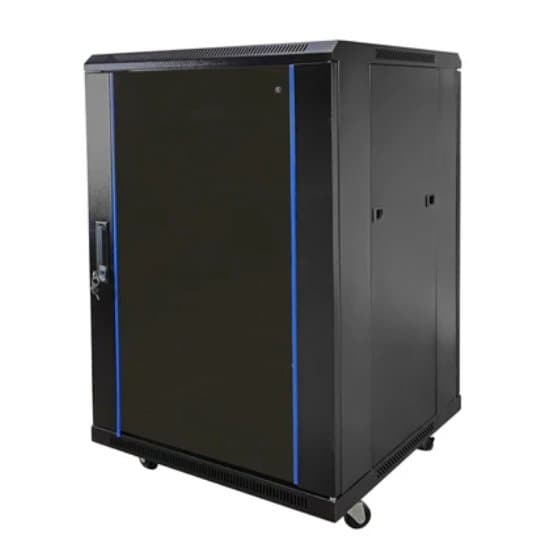
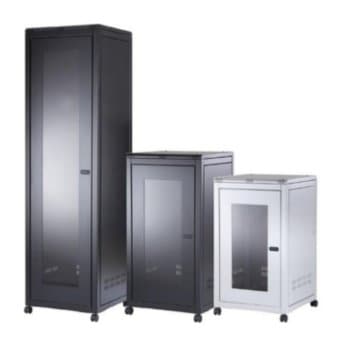
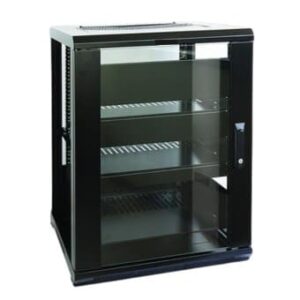
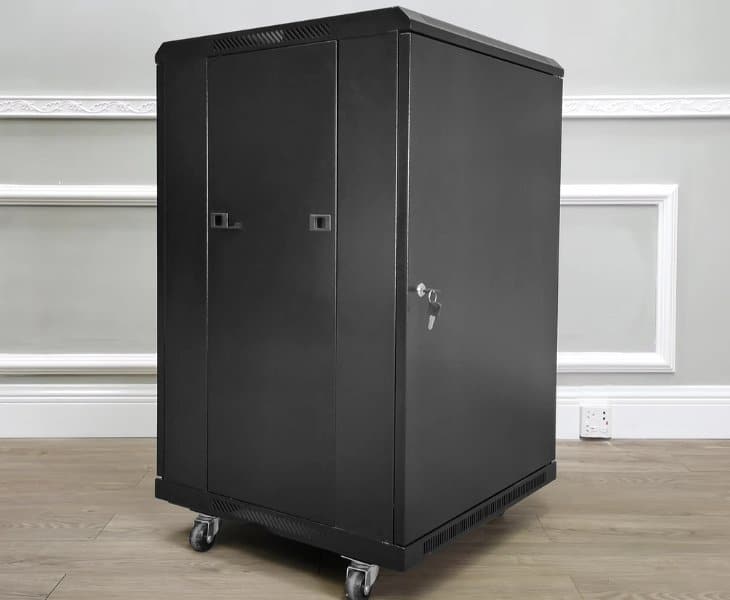
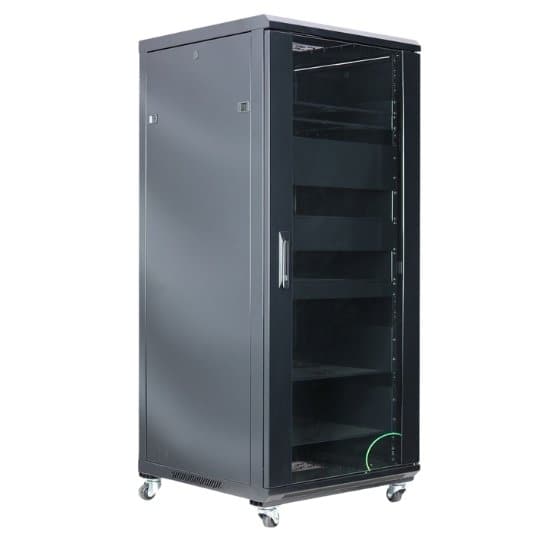
  • The “Aesthetic Integration” Scenario (e.g., Boardrooms, High-End Residential): Here, appearance and quiet operation are paramount. This favors an enclosed AV cabinet, often with premium finishes. A quality enclosed rack from a manufacturer like YISHANG must have a sophisticated ventilation system, with passive vents and provisions for active fans, to prevent it from becoming an oven. Integrating acoustic damping materials can further reduce operational noise in premium settings.
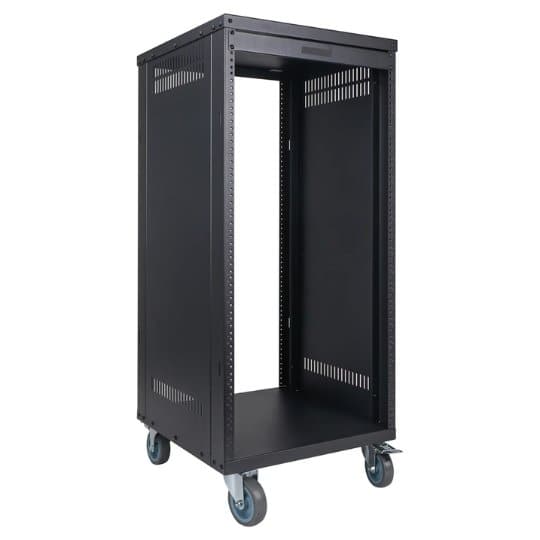
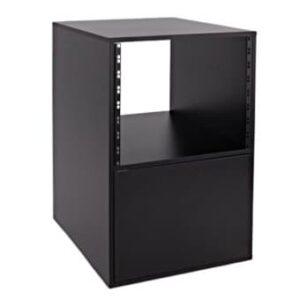
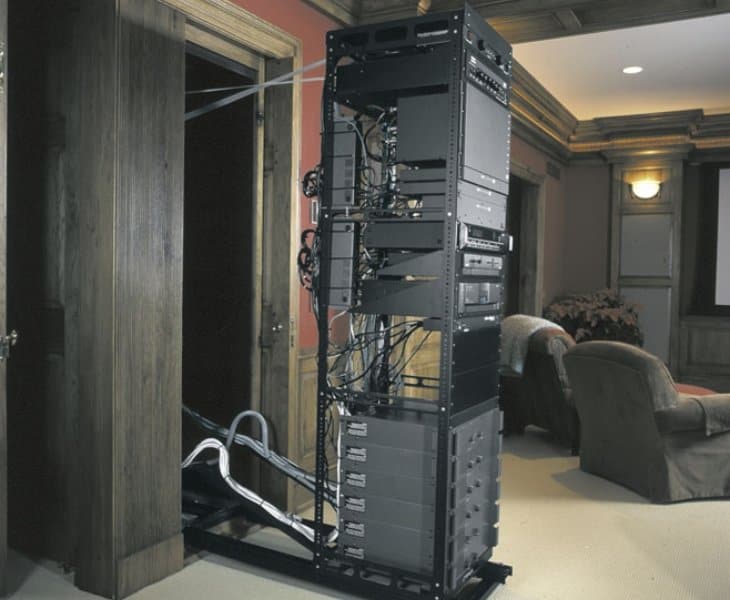
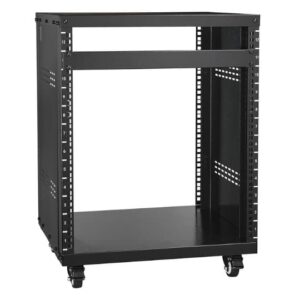
  • The “Performance First” Scenario (e.g., Equipment Closets, Control Rooms): In these secure environments, function trumps form. An open frame rack offers unparalleled accessibility and unobstructed airflow. The material choice is key. A rack built from high-grade cold rolled steel offers superior rigidity and a loading capacity of up to and beyond 500 lbs, essential for heavy amplifiers. An aluminum alloy rack, while also strong, provides excellent corrosion resistance and superior thermal conductivity, actively helping dissipate heat while reducing shipping weight for bulk orders.
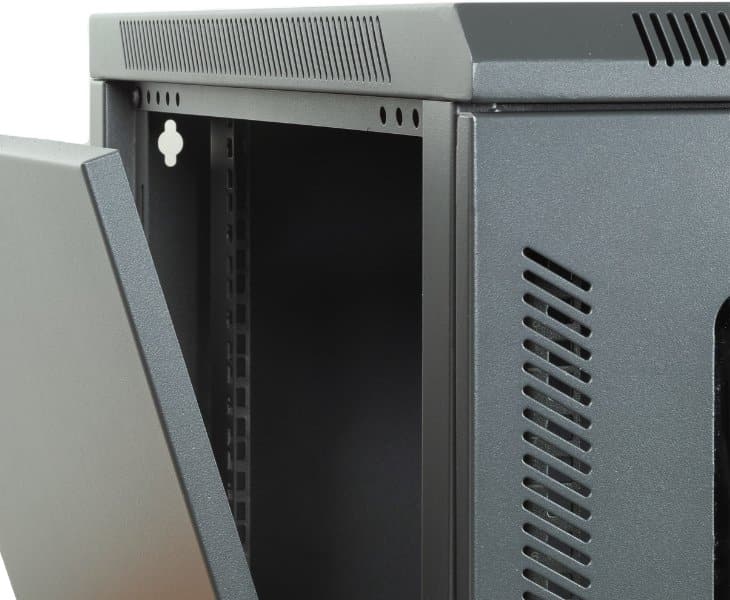
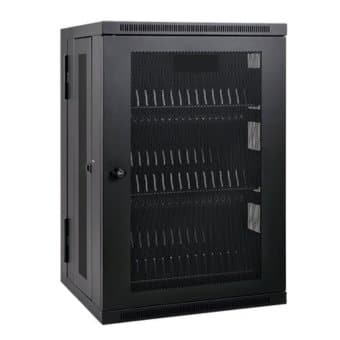
  • The “Space Optimization” Scenario (e.g., Classrooms, Small Offices): Where floor space is a premium, a wall-mounted rack is the ideal solution. These compact units, available as both open-frame and enclosed designs, turn unused wall space into a functional, organized hub, while offering proper airflow strategies to maintain system reliability.

Step Three: The Procurement Pitfall Prevention Guide

Navigating common AV rack buying mistakes is simple if you know the right questions to ask. For a wholesale buyer, these questions ensure the product you source will meet the rigorous demands of professional installation.

  1. Is the specified depth sufficient for cables and connectors? You must add several inches to the deepest component’s measurement for connectors and the minimum cable bend radius.
  2. Is the load capacity adequate for future expansion? A best practice is to specify a rack with a load capacity that far exceeds current needs, anticipating future upgrades.
  3. Are the mounting rails compatible with the intended equipment? Traditional AV racks often use pre-threaded 10-32 holes. Modern server-grade equipment may require square holes with cage nuts. A versatile rack should offer compatibility with both.
  4. Does the enclosed cabinet have a viable thermal management strategy? Scrutinize the ventilation design. A beautiful cabinet that causes equipment failure is a liability.
  5. How modular and customizable is the system? Can you easily add modular rack accessories like drawers, shelves, or custom panels? A modular system from a capable manufacturer like YISHANG grows with your client’s needs.

Chapter 3: Installation Engineering—Why Assembly and Integration Determine System Longevity

The best-designed audio video equipment rack can fail if installation shortcuts are taken. System performance, reliability, and serviceability hinge on how the rack is assembled, wired, and ventilated on-site. A well-integrated rack behaves like a finely tuned engine—every component must be mounted, powered, and cooled with precision.

Mechanical Assembly: It’s More Than Bolting Panels

Assembly begins with proper alignment and leveling. Uneven floors, warped walls, or tight clearances in mechanical rooms can lead to stress points. These imperfections may distort frame geometry, introducing micro-strain that transfers to sensitive electronics. Industrial-grade leveling feet and wall anchoring hardware ensure structural stability and mechanical isolation for mission-critical AV systems.

Attention to torque values is critical—both over-tightening and under-tightening fasteners can compromise system integrity. The use of anti-vibration washers and thread-locking compounds are standard best practices for long-term performance in rack-mounted installations.

Thermal Zoning and Airflow Architecture

An often-overlooked discipline is thermal zoning—the practice of grouping devices with similar thermal output and airflow requirements. This approach ensures active or passive cooling strategies are effective across the entire rack.

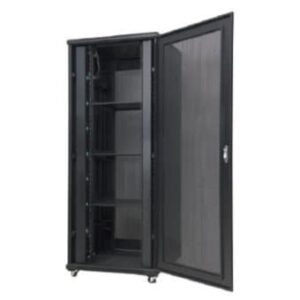
In enclosed racks, integrate side vents, perforated front/rear doors, and optional fan trays to optimize airflow. These features create a chimney effect for natural convection, reducing reliance on noisy fans. Incorporate blanking panels to eliminate air recirculation and force air through heat-generating components. This protects against thermal hotspots that can silently degrade performance.

Advanced installations benefit from rack-mounted sensors and thermostatically controlled fan modules that adjust cooling dynamically based on environmental feedback. This not only extends component lifespan but improves energy efficiency in enterprise AV deployments.

Structured Cabling and Signal Isolation

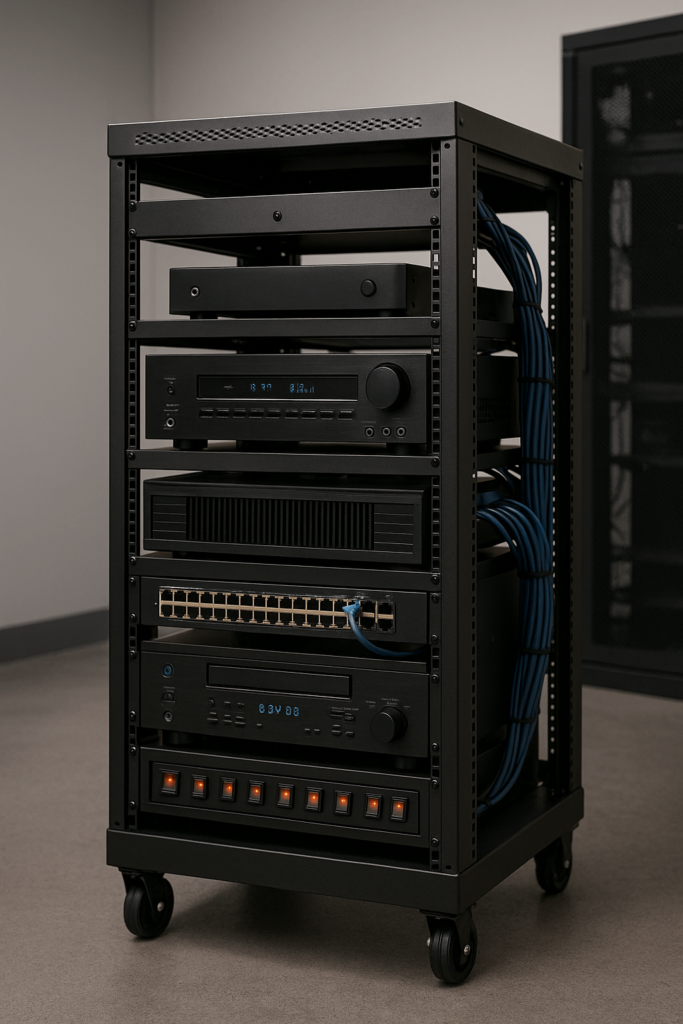
Professional AV rack cable management is not a cosmetic detail—it’s an operational safeguard. Neat, labeled, and logically routed cabling reduces electromagnetic interference, improves serviceability, and reflects professional-grade system integration.

  • Power and Signal Separation: AC lines and low-voltage signal cables should be routed separately and cross at right angles if unavoidable. Use metal cable trays and vertical/horizontal cable managers to maintain signal integrity.
  • Labeling Protocols: Label cables at both ends using durable heat-shrink or wrap-around markers. Apply a standardized left-to-right or top-down convention to simplify diagnostics and reduce service times.
  • Preferred Fasteners: Use Velcro ties instead of zip ties. Velcro avoids overtensioning, allows reconfiguration, and protects delicate cabling insulation—essential for HDMI, fiber, and control cables.

Proper cabling practices not only enhance performance but also maintain airflow, prevent obstruction of fans, and support long-term system scalability.

Grounding, Surge Suppression, and Power Distribution

Electrical protection begins with proper grounding. Every metal component of the audio video equipment rack, including frame, cable trays, and PDUs, should be bonded to a central grounding bus bar and connected to the facility’s earth ground. This reduces the risk of ground loops, ensures electrostatic discharge (ESD) is safely diverted, and minimizes EMI susceptibility.

Install rack-mounted power distribution units (PDUs) with integrated surge suppression, EMI/RFI filtering, and power metering. For larger installations, use dual independent PDUs powered from separate circuits, ideally backed by a UPS. This architecture allows for load balancing, redundancy, and remote rebooting if networked PDUs are implemented.

Standardizing your power and grounding design across all racks improves safety, simplifies maintenance, and ensures regulatory compliance—especially in commercial AV or government-grade installations where infrastructure audits are routine.

Assembly Verification and Final Quality Check

Before turning the system over to the client or operations team, conduct a comprehensive rack commissioning checklist to ensure full integrity and performance:

  • Are all components securely mounted with proper torque and vibration control?
  • Are airflow paths unobstructed, with blanking panels installed where needed?
  • Have all cables been labeled, tested, and routed in accordance with the rack elevation plan?
  • Are all grounding connections continuous and verified with a multimeter?
  • Are power circuits isolated, balanced, and protected with appropriate surge devices?

Document the completed installation with annotated photos and a rack elevation diagram. This not only aids in future troubleshooting but serves as a professional-quality deliverable for clients—positioning your integration team or supply firm as a detail-oriented, engineering-driven partner.

Chapter 4: Beyond the Rack—Trends and Innovations Reshaping AV Infrastructure

Even the most meticulously built audio video equipment rack must evolve with the systems it supports. As AV technology rapidly advances, racks are no longer static enclosures—they are transforming into intelligent infrastructure platforms. Wholesale buyers, system designers, and OEM integrators must stay attuned to these shifts to future-proof their projects.

The Rise of Smart Racks

Modern AV environments increasingly demand real-time monitoring, remote access, and intelligent automation. The smart AV rack addresses this need by integrating sensors, networked PDUs, and IoT-enabled modules that provide insight into power consumption, temperature, humidity, and system status.

  • Environmental Sensors: Integrated temperature and humidity sensors allow for proactive thermal management and environmental alerts.
  • Networked PDUs: Enable remote reboot, load balancing, and energy usage analytics for operational control and cost savings.
  • Access Control Integration: Incorporate RFID, keypads, or biometric modules to protect rack access in enterprise, government, and high-security deployments.

These innovations not only streamline facility operations but create opportunities for managed service contracts, enabling integrators to monetize performance visibility and uptime assurance.

Modular Design and Tool-Free Assembly

Speed, scalability, and standardization are shaping how AV racks are deployed across multi-site and phased projects. Tool-less architecture and modular design offer clear advantages to OEMs and volume buyers:

  • Snap-Fit Rails and Shelving: Reduce on-site labor and speed up installation with fast-swap shelf and rail systems.
  • Stackable, Expandable Chassis: Allow phased deployment where infrastructure can grow without rack replacement.
  • Standard Compliance: EIA-310 and IEC 60297 compatibility ensure consistent hardware mounting across global facilities.

YISHANG’s engineering team supports project-based customization, delivering flat-pack racks with regional compliance and fast deployment instructions for global OEM partners.

Sustainability and Passive Cooling Design

Sustainability is no longer optional. With green procurement standards rising globally, eco-engineered AV rack solutions are in high demand. Forward-thinking rack designs embrace:

  • Natural Convection Paths: Chimney-style ventilation channels that eliminate or reduce active fan dependency.
  • High-Thermal Conductivity Materials: Aluminum and ventilated steel panels promote passive heat dissipation.
  • Low-Emission Coatings: Powder-coated finishes reduce VOC emissions during manufacturing.

Buyers targeting LEED, BREEAM, or energy-efficient certifications can look to these features as integral parts of compliance and lifecycle savings.

Design Aesthetics Meet Engineering Discipline

In environments where AV racks are exposed—boardrooms, museums, premium retail—appearance carries weight alongside function. Well-designed audio video equipment racks today are no longer industrial eyesores. They feature:

  • Architectural Finishes: Brushed aluminum, matte black, or custom RAL powder-coats for design alignment.
  • Noise Control Elements: Acoustic dampening panels and ultra-quiet fan configurations.
  • Form-Factor Customization: Slimline or corner-rack variants tailored to spatial and visual constraints.

YISHANG works with consultants and interior designers to deliver AV racks that blend with architecture while maintaining structural rigidity, airflow integrity, and compliance.

Chapter 5: The Engineering Mindset—Elevating AV Rack Procurement from Commodity to Strategy

A high-performance audio video equipment rack is more than a static frame—it is the structural backbone of system stability, performance longevity, and engineering credibility. As AV systems scale in complexity and client expectations rise, the role of the rack must be reevaluated from passive enclosure to strategic infrastructure investment.

This guide has presented a framework rooted in engineering precision:

  • It is a vibration-damping structure, shielding sensitive electronics from microphonic interference.
  • It is a thermal management system, facilitating controlled airflow and passive/active cooling.
  • It is an EMI defense barrier, preserving signal integrity through physical and electrical separation.
  • It is a structured cabling and power platform, supporting maintenance, upgrades, and scalability.
  • It is a future-ready solution, accommodating modularity, sustainability, and intelligent monitoring.

At YISHANG, our manufacturing capabilities go beyond fabrication—we partner with OEMs and integrators to engineer application-specific enclosures using cold-rolled steel, aluminum alloys, and stainless steel, all backed by ISO 9001 and RoHS compliance. Our focus is structural integrity, thermal logic, and long-term deployment readiness across sectors and regions.

Whether specifying racks for mission-critical control rooms, high-end AV showrooms, or global equipment rollouts, sourcing must be driven by design logic—not price alone. When engineered properly, the rack becomes a technical asset—not a procurement afterthought.

Stop stacking. Start architecting.

Frequently Asked Questions (FAQ)

Q1: What is the standard size for an AV rack in commercial applications?

The most common heights are 27U (47.25 inches) and 42U (73.5 inches), as defined by the EIA-310 standard. Depth varies depending on the deepest equipment plus rear cable clearance, typically 24–36 inches.

Q2: How do I ensure proper airflow and cooling in an enclosed AV rack?

Use a combination of passive and active airflow design, including perforated doors, side vents, chimney-style airflow paths, blanking panels, and optional thermostatically controlled fan trays. Group devices by thermal profile using thermal zoning.

Q3: What’s the difference between an AV cabinet and an open-frame rack?

Enclosed audio visual equipment cabinets prioritize aesthetics, acoustic dampening, and security. Open-frame AV racks offer superior accessibility, cable management flexibility, and unobstructed airflow—ideal for equipment closets or backend infrastructure.

Q4: Can I order a custom AV rack system in bulk with specific materials and dimensions?

Yes. YISHANG provides OEM AV rack manufacturing with options in cold-rolled steel, aluminum alloy, or stainless steel. We support bulk procurement with flat-pack shipping and application-specific customization.

Q5: What certifications should I look for in a wholesale AV rack supplier?

At minimum, ensure ISO 9001 for quality management and RoHS compliance for material safety. These guarantee international acceptance and safe integration in regulated environments.

We'd like to work with you

If you have any questions or need a quote, please send us a message. One of our specialists will get back to you within 24 hours and help you select the correct valve for your needs.

Get A Free Quote

All of our products are available for sampling