
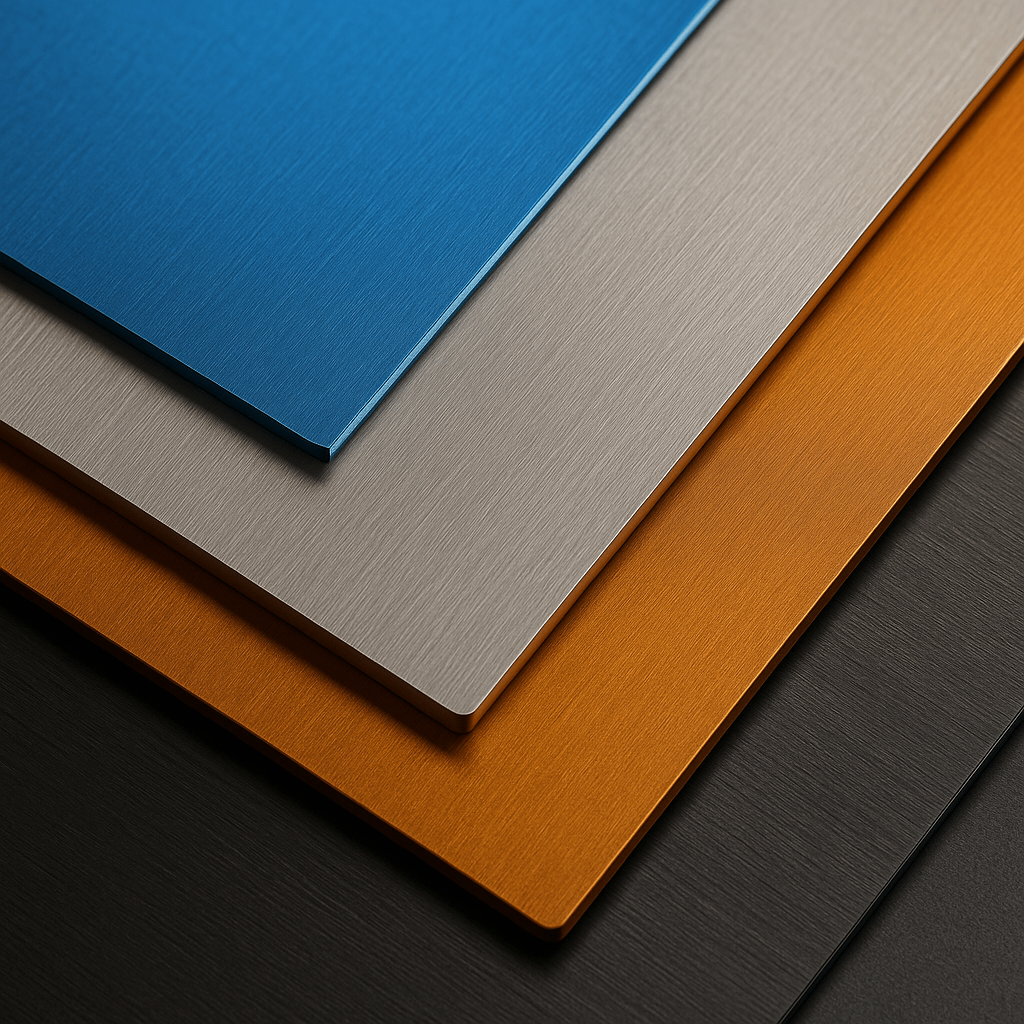
Introduction
Choosing an anodized finish looks simple at the quoting stage. In real production, it rarely is.
For buyers, anodized aluminum colors are not just about appearance. They affect batch approval, finish consistency, outdoor durability, drawing accuracy, and downstream rejection risk. A color that looks right on one sample can shift noticeably in mass production if the alloy, finish route, or process window is not controlled.
That is why this topic matters to procurement teams, engineers, and product designers alike. The right anodized finish can elevate product value. The wrong specification can create disputes over color range, rework, delayed shipments, and expensive replacement orders.
This guide focuses on the questions buyers actually need answered:
- How are anodized aluminum colors created?
- Why do colors vary from batch to batch?
- What should be written into drawings and RFQs?
- How do Type II and Type III finishes affect color options and performance?
1. Why Anodized Finishes Behave Differently from Paint or Powder Coat
Anodizing is often described as a finish, but it behaves very differently from conventional coatings. That difference is where many sourcing misunderstandings begin.
Paint and powder coat sit on top of the metal. An anodized layer is grown from the aluminum itself. Through an electrochemical process, the surface is converted into aluminum oxide rather than covered with a separate material.
That matters for three reasons:
- the finish does not peel or flake like a surface-applied coating
- the oxide layer is hard, wear resistant, and integrated with the base metal
- its porous structure can absorb color before the surface is sealed
This is why anodized aluminum often performs better in applications where buyers care about scratch resistance, long-term appearance, and finish stability. It is also why anodized color behaves differently from painted color. The final look depends not just on the dye, but on the oxide structure, the alloy beneath it, and the way the finish is sealed.
2. How Anodized Aluminum Colors Are Actually Created
Not all anodized colors are produced in the same way. For buyers, that distinction is important because color range, UV stability, cost, and repeatability all depend on the coloring method used.
Core Comparison of Four Main Coloring Routes
| Coloring Method | Color Range | UV Stability | Cost Level | Typical Use |
| Organic Dip Coloring | Very wide | Moderate to good, depending on dye | Low to medium | Consumer products, decorative parts, branded components |
| Electrolytic Coloring | Limited to bronze, black, champagne, similar tones | Excellent | Medium | Architectural parts, trim, exterior applications |
| Integral Coloring | Limited, mostly dark shades | Excellent | High | High-wear or premium technical applications |
| Interference Coloring | Select specialty hues | Excellent | High | High-end design, premium architectural work |
The right route depends on what matters more in the project: visual flexibility, outdoor stability, or long-term consistency in production.
2.1 Organic Dip Coloring
Organic dip coloring is the method buyers usually think of first when they want bright, flexible color options. After anodizing, the part is placed in a dye bath, and the open pores absorb the color before sealing.
This route is popular because it offers the broadest palette. It works well for:
- consumer electronics
- decorative hardware
- brand-driven product lines
- custom OEM components where visual identity matters
The trade-off is sunlight. Organic dyes vary in UV resistance, so the finish that looks excellent indoors may not hold the same color outdoors over time.
For buyers, the lesson is simple: if the part will live outside, the specification should go beyond “red anodized aluminum” or “blue anodized finish.” It should define a dye system suitable for the environment.
2.2 Electrolytic Coloring
Electrolytic coloring is usually the better option when buyers need outdoor durability and dependable long-term color retention. The anodized layer is formed first, and metallic salts are then introduced into the pore structure through a second electrochemical step.
The resulting shades are usually more restrained than dip dyes—typically:
- champagne
- bronze
- dark bronze
- black
That narrower range is often a strength rather than a limitation. These tones are widely used in:
- architectural framing
- outdoor trim
- transportation components
- exterior applications where fading is unacceptable
2.3 Integral Coloring
Integral coloring combines anodizing and color formation into one process. It produces a finish known for excellent wear resistance, but it also comes with a narrower palette and higher cost.
This method is usually reserved for specialized projects where buyers care more about surface robustness than broad visual choice.
2.4 Interference Coloring
Interference coloring is a more advanced, premium route. Instead of relying mainly on dyes, it manipulates how light interacts with the anodized surface, creating stable colors through optical effects.
This method is usually chosen for high-end architectural and design-led products where uniqueness matters as much as durability.
3. Color Consistency: What Buyers Need to Control Up Front
For wholesale orders, color is where small technical differences quickly become commercial problems. A batch may be structurally perfect and still end up rejected if the finish looks inconsistent across parts, profiles, or production lots.
3.1 Delta E (ΔE): The Measurement Buyers Should Know
Visual approval alone is risky because people see color differently. That is why the industry uses Delta E (ΔE) to measure the visible difference between two colors.
A useful rule of thumb:
- ΔE around 1 = barely noticeable difference
- ΔE 1–3 = often acceptable for premium cosmetic parts
- ΔE up to 5 = commonly accepted in broader architectural standards, depending on spec and viewing conditions
For buyers, specifying an acceptable ΔE range in the RFQ or quality agreement is one of the simplest ways to reduce disagreement later.
3.2 The Base Material Is Often the Biggest Variable
The most important point many buyers miss is this: anodizing does not hide alloy differences—it reveals them.
That means color consistency depends heavily on the aluminum grade itself, and even on the production lot.
What to Include in a Material Specification for Anodizing
| Specification Item | Why It Matters |
| Exact alloy grade | Different alloys anodize to different shades and clarity levels |
| AQ-grade requirement where applicable | Cosmetic anodizing needs better-controlled metallurgy |
| Single-lot sourcing when possible | Reduces batch-to-batch color drift |
| Surface condition before anodizing | Brushing, blasting, and polishing all affect final appearance |
| Approved color range sample | Prevents disputes based on screen images or verbal descriptions |
For cosmetic anodizing, buyers often specify:
- 6063 for extrusions
- 5005 for anodized sheet
These are common choices because they typically give a cleaner and more uniform anodized appearance than alloys with higher copper or zinc content.
3.3 Welding Can Change Color More Than Buyers Expect
Welded areas often anodize differently from the surrounding metal. The heat-affected zone can create a visible shade shift, sometimes seen as a dark halo or mismatch line.
Filler choice also matters. In many aluminum fabrications:
- 4043 filler can anodize noticeably darker
- 5356 filler is often preferred where color matching to 6000-series material matters more
For buyers, this is not a minor technical note. It should be addressed directly on drawings, welding instructions, or pre-production review documents.
3.4 Process Control Still Matters
Even when the alloy is right, the finish can still vary if the anodizing line is not tightly controlled. Color consistency depends on process factors such as:
- bath chemistry
- temperature
- current density
- immersion time
- sealing quality
At YISHANG, we treat these as production variables that must be managed, not guessed. That is how large-volume anodized parts stay closer to the approved visual standard.
4. Type II vs Type III: Choosing the Right Anodizing Route
Buyers often focus on color first, but finish type should be decided just as early. The choice between Type II and Type III affects not only durability, but also how many color options remain realistic.
Type II vs Type III at a Glance
| Item | Type II | Type III |
| Typical Thickness | 5–25 µm | 25 µm and above |
| Color Flexibility | Wide | Limited |
| Wear Resistance | Good | Excellent |
| Typical Appearance | Decorative to functional | More technical, darker, denser |
| Best Fit | Consumer, architectural, branded, visible components | High-wear industrial parts, technical hardware |
4.1 Type II (Conventional Sulfuric Anodizing)
Type II is the standard choice when the project needs visual flexibility, broad color range, and strong overall commercial performance. It works well for:
- consumer products
- architectural trim
- retail fixtures
- automotive appearance parts
If the buyer wants a strong decorative finish with color choice, Type II is usually where that conversation starts.
4.2 Type III (Hardcoat Anodizing)
Type III, or hardcoat anodizing, is designed more for wear resistance and surface hardness than for broad aesthetic freedom. It creates a thicker, denser layer and is often naturally darker in appearance.
That makes it a better fit for:
- industrial wear parts
- high-contact technical components
- machinery-related hardware
- applications where abrasion matters more than color variety
4.3 How to Write the Finish into a Drawing or RFQ
A vague note like “black anodize” is not enough for serious production.
A stronger specification usually includes:
- the anodizing type
- class if relevant
- target color or approved range sample
- thickness requirement
- surface texture before anodizing
- reference standard when needed
Examples:
- MIL-A-8625, Type II, Class 2, Black
- MIL-A-8625, Type III, Class 1
That level of detail makes approvals easier and reduces interpretation gaps between buyer and supplier.
5. Color Is Only Half the Appearance Story
Anodized aluminum does not just vary by color. The final look also depends on surface texture before anodizing. Since anodizing preserves the underlying surface condition, buyers should pay attention to texture early rather than treating it as a secondary detail.
Common Pre-Anodizing Surface Textures
- Matte / Satin: good for soft visual appearance and reduced glare
- Brushed: popular in electronics, appliance panels, and technical-looking products
- Polished / Bright: used where a more reflective, decorative finish is wanted
- Blasted / Etched: useful when a more uniform, low-reflection surface is preferred
A color sample without the matching surface texture does not tell the full story.
6. What Buyers Should Expect from Anodizing Innovation
The anodizing industry is moving toward better environmental performance and more controlled finish behavior. Buyers will increasingly see suppliers offering:
- heavy-metal-free or lower-impact dye systems
- nickel-free sealing options in some markets
- improved process monitoring for tighter finish repeatability
- more advanced architectural and decorative effects
Not every innovation will matter for every project, but the direction is clear: buyers are asking for finishes that perform better and create fewer sustainability concerns.
7. Professional FAQ
Can steel or stainless steel be anodized like aluminum?
No. Standard aluminum anodizing applies to non-ferrous metals such as aluminum, titanium, and magnesium. Steel and stainless steel require different finishing routes.
Does anodizing affect dimensions?
Yes. The oxide layer grows both inward and outward, so buyers should account for this in tolerance-sensitive designs.
Are all anodized colors equally UV stable?
No. Electrolytic colors are generally much more UV stable than many organic dyed colors.
Can anodizing match Pantone or RAL exactly?
Usually not in the same way paint can. Anodized finishes are translucent and influenced by alloy, texture, and process conditions. Physical approval samples are still the safest standard.
Can anodized parts be stripped and re-anodized?
Yes, but stripping removes some base material, so dimensional impact must be considered.
Conclusion
For buyers, anodized aluminum colors are never just a design choice. They are a specification issue, a consistency issue, and often a long-term performance issue as well.
The strongest sourcing results come from treating color selection as part of a larger system that includes:
- alloy choice
- coloring method
- surface texture
- anodizing type
- batch-control strategy
- clear documentation on drawings and RFQs
That is how color becomes predictable instead of negotiable.
At YISHANG, we help OEM buyers and sourcing teams align anodized aluminum finishes with real production needs—from sample approval to batch consistency and final delivery. If you need support with anodized color specification, process selection, or finishing control for volume orders, our team can help you build a finish standard that works in production, not just on paper.