
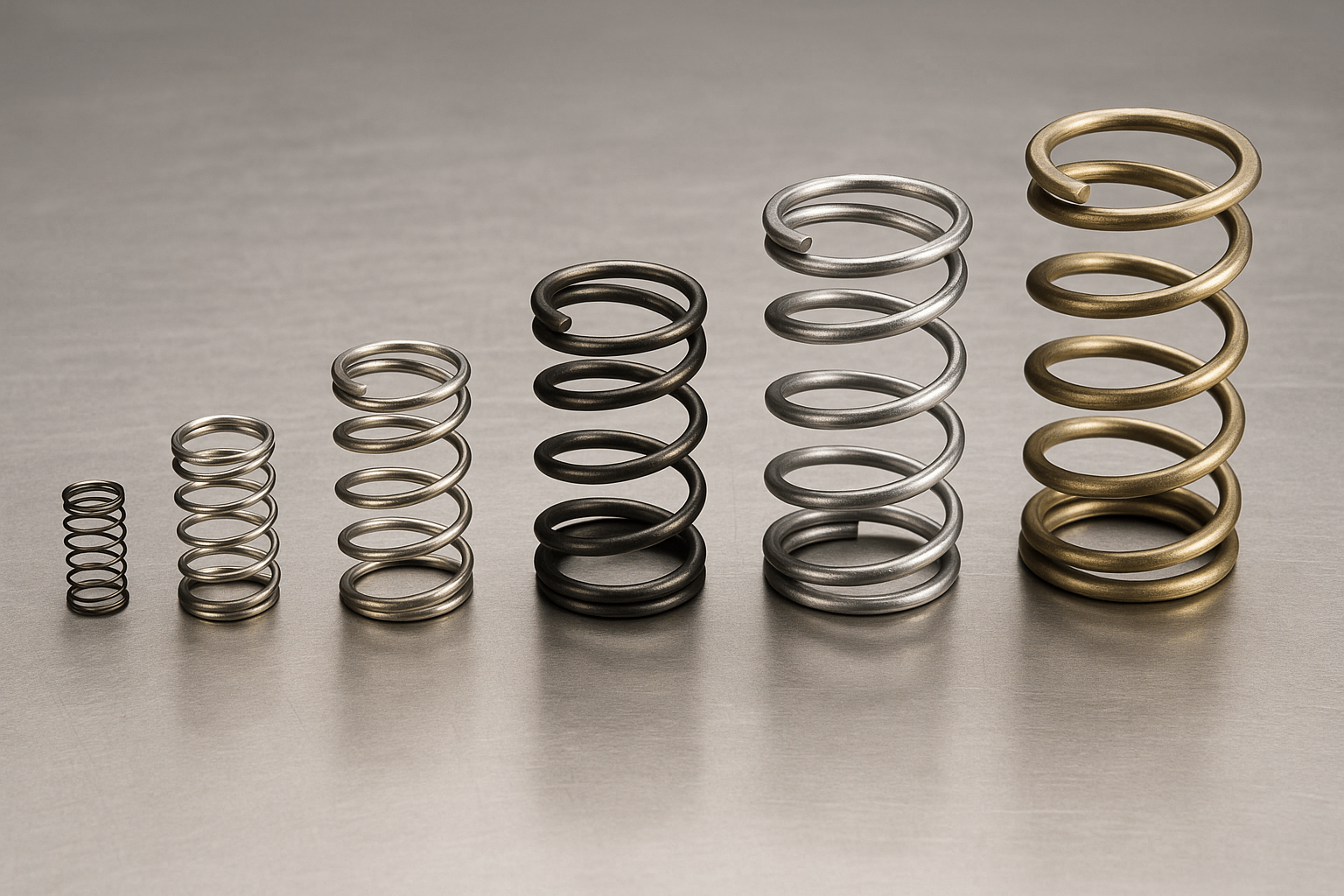
In industrial manufacturing, small components can determine the reliability of an entire system. Springs are a clear example. Although they are often overlooked, they directly affect load control, motion stability, fatigue performance, and long-term product reliability.
For engineers and procurement teams, spring selection is not just a catalog exercise. It is an engineering and sourcing decision that influences service life, maintenance cost, assembly behavior, and total ownership risk.
Part 1: The Physical “Bottom Line”—A Spring’s Unbreakable Performance Boundaries
Before selecting any spring type, buyers and engineers need to understand the limits that govern spring performance in real use. Springs may look simple, but they are controlled by strict relationships between load, displacement, stiffness, fatigue life, and material stress.
For sourcing teams, this matters because a spring rarely fails by surprise. Most failures are the result of choosing the wrong load profile, underestimating fatigue demand, or ignoring how material and surface condition affect long-term durability.
The most important principle is that a spring must operate within its elastic range. Once it is pushed beyond that range, it may no longer return to its original form, and the system depending on it may lose function or safety margin.
Part 2: Design Evolution Under Three Basic Forces—The Helical Spring Showdown
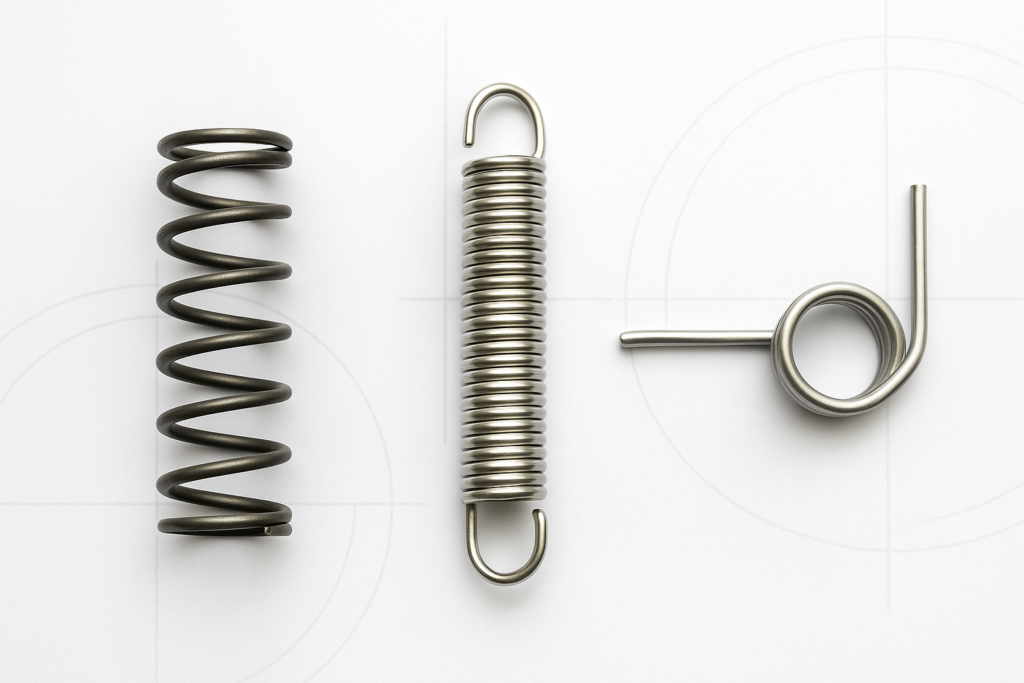
Helical springs remain the most common spring family because they solve three basic mechanical tasks: compression, extension, and torsion.
Compression springs resist axial load under compression. Extension springs store energy under pull. Torsion springs work through angular deflection. For buyers, the important point is not just the shape, but how each type behaves under repeated use, how it is mounted, and where stress concentrates during operation.
This distinction matters because two springs can look similar in quotation language while performing very differently once installed in the actual product.
Part 3: The Rule Breakers—Specialty Metal Springs for Extreme Engineering Problems
Not every application can be solved by a standard helical spring. Some designs require constant force, very high load in small space, or unusual deflection behavior.
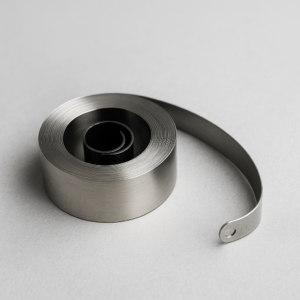
That is where specialty spring types become useful. Constant force springs, disc springs, leaf springs, and volute springs each solve a different engineering problem. For procurement teams, these parts usually require closer review because material choice, stress pattern, and manufacturing route are more specialized than in standard coil springs.
In many cases, the right specialty spring can reduce space demand, simplify mechanism design, or improve performance where a standard spring would struggle.
Part 4: From Metal to Masterpiece—How Manufacturing Defines a Spring’s Final Performance
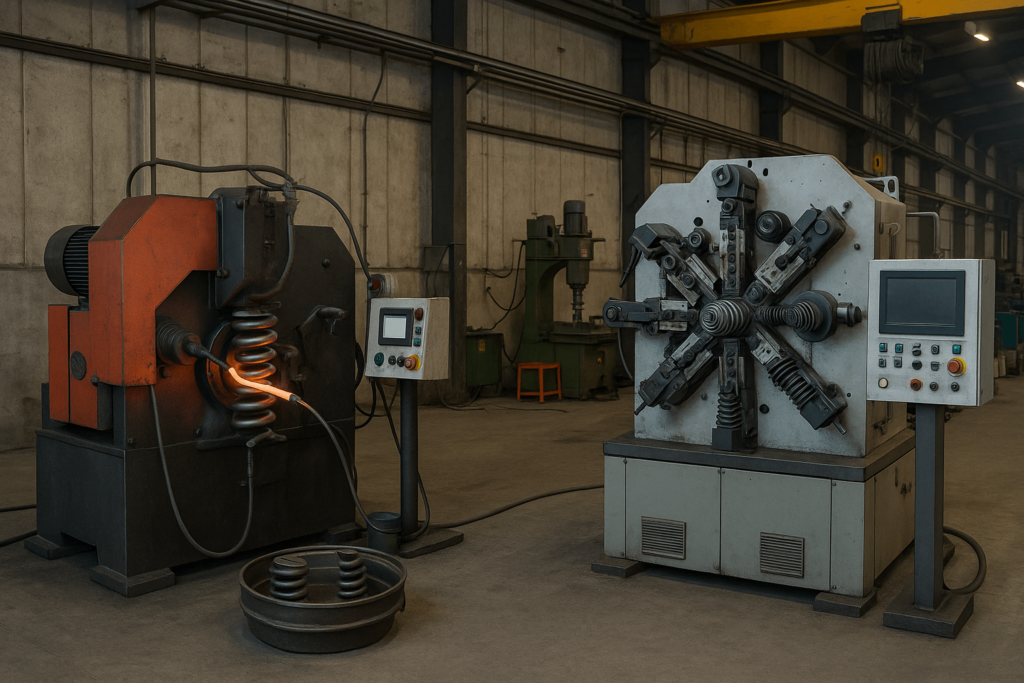
A spring’s final performance is shaped as much by manufacturing as by design. Coiling method, heat treatment, stress relief, shot peening, and surface finish all influence whether the spring performs reliably over time.
For buyers, this is critical. Two springs may look similar on paper, but if the manufacturing route differs, their fatigue life, dimensional stability, and corrosion performance may be very different in service.
That is why supplier evaluation should include not only spring dimensions and material grade, but also how the spring is made, treated, and controlled during production.
Part 5: The Engineer’s Decision Checklist—Matching the Spring to the Application
Spring selection should always start from the application, not from the catalog.
Buyers and engineers should review load direction, travel range, installation space, operating environment, expected cycle life, and acceptable failure risk before confirming spring type or material. This kind of disciplined review usually prevents expensive mismatch later in testing, assembly, or field use.
A spring that appears acceptable in static comparison may still perform poorly if the real working cycle, corrosion exposure, or mounting condition was underestimated.
Conclusion: Beyond “Type Selection,” Embracing “Engineering Matching”
The real goal in spring sourcing is not simply choosing a category such as compression or torsion. It is making sure the spring’s design, material, manufacturing route, and working environment are properly matched.
When that match is correct, springs become durable and predictable components. When it is wrong, the result is often premature failure, higher maintenance cost, or unstable product performance.
For industrial buyers, this means better sourcing decisions come from understanding how the spring will actually work, not just what it is called.
Why Work with YISHANG for Custom Spring Manufacturing?
At Yishang Metal Products Co., Ltd., we support OEM and wholesale customers with custom metal manufacturing for industrial parts that may include spring-related components, formed metal structures, and precision fabrication support.
With 26+ years of manufacturing experience, we support processes including laser cutting, bending, stamping, welding, CNC machining, surface treatment, assembly, packaging, inspection, and shipment. For custom projects, we work with customers to align material choice, production method, and quality expectations with the actual application.
FAQ
Q1: What are the different types of mechanical springs?
Common spring types include compression springs, extension springs, torsion springs, constant force springs, disc springs, and leaf springs.
Q2: How do I choose the right spring for my application?
Start with the real working conditions: load type, travel, available space, material environment, fatigue demand, and service risk.
Q3: Does YISHANG provide OEM custom spring services?
Yishang supports OEM and wholesale custom metal manufacturing projects with integrated production and export-oriented service for global buyers.