
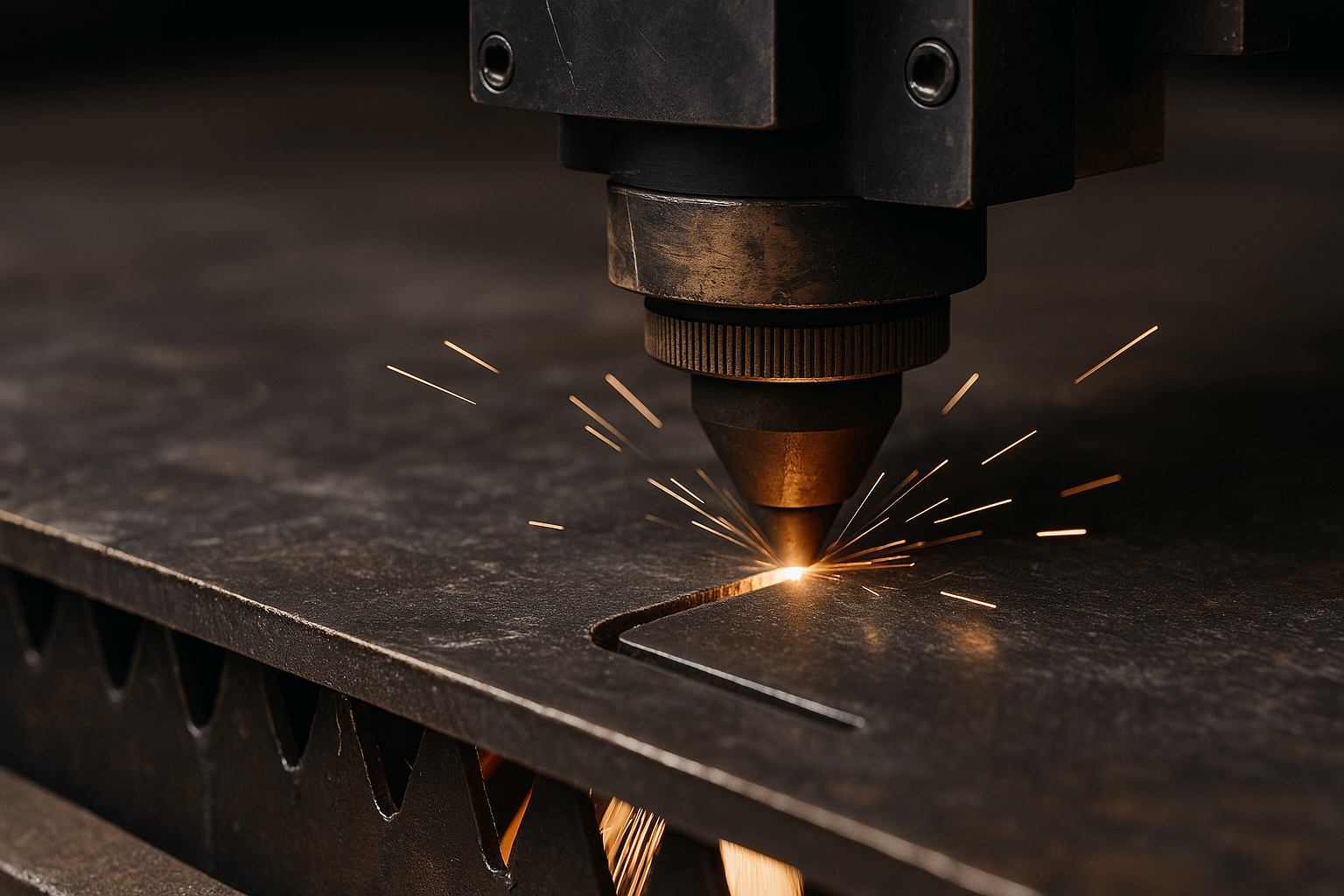
In metal fabrication, a very small cutting variation can create larger downstream problems. A panel may assemble poorly, a slot may become too narrow, or a door may no longer align as intended. One of the key reasons behind these problems is cutting kerf — the width of material removed during cutting.
Kerf is not just a cutting detail. It affects dimensional accuracy, material yield, fit between parts, and how reliably a supplier can reproduce the same result across repeat orders.
This guide explains what cutting kerf is, why it happens, how it is measured and compensated, and why buyers should pay attention to it when comparing metal fabrication suppliers.
What Cutting Kerf Actually Means
Cutting kerf is the width of material removed by a cutting process. In practical terms, it is the gap created by the beam, jet, flame, or tool as material is cut away.
Even when the number looks small, kerf matters because it directly changes final part dimensions unless it is measured and compensated correctly.
Why Kerf Happens
Kerf exists because cutting requires energy to separate material. Different cutting technologies deliver that energy in different ways, which is why kerf width varies from one process to another.
Typical Causes of Kerf Variation
- energy source type, such as laser, plasma, waterjet, or flame;
- material type and thickness;
- machine condition and setup;
- nozzle, beam, or tool condition;
- feed speed, gas, pressure, or process tuning.
For buyers, the key point is simple: kerf is not random. It reflects how the cutting process is controlled.
How Kerf Is Measured and Compensated
A supplier’s ability to measure and compensate kerf is one of the clearest signs of process maturity.
Typical Measurement Logic
- Cut a test feature using the target material and machine settings.
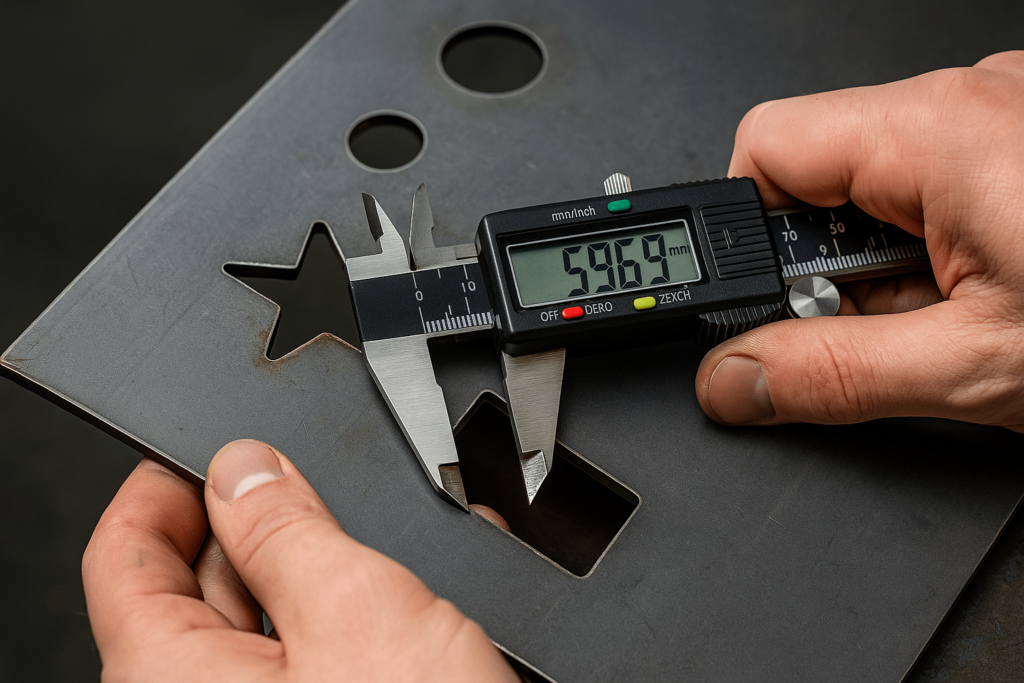
- Measure the final part or removed width.
- Compare the actual result with the programmed dimension.
- Convert that difference into a kerf offset for future tool paths.
Why Compensation Matters
If kerf is not compensated correctly in CAD/CAM or machine setup, every cut feature may shift slightly from the intended size. Over multiple panels, openings, and mating parts, that small error can accumulate into assembly issues and rework.
For buyers, asking whether kerf offsets are measured by material and thickness is often more useful than asking only about nominal machine precision.
Kerf in Different Cutting Technologies
Different cutting methods create different kerf widths, edge conditions, and process trade-offs.
Laser Cutting
Laser cutting usually creates the narrowest kerf and is often preferred where dimensional accuracy, edge quality, and repeatability are especially important.
Plasma Cutting
Plasma cutting generally produces a wider kerf than laser cutting, but it can be more economical for thicker conductive materials.
Waterjet Cutting
Waterjet cutting avoids heat-affected zones and is often chosen when cold cutting is important, even though its kerf is usually wider than a fine laser cut.
Oxy-Fuel Cutting
Oxy-fuel cutting is typically used for heavy steel sections where tolerance demands are less strict and productivity on thick material matters more.
Simple Comparison Table
| Cutting Method | Typical Kerf Range | General Precision Level |
| Laser cutting | narrowest | high |
| Plasma cutting | wider than laser | medium |
| Waterjet cutting | medium | high |
| Oxy-fuel cutting | widest | low to medium |
For buyers, the practical lesson is that kerf should be evaluated together with edge quality, thermal effect, thickness range, and total process fit—not as an isolated number.
Why Kerf Matters to Buyers
Kerf is useful because it reveals more than cutting width. It shows whether a supplier is likely to run a controlled, repeatable, and measurable process.
Kerf and Manufacturing Maturity
A supplier that actively measures kerf is often also controlling other related variables such as bending allowance, edge condition, and process drift. In that sense, kerf becomes a visible sign of production discipline.
Kerf and Cost
Kerf affects cost in several ways:
- material yield and nesting efficiency;
- rework caused by undersized or oversized cut features;
- fit quality in downstream bending, welding, or assembly;
- repeat-order consistency and requalification effort.
Kerf and Digital Process Control
In more mature factories, kerf data is not estimated casually. It is measured, stored by process condition, and linked to programming or process-control routines. For buyers, this is important because digital control helps repeat the same result across future batches rather than relying on trial-and-error setup.
Conclusion
Cutting kerf may seem like a small parameter, but it affects whether parts fit correctly, whether material is used efficiently, and whether repeat orders remain consistent.
For buyers, kerf is one of the clearest indicators of whether a supplier truly controls the cutting process. A factory that understands kerf will usually speak clearly about measurement, compensation, material-specific behavior, and downstream impact.
That is why kerf should be treated not as a minor cutting detail, but as part of a broader accuracy and process-control strategy in metal fabrication.