
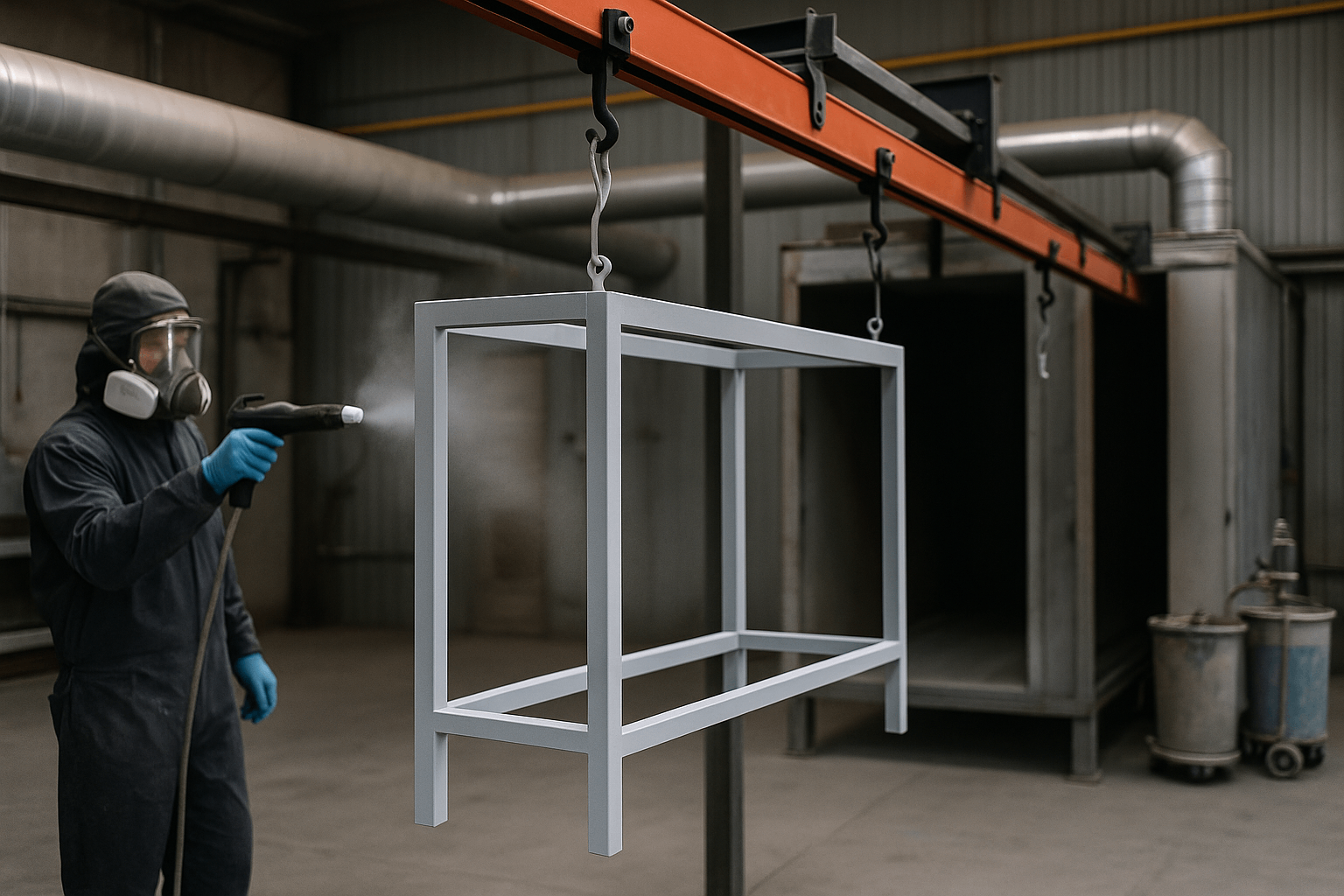
For global wholesale buyers, selecting a metal manufacturer is fundamentally about supply stability, predictable quality, and long-term production confidence. One capability that strongly influences these factors is powder coating. Across industries—from automotive to industrial equipment, construction, energy storage, appliances, vending systems, agriculture, and infrastructure—powder coating has become a decisive benchmark for durability, corrosion resistance, and overall finishing consistency. Because of this, more metal manufacturers are building their own powder coating setups to strengthen their competitiveness in export markets.
This article provides a deep, actionable guide on how metal manufacturers can successfully start a powder coating business and what international wholesale buyers should look for when evaluating suppliers with in-house powder coating capabilities. Rather than offering a surface-level checklist, the following sections will break down the strategic considerations, technical factors, facility layout principles, cost influences, throughput planning, quality control expectations, and risk management insights that truly matter in B2B procurement.
Whether you are a manufacturer planning your first powder coating setup, or a procurement professional trying to assess a supplier’s finishing capability, this guide will help you understand how a well-designed powder coating operation can improve consistency, reduce lead time, and elevate the long-term reliability of metal components.
Why Powder Coating Matters for Global Wholesale Buyers
Powder Coating as a Technical and Commercial Benchmark
In global manufacturing supply chains, powder coating has shifted from a value-added option to a minimum expectation for metal parts requiring outdoor resistance, aesthetic uniformity, or structural durability. Modern procurement teams increasingly prioritize suppliers who can demonstrate stable, in-house powder coating processes.
This is because powder coating provides several measurable advantages:
-
High corrosion resistance — particularly valuable for cabinets, enclosures, frames, housings, and structural parts exposed to environmental stress.
-
Predictable visual consistency — especially important for batch-controlled products in automotive, appliance, retail display, and industrial equipment sectors.
-
Greater film thickness control — essential for durability in high-cycle usage environments.
-
Reduced environmental volatility — powder coating eliminates VOC emissions common in liquid paint systems, meeting global compliance expectations more easily.
For buyers, these benefits translate directly into more stable product performance, fewer quality disputes, and greater confidence in year-round procurement cycles.
Integrated Coating as a Supply Chain Advantage
When a manufacturer brings powder coating in-house, several bottlenecks disappear:
-
No dependency on subcontractor schedules
-
Fewer transport-related defects
-
Better engineering change response
-
Stronger consistency between prototype and mass production
-
Shorter overall lead time
This integration enhances value for large global buyers who prioritize dependability over short-term cost savings. For example, a procurement manager supplying vending machines or industrial cabinets cannot risk inconsistent gloss levels or shade variation between multiple production waves. In-house powder coating reduces these risks dramatically.
From a commercial standpoint, a powder coating business strengthens a metal manufacturer’s position as a strategic, long-term supplier able to support multi-year OEM programs with predictable performance.
Designing a Powder Coating Setup That Meets International Requirements
Phase 1: Strategic Definition and Feasibility Planning
Starting a powder coating business requires a strategic understanding of product mix, target finish requirements, and expected production volumes. Manufacturers must evaluate factors such as:
-
Part dimensions and weight
-
Annual order quantities
-
Type of coating durability required
-
Color variation management
-
Whether the line must support frequent changeovers
-
Whether customers require specific standards (e.g., ISO 9001 QC procedures, RoHS compliance, salt-spray performance, scratch resistance levels)
This phase lays the foundation for a system that is not only technically functional but commercially aligned with real buyer expectations. Wholesale buyers often request repeat sample consistency, so manufacturers must consider how their powder coating business will support replicable color, texture, and appearance across different production months or even years.
Phase 2: Engineering the Layout and Powder Coating Setup
A successful powder coating setup must have an efficient, linear, and safe flow. A typical export-grade setup includes:
-
Pretreatment zone (degreasing, rinsing, phosphating)
-
Dry-off oven
-
Powder spray booth (manual or automatic)
-
Curing oven
-
Cooling and inspection area
-
Hanging and unloading sections
-
Conveyor or trolley-based transfer system
An optimal layout minimizes backtracking and prevents contamination. For instance, a one-directional workflow ensures that untreated parts never come into contact with coated components.
Manufacturers serving export markets must consider:
-
Part throughput rate
-
Oven length and heating zones
-
Powder recovery efficiency
-
Quick color-change capability
-
Energy consumption per cycle
-
Booth overspray management
These factors significantly influence both production cost and output stability—two key concerns of global wholesale buyers.
Phase 3: Technical Validation and Mass-Production Simulation
Before launching full production, manufacturers must run technical validation cycles to confirm:
-
oven curing curve stability
-
consistent film thickness distribution
-
gloss level uniformity
-
edge coverage capability
-
scratch and adhesion performance
-
expected salt-spray test ratings
-
color tolerance compliance between batches
A reliable powder coating business proves its capability not by equipment specifications alone, but by delivering stable, repeatable performance over multiple simulation rounds.
For wholesale buyers, this phase reveals whether a supplier can support long-term, high-volume programs without quality drift.
Managing Cost, Quality, and Risk From a Buyer’s Perspective
Understanding Cost Drivers in Powder-Coated Metal Products
Wholesale buyers often evaluate multiple suppliers across regions, so understanding cost structure helps interpret quotations more accurately. Major cost drivers include:
-
energy consumption for curing ovens
-
powder type and thickness requirements
-
pretreatment chemicals and water system maintenance
-
labor intensity (manual vs automated coating)
-
batch vs conveyor line differences
-
equipment depreciation
-
color-change frequency
-
scrap rate and rework rate
For example, buyers sourcing outdoor-grade cabinets requiring thicker films and UV-resistant powder will naturally see higher production costs. Likewise, frequent color changes increase downtime and reduce efficiency, influencing overall pricing.
Manufacturers who manage these variables well become more competitive—especially for large export orders where cost consistency matters just as much as initial price.
Quality Control as the Core of Buyer Confidence
For international buyers, quality is more than appearance; it is reliability across the entire order cycle.
Key metrics evaluated include:
-
film thickness (µm)
-
gloss levels
-
adhesion results (cross-hatch tests)
-
resistance to chipping, scratching, and salt-spray exposure
-
uniformity across edges, corners, and welded joints
-
surface defect rates per batch
A mature powder coating business also maintains:
-
curing logs
-
preventive maintenance records
-
equipment calibration data
-
incoming powder inspection results
Manufacturers who offer transparent QC documentation build stronger trust with global wholesale buyers.
Eliminating Supply Chain Risks Through In-House Coating
In-house powder coating minimizes variables such as subcontractor delays, inconsistent curing profiles, or transport damage. For procurement teams under pressure to maintain fixed timelines, this reduces the risk of:
-
inconsistent finishing between batches
-
rejection rates increasing unexpectedly
-
shipment delays due to bottlenecks
-
mismatches between sample approval and mass production
Manufacturers with internal coating capabilities simply have more control—an advantage buyers actively look for when comparing suppliers.
Frequently Asked Questions About Starting a Powder Coating Setup with a Metal Manufacturer
1. How much investment is needed to start a powder coating business?
Entry-level powder coating setups may start around USD 50,000, while fully automated conveyor lines can reach several hundred thousand. For buyers assessing suppliers, the important metric is not the investment amount but whether the line is sized appropriately for product volume, part dimensions, curing requirements, and projected annual demand.
A properly sized line ensures throughput stability—critical for long-term OEM programs.
2. How do buyers evaluate whether a supplier’s powder coating process is reliable?
Buyers typically review:
-
process documentation
-
consistency across multiple sample runs
-
curing oven stability
-
film thickness and adhesion stability
-
gloss uniformity
-
records of daily/weekly QC tests
-
color tolerance management
A supplier who performs systematic checks and maintains long-term QC logs will almost always outperform subcontracted finishing vendors.
3. Does in-house coating reduce lead time for export orders?
Yes. In-house coating eliminates transportation between factories and reduces subcontractor queue times. Manufacturers can align coating schedules with fabrication progress, ensuring:
-
faster sample turnaround
-
fewer unexpected delays
-
more predictable mass production timelines
This advantage is particularly valuable for buyers sourcing assemblies with welded structures or multi-component systems.
4. Which types of parts benefit most from in-house powder coating?
Parts with high surface-area exposure or strict appearance requirements benefit significantly, such as:
-
industrial enclosures
-
vending machine bodies
-
equipment housings
-
frames and brackets
-
automotive accessories
-
metal shelving and fixtures
-
outdoor structural components
These require consistent edge coverage and long-term durability—two areas where in-house coating performs noticeably better.
5. Is powder coating suitable for multi-year OEM programs?
Absolutely. Powder coating is highly stable and repeatable when managed properly. Buyers should ensure that their supplier runs preventive maintenance, maintains stable pretreatment quality, and monitors oven conditions. When these steps are followed, powder coating supports long-term OEM requirements with strong year-over-year consistency.
A well-built powder coating business does much more than add color to metal parts—it enhances supply chain reliability, strengthens quality control, and elevates manufacturing professionalism. For global wholesale buyers, evaluating a supplier’s powder coating capability provides insight into their long-term stability, technical maturity, and commitment to consistent output.
For manufacturers, investing in powder coating is not only a technical upgrade but a commercial strategy. With proper planning, validated processes, and the right equipment, a powder coating setup becomes a durable competitive advantage in export-oriented markets.
If you are sourcing fabricated and powder-coated metal components and want to understand coating capabilities, process control methods, or production feasibility, YISHANG welcomes the opportunity to discuss your requirements. Reach out to us to explore your project needs.