For global OEM buyers and wholesale procurement professionals, metal product quality is only as good as its surface finish. Powder coating isn’t just a protective layer — it’s a performance system. When engineered correctly, it prevents corrosion, extends product life, and enhances the brand value of your end products across industrial, automotive, and electronic sectors.
Yet many buyers reduce powder coating to a commodity service. This results in costly field failures, warranty claims, and inconsistent product performance. To avoid these pitfalls, you need more than just a supplier — you need a manufacturing partner with a systems-engineered approach to finishing.
This guide outlines how YISHANG — an ISO 9001 and RoHS-certified metal fabrication expert with over 26 years of export experience — engineers powder coating processes from the inside out. We’ll cover:
- Compressed air quality & thermodynamic control
- Surface pre-treatment chemistry
- Electrostatic deposition and grounding systems
- Thermal curing and film performance
- Quality control, standards compliance, and traceability
- Total cost of ownership and buyer risk mitigation
- CNC machine cost overview for part pricing context
Let’s unpack the physics — and economics — behind premium, export-grade finishes.
CNC Machine Cost Overview for Metal Fabrication Buyers
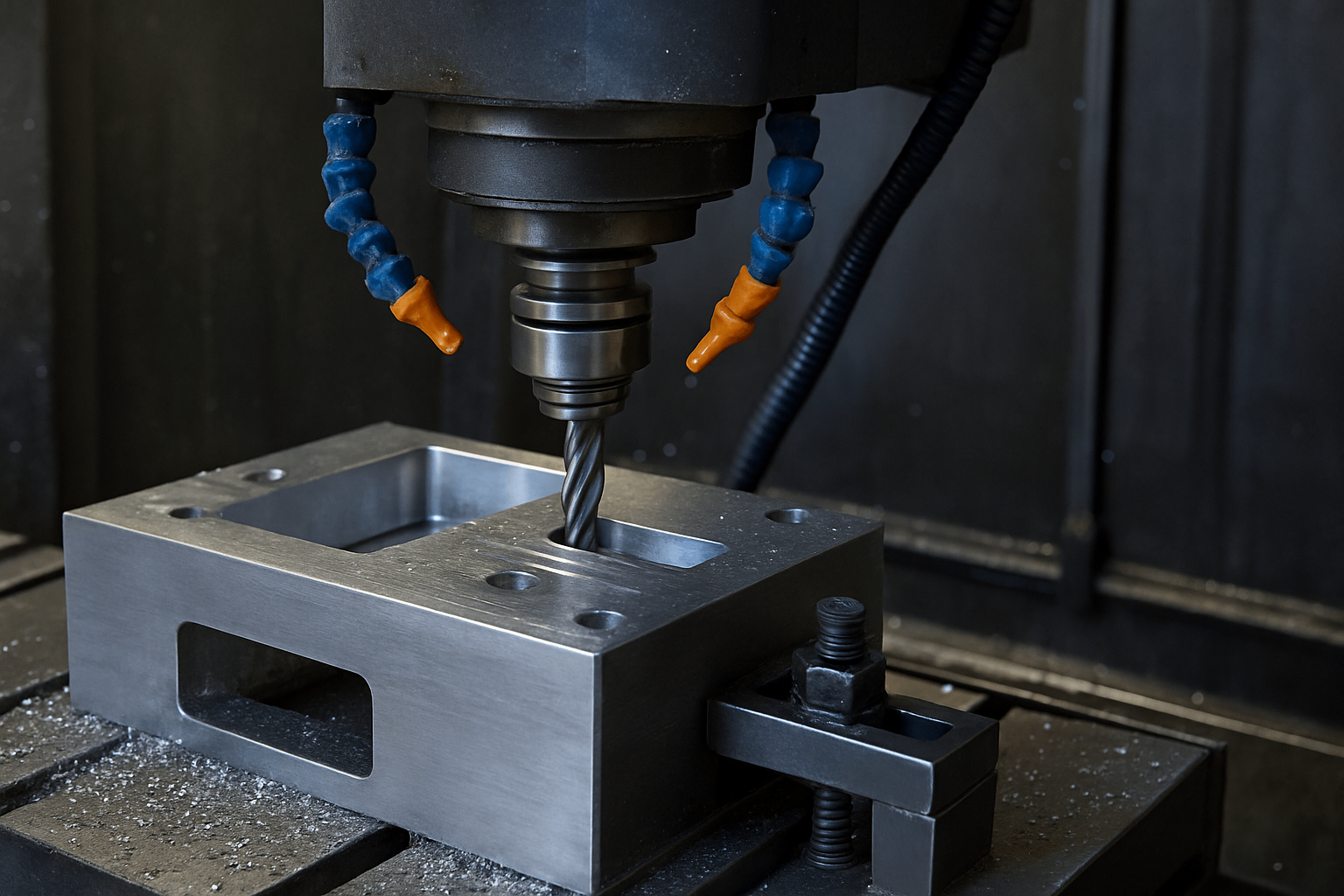
Whether you’re sourcing metal cabinets, display racks, enclosures, or vending machine housings, understanding the upstream cost structure of CNC machining helps you benchmark pricing and evaluate supplier capabilities. While YISHANG is not a CNC machine seller, our extensive use of CNC metalworking systems gives us unique insight into the pricing landscape that impacts part cost.
How Much Is a CNC Machine for Metal Parts?
The price of CNC machines used in sheet metal fabrication varies significantly depending on machine type, precision, build volume, automation, and brand. As of 2025, typical price brackets include:
| CNC Machine Type Common Use Price Range (USD) | ||
|---|---|---|
| Desktop 3-axis CNC router | Hobby / prototyping | $2,500 – $8,000 |
| Entry-level CNC mill (3-axis) | Small metal parts / custom jobs | $20,000 – $40,000 |
| Mid-size industrial CNC machining | Enclosures, brackets, frame panels | $50,000 – $120,000 |
| Large-format CNC (5-axis / gantry) | Complex structures / multi-face parts | $150,000 – $500,000+ |
Key Factors Influencing CNC Machine Pricing
- Number of axes: More axes allow complex part geometries.
- Work envelope: Larger bed size increases cost.
- Spindle power & RPM: Impacts metal cutting speed and capability.
- Tool changers / automation: Affects cycle time and efficiency.
- Software and controller integration: Impacts precision and reliability.
YISHANG operates high-efficiency CNC punching, milling, and bending centers specifically designed for medium- to large-volume metal parts production. Our investment in this infrastructure ensures consistency, repeatability, and short lead times—while keeping cost per part competitive.
Why CNC Machine Cost Matters to Buyers
Even if you’re not buying the machine, the machine defines the part. High-end CNC systems reduce rework, lower scrap, and increase output per labor hour. That’s why choosing a supplier like YISHANG, which invests in industrial-grade CNC infrastructure, directly improves your product’s consistency and total landed cost.
Whether you’re comparing quotes or planning long-term sourcing, understanding how CNC machine costs affect factory capabilities gives you an edge in negotiation and vendor qualification.
I. Compressed Air & Thermodynamic Infrastructure
Every powder coating system starts with compressed air. It powers the fluidization of powder, the propulsion through the gun, and the final atomization on the part. But compressed air also brings the biggest hidden threat: moisture.
Why Moisture Destroys Coating Quality
During compression, ambient air’s moisture condenses. When it reaches the powder gun and expands rapidly, it causes water vapor to condense inside the spray pattern. The result? Clumped powder, pinholes, craters, and surface fisheyes.
For professional-grade finishes, the system must meet ISO 8573-1 Class 2: < -40°C dew point, <0.1 mg/m³ oil content.
YISHANG Engineering Controls
- Desiccant dryers with real-time dew point monitoring
- 0.01μm coalescing filters to eliminate oil vapor
- Air receiver tanks to stabilize line pressure and reduce surges
- Closed-loop alarmed filtration system for predictive maintenance
These systems aren’t optional—they’re foundational. At YISHANG, every booth runs on precision-regulated air to ensure powder flows evenly and cures without micro-defects.
II. Surface Chemistry: Pre-treatment Science
Powder can only adhere properly to a clean, chemically active surface. That’s why pre-treatment is often the difference between a one-year finish and a ten-year performance warranty.
Our Multi-Stage Pre-treatment Workflow
- Alkaline degreasing to remove oils and organics
- Deionized water rinse to eliminate residue
- Zirconium nano-coating conversion layer for adhesion
- Final rinse with RO water for zero mineral content
- Dry-off oven for moisture-free surfaces
Common Failures Avoided
- White rust from mineral contamination
- Blistering from weld oxides or flux
- Adhesion loss on unpassivated galvanized steel
YISHANG integrates closed-loop rinse monitoring, pH and conductivity tracking, and passivation checks for complex assemblies. Welded, bent, or CNC-machined parts receive additional abrasive prep and masking to ensure uniform adhesion.
III. Electrostatic Deposition & Grounding
Without consistent charge transfer, powder won’t wrap, won’t build, and won’t penetrate corners. YISHANG solves this with both electrostatic control and mechanical design.
Key Elements of Our System
- Corona guns with adaptive kV control to prevent back-ionization
- Faraday mitigation cycles for internal corners and vents
- Low-flow pulse settings to flood deep recesses without buildup
- Robotic reciprocators integrated with CAD profiles for coverage mapping
- Ground verification systems on every racking point (<1 Ohm)
Static field modeling is used during process planning to identify low-coverage areas. We simulate charge density and adjust gun angle, air mix, and dwell timing.
IV. Thermal Dynamics: Curing Profiles & Oven Calibration
Even perfect powder application fails without proper curing. Curing is a thermochemical process — not just heat exposure. Time, temperature, airflow, part geometry, and powder chemistry must align within tight tolerances.
Common Curing Failures
- Underbake: Incomplete crosslinking = weak adhesion, poor chemical resistance
- Overbake: Brittleness, discoloration, and powder degradation
- Thermal shadows: Uneven exposure = gloss variation, orange peel
YISHANG uses high-efficiency convection ovens with thermocouple validation at part-level. We calibrate to each geometry using ASTM D2454 and record real-time part temperature curves.
How We Guarantee Cure Quality
- 5-point thermocouple tracking on rotating carriers
- Airflow mapping per rack layout
- Colorimetric gloss and crosshatch adhesion post-cure (per ISO 2409)
We also simulate worst-case cure paths using digital twin modeling to validate the full rack. Only when the most thermally shielded part reaches proper dwell time at full cure temperature is the program released to production.
V. Quality Control & Standards Traceability
For high-volume OEMs, coating isn’t a visual concern — it’s a performance contract. At YISHANG, QA begins before powder even touches the part.
Our QC Approach
- Material batch tracking with powder lot ID and shelf life logging
- Micron-thickness measurement (ASTM D7091) per panel and live parts
- Crosshatch adhesion (ISO 2409) on random samples per batch
- Salt spray corrosion testing (ISO 9227) for outdoor-rated assemblies
For custom powder types (ESD, anti-microbial, high-temp), we store and control batch parameters via MES-linked inventory. Every shipment is traceable to application date, gun ID, pre-treatment chemistry, and operator.
Visual inspections are supported by gloss meters (ISO 2813), colorimeters (CIE ΔE), and angle-resolved imaging for edge wrap.
VI. Total Cost of Ownership & Buyer Risk Mitigation
Powder coating costs aren’t about price per kg—they’re about failure prevention and brand preservation.
Hidden Costs of Poor Finishing:
- Returns due to surface defects or corrosion
- Extra shipping from reworks
- Customer dissatisfaction impacting renewals
YISHANG’s approach reduces total landed cost by:
- Shortening first-article approval cycles (fast prototyping)
- Preventing costly field failures (pre-delivery tests)
- Ensuring repeatability across reorder cycles (jigs, automation, fixture controls)
We offer bundled pricing with post-processing, hardware integration, and packaging, lowering TCO for international buyers.
Final Thoughts: Engineering Value Into Surface Finishing
When selecting a supplier for powder-coated metal products, you’re not just buying finish — you’re buying consistency, compliance, and credibility. YISHANG’s systems engineering mindset eliminates guesswork and ensures performance.
From vending machine enclosures in Germany to medical equipment frames in Canada, our finishing infrastructure scales with your brand requirements. That’s why 50+ countries trust us for high-stakes fabrication.
Frequently Asked Questions (FAQs)
Q1: How much does a CNC machine for metal typically cost?
A: Entry-level machines range from $20,000–$40,000, while industrial-grade systems can exceed $250,000 depending on size, axis, and automation.
Q2: Do you offer powder coating on aluminum, stainless steel, and galvanized steel?
A: Yes, YISHANG supports a range of substrates including aluminum, 304/316 stainless steel, galvanized, and mild steel.
Q3: What certifications do your powder coating processes comply with?
A: Our factory is ISO 9001 certified and RoHS compliant. We follow ISO 2409, 2813, 9227, and ASTM D7091 standards in testing.
Q4: Can you support small batch or custom color requests?
A: Yes, we offer flexible MOQ for custom RAL colors and special finishes including textures, metallics, and matte.
Q5: What’s your typical lead time?
A: Lead time varies by order size and finish type, but standard production runs ship within 15–25 days. Expedited service is available for repeat buyers.
Want to discuss your next powder-coated metal project? Contact YISHANG for a quote or request technical data sheets to qualify our process.