Introduction
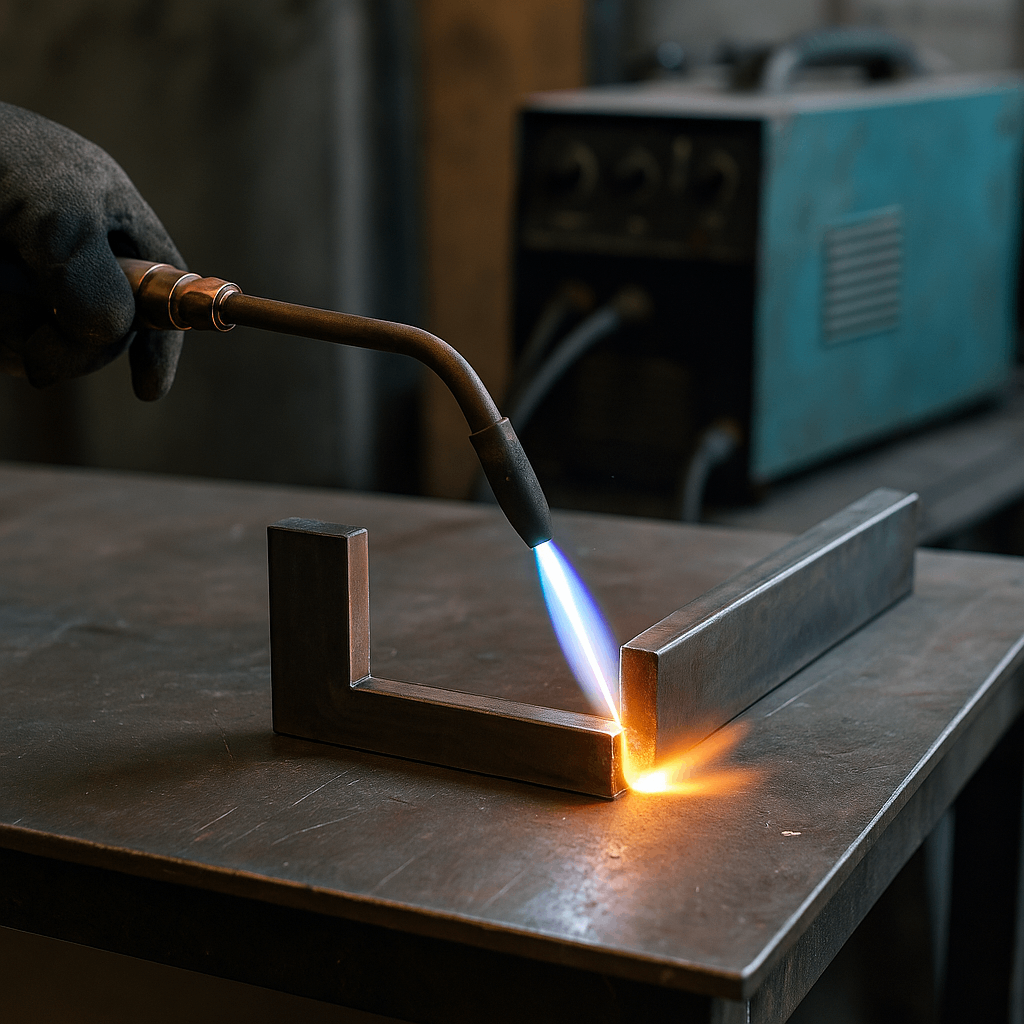
When buyers compare brazing and welding, the discussion often starts with one simple question: which joint is stronger? In practice, that question is only useful up to a point.
For bulk metal products—such as cabinets, housings, brackets, frames, and assembled sheet-metal structures—the joining method affects far more than laboratory strength. It also influences:
part distortion
assembly fit
surface finish quality
batch consistency
rework rate
long-term customer complaints
That is why this topic comes up so often in RFQs, drawings, engineering reviews, and sourcing discussions.
Quick Answer
A properly executed full-penetration weld is usually stronger than a brazed joint in pure tensile or impact terms. For heavily loaded structural parts, welding is still the stronger option.
Even so, that does not mean welding is automatically the better choice for every product. In many sheet-metal, aluminium, and mixed-material applications, brazing can be strong enough in practice—and sometimes better for the finished product overall because it helps preserve:
flatness and tolerance control
surface quality before coating
dimensional stability
compatibility between dissimilar metals
For buyers, the better question is usually this:
Which process gives the product stronger real-world performance over its full service life—not just a higher number in a test report?
1. How Brazing and Welding Change the Finished Product
Welding: High Strength, Higher Heat, More Side Effects
Welding is a fusion process. The base metal melts, the joint becomes part of the structure, and the finished weld can approach or even exceed the strength of the surrounding material. That is exactly why welding remains the standard choice for frames, supports, machine bases, and other heavy-duty structures.
The trade-off is heat. That heat does not stop at the joint line. It changes the surrounding area too, which is why buyers often see issues such as:
heat-affected zones with altered properties
distortion in thin sheet metal
residual stress that shows up later in machining or coating
surface marks, weld ripples, or heat tint that become visible after finishing
So a welded joint can be mechanically excellent and still create trouble elsewhere in the product.
Brazing: Lower Heat, Better Stability, Different Strength Profile
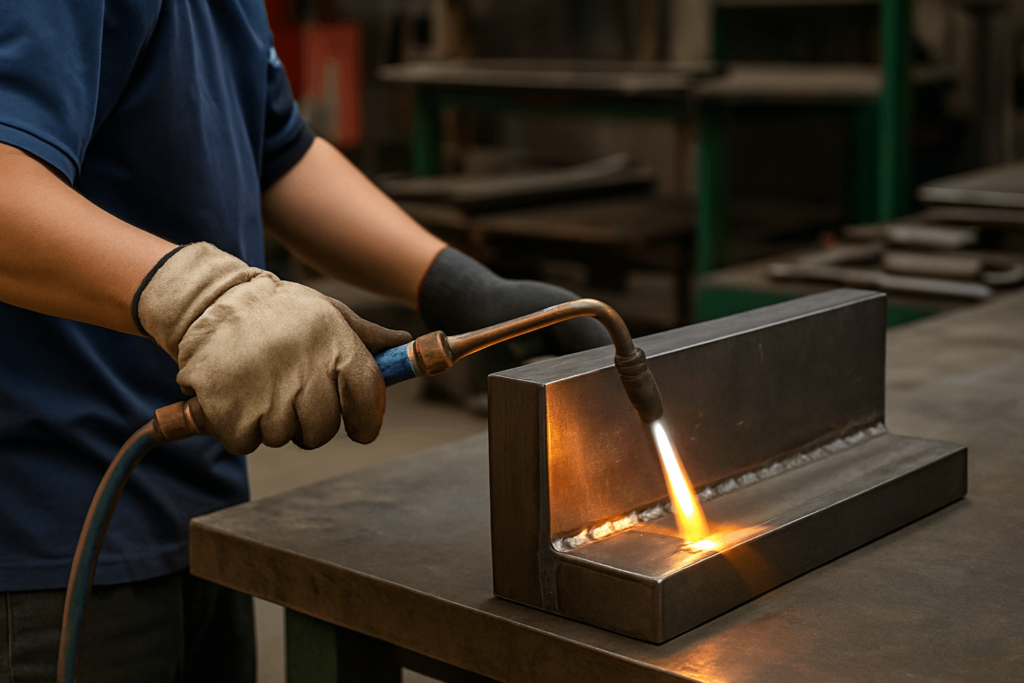
Brazing joins metal with a filler that melts below the base metal’s melting point. The parent materials stay solid, while the molten filler flows into the joint gap and bonds the assembly.
That lower heat input changes the result in ways buyers usually care about:
less distortion
better flatness and alignment
less rework before coating
stronger performance in mixed-metal assemblies
fewer cosmetic issues on visible surfaces
This becomes especially important in aluminium brazing vs welding decisions. Aluminium moves quickly under heat, so the lower-temperature nature of brazing often helps preserve shape and appearance better than welding.
Braze vs Weld: Two Different Product Philosophies
There is also a more useful way to think about the comparison:
Welding changes the metal to create a structural joint
Brazing protects the metal while still creating a reliable joint
That difference is often more practical than a simple strength ranking. If the product depends on heavy load capacity, welding usually wins. If the product depends on precision, appearance, stability, or mixed materials, brazing may serve the product better.
2. Why Strength on Paper Does Not Tell the Whole Story
Real-World Strength Has More Than One Dimension
Many articles compare brazing vs welding strength by quoting tensile strength and stopping there. That may work in a classroom, but it is not how buyers judge finished products.
In a real sourcing decision, you also care about:
whether the part stays in tolerance after joining
whether doors, seams, or panels still align properly
whether the finish looks clean after coating
how much rework shows up during assembly
how the joint behaves under vibration, fatigue, and thermal cycling
A higher-strength weld is not automatically better if it causes the product to move out of shape.
A Strong Joint Can Still Produce a Weak Product
Take a stainless cabinet as an example. The frame may be welded correctly, the seam may pass inspection, and the joint itself may be mechanically strong. Yet if the heat distorts the door opening, leaves visible marks, or forces extra grinding before coating, the finished cabinet becomes harder to assemble and less attractive to the customer.
In that case, the joint is strong, but the product outcome is weaker.
A brazed version of the same product may not win in pure tensile comparison, but it may still deliver the better commercial result because it stays flatter, looks cleaner, and reduces rework.
Buyers Need Functional Strength
This is where the decision becomes more useful. Instead of focusing only on ultimate strength, sourcing teams should ask:
Which method protects the dimensions that matter most?
Which one gives a cleaner surface before coating?
Which one reduces field failures caused by fatigue or vibration?
Which one is more stable across repeat production?
That shift—from test strength to functional strength—usually leads to better choices.
3. How to Judge Brazing vs Welding for Your Specific Product
Distortion Tolerance and Flatness Requirements
Thin sheet metal reacts quickly to heat. That makes distortion one of the first things buyers should evaluate.
If the product depends on:
flat door faces
flush panels
straight hinge lines
tight visual gaps
then even small movement after joining can become a quality issue.
This is one reason brazing is often preferred in thin stainless steel and aluminium enclosures. It may not produce the strongest joint in absolute terms, but it often protects the shape of the product more effectively.
Load Path and Joint Geometry
The best joining method also depends on how force moves through the part.
| Product Condition | Process That Usually Fits Better | Reason |
| Main structural skeleton | Welding | Better for primary tension and heavy load paths |
| Sheet-metal box or cover with overlap joints | Brazing | Performs well in shear and reduces distortion |
| Reinforced light-duty enclosure | Either, depending on design | Depends on load direction, tolerance needs, and finish requirements |
Welds usually perform better when the joint is directly pulled apart. Brazed joints often perform very well when the load is spread across overlapping surfaces.
Dissimilar Metals and Thin Sections
Products increasingly combine different metals for weight, conductivity, corrosion resistance, or appearance. That may include:
stainless steel
copper
aluminium
brass
Welding these combinations is often difficult or impractical. Brazing is usually more adaptable in mixed-metal assemblies because the filler can bridge metals that do not weld easily together.
Thin sections create a similar issue. Welding can cause burn-through, heat tint, or local collapse. Brazing usually gives more control in these situations.
Vibration, Fatigue, and Service Life
Not every product fails under one heavy load. Many fail slowly under repeated use. Vibration, cyclical movement, and thermal changes can gradually weaken a joint over time.
In a properly designed brazed joint:
stress is spread more evenly across the bonded area
residual stress is usually lower
the product may perform better under repeated vibration than a small, highly stressed weld detail
This is one reason brazing remains useful in assemblies such as HVAC parts, sensor brackets, light equipment housings, and other vibration-sensitive subassemblies.
Finishing, Coating, and Appearance Matter Too
From the buyer’s side, some of the most expensive problems only appear after finishing. A joint may pass structural inspection and still create trouble because of:
visible weld shadows
grind marks under powder coat
heat tint that needs extra polishing
surface inconsistency across a customer-facing product
Brazed joints usually blend more smoothly into visible surfaces, which can improve yield and reduce coating-related rejects.
4. Where Brazing Can Be “Strong Enough” — and Sometimes the Smarter Choice
Thin Stainless Steel and Aluminium Enclosures
Cabinets, covers, and light enclosures are often better judged by dimensional stability and appearance than by extreme structural strength. In these products, brazing can offer a very good result because it helps keep:
doors flat
panels aligned
hinge lines straight
coating results more consistent
That is often more valuable than having the highest possible tensile number.
Customer-Facing Metal Products
Whenever the product is visible to the end user, appearance becomes part of quality. A rough joint can make the whole product feel lower grade.
Brazing supports:
cleaner joint lines
less visible finishing work
better blending into surrounding surfaces
This is why brazing is often a better fit for display products, kiosks, decorative housings, and branded metal assemblies.
Multi-Material Designs
If the assembly combines different materials or multiple functions—such as structure, conductivity, or shielding—brazing often provides more flexibility. It is especially useful in combinations such as:
stainless with copper
aluminium with brass inserts
steel parts with localized thermal or electrical elements
High-Volume Production with Repeatability Demands
In repeat orders, consistency becomes a form of strength by itself. Brazing processes such as induction brazing or furnace brazing can often be controlled very tightly, which helps reduce variation from one batch to the next.
For buyers, that can mean:
more consistent joint quality
lower rework rates
better finish repeatability
more stable production across long-term supply programs
5. When Welding Is Usually the Better Call
There are also cases where the comparison becomes much simpler.
Structural Frames and Heavy Load Paths
If the joint is part of the main structural backbone of the product, welding is usually the right answer. That includes products such as:
industrial frames
load-bearing racks
lifting structures
structural steel fabrications
Here the joint is expected to behave as part of the load-bearing skeleton, not just as a dimensional connection.
High-Impact Conditions
Products exposed to drops, crashes, or strong impact loads usually benefit from the energy absorption and structural continuity of a well-designed weld.
High-Temperature Service
Brazing fillers have their own temperature limits. If the product works close to or above those limits, welding becomes the safer option. This applies to parts such as:
exhaust-related components
furnace parts
heat-exposed engine assemblies
Safety-Critical or Code-Controlled Products
In some sectors, the decision is not purely technical or commercial. It is driven by codes, standards, or customer requirements. Structural steel, pressure-related equipment, and some aerospace or regulated assemblies fall into this category.
In those cases, the joint method may be defined before sourcing even begins.
6. A Practical Decision Framework for Sourcing Teams
A useful way to compare brazing and welding is to move through the decision in stages.
Start with What Cannot Be Compromised
Clarify the essentials early:
maximum allowed distortion
required stiffness or load capacity
service environment
appearance standard
finishing process
Map the Load Path
Ask where the assembly is truly carrying force and where the joint is mainly helping with fit, enclosure, or appearance.
Look Beyond Unit Cost
A lower-cost joining method can still become more expensive if it increases:
scrap
rework
coating rejection
assembly delay
field complaints
Match the Process to the Materials and Geometry
In general:
| Product Condition | Process Often Favored |
| Thin, visible, distortion-sensitive product | Brazing |
| Heavy structural product | Welding |
| Mixed-material assembly | Often brazing |
| Hybrid structure with different joint functions | Combination of both |
Use Samples to Remove Guesswork
When the decision is close, the most reliable answer is usually practical testing. Prototype both options if needed, then compare:
fit after joining
surface quality before coating
finished appearance
functional performance in your real use case
7. Final Answer: Is Brazing as Strong as Welding?
In pure mechanical terms, welding is usually stronger. For structural frames, impact loads, and high-stress joints, that still matters.
Even so, buyers do not purchase joints in isolation. They purchase finished products. In many sheet-metal, aluminium, visible-surface, and mixed-material assemblies, brazing can be strong enough in practice—and sometimes the better overall choice—because it protects the product from distortion, cosmetic problems, and unnecessary rework.
So the more useful sourcing question is not:
Which joining method wins in theory?
It is this:
Which one keeps the finished product stable, repeatable, and commercially reliable in real production?