
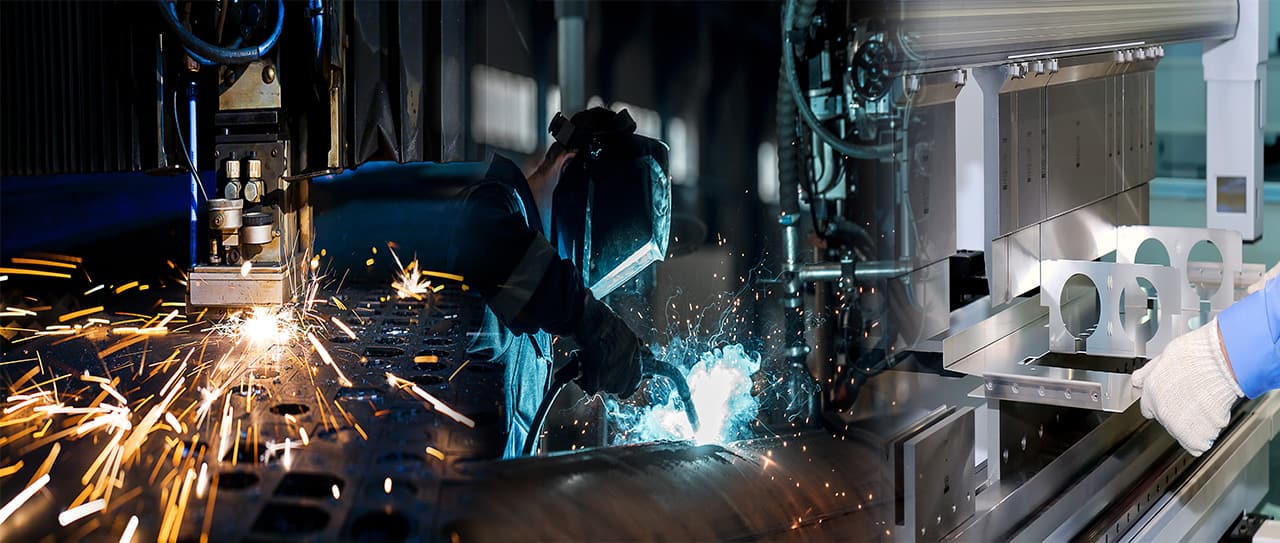
Quick Summary: What Do Welders Weld in Industrial Manufacturing?
In a modern metal fabrication factory, professional welders typically weld ferrous metals (carbon steel, stainless steel) and non‑ferrous metals (aluminum, copper, titanium). Beyond simple joining, welders choose processes such as MIG, TIG, laser welding, and robotic welding to control distortion and structural integrity. For B2B buyers and wholesale importers, understanding these materials and welding methods helps ensure your custom metal parts meet ISO 9001 quality targets and avoid latent defects in applications ranging from automotive frames to vending machines and medical equipment.
What Do Welders Weld? (Short Answer for Buyers)
In practical terms, welders in industrial manufacturing weld steel, stainless steel, aluminum, galvanized steel, and other metals into finished products such as frames, cabinets, racks, machine housings, tanks, and structural parts. Depending on the design and material, they choose different processes—MIG, TIG, laser, and robotic welding—to achieve the required strength, appearance, and cost level. This article goes beyond that short answer to explain how each material category affects weld quality, risk, and long‑term performance in your supply chain.
Introduction: Why Understanding Welded Materials Matters for B2B Manufacturing Procurement
For purchasing managers, product engineers, wholesalers, and supply chain directors sourcing custom metal products from China, the question “what do welders weld?” is not a casual topic about chemistry. It is directly related to risk management, landed cost, and supplier capability.
In the complex ecosystem of global contract manufacturing, welding is the “black box” where raw sheet metal, tubes, and frames are transformed into finished cabinets, display racks, frames, brackets, machine housings, and enclosures. It is the point where structural strength meets visual appearance—and very often the point where a project succeeds or fails.
A mistake in welding parameters does not just create one bad part. It can result in batch‑wide hidden defects, rework, shipment delays, and safety issues in the final application. When you send an RFQ (Request for Quotation) to an overseas metal fabrication supplier in China, you are not simply buying machine time. You are investing in that supplier’s ability to control the physics of fusion at scale.
Welding involves a sophisticated interplay of thermal dynamics, metal composition, joint design, and part geometry. Understanding which materials are being welded—and how—helps you:
- Select the right material for each project and industry
- Evaluate whether a sheet metal factory really has the capability it claims
- Compare quotes based on process quality, not only unit price
- Reduce quality complaints and warranty risk in your market
This guide moves beyond basic definitions to explain welding through the lens of B2B mass production, cost control, and quality assurance, ensuring every section connects directly with procurement and engineering decision‑making. We will look at how a professional OEM fabricator in China, such as YISHANG, manages different “weldability” challenges so that your bulk orders meet strict export standards. By understanding the technical reality behind what welders weld, you can make smarter purchasing decisions, optimize your budget, and build a more stable supply chain.
What Is a Welder Used For in Modern Manufacturing?
From an industry perspective, a welder is used to build, assemble, and repair metal structures and components in sectors such as automotive, construction, energy, machinery, vending machines, medical equipment, and storage systems. In a metal fabrication factory, welders and welding robots:
- Join sheet metal parts, tubes, and frames into complete assemblies
- Repair or modify jigs, fixtures, and production equipment
- Support prototyping and engineering changes during product development
- Help ensure that finished products meet required strength, safety, and appearance standards
For B2B buyers and wholesale importers, this means welders are used as a key resource to transform raw metal into market‑ready products—not only in the workshop, but across your entire value chain.
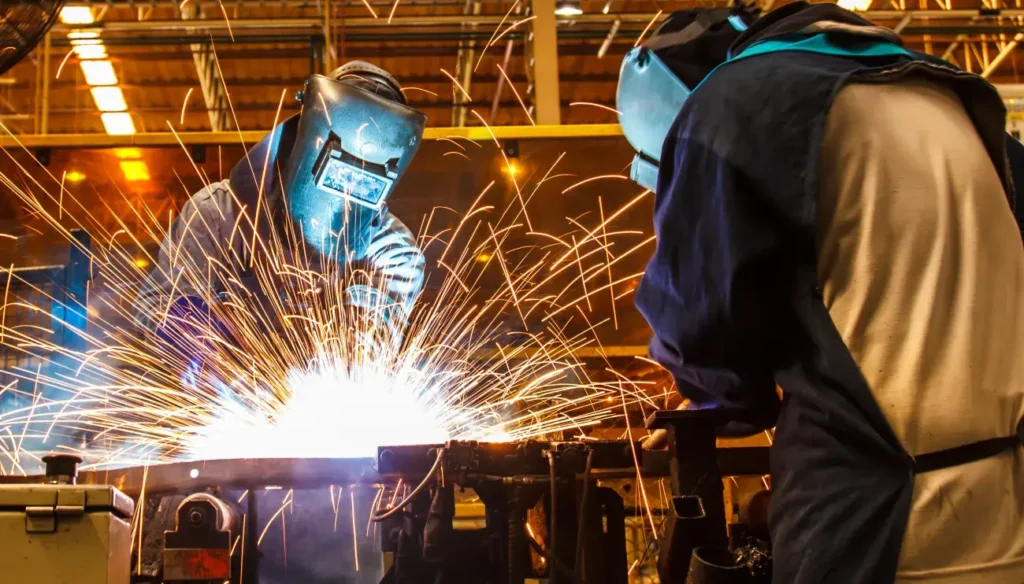
The Ferrous Category: Balancing Cost, Strength, and Corrosion Risks
Ferrous metals, including different grades of steel and iron, form the backbone of industrial orders due to their excellent cost‑to‑strength ratio. For B2B buyers and wholesalers, these are the typical materials used for:
- Metal cabinets and lockers
- Tooling and workbenches
- Machine frames and support structures
- Warehouse shelving and metal display racks
However, treating “steel as steel” is a dangerous simplification. The specific steel grade and carbon content have a major impact on weldability, cracking risk, and long‑term performance.
Carbon Steel: The Hidden Complexity of a “Standard” Material
Carbon steel is the default choice for automotive chassis, heavy machinery frames, frames for vending machines, and load‑bearing brackets. From a sourcing perspective, the key difference lies in the carbon content.
- Low‑carbon (mild) steel (e.g., A36, 1018)
- Easy to weld with MIG welding (GMAW) in mass production
- Ductile and tolerant to rapid heating and cooling
- Ideal for high‑volume orders of metal cabinets, frames, and sheet metal parts
- Medium‑ to high‑carbon steel
- Used for wear‑resistant parts, gears, and tools
- Much higher risk of cold cracking and brittleness if welded incorrectly
If a factory welds high‑carbon steel using the same parameters as mild steel, rapid cooling can create a hard microstructure called martensite. The part may look fine after production but crack or break under impact in real‑world use.
To handle high‑carbon steel correctly, a capable manufacturing partner must follow defined Welding Procedure Specifications (WPS), which usually include:
- Pre‑heating before welding to slow down the cooling rate
- Controlled inter‑pass temperature between weld layers
- Post‑Weld Heat Treatment (PWHT) to relieve internal stresses
Procurement Tip: When you audit a supplier for higher‑strength steel projects, ask for evidence of their pre‑heat and PWHT records. If they cannot show logs or procedures, they may be taking shortcuts that push risk to your side of the supply chain.
Stainless Steel: Preserving the “Stainless” Property
The situation changes completely with stainless steel, often specified for:
- Medical carts and medical equipment frames
- Food processing machines and kitchen equipment
- Outdoor cabinets and communication enclosures
- High‑end retail and architectural fixtures
You are primarily paying for corrosion resistance and clean appearance. Unfortunately, the high heat used in welding can damage these properties if not controlled.
The most common outsourced failure is carbide precipitation (sensitization). If the heat input and cooling rate are not properly controlled, carbon combines with chromium at the grain boundaries, making the stainless steel vulnerable to intergranular corrosion. The part may look “stainless” after production but start rusting near the weld zones months later.
For demanding applications using 304 or 316 stainless steel, professional factories apply:
- Pulse TIG or advanced pulse MIG to limit heat input
- Controlled travel speed and arc length
- Selection of low‑carbon or stabilized grades (e.g., 304L, 316L) as needed
For tanks, piping, and tubular structures, the inside must be purged with argon gas during welding. Without this back purging, the backside of the weld oxidizes and becomes rough and porous (“sugaring”). This is unacceptable for food‑grade and medical‑grade equipment and can trap bacteria or contaminants.
Galvanized Steel: The Environmental and Porosity Challenge
For cost‑efficient outdoor products—such as outdoor cabinets, signage structures, and agricultural equipment—many buyers specify galvanized steel.
Here the challenge is the zinc coating. Zinc melts and vaporizes at far lower temperatures than steel. When a welder strikes an arc on galvanized steel:
- The zinc burns off and turns into gas before the steel melts
- This creates gas pockets and porosity inside the weld
- Fumes can also be hazardous if not managed correctly
Low‑tier suppliers may simply “burn through” the coating to save time. A more reliable OEM factory will:
- Mechanically grind off the zinc coating along the weld path before welding
- Or use special flux‑cored wires formulated to handle zinc during welding
This extra step slightly increases labor cost but greatly improves weld quality and reduces the risk of batch rejection in your quality inspection.
The Non‑Ferrous Category: Assessing Advanced Manufacturing Capabilities
Sourcing non‑ferrous parts such as aluminum, copper, or titanium is often where the difference between a basic job shop and an experienced OEM metal fabrication factory becomes clear.
These materials follow different physical rules than steel and require:
- Different filler wires and shielding gases
- More advanced welding machines and fixtures
- Clean environments and strict contamination control
Knowing what welders weld in non‑ferrous materials helps you evaluate whether a potential supplier can truly handle higher‑end components—for example EV parts, energy storage cabinets, electronics housings, or medical frames.
Aluminum Alloys: Managing the Thermal Paradox
Aluminum alloys are widely used for:
- EV battery boxes and energy storage enclosures
- Heat sinks and electronic housings
- Lightweight frames, ramps, and structures
Because aluminum conducts heat about five times faster than steel, it creates a thermal paradox in welding:
- At the start, the part is “cold” and can suffer lack of fusion
- After a short time, the part becomes heat‑soaked and may burn through
To weld aluminum correctly in a production environment, a capable factory will:
- Use AC TIG welding with frequency and balance control to break through the oxide layer
- Or use pulse MIG with the correct waveform and wire feed speed
- Pre‑heat thick sections and use fixtures and heat sinks to stabilize temperature
For high‑volume orders, robotic MIG or TIG welding is often used to maintain consistent travel speed and arc length over long production runs. When you request a quote for aluminum welded parts, asking about AC TIG, pulse MIG, and robotic welding is a good way to test the depth of the supplier’s capability.
Copper and Brass: The Specialized Conductors
Copper and brass are more niche materials but important in sectors like:
- Electrical power distribution (busbars, terminals)
- Decorative and architectural metalwork
- Special fittings and connectors
Because of their extremely high thermal conductivity, copper and some brass alloys are difficult to weld with standard setups. Professional welders and factories may:
- Use helium‑mix shielding gases to achieve higher arc heat
- Adjust joint design and fit‑up to avoid lack of fusion
- Recommend silicon bronze TIG brazing for some brass components
Rather than insisting on direct welding that will fail, a knowledgeable factory will often propose brazing or redesign that gives you the same function with better reliability.
Titanium: The Zero‑Tolerance Material
Titanium is used in medical, aerospace, and chemical processing industries where strength‑to‑weight ratio and corrosion resistance must be extremely high. For welding, it behaves as a reactive metal:
- At high temperature, titanium absorbs oxygen, nitrogen, and hydrogen immediately
- Even small amounts of contamination make the weld brittle and unusable
A titanium‑capable factory will invest in:
- Trailing shields and special torches that keep argon covering the weld as it cools
- In some cases, glove boxes or chambers where welding is done in a fully controlled atmosphere
A quick real‑world check is weld color. A high‑quality titanium weld is silver or light straw in color. Blue, purple, or white means contamination and should be rejected.
The Geometric Reality: Managing Shape, Thickness, and Distortion
Chemical composition determines the welding parameters, but part geometry determines the strategy. What a welder does on a 1.0 mm sheet metal cabinet is very different from welding a 20 mm thick structural plate.
When comparing different custom metal fabrication suppliers in China, you should pay attention not just to the material list, but also to their experience with:
- Thin sheet metal for metal cabinets, racks, and housings
- Structural and tubular frames for equipment, trailers, or construction
Precision Sheet Metal: The War Against Distortion
For enclosures, server racks, vending machines, POS machines, and cabinets (typically 0.8–2.0 mm thick), the primary enemy is distortion.
The local heat from welding makes thin sheet expand and contract unevenly, causing:
- Buckling and waves (“oil‑canning”)
- Misalignment of doors and panels
- Visible distortion that hurts the product’s perceived quality
High‑quality factories control distortion by combining:
- Fixturing and clamping to hold parts during welding
- Stitch welding (intermittent welds) instead of long continuous seams
- Use of heat sinks—for example, copper bars behind the joint
More advanced sheet metal factories are now using laser welding for visible surfaces and tight‑tolerance parts. Laser welding provides:
- Very small heat‑affected zone (HAZ)
- Minimal distortion and less grinding work
- Clean, almost invisible weld seams on stainless steel and mild steel
If your product is sensitive to appearance and assembly accuracy, asking whether the supplier offers laser welding for sheet metal parts is very important.
Heavy Structural Welding: Penetration and Volume
For thick plates and heavy frames, the focus is penetration and weld volume. A typical weld is built in several passes:
- Root pass – seals the bottom of the joint
- Fill passes – add volume and build up the weld
- Cap pass – creates the final shape and surface
Risks include lack of fusion between weld layers and internal defects if slag is not properly cleaned between passes. For safety‑critical applications, it is common to require:
- Ultrasonic testing (UT)
- Or X‑ray inspection of welds
As a buyer, you can specify these tests in your PO or technical drawing for critical welds.
Tubular Welding: The “6G” Challenge
Tubular or pipe welding is used for:
- Machine frames and guardrails
- Fluid and gas lines
- Support structures that must resist multi‑directional forces
The 6G welding position requires the welder to maintain control as the joint rotates through flat, vertical, and overhead positions. This demands more skill than simple flat welding.
If your product uses many pipe connections or tubular frames, ask if the factory’s welders are certified for 6G or similar positions. This is a quick way to separate basic weld shops from more advanced metal fabrication factories.
The “Impossible” Request: Solutions for Dissimilar Metals
During Design for Manufacturing (DFM), engineers sometimes want to join dissimilar metals—for example an aluminum heat sink to a steel structure, or stainless steel to carbon steel without any transition.
From a metallurgical point of view, direct fusion welding of these combinations is usually not recommended for structural or long‑term use:
- Different melting points and expansion rates
- Formation of brittle intermetallic compounds
- Galvanic corrosion where one metal becomes the sacrificial anode
An experienced OEM factory will explain these limitations instead of “trying anyway” and shifting risk to the customer. Typical alternative solutions include:
- Brazing: Use of a filler metal with a lower melting point to join the parts without melting the base metals
- Bimetal transition inserts: Explosively bonded blocks that allow welding aluminum to aluminum on one side and steel to steel on the other
- Mechanical fastening: Bolted joints, rivets, or PEM nuts that avoid metallurgical issues entirely
If a supplier is willing to weld dissimilar metals without any discussion of these problems, that is a serious red flag for wholesale buyers and importers.
Quality Assurance: How to Vet a Welding and Fabrication Partner
High‑quality welding is impossible without strong quality assurance (QA). For procurement teams and wholesale distributors, this determines whether a supplier can deliver consistent quality across thousands of units, not just a few good samples.
A professional welding and sheet metal factory should have QA controls in three main areas.
1. Incoming Material Verification
Before welding, incoming materials must be checked and documented:
- Material certificates and grade verification
- Random hardness checks or composition testing where needed
- Separate storage for stainless steel, carbon steel, and aluminum to avoid cross‑contamination
A factory that follows an ISO 9001 quality system will be able to trace each batch of sheet metal, tubes, and brackets back to its original lot. This gives you better control when issues appear in the market.
2. In‑Process Welding Control
During welding, the factory should control the process with:
- Written WPS / PQR for different metals and thicknesses
- Defined ranges for voltage, current, and travel speed
- Inter‑pass temperature control for multi‑pass welds
- Proper fixtures and jigs to keep parts aligned
- Gas purity and gas flow monitoring for TIG and MIG processes
These controls reduce operator variation and help ensure that the 1,000th part in a batch is as good as the first.
3. Final Inspection and Mechanical Testing
After welding and any surface treatment (such as powder coating, painting, or plating), inspection should include:
- Visual inspection of weld bead shape and continuity
- Dimensional checks to confirm flatness, hole position, and alignment
- Non‑destructive testing (NDT), such as dye‑penetrant or ultrasonic testing, if required
- Load or fatigue testing for structural components
For export orders, you can request inspection reports or photos of critical welds and key dimensions before shipment. This is especially important for custom metal products, OEM sheet metal parts, and welded frames going into your own branded equipment.
Final Procurement Insight: Why Material Knowledge Directly Reduces Supply Chain Risk
Ultimately, the question “what do welders weld?” is a practical tool for evaluating your supply chain. It tells you whether a potential supplier is just a basic shop with welding machines, or a specialized metal fabrication partner that truly understands materials, processes, and export‑grade quality.
For wholesale buyers and industrial importers, the goal is not only to secure a low unit price. The real goal is to secure:
- Stable quality across repeated orders
- Predictable lead times and low rework rate
- Fewer complaints and returns from your customers
Whether your project uses carbon steel frames, stainless steel cabinets, aluminum housings, or mixed‑material assemblies, the final result depends heavily on the “invisible engineering” behind each weld: material selection, process choice, heat input, fixture design, and quality checks.
When evaluating a new welding and fabrication supplier, go beyond the equipment list and brochures:
- Ask to see WPS documents for the main materials in your project
- Confirm how they prevent distortion, porosity, and cracking
- Check material storage and labeling to avoid cross‑contamination
- Look for established systems that support ISO 9001 and RoHS‑compliant production
In the world of custom metal fabrication and OEM welding services, real value is found not just in the metal that is joined—but in the defects that never reach your warehouse or your customers. By partnering with a manufacturer that understands the science and practice behind every weld, you protect your brand reputation and build a more reliable global supply chain.
FAQ: Common Questions from B2B Welding and Metal Fabrication Buyers
1. What do welders weld in a sheet metal factory in China?
They typically weld carbon steel, stainless steel, and aluminum sheet metal, as well as tubes and profiles used in cabinets, racks, enclosures, vending machines, medical carts, and industrial frames. Some advanced factories can also handle copper, brass, and titanium for specific industries.
2. How do I choose a welding and metal fabrication supplier for wholesale orders?
Look for a supplier that offers MIG, TIG, and laser welding, has written WPS for major materials, can share inspection reports, and understands export requirements. Experience with OEM / ODM projects and long‑term cooperation with overseas customers is a strong plus.
3. Why are my stainless steel parts rusting near the welds?
This is often related to carbide precipitation, back‑purge issues, or contamination during welding and surface treatment. A good manufacturer will control heat input, use proper grades (such as 304L / 316L), and separate stainless steel from carbon steel in storage and processing.
4. Can one factory weld all metals for my project?
Most professional factories focus on a defined range of materials—for example carbon steel, stainless steel, and aluminum for sheet metal and frame fabrication. Very specialized materials like titanium or complex copper alloys may require dedicated setups or partner suppliers.
5. What is a welder used for in industrial manufacturing?
In industrial environments, a welder is used to assemble, build, and repair metal products and structures. Welders and welding robots join parts for machines, vehicles, cabinets, racks, frames, pressure vessels, and structural supports. Their work turns cut and formed metal parts into finished, functional products that can be shipped to end customers or integrated into larger systems. carbon steel, stainless steel, and aluminum for sheet metal and frame fabrication. Very specialized materials like titanium or complex copper alloys may require dedicated setups or partner suppliers.
Ready to Discuss Your Welded Metal Project?
If you are planning a new custom metal product, sheet metal enclosure, metal cabinet, display rack, or welded frame for wholesale, a professional OEM factory like YISHANG can support you from DFM review, prototyping, welding, surface treatment, assembly, to export packaging.
Share your drawings or samples, and our engineering team can help you optimize for weldability, cost, and long‑term performance.