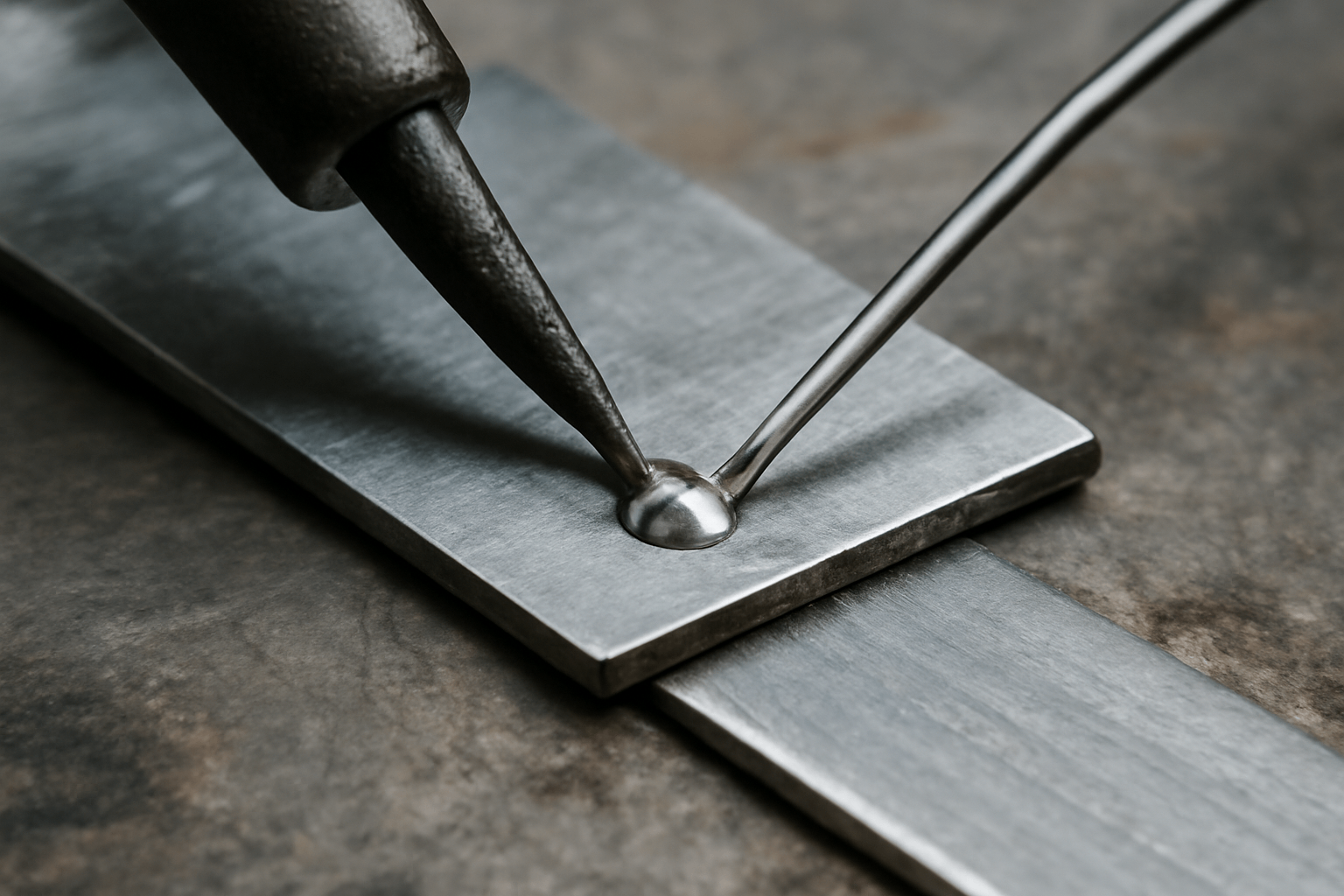
Not all metals behave the same way in soldering. Some accept solder readily, while others create bonding problems because of oxide layers, thermal behavior, or surface energy limitations.
For buyers, this matters because metal choice affects not only joint quality, but also production speed, flux requirements, rework risk, and whether soldering is even the best joining method for the application.
What Makes a Metal Solderable
A metal is easier to solder when it allows solder to wet the surface, maintain contact, and form a stable bond without excessive process difficulty.
Key Factors That Affect Solderability
| Factor | Why It Matters |
| Surface energy | Higher surface energy usually improves wetting |
| Oxide behavior | Stable oxide layers can block solder adhesion |
| Thermal conductivity | Affects how heat moves through the part during soldering |
| Melting point | Influences process window and overheating risk |
| Surface cleanliness | Oils, oxidation, and contamination reduce bonding reliability |
Metals That Are Easy to Solder
| Metal | Why It Solderes Well | Typical Uses |
| Copper | Excellent wetting and thermal conductivity | Electronics, wiring, plumbing, heat exchangers |
| Brass | Good solderability with added mechanical strength | Valves, hardware, plumbing fittings |
| Silver | Excellent conductivity and strong solder response | Precision electronics, instruments, specialty applications |
Metals That Are Harder to Solder—and Why
Some metals are not impossible to solder, but they are harder to process consistently in production.
| Metal | Main Soldering Challenge | What Buyers Should Know |
| Aluminum | Tough oxide layer and narrow process window | Requires specialized flux and solder; process control matters |
| Stainless steel | Chromium oxide blocks adhesion | Often needs aggressive flux or may be better joined another way |
| Titanium | Very difficult wetting and process sensitivity | Usually not the first-choice metal for solder-based joining |
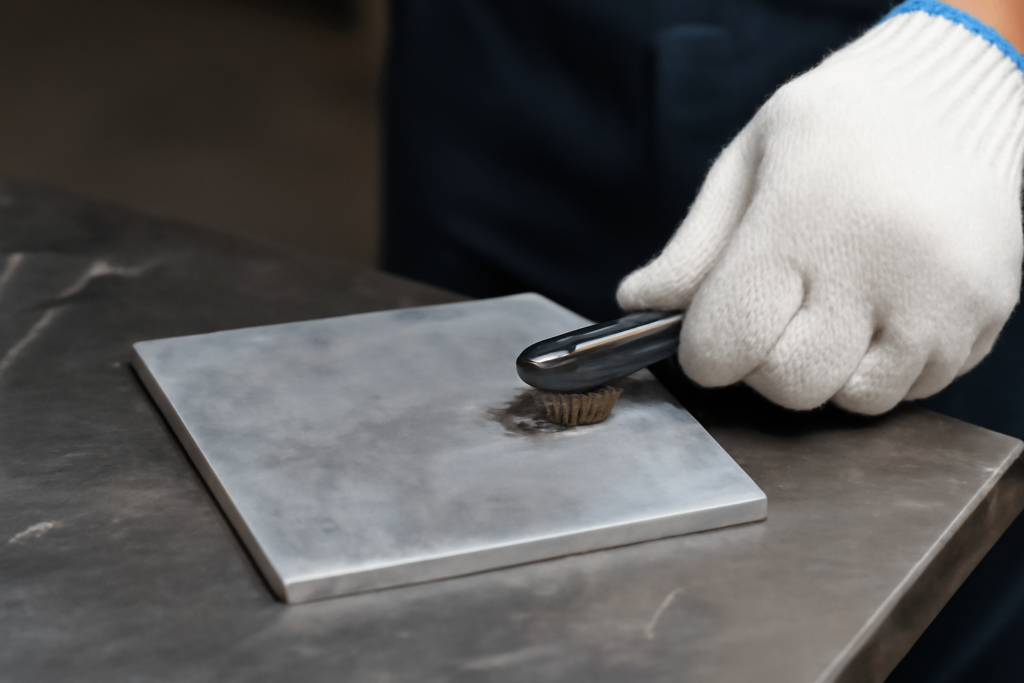
Why the Difficulty Is Different
These metals do not all resist soldering for the same reason:
Aluminum is mainly an oxide-layer problem.
Stainless steel is both an oxide-layer and process-temperature problem.
Titanium is a high-difficulty material where soldering often loses out to brazing or welding.
When Soldering Is the Right Process—and When It Is Not
Soldering is often a strong fit when the project needs:
lower joining temperatures,
good electrical continuity,
lighter-duty mechanical joining,
repeatable assembly in electronics or fine metalwork.
It may be a weaker fit when the part requires:
very high structural strength,
extremely high temperature resistance in service,
joining of difficult-to-wet metals without specialized process controls.
Soldering vs Alternative Joining Routes
| Requirement | Soldering | Brazing / Welding |
| Low heat input | Strong fit | Usually higher heat |
| Electrical applications | Strong fit | Not always the first choice |
| High structural load | Limited | Better fit |
| Difficult metals | Can require special handling | Often more practical for stainless or titanium |
What Buyers Should Confirm Before Ordering Soldered Parts
| Check Item | Why It Matters |
| Base metal | Different metals require different soldering strategies |
| Joint function | Electrical joints and structural joints do not have the same process priorities |
| Use environment | Heat, humidity, and corrosion exposure affect joint reliability |
| Flux compatibility | Incorrect flux selection can reduce bond quality or create residue problems |
| Production volume | High-volume work benefits from simpler, more repeatable solder systems |
| Alternative process review | In some cases, brazing or welding may be more suitable than soldering |
FAQ
What metals are easiest to solder?
Copper, brass, and silver are among the easiest because they generally wet well and respond predictably to soldering.
Can aluminum be soldered?
Yes, but it is more difficult and usually requires specialized flux and solder because of its oxide layer.
Is stainless steel easy to solder?
No. It can be soldered, but the chromium oxide layer makes the process more difficult and less forgiving.
When is soldering not the best joining method?
Soldering is often less suitable when the joint must carry high structural loads or when the metal is especially difficult to wet reliably in production.
Conclusion
Choosing a solderable metal is not only about whether bonding is possible. It is also about process stability, surface condition, thermal behavior, and whether soldering is the most efficient joining route for the application.
For buyers, understanding those differences improves material selection, reduces rework risk, and supports more stable large-volume production.