
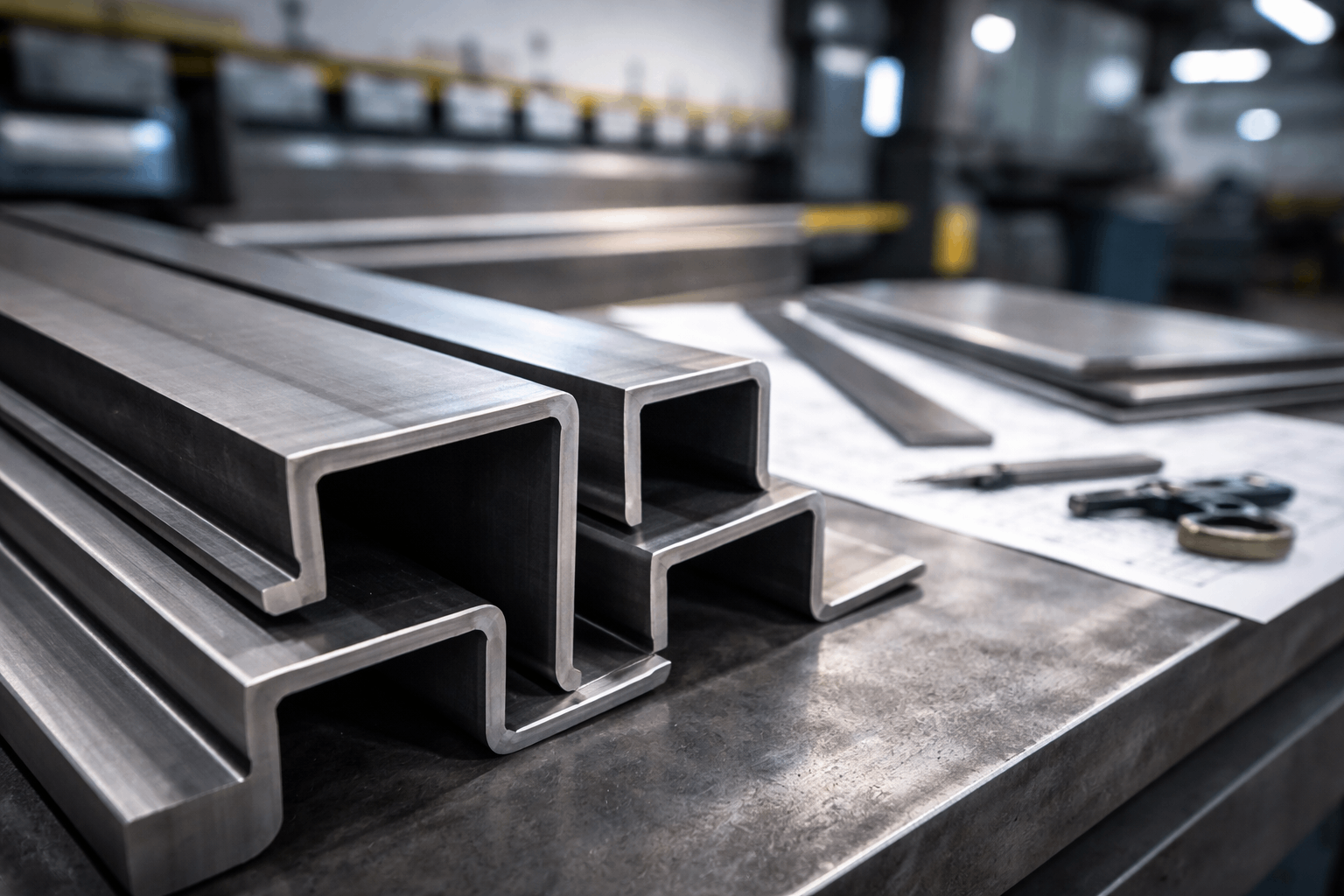
Bent steel plates are everywhere in industrial manufacturing, but overseas wholesale buyers rarely judge them by appearance alone. A bent steel plate influences whether parts fit consistently, whether cartons stack cleanly, whether assembly lines keep moving, and whether a second supplier can reproduce the same geometry without painful re‑qualification. Those outcomes—consistency, interchangeability, and predictable cost—matter more than a perfect one‑off sample.
This guide is written for sourcing managers, wholesale buyers, and engineering teams who want fewer surprises after the purchase order is placed. Instead of repeating basic “how to bend” instructions, we focus on what actually drives bent steel performance in production: geometry, springback behavior, tolerance strategy, and process control. Along the way, we’ll use practical industry terms such as press brake bending, air bending, bend allowance, and process capability—explained in plain language.
If you are building a supply program for bent steel plate parts (including bent steel components used in frames, brackets, enclosures, and structural subassemblies), the goal is simple: make decisions that keep the process stable from first article to full container shipments.
Procurement Snapshot: What Actually Determines Success in Bent Steel Plate Sourcing
For overseas wholesale buyers, most problems with bent steel plates do not come from dramatic failures. They come from small, repeatable deviations that grow expensive over time. Understanding where these risks originate allows you to focus attention on the few variables that truly matter.
In high-volume sourcing programs, instability most often appears when geometry is sensitive, springback is not clearly defined, or tolerances are specified without reference to function. These conditions increase inspection effort, slow assembly, and make it harder to qualify secondary suppliers. By contrast, designs that emphasize predictable bending behavior and clear measurement logic tend to scale smoothly across batches and factories.
If you take one principle from this article, let it be this: bent steel plates succeed in wholesale manufacturing when design intent, bending behavior, and procurement expectations are aligned early—before tooling, schedules, and container bookings are fixed.
Why Bent Steel Plates Fail Even When Bending Equipment Is Advanced
When a shipment of bent steel plates shows angle variation or poor fit, buyers often suspect equipment limitations. That assumption is understandable: machine tonnage, CNC controls, and tooling sets are visible and easy to compare. In reality, many steel plate bending problems stem from earlier design assumptions that don’t match how bent steel behaves under deformation.
A press brake can deliver repeatable ram motion, but it cannot change physics. If a design forces a tight bend radius on thick plate, places holes too close to a bend line, or requires multiple bends that interact, the part becomes sensitive to small variations in material lot, thickness tolerance, or setup. In that situation, even high‑end machines produce results that drift within and between batches.
For overseas sourcing, the key takeaway is that “advanced equipment” is not a guarantee of stable output. Stability comes from the combination of design choices, process window definition, and how the factory manages variation. Buyers who evaluate a supplier’s bending logic—not just their equipment list—reduce rework risk and improve long‑term consistency.
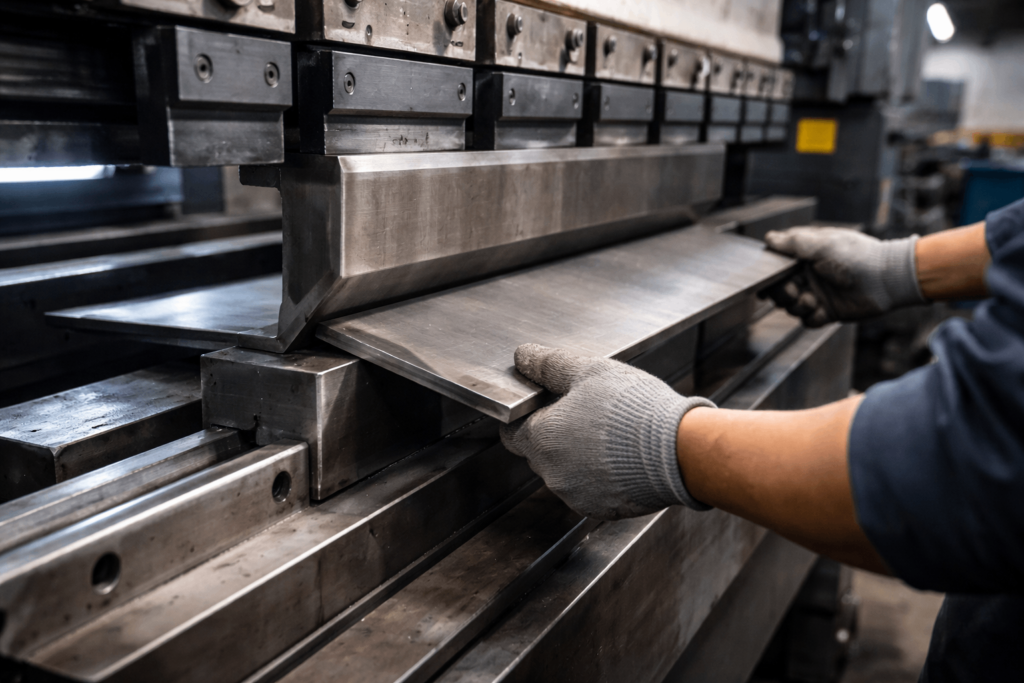
What buyers can look for early
During supplier evaluation, ask questions that reveal process understanding rather than marketing claims. A reliable supplier can explain why a given bent steel plate geometry is sensitive, what they would control (material lot, tooling choice, bend sequence), and which dimensions are most likely to drift.
A useful sign is when the supplier speaks in terms of functional outcomes: “This flange length will amplify springback,” or “This hole‑to‑bend distance may distort during forming,” instead of only promising “high precision.” That language indicates the supplier has seen these failure modes in production, not only in prototypes.
What a Bent Steel Plate Represents from a Manufacturing and Procurement Perspective
A bent steel plate is not simply a flat piece of steel folded into shape. In manufacturing terms, it is a commitment to a specific production logic. Once steel is bent, residual stresses change, elastic recovery becomes part of the final geometry, and dimensional sensitivity increases. Those effects follow the part through welding, surface finishing, packaging, shipping, and final assembly.
From a procurement view, this means bent steel plates should be evaluated as system‑level components. A bend that looks fine on a drawing can still create downstream friction: stacking instability during packing, mismatch with mating parts, or slow assembly due to inconsistent angles. These are not “cosmetic” issues—they become labor cost, schedule risk, and sometimes warranty exposure.
To align expectations, it helps to frame bent steel plate requirements around functional interfaces. Instead of only specifying nominal angles, define what the bend must achieve in use: alignment to a mating surface, clearance for fasteners, or squareness for a cabinet door. This shifts the discussion from perfection to predictability.
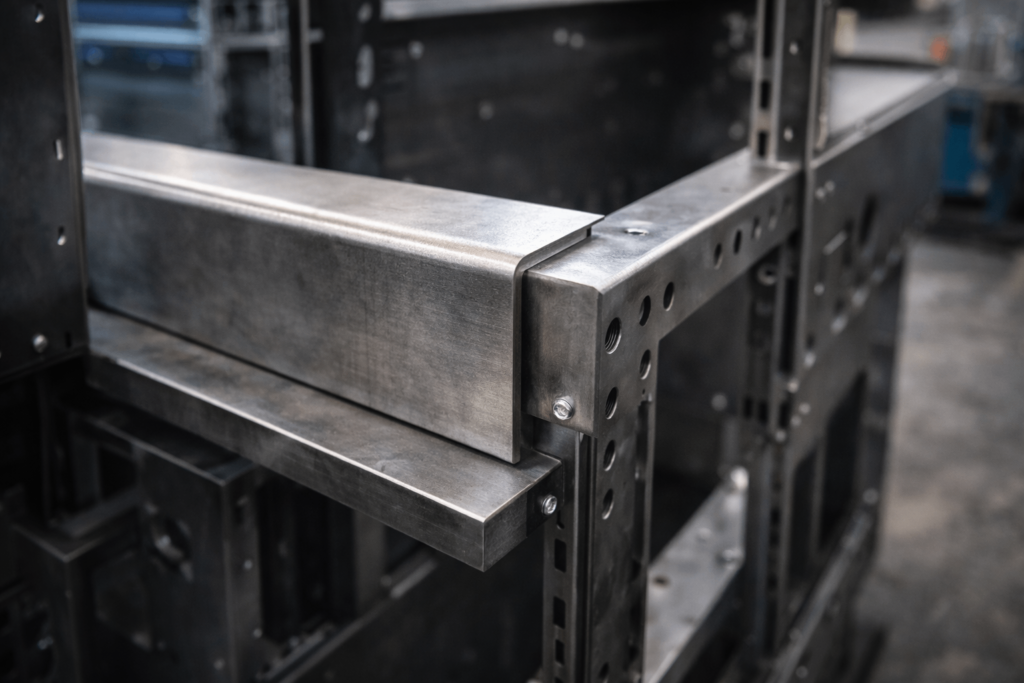
Typical buyer questions that deserve technical answers
The table below connects common procurement concerns to the manufacturing factors that usually drive them.
| What wholesale buyers care about | What often drives it in bent steel plate manufacturing | Practical way to de‑risk |
|---|---|---|
| Consistent fit across batches | Springback variation, tool wear, thickness tolerance | Define functional references; agree on angle measurement method |
| Interchangeable suppliers | Different tooling philosophies, bend sequencing, compensation | Use robust geometry; specify critical-to-fit dimensions clearly |
| Stable unit cost | Rework loops, inspection escalation, setup time | Set realistic tolerances; standardize material; minimize sensitive features |
| Smooth assembly | Tolerance stack-up, flange distortion, hole shift near bends | Move features away from bend lines; add clearance where it matters |
This mapping is helpful because it keeps the conversation anchored to bent steel plates themselves, rather than generic capability statements.
The First Strategic Question: Should This Part Be Bent at All?
In many projects, bending is treated as the default solution because it reduces part count and can remove weld joints. Those benefits are real, but for wholesale procurement the more important question is whether bending improves supply reliability compared to alternative fabrication strategies.
Bent steel plate designs can deliver cleaner load paths and fewer failure points than welded assemblies, especially in fatigue‑sensitive applications. At the same time, they can be more sensitive to variation in material properties and bending conditions. Welded assemblies, while requiring more labor, may allow adjustment at joints and can be more forgiving when suppliers change.
A useful decision lens is to separate “structural need” from “packaging preference.” If bending is required for stiffness or function, the sourcing strategy should focus on controlling variation. If bending is mainly chosen for appearance or part-count reduction, it may be worth comparing it against a welded design that offers better interchangeability across suppliers.
A buyer-friendly way to evaluate the trade-off
Ask: which approach creates fewer hidden costs over a year of production? In high-volume programs, cost is rarely defined by the bend itself. It is defined by stability: fewer rejected lots, fewer inspection escalations, and fewer engineering changes.
If bending is chosen, plan for supplier qualification that reflects reality—first article inspection (FAI), clear measurement definitions, and an agreement on what constitutes acceptable variation. These steps are normal in mature supply chains and help prevent “surprise” disagreements after shipping.
Why Geometry Drives Bent Steel Outcomes More Than Material Choice
Material matters in bending steel plates, but geometry usually has a stronger influence on production outcomes. Bend angle, flange length, bend radius, and feature placement can dramatically change how a bent steel plate behaves—even when the steel grade remains the same.
One core relationship is bend radius versus plate thickness. Tight radii concentrate strain, increase springback sensitivity, and raise the risk of micro‑cracking on the outer fiber. Short flanges reduce tooling support, which magnifies angular variation and can cause twist or “oil canning” in thin plates. Features placed near bends—holes, slots, embossed areas—often distort as the material flows during forming.
For buyers reviewing drawings, geometric risk is a practical predictor of supplier stability. Robust geometry tolerates normal manufacturing variation. Fragile geometry forces suppliers to “fight the process,” which usually leads to longer lead times, higher scrap, or wider tolerances.
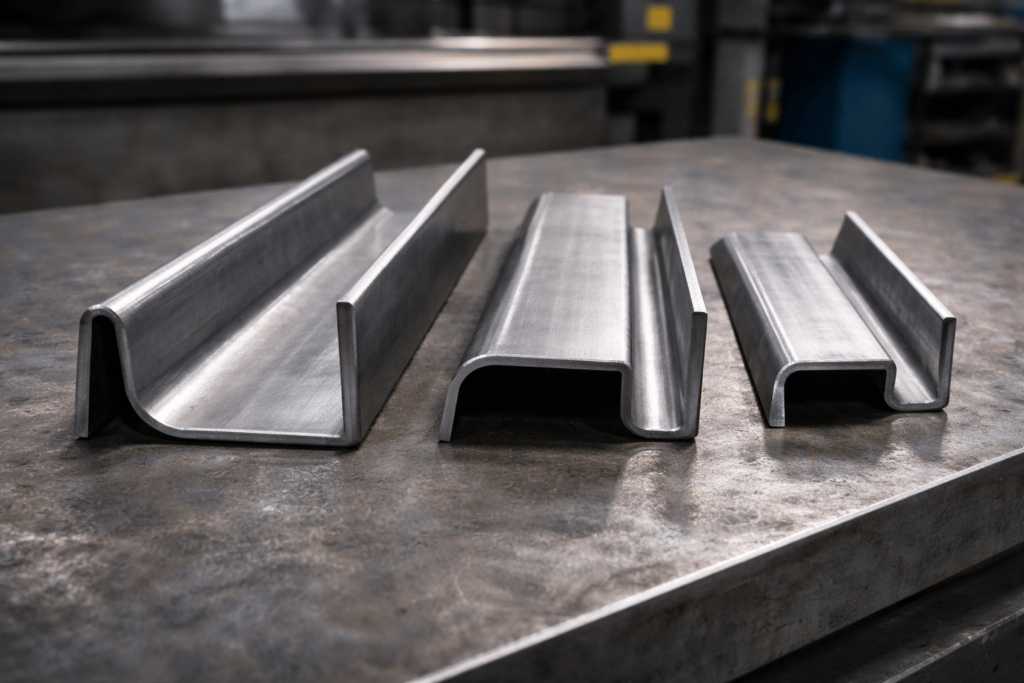
Design details that influence sourcing outcomes
Even without deep CAD experience, buyers can spot patterns that commonly create trouble: very short return flanges, tight internal corners on thick plate, and holes or cutouts close to bend lines. These features increase sensitivity to bend sequence and tooling choice.
When suppliers propose small geometry adjustments—slightly longer flanges, increased bend radius, or moving features away from the bend—they are usually protecting batch consistency. The best outcome is not a drawing that is theoretically perfect, but a bent steel plate that is consistently producible.
Springback in Bent Steel Plates as a Predictable Sourcing Variable
Practical reference: In press brake air bending, angular springback of several degrees is common depending on material strength and bend radius. The exact value is less important than whether the variation remains consistent from batch to batch.
Springback is often described as a technical problem, but for wholesale buyers it is more useful to treat springback as a predictable sourcing variable. When steel is bent, elastic recovery causes the final angle to open slightly after unloading. The magnitude of springback depends on yield strength, bend radius, thickness, and the bending method.
In press brake bending, air bending typically produces more springback variation than bottoming or coining, because the final angle is achieved through controlled penetration rather than full material compression. That is not “bad”—air bending is flexible and efficient—but it means the process window must be understood and controlled.
For high-volume orders, chasing zero springback is often less effective than designing for consistent springback. A stable process lets buyers build reliable inspection rules and assembly fixtures. An unstable process forces constant adjustment and increases the risk that later batches will not match the first articles.
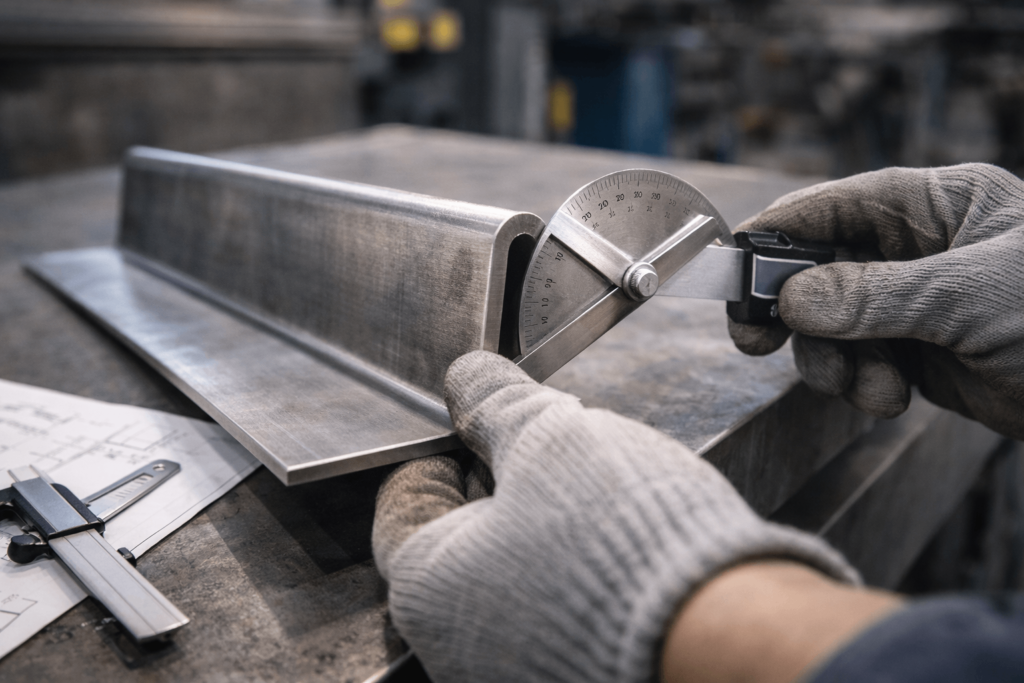
How springback connects to procurement risk
If a bent steel plate’s angle tolerance is tight and the geometry is sensitive, springback becomes a hidden cost driver. It increases setup time, sampling cycles, and rework probability. It also increases the chance that two suppliers will produce slightly different angles even when both are “within spec.”
A practical approach is to define which surfaces are critical-to-fit and which angles have functional flexibility. When the supplier knows what truly matters, they can prioritize control where it counts and avoid expensive over-control where it does not.
Tolerance Drift and Its Impact on Large-Volume Bent Steel Orders
Procurement note: In practice, many bent steel plate programs rely on general tolerance frameworks such as ISO 2768 as a baseline, then tighten only the dimensions that affect fit or function. This approach often reduces inspection escalation without sacrificing performance.
Many bent steel plates can meet tight specs in initial sampling. The bigger challenge is keeping those specs stable across weeks of production, multiple coils or sheets, and real-world shop conditions. This is where tolerance drift appears: small variations accumulate until parts start to approach or exceed the agreed limits.
Tolerance drift is influenced by tool wear, material lot variation, temperature, lubrication, and subtle setup changes. A supplier may pass a first article inspection with ease, then struggle on the 800th piece if the design is sensitive and the tolerance band is too narrow for the process capability.
For buyers, the key is to treat tolerance definition as a sourcing decision, not only an engineering detail. Overly tight tolerances increase inspection burden and rejection risk. Overly loose tolerances increase assembly labor and customer complaints. The right tolerances protect both quality and stability.
A realistic way to talk about tolerances
In industrial fabrication, general tolerances are often guided by standards such as ISO 2768 (general tolerances) when drawings do not specify every detail. For bent steel plate parts, angle and linear tolerances should ultimately be tied to functional needs. If a bend primarily affects clearance, specify the clearance. If it affects alignment, define alignment references.
When suppliers discuss process capability—terms like Cp/Cpk or “process window”—they are describing the natural variation they can hold consistently. Buyers do not need to demand statistical reports for every part, but it is helpful to agree on which characteristics are critical and how they will be measured.
Bent Steel Features That Quietly Create Production Bottlenecks
Some bends look simple on paper but create bottlenecks in production. Short return flanges, bends near holes, and decorative folds often restrict tooling options and increase sensitivity to variation. These issues may not show up in early samples, then appear later during powder coating, assembly, or packaging.
From a procurement perspective, these “quiet bottlenecks” are expensive. They can cause delayed shipments, inconsistent assembly time, and disputes about whether parts are acceptable. A part can meet nominal dimensions and still be difficult to assemble if angles vary in a way that affects stacking or alignment.
The best suppliers identify these features early and propose small design changes that improve repeatability. That is not “changing your design.” It is improving manufacturability so that the bent steel plate behaves predictably in volume.
A practical example of why bottlenecks appear late
A common scenario is a bent steel plate with a hole pattern close to a bend. During bending, material flow and local strain can shift the hole position slightly. The shift may be small, but in assembly it can force reaming, slotting, or manual alignment. That additional labor cost is usually far higher than the small geometry change that would have prevented it.
This is why buyers benefit from design-for-manufacturability feedback early. It reduces downstream labor and protects delivery schedules.
Why the True Cost of Bent Steel Plates Is Decided Before Production Starts
When evaluating quotations, buyers naturally focus on unit price. In bent steel plate sourcing, the largest cost drivers are often locked in long before any steel is cut. Geometry complexity, tolerance expectations, bend count, and inspection strategy all influence setup time, sampling cycles, and scrap risk.
If a design pushes bending beyond predictable limits, the supplier must compensate: more setups, more checks, and more manual correction. These hidden costs rarely appear in the first quote. They appear as schedule slippage, quality holds, or unexpected chargebacks later.
A procurement-friendly way to compare suppliers is to look beyond the headline price and ask how the supplier will keep the process stable. Stable processes protect total landed cost: fewer rejected shipments, fewer line stoppages, and fewer urgent airfreight events.
Cost visibility buyers can request without slowing the project
Instead of demanding a long report, ask for a short explanation of what drives cost for your part: bend complexity, tooling changes, inspection time, and any sensitive features. This keeps the conversation practical.
When a supplier proactively discusses how to reduce rework risk, it is often a sign they have managed high-volume bent steel programs before. That experience matters more than small differences in machine rates.
Why Bent Steel Plates Are Difficult to Standardize Across Suppliers
Many overseas buyers expect identical output when the same bent steel plate drawing is sent to different suppliers. In practice, results vary. Differences in tooling selection, bend sequencing, compensation strategy, and measurement methods can produce measurable differences in final geometry.
Even with similar equipment, factories may operate different process windows. One supplier may rely on air bending with flexible compensation; another may use bottoming for tighter control. Both can be valid, but the outcomes may not be identical unless the design is robust and the measurement definitions are aligned.
For sourcing programs that require dual suppliers or future supplier switching, robust design is the best insurance. Designs that tolerate variation, define functional references, and avoid fragile features transfer more smoothly. This reduces transition risk and keeps the supply chain resilient.
Measurement alignment matters more than most buyers expect
Two factories can measure the same angle differently depending on datum choice, measurement tools, and where the measurement is taken. Small differences can create disputes even when parts function correctly.
A simple way to avoid this is to agree on how critical characteristics will be measured—what datums, what method, and what sample plan. This supports trust and reduces “measurement mismatch” conflicts.
Designing Bent Steel Plates for Predictability in Wholesale Supply Chains
In industrial procurement, predictability is more valuable than theoretical perfection. A bent steel plate design that holds stable in volume will almost always beat a “perfect” design that only works under ideal conditions. Predictability reduces inspection escalation, stabilizes assembly time, and improves on-time delivery.
Predictable designs also simplify communication. When acceptance criteria are tied to functional needs, suppliers can focus control on what matters. Buyers receive parts that fit consistently rather than parts that pass a checklist but create assembly friction.
In practice, predictability often comes from small choices: appropriate bend radius, sufficient flange length, clear functional datums, and tolerance bands that reflect real process capability. These choices keep bent steel manufacturing stable across batches and across suppliers.
Bent Steel Plates as a Long-Term Sourcing Commitment
Choosing bent steel plates is not a neutral decision. It commits the product to a manufacturing approach that influences scalability, supplier flexibility, and lifecycle cost. Once established, changing this approach usually requires redesign rather than minor adjustment.
Buyers who treat bending as a strategic sourcing decision tend to achieve more stable outcomes. They work with manufacturers that understand not only how to bend steel, but how bent steel behaves across batches, suppliers, and time.
If you are evaluating bent steel plate designs for wholesale production, a short technical discussion can often surface risks early and save significant time later. If you’d like, the team at YISHANG can review drawings or samples and share practical feedback focused on repeatability, inspection clarity, and long-term supply stability.
Frequently Asked Questions for Wholesale Buyers
What tolerance is realistic for press brake bent steel plates in batch production?
Realistic tolerances depend on geometry, material, and bending method. Many programs start from general standards (such as ISO 2768) and tighten only critical-to-fit dimensions. This reduces rejection risk while keeping assembly stable.
How should angle measurements be defined across suppliers?
Agreeing on datums, measurement tools, and where the angle is taken is essential. Differences in measurement method often explain why two suppliers report different results for parts that function the same.
What is a safe hole-to-bend distance for consistent assembly?
As a rule of thumb, placing holes too close to bend lines increases the risk of distortion. Increasing this distance, even slightly, often improves repeatability and reduces manual correction during assembly.
Air bending or bottoming: which is better for large orders?
Both can work. Air bending offers flexibility, while bottoming can improve angle consistency for certain geometries. The key is selecting a method that stays stable within the agreed process window.
Why do parts pass first article inspection but drift later?
Batch effects such as tool wear, material lot variation, and setup changes accumulate over time. Designs with narrow tolerance bands are more sensitive to these effects.
What information helps suppliers quote bent steel plates more accurately?
Clear drawings, identification of critical-to-fit features, surface finish requirements, and agreed inspection methods all help suppliers price more accurately and reduce later disputes.