
In the shifting landscape of the global automotive industry, the role of the procurement manager has fundamentally evolved. It is no longer a linear pursuit of the lowest unit price per component.
Today, sourcing is a strategic exercise in risk mitigation, supply chain diversification, and value engineering.
As the industry pivots aggressively from internal combustion engines (ICE) to electric powertrains (EV) and autonomous systems, the technical demands on the supply chain have intensified.
For international sourcing agents and wholesale buyers, the challenge is identifying a manufacturing partner who offers more than just machine capacity.
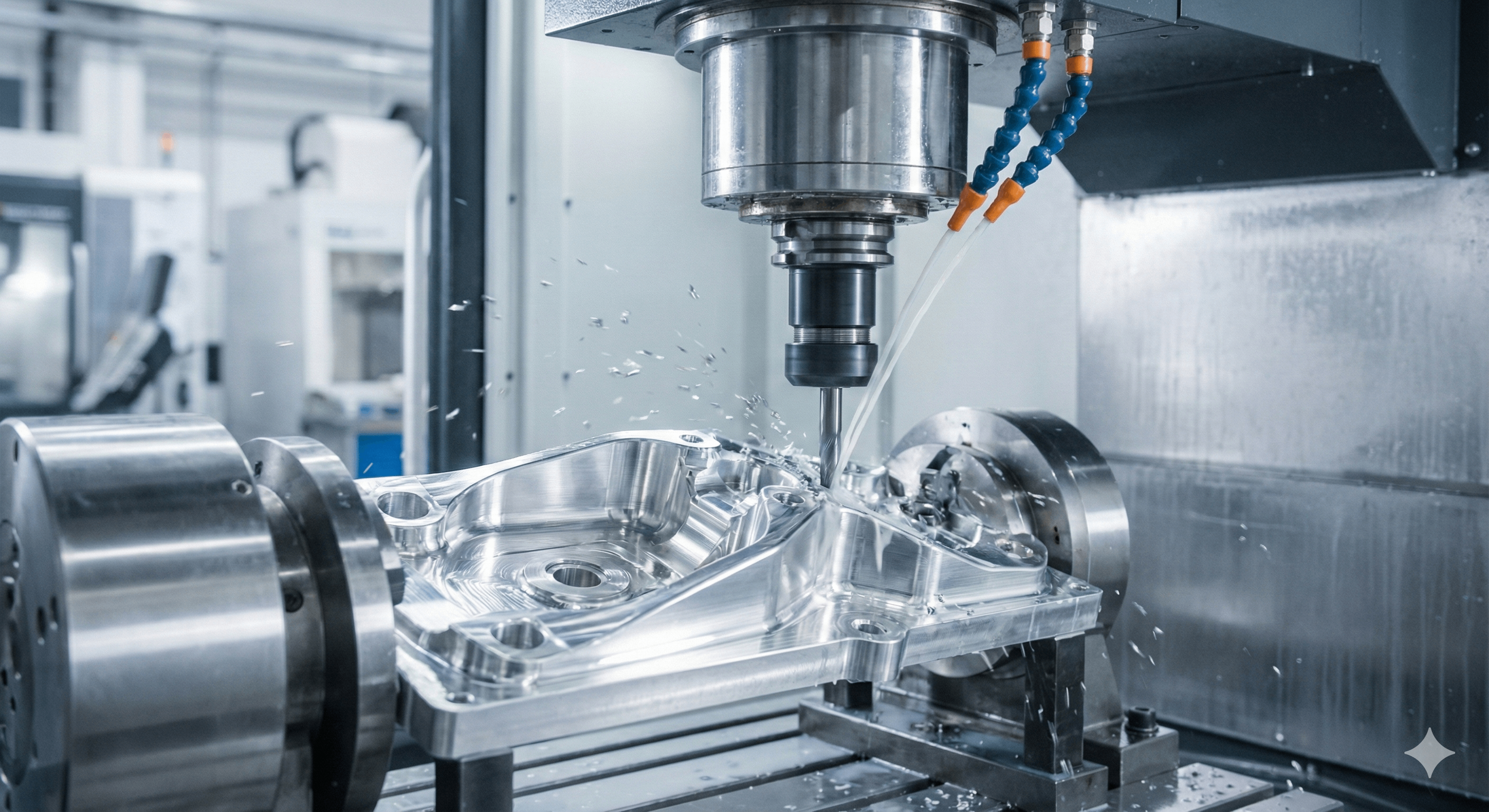
You need a partner who understands the intricate correlation between engineering precision and long-term profitability. The automotive cnc machine is the pivot point of this equation.
It serves as the critical bridge between ambitious design concepts and the rigorous, unforgiving demands of the road.
However, not all machining capabilities are created equal. The gap between a generalist machine shop and a specialized automotive manufacturer can determine the success or failure of a product launch.
At YISHANG, we recognize that wholesale buyers are seeking certainty in an uncertain market.
This comprehensive guide deconstructs the critical technical and commercial factors that drive successful auto cnc machining procurement in today’s high-stakes market.
1. The Financial Impact of Precision: Why Tolerance Equals Profitability
In the world of wholesale procurement, “Quality” is often treated as an abstract box to check. But in automotive engineering, quality is a quantifiable financial metric.
The cost of a single recall, a line stoppage, or a batch rejection far outweighs the marginal savings gained from a cheaper, less precise supplier.
The industry’s transition to electrification has fundamentally altered the tolerance landscape. The primary driver is no longer just fitment; it is Noise, Vibration, and Harshness (NVH).
In legacy combustion vehicles, the roar of the engine could mask minor imperfections in drivetrain gears, mounting brackets, or transmission housings.
In an Electric Vehicle, the powertrain is near-silent. This silence is unforgiving.
It exposes every micron of deviation. A simple bracket that is out of tolerance by just 0.05mm can cause a vibration or rattle that is audible in the cabin.
This leads to consumer complaints, warranty claims, and damage to brand reputation.
For the procurement manager, this reality dictates that high-precision automotive cnc machine capabilities are non-negotiable.
Achieving a tolerance of +/- 0.01mm on a single “Golden Sample” is standard practice.
However, maintaining that tight tolerance across a wholesale batch of 10,000 units is where the true value lies. This is known as “Batch Consistency.”
Consistent parts ensure that mating components fit together perfectly on the assembly line, eliminating the need for manual adjustments, shims, or selective assembly.
This consistency directly reduces your PPM (Parts Per Million) defect rate and accelerates your assembly throughput.
Precision, therefore, is not just an engineering specification; it is a driver of operational efficiency and lower Total Cost of Ownership (TCO).
At YISHANG, we view micron-level accuracy as an insurance policy for your supply chain. We ensure that the components you receive perform flawlessly from the first mile to the last.
2. Material Mastery: Mitigating Risk in Diverse Alloy Processing
Once the tolerance standard is set, the next critical variable is the material itself.
The automotive Bill of Materials (BOM) is diversifying. To meet strict “lightweighting” targets (CAFE standards) and extend EV battery range, engineers are specifying a broader range of alloys.
A capable manufacturing partner must be fluent in processing this periodic table of elements without compromising structural integrity.
This material expertise is what distinguishes a vendor from a strategic partner.
Aluminum (6061/7075): The Lightweighting Standard
Aluminum is ubiquitous in modern chassis, suspension arms, and battery housings. However, it presents specific machining challenges related to internal stress.
Aggressive auto cnc machining can generate significant heat. If not managed correctly, this heat causes the aluminum to expand during cutting.
When the part is removed from the fixture and cools down, it shrinks and warps, falling out of tolerance.
An experienced partner understands how to mitigate this. We employ advanced tool path strategies, high-pressure coolant systems, and intermediate stress-relief cycles.
This ensures that complex, thin-walled aluminum components remain dimensionally stable and flat.
Stainless Steel (304/316): Durability vs. Work Hardening
For exhaust systems, fasteners, and exposed sensors, corrosion resistance is paramount. Stainless steel is the material of choice, but it fights back.
Stainless steel is prone to “work hardening.” If the cutting tool dwells too long in one spot, or if the feed rate is too slow, the material surface becomes incredibly hard and brittle.
This can lead to micro-cracking under vibration and premature component failure in the field.
YISHANG utilizes rigid machine setups and specialized carbide tooling coatings to cut cleanly. We ensure the material retains its natural ductility and fatigue resistance.
Copper & Brass: The Electrification Surge
The rise of EV battery systems has surged the demand for highly conductive busbars, terminals, and connectors.
These “red metals” are soft and “gummy.” They are notorious for creating long, stringy chips and burrs that can cause dangerous electrical shorts.
Processing copper requires specific geometry cutters and rigorous deburring protocols—often involving thermal or electrochemical deburring.
For a wholesale buyer, the ability to source all these diverse materials from a single facility simplifies the supply chain.
It consolidates quality accountability and ensures compliance with global environmental standards like RoHS and REACH.
3. The 5-Axis Advantage: Solving Complexity and Speed Simultaneously
As materials become more specialized, component geometries are becoming increasingly complex.
Driven by aerodynamics, thermal management, and packaging constraints, engineers are designing parts with compound angles, deep undercuts, and organic surfaces.
Common examples include intake manifolds, steering knuckles, and complex turbocharger impellers.
This evolution exposes the severe limitations of traditional 3-axis machining.
To machine these complex geometries on a 3-axis machine requires multiple setups. The part must be manually unclamped, rotated, and reclamped for each side.
This introduces two critical risks for the buyer: “Stack-up Error” and increased labor costs.
Every time a human operator touches the part to move it, precision is lost.
The strategic solution is the 5-axis automotive cnc machine.
This advanced technology allows the cutting tool to approach the workpiece from virtually any vector in a single setup.
Why this matters to Procurement Strategy:
- Geometric Integrity: Because the part stays stationary in the fixture, the positional relationship between features is maintained perfectly. This is critical for GD&T (Geometric Dimensioning and Tolerancing) compliance.
- Speed and Throughput: It eliminates the downtime of manual re-fixturing. Parts move from raw stock to finished geometry in a single cycle.
- Cost Efficiency: Faster cycle times on complex parts translate to a lower unit price for wholesale orders.
For YISHANG, 5-axis capability is not just about making complex shapes; it is about efficiency and repeatability.
It allows us to deliver intricate components with shorter lead times, helping you meet “Just-in-Time” (JIT) delivery schedules.
It also future-proofs your supply chain. As your engineering team releases more advanced designs, you already have a manufacturing partner capable of executing them.
4. Scalability: The Bridge from Prototype to Mass Production
A common friction point in international sourcing is the disconnect between R&D and Production—often called the “Valley of Death.”
Design firms can produce a perfect single prototype but lack the capacity for volume. Conversely, mass production foundries often refuse “High-Mix, Low-Volume” orders (e.g., 500-2,000 units).
This leaves a dangerous gap for specialized utility vehicles, aftermarket performance parts, and pilot runs for new EV platforms.
Automotive cnc machine technology is the ideal bridge across this gap.
Unlike die casting or metal stamping, which require thousands of dollars in hard tooling and weeks of lead time to fabricate molds, CNC is agile.
The “tooling” is largely digital code.
This allows procurement teams to order a small batch of functional prototypes made from the actual production-intent material for validation.
You can test these machined parts on a test track or in a thermal chamber.
Once the design is validated, YISHANG can scale the process immediately. We transition from single-block machining to palletized systems that machine multiple parts simultaneously.
This continuity is vital for risk management.
It means the mass-produced part will perform exactly like the approved prototype because the manufacturing physics remain unchanged.
It offers buyers the flexibility to test market demand without the sunk cost of obsolete molds.
If a design change is needed mid-year—a common occurrence in the fast-paced automotive sector—we simply update the G-code.
This agility is a significant competitive advantage in a market that rewards speed and adaptability.
5. Cost Reduction Strategy: Design for Manufacturability (DFM)
Experienced procurement managers know that the best way to lower costs is not to squeeze the supplier’s margin, but to optimize the design.
A true manufacturing partner contributes to this process through Design for Manufacturability (DFM) feedback.
Before we cut a single chip, our engineers analyze your CAD files to identify cost drivers that do not add value to the final product.
Common Cost-Saving Opportunities:
- Corner Radii: Sharp internal corners require small, fragile tools and slow cutting speeds. Adding a radius allows for larger tools to hog out material faster, reducing cycle time.
- Wall Thickness: Extremely thin walls can vibrate (chatter), requiring slow machine speeds to maintain accuracy. Slightly thickening non-critical walls can reduce machining time significantly.
- Tolerancing: Not every surface needs a +/- 0.005mm tolerance. “Over-tolerancing” non-critical features drives up inspection time and scrap rates. We help you identify where standard tolerances can apply to save money.
- Standard Tooling: Designing features that can be cut with standard off-the-shelf tools avoids the cost and delay of custom tooling fabrication.
At YISHANG, we provide this DFM analysis as part of our comprehensive service. We act as an extension of your engineering team, helping you balance performance with budget.
This collaborative approach builds a transparent relationship where cost savings are shared and optimized over the life of the program.
6. The “Landed Cost” Perspective: Surface Finishing and Assembly
Smart procurement managers focus on the “Landed Cost”—the total cost of the part when it arrives at your warehouse—rather than just the Ex-Works price.
A significant driver of hidden costs is a fragmented supply chain.
If a raw part is machined in one factory, sent to another for plating, and a third for packaging, the risk of error and delay multiplies.
If a quality issue arises, the “blame game” begins. The plater blames the machinist for surface porosity, and the machinist blames the plater for poor adhesion.
The buyer is left stuck in the middle with a container of unusable parts and a stopped assembly line.
The most efficient strategy is a vertically integrated solution. YISHANG integrates auto cnc machining production with secondary finishing and assembly.
Surface Finishing Alignment: A machined automotive part is rarely a finished product. It needs protection against the elements.
- Anodizing (Type II & III): Essential for aluminum wear resistance, corrosion protection, and cosmetic branding.
- Zinc/Nickel Plating: The standard for steel corrosion protection.
- Passivation: Critical for maximizing the longevity of stainless steel.
- Powder Coating: For durable, impact-resistant underbody parts.
When we manage these processes, we account for the coating thickness during the machining stage.
We machine threads slightly oversize to ensure they gauge perfectly after the plating layer is added. A disconnected supply chain often misses this detail, leading to assembly failures.
Assembly and Kitting: We go further by offering light assembly services. Instead of receiving bags of loose screws and brackets, you receive a pre-assembled unit.
This reduces your labor costs at the destination and simplifies your inventory management.
By delivering a “shelf-ready” or “line-ready” product, we significantly lower your Landed Cost and streamline your logistics.
7. Risk Management: Quality Control and Global Logistics
In cross-border B2B trade, trust must be verified by data. The fear of receiving a container of non-conforming parts is the primary anxiety for any import manager.
A robust Quality Management System (QMS), anchored by ISO 9001 certification, is the baseline requirement. But true risk management goes deeper.
It involves “In-Process Inspection.” We do not wait until the end of the line to check quality.
We use Coordinate Measuring Machines (CMM) to verify geometry while the part is still in production. This proactive approach catches tool wear or thermal drift before it affects the entire batch.
Transparency and Traceability: We believe in total transparency. Every shipment from YISHANG includes a comprehensive data package:
- Material Certifications (Mill Certs): Verifying the chemical composition of the raw metal.
- Dimensional Inspection Reports: Proving that critical dimensions meet the print specifications.
- Finishing Certificates: Validating the plating thickness or anodizing hardness.
This documentation is essential for your internal audits and PPAP (Production Part Approval Process) requirements.
The Logistics of Export: Finally, manufacturing excellence is wasted if the parts are damaged in transit. Ocean freight exposes metal components to humidity, salt spray, and rough handling.
We have seen excellent parts ruined by poor packaging practices. Rust is the enemy of steel components during long sea voyages.
Professional exporters utilize VCI (Volatile Corrosion Inhibitor) packaging. These specialized bags release a vapor that forms a molecular protective layer on the metal, preventing rust.
Additionally, reinforced crating and thoughtful stacking prevent impact damage.
We understand that for a wholesale buyer, the job isn’t done until the parts are successfully received, inspected, and accepted at your warehouse.
8. FAQ: Sourcing Automotive Parts from YISHANG
To assist procurement teams in evaluating our capabilities, here are answers to the most common questions regarding our automotive cnc machine services.
Q: What is the minimum order quantity (MOQ) for custom auto parts? A: We specialize in flexibility. We handle prototypes (MOQ 1) and scale seamlessly to mass production (10,000+ units). We do not have a rigid minimum, as we support High-Mix, Low-Volume production strategies.
Q: Can you provide PPAP Level 3 documentation for OEM orders? A: Yes. As an ISO 9001 certified manufacturer, we are familiar with automotive compliance. We can provide full Production Part Approval Process (PPAP) documentation, including Process Flow Diagrams, Control Plans, and Dimensional Results upon request.
Q: How do you handle design privacy and IP protection? A: Intellectual Property protection is paramount. We sign Non-Disclosure Agreements (NDAs) before receiving any CAD files. Your designs are stored on secure, encrypted servers and are accessible only to the engineering team assigned to your project.
Q: What is your typical lead time for a batch of 500 machined parts? A: Lead times vary by complexity and material availability, but generally, a batch of 500 standard auto cnc machining parts can be completed in 10-15 business days after design approval. Expedited services are available for urgent requirements.
Q: Do you handle customs clearance for international shipments? A: We have exported to 50+ countries. While we typically ship Incoterms EXW, FOB, or DDP, our logistics team handles all export documentation, including Commercial Invoices, Packing Lists, and Certificates of Origin to ensure smooth customs clearance at your destination.
Conclusion: Engineering Your Supply Chain for Resilience
The automotive industry is evolving at a breakneck pace. To stay competitive, your supply chain must be as advanced and adaptable as the vehicles you are building.
The automotive cnc machine is a powerful tool, but its true value is unlocked by the expertise of the partner operating it.
You need a partner who can navigate the complexities of material science, execute complex geometries with 5-axis precision, and scale with your business growth.
You need a partner who understands that “low cost” comes from efficiency and design optimization, not from cutting corners on quality.
At YISHANG, we combine over 26 years of manufacturing heritage with a forward-looking approach to global service. We are not just a factory; we are a strategic extension of your procurement team.
We bridge the gap between complex engineering requirements and reliable wholesale supply.
If you are seeking to secure your supply chain with high-precision, custom-engineered metal components, we are ready to deliver.
Contact YISHANG today. Let’s discuss how we can engineer value, precision, and resilience into your next automotive project.