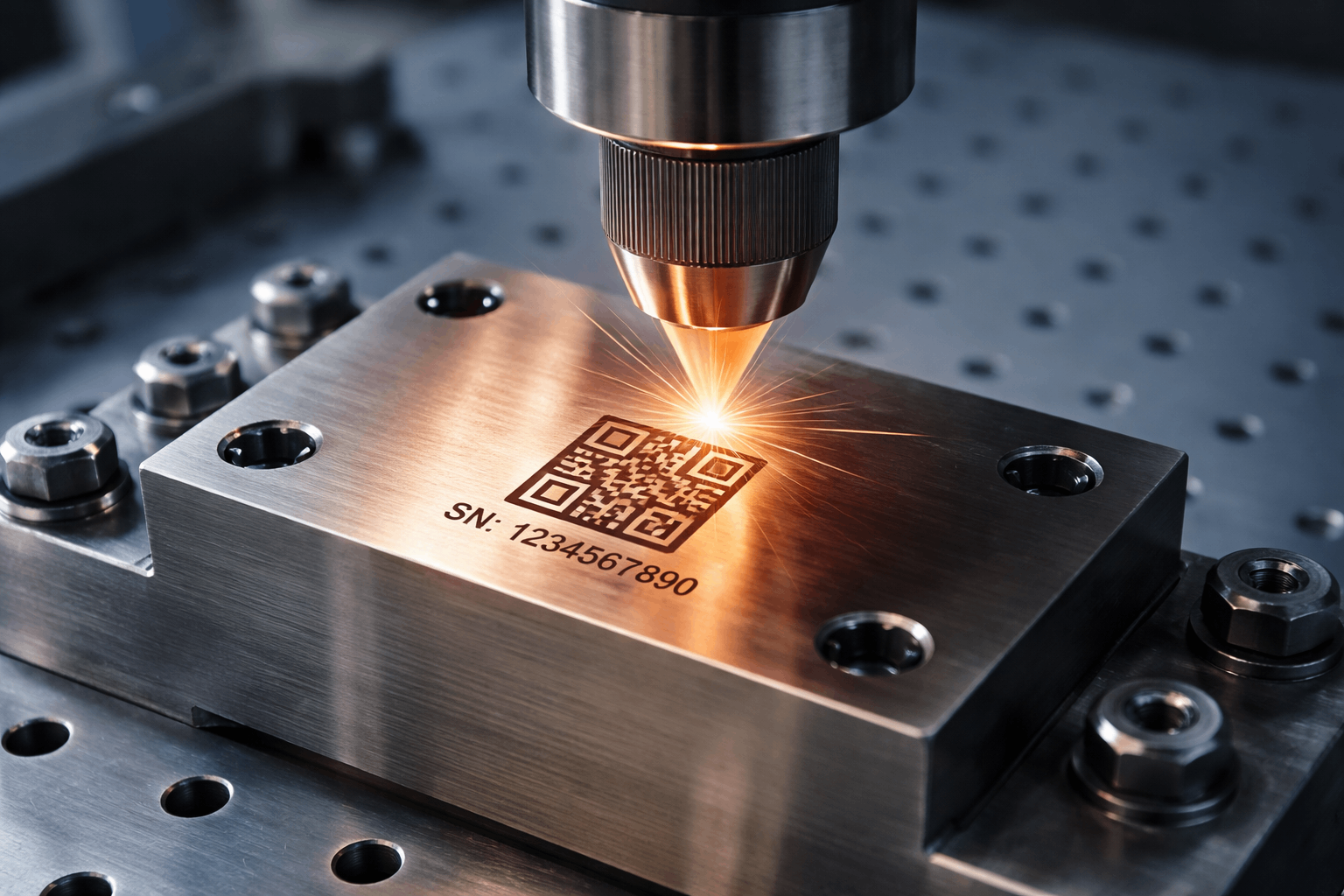
Overseas wholesale buyers rarely evaluate laser etched metal as a “nice-to-have” finish.
In high-volume sourcing, a mark is part of the quality and traceability system. Buyers assess it the same way they assess material grade, dimensional stability, or coating durability.
The practical question is simple: will the mark stay readable after shipping, handling, assembly, cleaning, post-processing, and years of service?
When it does not, the cost is not aesthetic. It shows up as mixed inventory, rejected lots, rework, delayed shipments, and avoidable compliance risk.
This article is written for procurement, supplier-quality, and engineering teams who need reliability at scale. It explains how laser etching on metal behaves over time, why marks fail in real environments, and how buyers can reduce risk through better process decisions.
You will also see the term metal engraving laser used deliberately. Many buyers compare etching and engraving during RFQs, even when the words are used interchangeably. Understanding the difference matters when durability and traceability are critical.
The Quiet Assumption Behind Most Laser Etched Metal Discussions
Most “complete guides” describe laser etching as a capability. Wholesale buyers evaluate it as a potential failure point unless the supplier demonstrates control.
That difference explains why many well-written articles still feel incomplete to procurement teams. They explain what laser etching is, but not what fails when production scales.
A visible mark at incoming inspection is only a snapshot. It does not predict what happens after cartons are moved, parts are wiped down, coatings are applied, or assemblies rub during installation.
In real industrial environments, marks face abrasion, vibration, chemical exposure, temperature cycles, and handling variability. These conditions determine whether a marking process is stable or fragile.
How procurement teams actually read supplier content
B2B buyers rarely read blogs line by line. They scan with intent, using searches such as “laser etched metal durability,” “DPM marking wear,” or “laser etched serial number fading.”
They look for evidence that the supplier understands volume production, not just lab conditions. The strongest signal is not marketing language, but the ability to identify common failure paths and explain how they are mitigated.
If a mark supports traceability, service history, calibration, or warranty workflows, degradation becomes a process failure. Buyers want suppliers who recognize that risk early.
What Laser Etching Actually Changes — and What It Doesn’t
Laser etching on metal is best understood as controlled surface modification rather than deep material removal.
A focused beam delivers energy to a localized zone. Depending on parameters and surface condition, it can create oxidation, micro-melting, or micro-texture that alters light reflection and creates contrast.
In most applications, the modified layer is shallow. Changes occur at the micrometer scale, not through the bulk of the part. This makes etching fast and flexible, but it also explains why durability cannot be judged by appearance alone.
What laser etching changes
Laser etching can modify surface roughness, oxide chemistry, and micro-topography. These factors influence readability, friction response, and how contaminants interact with the surface.
On stainless steel, contrast often comes from controlled oxide layers. On aluminum, it may result from texture change combined with oxide response. Similar visual results can come from very different mechanisms.
Those mechanisms do not age the same way.
What laser etching does not change
Laser etching does not improve bulk mechanical strength. It does not make a surface immune to abrasion or chemicals. It also does not eliminate variability introduced by surface finish, batch condition, or fixturing.
For RFQs that specify “permanent marking,” the real requirement is resistance to defined stresses. That requirement should drive method selection and acceptance criteria.
A practical mental model for buyers
Think of the etched zone as a thin functional layer with its own behavior. If that layer is inconsistent, the mark will be inconsistent. If it is fragile, the mark may pass inspection and still fail in the field.
Etching vs Engraving vs Marking: What Buyers Actually Specify
Procurement discussions often mix the terms etching, engraving, and marking. For decision-making, the distinction is functional rather than semantic.
Laser etching modifies the surface with minimal depth. It is fast and flexible, making it suitable for moderate environments where abrasion and coating are limited.
Laser engraving, often referred to by buyers as metal engraving laser, removes material to create a recessed mark. This added depth improves resistance to wear, coatings, and aggressive cleaning, at the cost of longer cycle times.
Laser marking is sometimes used as an umbrella term. In RFQs, buyers benefit from specifying performance requirements rather than process names.
From a procurement standpoint, the key question is not which technology is modern, but which method maintains readability after the part’s full lifecycle, including post-processing.
Why Identical-Looking Laser Etched Marks Age Differently on Metal
Two marks can look identical at inspection and still diverge in service. This is a common sourcing surprise because the failure is not visible at day one.
The reason is simple: visual similarity does not guarantee identical surface modification.
Surface roughness distribution
Surface roughness influences how a mark wears. A surface that is too smooth may polish away quickly. A surface that is too aggressive can trap debris and promote localized corrosion.
Marks that age well typically show balanced, uniform roughness across the entire code or character set.
Heat-affected zone stability
Even shallow etching introduces heat. If the heat-affected zone is uneven, residual stresses and microstructural variation can accelerate aging.
This is why identical settings can still produce different outcomes across batches.
Early risk detection for buyers
Buyers cannot see microstructure, but they can ask the right questions. Are parameters locked by material and finish? Is wear simulation used? Is contrast drift monitored across a run?
These questions focus on repeatability, which is what matters at scale.
Permanence Is Not a Yes-or-No Question for Laser Etched Metal
Search results often frame permanence as binary. For procurement teams, permanence is a performance envelope.
A mark is acceptable only if it survives the dominant stresses of its use case.
Common failure paths
Abrasion from handling and assembly reduces contrast. Cleaning chemicals can alter oxide layers. Thermal cycling accelerates surface evolution, especially with moisture present.
Environment defines permanence
Warehouse labels face light handling. Machine components face years of wiping. Food, medical, or pharmaceutical environments introduce aggressive cleaning.
If post-processing or harsh exposure is expected, deeper marking or engraving may be more appropriate.
Standards buyers reference
Many programs reference ISO/IEC 15415 for 2D code quality and ISO/IEC 29158 (AIM DPM) for direct part marking. These standards help align expectations without over-specifying the process.
If Your Part Gets Coated or Blasted, Decide Carefully
Post-processing is one of the most common causes of marking failure.
Painting, powder coating, anodizing, or shot blasting can reduce contrast or completely obscure shallow marks.
For parts that will be coated, buyers often prefer engraving or alternative marking methods that preserve readability after finishing.
The key procurement action is simple: disclose post-processing early. This allows the supplier to select a method that survives the full process chain.
Speed, Contrast, and Stability: Why You Can’t Optimize All Three
High-volume sourcing values throughput, but instability is more costly than slow marking.
Faster marking often increases thermal gradients. High contrast may rely on fragile surface conditions. Stability requires balance.
Procurement teams typically accept slightly longer cycle times if they prevent downstream failures and supply disruptions.
The Prototype Illusion: Why Laser Etched Metal Looks Perfect at First
Prototype runs hide variability. Heat accumulation is low, fixtures are new, and adjustments are easy.
In mass production, heat builds, fixtures wear, and surface condition drifts. Small changes matter because etching affects only the surface layer.
Buyers who understand this difference seek suppliers who validate beyond first-off samples.
Why Inspection Often Approves Marks That Fail in the Field
Visual inspection checks contrast under controlled conditions. Field performance depends on friction, chemistry, and time.
Functional validation, such as abrasion simulation or scan verification after exposure, aligns inspection with real use.
Procurement-aligned validation table
| Concern | Typical issue | Practical check |
|---|---|---|
| Handling wear | Polishing | Wipe or abrasion simulation |
| Cleaning exposure | Oxide change | Solvent or cleaner test |
| DPM scan reliability | Edge degradation | Scan verification or grading |
| Batch drift | Inconsistent contrast | Mid-run and end-run samples |
The Real Cost of Laser Etched Metal
Per-part cost is rarely the full cost. Failures create labor, delays, and compliance risk.
A stable process often reduces total cost of ownership, even if marking time increases slightly.
This is why buyers evaluate quotes in context, not isolation.
When Laser Etched Metal Is the Wrong Answer
Laser etching is not always optimal. Stamping, chemical etching, or engraving may outperform it in harsh environments.
Buyers trust suppliers who recommend the right method for the application, not the most convenient one.
A Manufacturing-Centered Way to Think About Laser Etched Metal
For wholesale buyers, marking should be evaluated as part of a system. Material condition, surface finish, parameters, validation, and environment all matter.
This systems-level thinking reduces surprises and aligns expectations.
Where YISHANG fits
At YISHANG, laser etching discussions focus on application context. When material, finish, environment, and post-processing are clear, stable solutions are easier to define.
Early technical alignment often saves time and cost later.
Conclusion: Reliability Is the Signal Buyers Look For
Laser etched metal succeeds when it remains readable through the entire lifecycle.
That requires more than high contrast at inspection. It requires surface control, production consistency, and validation aligned to real use.
If you are sourcing marked metal components in volume and want to reduce traceability risk, YISHANG can support a focused technical discussion.
Share your drawing or marking requirements, and we will respond with practical options for stable production.