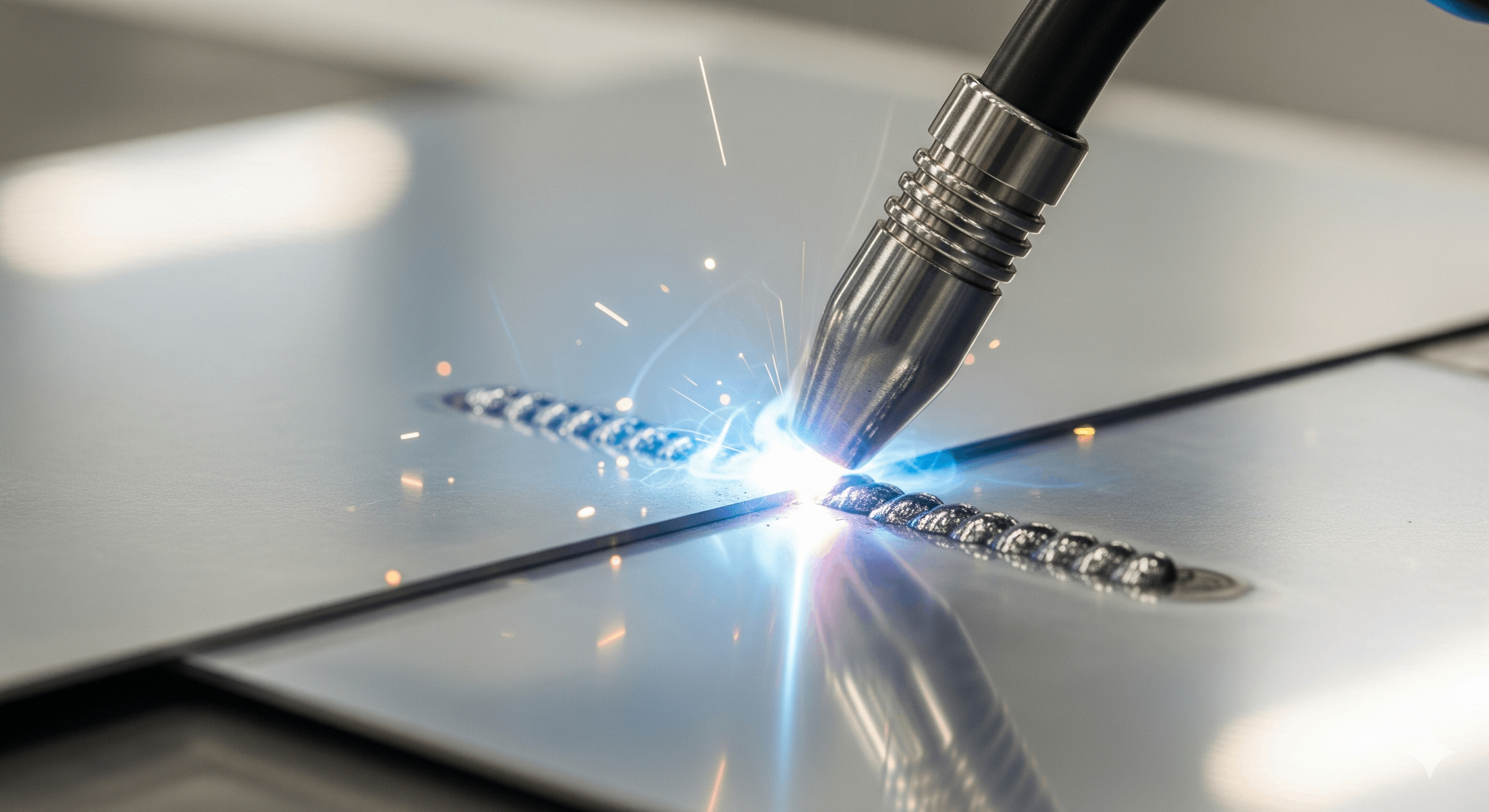
In the high-stakes arena of global manufacturing, executing flawless welds on welding aluminum sheet metal acts as the definitive litmus test. It proves a supplier’s engineering maturity.
Overseas procurement managers and product engineers often source complex enclosures for medical devices, electronics, or automotive components. For these professionals, the margin for error is effectively zero. Standard fabrication rules no longer apply when the material thickness drops into the critical range of 0.8mm to 2mm.
The challenge facing your supply chain goes beyond simply joining two pieces of metal. Instead, it centers on managing risk. A warped chassis or a porous seam represents more than a cosmetic defect. It signifies a disruption in your assembly line and increased cycle times. Furthermore, it creates the potential for damaging warranty claims.
Therefore, you must partner with a manufacturer who has mastered the science of welding thin aluminium. This is not just an operational detail. It is a strategic necessity.
The primary adversary in this field is “Thermal Runaway.” Aluminum possesses a distinct metallurgical profile that complicates high-volume production. Specifically, it dissipates heat five times faster than steel. Yet, it melts at a significantly lower temperature.
This creates a paradox for the fabricator. The material acts as a massive heat sink, requiring high energy to initiate the weld. However, it instantly risks “burn-through” once the puddle establishes.
From a procurement perspective, though, the more insidious enemy is heat distortion. Even if the weld holds structurally, the aluminum grain structure expands and contracts rapidly. This can lead to “oil canning” or buckling. Consequently, this renders precision enclosures useless for final assembly.
This guide provides an engineering-level breakdown of the protocols necessary to achieve zero-defect scalability. We move beyond basic tutorials. Instead, we address the core concerns of the B2B buyer: scalability, consistency, and Total Cost of Ownership (TCO).
Executive Summary: The 3 Pillars of Distortion Control
For rapid evaluation of your aluminum fabrication partners, check for these three core competencies:
- Process Control: Utilizing High-Frequency Pulse TIG or Fiber Laser Welding minimizes the Heat Affected Zone (HAZ).
- Thermal Management: Applying copper backing bars and heat sinks draws heat away from the thin sheet.
- Surface Hygiene: A strictly segregated “Clean Room” environment prevents iron contamination and porosity.
The Zero-Tolerance Protocol: Mitigating Contamination Risks
In a mass-production environment, consistency matters most. Contamination remains the primary variable that disrupts consistency in aluminum fabrication.
Unlike carbon steel, thin aluminum demands a clinically clean environment. Minor surface impurities on steel might not cause catastrophic failure. In contrast, aluminum’s natural oxide layer (Aluminum Oxide) is porous and hygroscopic. It absorbs moisture and hydrocarbons, which leads to porosity and bond failure.
The Hidden Cost of Poor Prep
To guarantee weld integrity across thousands of units, we consider a robust Standard Operating Procedure (SOP) for surface preparation non-negotiable. When evaluating a supplier, you must look for specific cleaning protocols. Unfortunately, low-cost providers often fail here.
Imagine a technician wire brushes the material while residual forming oils are still present. The brush bristles drive those hydrocarbons deep into the soft metal surface. Subsequently, these trapped contaminants vaporize during the welding process. This creates subsurface porosity.
These microscopic gas pockets may pass a cursory visual inspection. However, they often fail leak tests or pressure tests in the field. For industries like aerospace or medical fluid management, this risk is unacceptable. Therefore, you should ask your supplier about their specific degreasing methodology. This is a valid and necessary audit question.
The YISHANG Standard
At YISHANG, our industrial standard follows a specific, unbreakable sequence designed to mitigate this risk. First, we employ degreasing. We use industrial-grade solvents like Acetone to remove all organic oils and handling residues.
We employ mechanical de-oxidation using dedicated stainless steel brushes only after the surface is chemically clean. This sequence ensures that we clean the metal rather than embedding dirt into it.
Furthermore, cross-contamination acts as a silent killer of aluminum quality. To prevent galvanic corrosion, we mandate tool segregation in our facility. We permanently ban any brush or grinding disc that has touched carbon steel from the aluminum bay. This level of process control is essential for ensuring the long-term durability of exported goods. It is a hallmark of a mature OEM aluminum parts manufacturer.
Strategic Process Selection: Balancing ROI and Tolerance
Once we establish material prep protocols, the focus shifts to the welding process itself. Procurement officers face a critical decision here. The choice of welding process impacts unit cost, production speed, and final quality.
There is no “universal” solution in sheet metal fabrication. Rather, an optimal process exists for specific geometric and cosmetic requirements. Specifically, we evaluate three primary methodologies based on your project scope. This ensures the best Return on Investment (ROI).
TIG (GTAW) with Inverter Technology: The Premium Standard
Engineers prefer Gas Tungsten Arc Welding (TIG) for visible, high-value joints. Perhaps you are sourcing a medical instrument chassis or a premium audio amplifier faceplate. In these cases, the aesthetic requirement for “stacked dime” ripples dictates this choice.
Often, the visual quality of the weld signals the perceived value of the entire product to the end-user. However, traditional TIG equipment is often too crude for 1mm aluminum. It leads to wide heat-affected zones (HAZ) and significant warping.
Therefore, modern fabrication demands Inverter Technology capable of high-frequency AC output. We can constrict the arc into a tight, focused beam by increasing the AC frequency to 150Hz or 200Hz.
Ultimately, this technical nuance translates directly to procurement value. A focused arc allows for pinpoint heat application. It melts the joint without “soaking” the surrounding sheet metal with excess thermal energy.
This capability is crucial for maintaining tight dimensional tolerances in complex assemblies. In these scenarios, post-weld straightening is not feasible. It ensures that your custom metal box fabrication projects arrive with flat surfaces and square corners. They are ready for immediate assembly.
Fiber Laser Welding: The Scalable, Low-Distortion Solution
Consider projects requiring high scalability, such as EV battery boxes or server rack enclosures. For these, Fiber Laser Welding has revolutionized the industry. The physics of laser welding offers a distinct advantage: extreme energy density.
Specifically, a laser beam inputs approximately one-quarter of the total heat energy of TIG welding to achieve the same penetration depth. This rapid thermal cycle acts as a game-changer for distortion control. The weld pool establishes and freezes in milliseconds. Consequently, the surrounding material has zero time to expand or buckle.
For 0.8mm to 1.2mm sheets, laser welding virtually eliminates the need for secondary grinding or straightening operations. Moreover, from a cost perspective, this directly reduces the Total Cost of Ownership (TCO) for the buyer.
We reduce labor hours and improve consistency by eliminating manual post-processing steps. Additionally, we can easily automate the process. This ensures 100% repeatability across large batches. Consistency is vital for JIT (Just-In-Time) supply chains relying on predictable lead times.
Technical Insight: The “Wobble” Function Advanced laser systems, like those deployed at YISHANG, utilize a “wobble” function. Here, the beam oscillates rapidly. This action stirs the weld puddle. It bridges wider gaps and allows for slightly looser fit-up tolerances without compromising strength. This is a key factor in reducing scrap rates.
Pulsed MIG (GMAW-P): The Structural Alternative
A common misconception in the procurement world suggests that MIG welding is too “hot” and messy for thin aluminum. This holds true for standard Short-Circuit MIG. However, Pulse-on-Pulse (Double Pulse) technology provides a viable solution for specific applications.
This works ideally for internal structural frames or slightly thicker gauges (1.5mm – 2mm). In these cases, speed is paramount but cosmetic finish is secondary. The system alternates between a high-energy peak current and a low background current. Consequently, Pulsed MIG allows the puddle to cool slightly between droplet transfers.
This “thermal heartbeat” grants the speed of MIG welding without the risk of burn-through. Furthermore, industrial reliability in MIG aluminum requires specialized feeding systems: Push-Pull Guns, U-Groove Drive Rolls, and Teflon Liners.
These components prevent soft aluminum wire from tangling (“bird-nesting”) and ensure uninterrupted production lines. Pulsed MIG offers a balance of speed and strength that TIG cannot match for structural components hidden inside a machine. This often results in lower unit costs for non-cosmetic parts.
The “Passive” Defense: Engineering the Fixture
Even after selecting the correct process, the physical setup determines 80% of the outcome. In our facility, we view fixture design as a critical component of Design for Manufacturing (DFM).
A skilled welder cannot compensate for poor tooling physics, especially on ultra-thin gauges. Here, a supplier transforms from a vendor into a technical partner.
The Heat Sink Strategy: Copper Backing Bars
We utilize the high thermal conductivity of copper to combat burn-through on ultra-thin sheets. We clamp heavy copper backing bars (chill blocks) directly behind the weld seam. This creates an artificial thermal path.
The copper acts as a sponge. It draws excess heat away from the aluminum root more efficiently than the aluminum itself can dissipate it. This setup provides two critical engineering advantages that protect your investment.
First, it supports the molten puddle to prevent drop-through. This ensures a consistent root profile. Second, it allows our operators to use higher amperage settings.
This might sound counterintuitive. However, higher heat allows for faster travel speeds. This actually reduces the total heat input per inch. As a result, we achieve verified sidewall fusion without risking base metal failure. This ensures your precision sheet metal fabrication projects meet rigorous structural standards.
Smart Clamping: Managing Thermal Expansion
Rigid clamping represents a common failure in amateur fabrication shops. Aluminum expands significantly when heated—roughly twice as much as steel. Suppose you clamp a 1mm sheet immovably on all sides. The expanding metal in the heat zone has nowhere to go but up or down.
Consequently, this causes permanent buckling, known in the industry as “oil canning.” Our industrial fixtures employ “floating” designs or strategic finger clamps placed close to the weld seam.
These allow for controlled lateral movement. They accommodate the necessary thermal expansion cycles while maintaining strict joint alignment. This attention to thermal dynamics ensures that a 500mm long enclosure door remains perfectly flat. It will seal correctly upon assembly at your facility.
DFM Optimization: The Flange Joint
We often advise clients to optimize their sheet metal designs for weldability. A prime example involves converting simple butt joints into Flange Joints. By bending a small lip on the edge of the sheet, the design creates inherent stiffness. It also provides sacrificial material for the weld.
This minor design tweak can reduce welding difficulty by 50%. It significantly lowers scrap rates and increases the structural rigidity of the final product. As your manufacturing partner, YISHANG actively looks for these optimization opportunities during the quoting phase. This helps you reduce costs and improve product manufacturability.
Material Science for Buyers: Alloy & Wire Selection
Buyers often require post-processing, such as anodizing or powder coating. In these cases, the metallurgy of the filler material becomes a critical detail. Specifiers often miss this in initial specs, which leads to cosmetic failures.
The Anodizing Trap: 4043 vs. 5356
Fabricators typically use two common filler alloys: 4043 (Al-Si) and 5356 (Al-Mg). Many welders favor 4043 alloy for its fluidity and crack resistance. It is easier to use on the production floor.
Unfortunately, it contains silicon. When a part welded with 4043 undergoes the anodizing process, the silicon turns a dark, charcoal gray. Does your product require a clear or colored anodized finish? If so, 4043 will result in ugly, contrasting weld seams that look like defects.
For these applications, we mandate 5356 alloy. It is more difficult to weld due to lower fluidity. However, it is chemically similar to standard 6061 or 5052 sheets. This ensures a perfect color match after anodizing.
Understanding these nuances prevents costly surprises after the fabrication stage. Otherwise, you might reject a whole batch due to anodized aluminum welding defects.
Base Material Considerations: 5052 vs. 6061
From a procurement standpoint, choosing the right base metal is equally vital. 6061 Aluminum is heat-treatable and strong. This makes it ideal for structural frames. However, it is more prone to cracking if not welded correctly.
In contrast, 5052 Aluminum is non-heat-treatable. Yet, it offers superior corrosion resistance and formability. For sheet metal enclosures that require complex bending and welding, 5052 often proves the safer choice for consistency.
Consult with your industrial aluminum welding services provider early in the design phase. This can help you select the alloy that offers the best balance of cost, strength, and weldability.
Quality Assurance: Forensic Defect Analysis
Quality Control (QC) in our facility goes beyond visual inspection. It is a forensic process designed to protect your supply chain. We actively monitor for specific defects that indicate process drift. This ensures that every batch meets your specifications before it leaves the factory floor.
Root Oxidation (Sugaring)
Ideally, the backside of a weld should be smooth. If it looks rough and black, it indicates a failure in shielding known as “sugaring.” This implies more than a cosmetic defect. It creates a site for corrosion and crack initiation.
Therefore, we employ Back-purging techniques. We flood the root side with Argon to ensure a smooth, sanitary finish inside the enclosure. This is particularly critical for medical or food-industry enclosures where hygiene is paramount.
Crater Cracking Mitigation
Small pits or cracks at the very end of a weld act as stress risers. Rapid shrinkage causes them as the arc extinguishes. These “crater cracks” can propagate into full weld failures under vibration.
Our robotic and manual systems utilize specific “Crater Fill” programs. These programs taper off the current gradually over several seconds. They feed additional material into the solidifying pool to prevent cracks. This attention to detail ensures the structural longevity of your parts during shipping and end-use.
Porosity Detection
Subsurface gas pockets are a common plague in aluminum welding. We utilize rigorous process monitoring. We ensure that gas flow rates and nozzle angles are optimized to prevent air entrainment.
For critical applications, we can implement macro-etching or dye penetrant testing protocols. These verify internal weld quality and provide you with the documentation needed for compliance.
Procurement Pitfalls: How to Spec Your RFQ
You need accurate quotes and superior parts. Therefore, avoiding common pitfalls in your Request for Quote (RFQ) is essential.
1. Over-Specifying Weld Sizes: Engineers often specify large fillet welds on thin sheets “just to be safe.” However, a weld larger than the material thickness adds no strength. Instead, it adds massive heat input, guaranteeing distortion. Trust your fabricator to size the weld appropriate to the material gauge (usually 1T, where T is material thickness).
2. Ignoring Grain Direction: When forming and welding aluminum, grain direction matters. Bending parallel to the grain can cause cracking. Welding only exacerbates this. Ensure your drawings specify grain direction for critical structural bends.
3. Vague Cosmetic Standards: “Good welds” is subjective. Use specific standards like “Workmanship Standard for Aluminum Welding.” Alternatively, provide limit samples (photos of acceptable vs. unacceptable welds) to align expectations immediately.
Frequently Asked Questions (FAQ) for Procurement Officers
Q: What is the minimum thickness for welding aluminum sheet metal? A: While specialized TIG can handle 0.5mm, industrial reliability typically starts at 0.8mm. For gauges below 1mm, Fiber Laser Welding is strongly recommended to prevent warping and burn-through.
Q: Can you prevent aluminum from warping during welding? A: Yes. You can prevent warping by using Heat Sinks (copper backing bars), minimizing Heat Input (using Pulse TIG or Laser), and employing proper Stitch Welding sequences rather than continuous welds.
Q: Why do aluminum welds turn black after anodizing? A: This occurs when we use 4043 filler wire (containing silicon). To ensure color consistency after anodizing, you must specify 5356 filler wire (containing magnesium) in your RFQ.
Q: Is TIG or MIG better for thin aluminum? A: For material under 1.5mm, TIG (or Laser) is superior due to better heat control. MIG is generally too “hot” for thin sheets unless advanced “Pulse-on-Pulse” equipment is used.
Conclusion: Partnering for Scalable Precision
Welding thin gauge aluminum (0.8mm – 2mm) is an engineering discipline that tolerates no shortcuts. It requires a holistic approach that integrates material science, thermal dynamics, and advanced automation.
Global buyers have a clear goal. They do not just want to buy parts. They want to secure a supply chain that delivers consistency, scalability, and adherence to international standards.
At YISHANG, we do not just fabricate; we engineer solutions. We have over 26 years of experience serving markets across 50+ countries. Our facility bridges the gap between prototyping and mass production.
Perhaps you require the aesthetic perfection of TIG. Or maybe you need the high-speed efficiency of Fiber Laser Welding. Regardless, our ISO 9001 certified processes are designed to mitigate risk and maximize value.
Is your current supply chain struggling with inconsistent tolerances, warping issues, or surface finish defects? Let us bring our engineering expertise to your next project. Contact our technical team today for a comprehensive DFM review of your thin aluminum enclosures.