
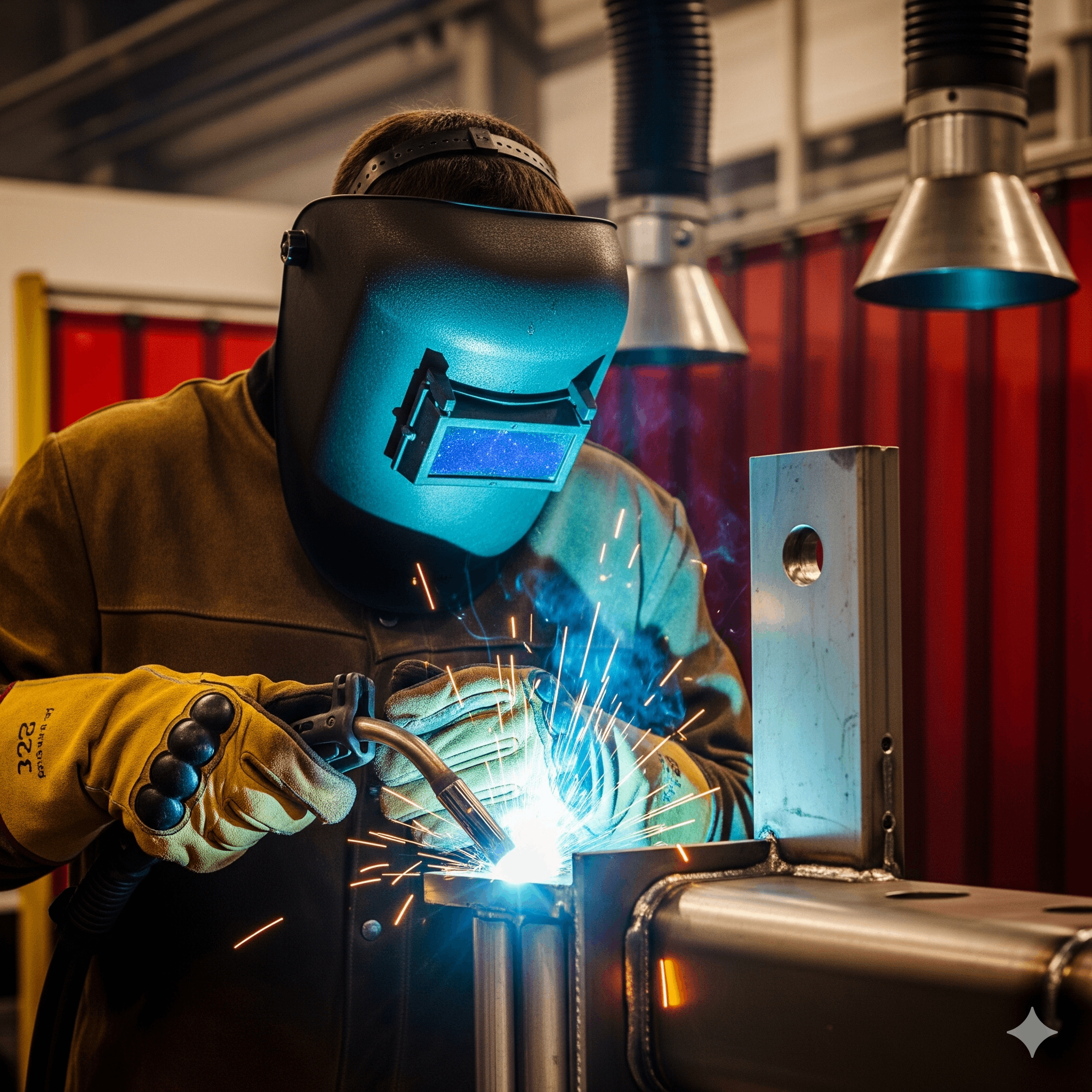
In global sourcing, the lowest unit price often hides the highest operational risk. For experienced procurement professionals, a supplier’s stability is not judged by their showroom, but by their shop floor discipline. Specifically, a factory’s investment in specialized welding safety equipment is a leading indicator of their ability to deliver consistent quality and respect lead times.
What is Welding Safety Equipment? Welding safety equipment, also known as welding PPE (Personal Protective Equipment), refers to the comprehensive gear mandated by ISO and OSHA standards to protect personnel from optical radiation, thermal burns, and toxic fumes. In a manufacturing context, this welding protection ecosystem is critical for maintaining process consistency and minimizing defect rates in mass production.
Why should a buyer care about welding ppes? Because safety is a production variable. A facility that treats safety as optional is a facility prone to disruption—be it through regulatory shutdowns, workforce turnover, or contamination of finished goods.
Drawing from YISHANG‘s 26 years of export manufacturing experience, this guide goes beyond basic compliance. We dissect the 12 non-negotiable essentials that define a professional fabrication environment. We analyze these not as costs, but as vital components in maintaining a high-velocity, zero-defect manufacturing line for your OEM/ODM projects.
Quick Reference: The ISO-Compliant Welding PPE Checklist
For procurement managers auditing a potential supplier, use this reference table to verify their welding safety gear.
| Category | Essential Gear | Key Standard (ISO/ANSI) | Impact on Your Order |
|---|---|---|---|
| Visual | Auto-Darkening Helmet | EN379 (1/1/1/1 Rated) | Prevents uneven welds & porosity. |
| Respiratory | PAPR / Respirators | OSHA 1910.134 | Ensures capacity stability (no sick leave). |
| Body | Welding Protective Clothing and Equipment | ISO 11611 Class 2 | Prevents FOD (melted buttons) on products. |
| Facility | Source Capture Extraction | ISO 15012-1 | Prevents dust contamination on finished goods. |
Part 1: Visual Integrity – The Foundation of Precision
In high-precision manufacturing, if the operator cannot see clearly, the product specifications are compromised. Visual protection is the first barrier against defect rates.
1. Auto-Darkening Helmets (ADF): Guaranteeing Bead Consistency
The auto darkening welding helmet is the welder’s command center. Unlike passive shields which require a “nod” to lower, causing repetitive neck strain and loss of fixture alignment, ADF technology allows for continuous focus.
For the wholesale buyer, the critical metric here is the Optical Clarity Rating (1/1/1/1).
- What it is: A standard (EN379) ensuring zero distortion, zero blur, and uniform shading.
- Why it matters to you: A welder using inferior optics suffers from eye fatigue by mid-shift. This fatigue leads to variable bead widths, porosity, and undercuts.
- The Result: By mandating high-clarity safety equipment for arc welding, we ensure that the weld executed at 4:55 PM is as precise as the one at 8:00 AM.
Procurement Takeaway: Ask your supplier if their helmets feature “True Color” technology. This allows welders to see the heat-affected zone (HAZ) accurately, preventing warping in thin-gauge stainless steel components.
2. Primary Eye Protection: The ANSI Z87.1+ Protocol
The helmet is only the secondary layer. The primary layer is welders protective gear worn underneath: safety glasses rated ANSI Z87.1+ (High Impact).
These protect against flying debris during grinding and slag chipping—the “transition moments” where 90% of injuries occur. Rigorous adherence to this protocol signals a disciplined shop floor. It minimizes production halts caused by minor injuries. Furthermore, glasses with UV filters prevent “indirect arc flash” from neighboring booths, allowing high-density production lines to operate without cross-interference.
Part 2: Respiratory Systems – Compliance & Capacity Stability
Respiratory safety is the biggest factor in long-term capacity stability. Welding generates complex fumes, particularly when fabricating Stainless Steel (Hexavalent Chromium) or Galvanized Steel (Zinc Oxide).
3. PAPR Systems: The Gold Standard for Continuity
A factory relying solely on disposable masks for heavy fabrication risks regulatory non-compliance and high workforce churn. The industry benchmark for welding protective equipment is the PAPR (Powered Air Purifying Respirator).
- Mechanism: A belt-mounted fan forces filtered air into the helmet, creating positive pressure.
- Benefit: It virtually eliminates “metal fume fever” and heat stress.
- ROI for Buyers: A healthy workforce means low absenteeism. When YISHANG invests in PAPR systems, we are effectively guaranteeing that your lead times will be respected, even during peak summer production runs.
Part 3: Contact Protection – Material Science & Finish Quality
The interaction between the gear and the workpiece is where surface defects often originate. Using the correct welding ppe kit elements is an art form balancing safety with the finesse required for high-quality metalwork.
4. Process-Specific Gloves: Dexterity vs. Protection
Procurement officers should verify if a supplier uses specific gloves for specific processes. One type does not fit all.
| Welding Process | Required Glove Material | Why it Matters for Product Quality |
|---|---|---|
| TIG (GTAW) | Goatskin / Kidskin | Thin leather allows the welder to “feel” the filler rod, creating the aesthetic “stack of dimes” weld on your visible parts. |
| MIG / Stick | Elkskin / Cowhide | Thick, lined leather prevents heat transfer, allowing long weld runs without stopping (fewer start/stop defects). |
Using heavy cowhide for precision TIG work numbs the touch, leading to sloppy welds. Detailed welding gloves selection demonstrates a commitment to the micro-details of craftsmanship.
5. Thermal Body Armor: Preventing FOD (Foreign Object Debris)
The welder’s jacket protects the operator, but also the product. Professional welding protective clothing and equipment must use dielectric snap buttons and flap-covered pockets.
- The Risk: Exposed zippers or plastic buttons can melt onto a hot stainless steel chassis.
- The Fix: YISHANG utilizes Flame Retardant (FR) Cotton for light work and Full Grain Leather for heavy work, ensuring no plastic contaminants ever touch your product.
6. Stability Footwear: The Base of Precision
Standard steel-toe boots are insufficient. Welding safety gear for feet must include Metatarsal Guards (to prevent sparks burning through laces) and Heat Resistant Outsoles (HRO).
Stable footing allows for stable body positioning. If a welder is shifting their feet due to heat discomfort from the floor plates, the weld line will waver. Proper footwear ensures linear, consistent welds on your structural components.
Part 4: The Facility Ecosystem – Engineering for Scale
Moving from individual welding ppe to the macro environment. Engineering controls protect the entire plant ecosystem, including your potential inventory.
7. Source Capture Fume Extraction
A clean shop produces clean products. Advanced Source Capture systems (articulating arms or downdraft tables) remove particulate matter before it disperses.
- Impact on Product: This prevents metallic dust from settling on finished goods.
- Impact on Process: Essential for preventing cross-contamination in medical or food-grade stainless steel products. If your product requires powder coating, airborne dust is the enemy of adhesion.
8. Spectral Filtering Curtains
High-density cell configurations require welding curtains with spectral filtering. They block harmful UV/Blue light while maintaining visual transparency.
- Management Advantage: This transparency allows floor managers (and your QC auditors) to monitor workflow and safety compliance without entering the hazardous zone.
- Scalability: It allows us to optimize floor space, ensuring we have the capacity to scale up for your bulk orders.
9. Noise Control & Communication
High-volume fabrication is noisy. Excessive noise (>85dB) leads to cognitive fatigue. Implementing NRR 25dB+ hearing protection ensures operators remain alert.
Clear communication is vital for coordinating crane movements and complex assemblies. By controlling the acoustic environment, we ensure your specific assembly instructions are heard and executed correctly, reducing handling damage.
Part 5: Crisis Management – Business Continuity
Your supply chain is only as robust as your supplier’s ability to handle a crisis.
10. Class D Fire Suppression
Standard extinguishers can cause explosions if used on metal fires (like Aluminum dust). A professional facility must use Class D Extinguishers. This safeguards your raw material inventory from catastrophic loss, ensuring force majeure events don’t derail your delivery schedule.
11. Electrical Integrity
Poor grounding causes arc instability, leading to spatter and lack of fusion. Rigorous maintenance of welding protection electrical systems (grounding clamps, cables) is synonymous with process control. We ensure every volt is used to create a strong weld, not a safety hazard.
12. Industrial First Aid Response
A specialized welding ppe kit for first aid (containing hydrogel burn dressings and saline eye wash) reflects how a company values its human capital. High morale translates to better attention to detail on your products. It ensures the master welder working on your prototype is the same one overseeing your mass production.
Procurement Checklist: Auditing Your Supplier’s Safety Culture
When visiting a potential partner’s factory, use this checklist to validate their capability:
- [ ] Check the Helmets: Are they using 4-sensor ADF helmets, or cheap passive shields?
- [ ] Inspect the Air: Is the air hazy? Or are welding fume extractors effectively capturing smoke at the source?
- [ ] Look at the Gloves: Do TIG welders have thin, clean gloves, or are they struggling with heavy mitts?
- [ ] Verify Standards: Ask to see their ANSI Z87.1+ or ISO compliance certificates for their welding ppes.
- [ ] Fire Safety: Locate the Yellow Star (Class D) extinguishers near the aluminum processing area.
FAQ: Common Questions from Buyers
Q: Does YISHANG charge extra for projects requiring specialized safety protocols? A: No. Advanced welding protection is our standard operating procedure. We believe the cost of safety is far lower than the cost of defects.
Q: My product is 316L Stainless Steel. How do you handle the Hex Chrome risk? A: We utilize PAPR systems and source-capture ventilation specifically for stainless steel lines to maintain air quality standards well above OSHA requirements, ensuring uninterrupted production.
Q: Can you provide safety data sheets for the consumables used on my order? A: Yes. As part of our comprehensive documentation package, we can provide traceability on all inputs, including safety compliance for the manufacturing environment.
Conclusion: The ROI of Safety
For the global wholesale buyer, the Welding Safety Equipment List is a transparency report on a manufacturer’s operational health. A partner who invests heavily in the safety of their workforce is investing in the consistency of your supply chain.
At YISHANG, these 12 essentials are the baseline for our 99% on-time delivery rate. When you choose a partner, look beyond the unit price. Look for the discipline, the infrastructure, and the safety culture that guarantees your product is fabricated correctly, safely, and delivered on schedule.
Ready to secure a manufacturing partner who prioritizes your product’s integrity as much as you do? Contact YISHANG today for a consultation on your next metal fabrication project.