Executive Summary: The Financial Impact of a “Simple” Joint
For B2B procurement managers sourcing custom metal enclosures or industrial cabinets from overseas, the corner joint is rarely just a design feature—it is a pivot point for profitability. A well-specified corner ensures smooth assembly; a poor one creates a bottleneck of manual labor, inconsistent fit-up, and shipping damage.
Drawing on YISHANG‘s 26 years of global export experience, this guide moves beyond basic definitions. We analyze the corner joint as a financial variable in your supply chain.
Key Takeaways for Buyers:
- Cost Drivers: How specifying “Grind Flush” can unintentionally double your finishing costs.
- Scalability: Why joint designs that work for 10 prototypes often fail for 10,000 production units.
- Risk Control: Preventing “Cardboard Killer” sharp edges that destroy export packaging.
- Standardization: Using ISO standards to define quality remotely.
I. What is a Corner Joint? (Definition & Basics)
To align with engineering teams globally, we must start with a precise corner joint definition.
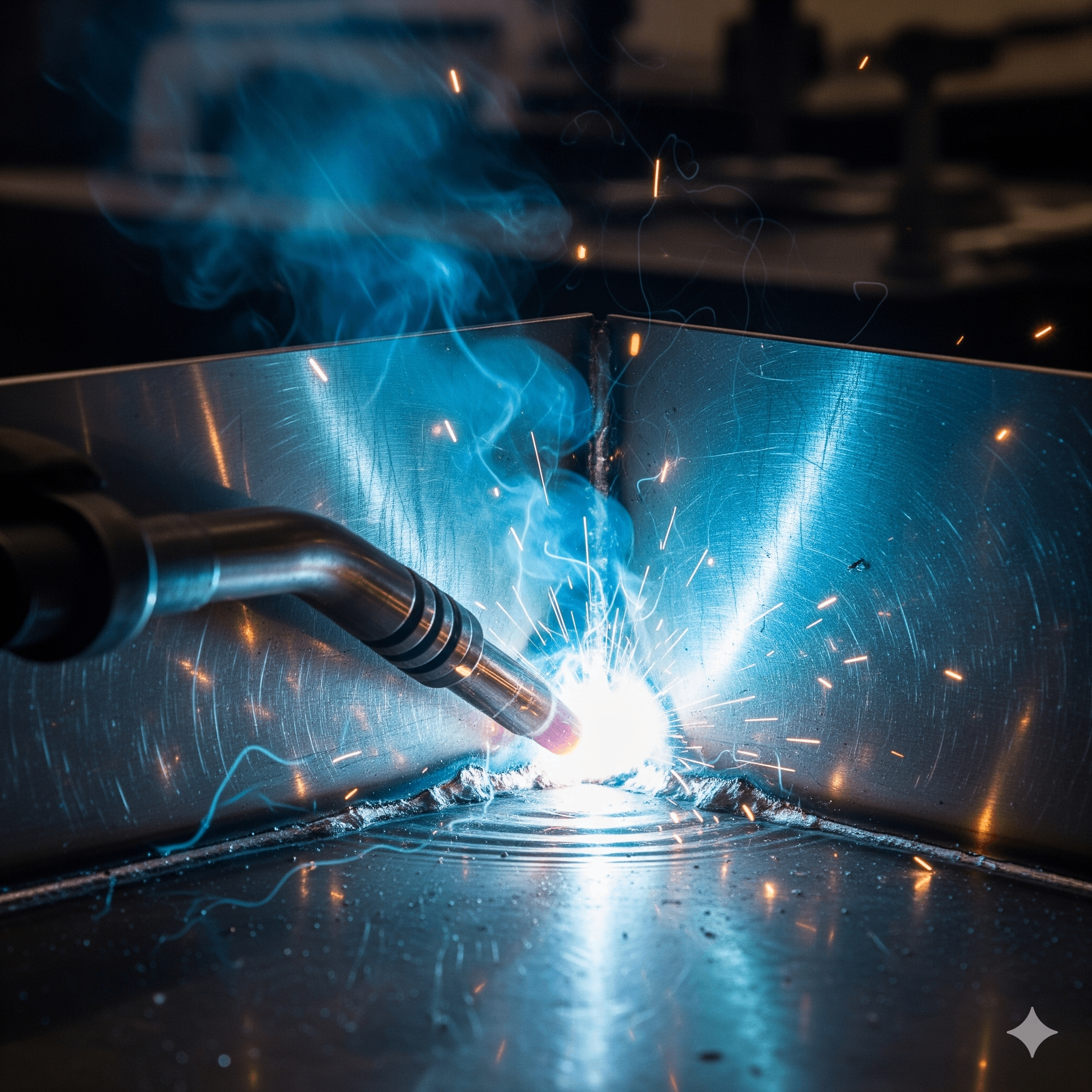
A corner joint in welding is defined as a joint between two members located at approximately right angles to each other in the form of an L. It is distinct from a Tee Joint (T-shape), where the edge of one part rests on the face of another.
- Corner Joint (L-shape): Used for the outer edges of boxes, frames, and enclosures.
- Tee Joint (T-shape): Used for internal reinforcements and brackets.
While the concept is simple, the design of welded joints for corners allows for several variations depending on the edge preparation. In sheet metal, this typically involves Square-groove (for flush fits) or V-groove (for open corners) configurations.
II. The Engineering Reality: Definition Meets Mass Production
When a CAD model is converted into a physical product, theoretical perfection meets manufacturing reality. For wholesale buyers, understanding the nuance behind the corner joint welding definition within a factory context is the first step in risk management.
The “Tolerance Stack-up” Problem
For a skilled joint welder in a prototype shop, bridging a 1mm gap is routine. But for mass production, it is a liability.
- Scenario: Laser cutting has a tolerance of ±0.2mm. Bending has ±0.3mm.
- Result: A standard corner joint can easily vary by 0.5mm to 1.0mm across a batch.
If your design does not account for this via proper joint designs, you cannot use cost-effective robotic welding. You are forced to pay for manual labor to “fix” every corner. Experienced buyers focus on the geometry before the RFQ is even sent.
Critical Procurement Variables
To get an accurate quote, verify these three points:
- Material Thickness: Thin gauges (<1.5mm) limit heat input. High-amperage structural welds on thin metal cause warping.
- Tool Access: Can a grinder reach the inside corner? If not, do not specify “Grind Smooth” for internal welds.
- Cosmetic Zones: Clearly define which surfaces are visible (Class A) versus hidden (Class B).
III. Strategic Selection: Matching Joint Type to Volume
Choosing the right configuration is a trade-off between Structural Strength and Cycle Time. Below is a comparison of the three primary sheet metal strategies.
1. The Flush Corner Joint (Closed Corner)
- Technical Weld Type: Square-groove weld or Fillet weld (outside).
- Structure: One sheet overlaps the other’s edge to create a flush surface.
- Procurement Advantage: High Speed. It is forgiving of minor cutting errors. The overlap hides gaps, allowing for faster laser cutting and easier assembly.
- Cost Implication: Lowest. Minimal filler metal; fast to finish.
- Best For: Electrical enclosures (IP rated), server racks, and high-volume electronics where aesthetics and cost outweigh heavy structural needs.
2. The Full-Open Corner Joint
- Technical Weld Type: Single V-groove weld or Bevel-groove weld.
- Structure: Sheets meet corner-to-corner, creating a natural V-shape.
- Procurement Advantage: Maximum Strength. Allows 100% root penetration, fusing the full material thickness.
- Risk: High risk of burn-through on thin gauges if the gap is too wide. Requires high-precision bending.
- Cost Implication: Moderate to High. Slower welding; higher distortion risk.
- Best For: Industrial machinery frames, heavy-duty display racks, and dynamic load-bearing structures.
3. The Half-Open Corner Joint (The “Shoulder”)
- Technical Weld Type: Fillet weld combined with Groove weld.
- Structure: One sheet projects slightly to form a shelf/shoulder.
- Procurement Advantage: Scalability. The shoulder guides the welding gun, significantly reducing defect rates. It ensures consistency across large batches.
- Cost Implication: Moderate. Balances strength with ease of assembly.
- Best For: Large weldments, automotive brackets, and parts using Galvanized Steel (allows zinc outgassing).
Quick Comparison Matrix for Buyers
| Joint Type | Structural Strength | Fit-up Tolerance | Finishing Cost | Best Application |
|---|---|---|---|---|
| Flush (Closed) | Medium | High (Forgiving) | Low | Electronics / Cabinets |
| Full-Open | High | Low (Strict) | High | Heavy Frames / Tanks |
| Half-Open | High | Medium | Medium | Automotive / Brackets |
IV. Material Science: Preventing “Hidden” Liabilities
In B2B wholesale, a “defect” isn’t just a bad weld—it’s a liability sitting in your warehouse.
Stainless Steel: The Corrosion Trap
Stainless steel is prone to “Sugaring” (oxidation) on the back of the weld if not protected.
- The Fix: Explicitly ask: “Do you use back-purging for stainless corner welds?”
- YISHANG Standard: We mandate back-purging for food-grade and medical enclosures.
Aluminum: The Consistency Challenge
Aluminum dissipates heat rapidly, leading to “Cold Lap” (lack of fusion).
- The Fix: Specify Pulse MIG or AC TIG in your quality agreement to ensure consistent fusion.
Galvanized Steel: The Porosity Issue
Zinc coating vaporizes during welding, causing gas explosions that leave holes (porosity).
- The Fix: Design a “Relief Gap” or use a Half-Open joint to let gas escape.
V. Scalability: TIG vs. MIG vs. Laser
As your order volume grows, the process must evolve. A manual joint welder cannot keep up with automotive volumes.
1. TIG Welding (The Artisan)
- Pros: Premium “dime stack” look; seamless finish.
- Cons: Slow; dependent on skilled labor.
- Verdict: Use for Class A visible surfaces on medical/cosmetic products (1-500 units).
2. MIG Welding (The Workhorse)
- Pros: Fast; strong; cost-effective.
- Cons: Visible bead; spatter requires cleanup.
- Verdict: Use for internal structural frames and volumes of 500-5,000 units.
3. Robotic Laser Welding (The Future)
- Pros: Surgical precision; low heat/distortion; extreme speed.
- Cons: High upfront fixture tooling cost.
- Verdict: The only viable choice for recurring OEM orders of 5,000+ units.
VI. Design for Logistics (DfL): The Sharp Corner Risk
Here is a specific pain point for importers: Corner joints create Sharp Edges. A 90° corner is essentially a knife.
During 30 days of ocean transit vibration, these corners can saw through cardboard dunnage. The result? Parts rub together, scratching the powder coat. Moisture enters breached packaging, causing “White Rust.”
Our Recommended DfL Protocols:
- Corner Blunting: Add a micro-radius (R0.5mm) to the corner tip in the laser program.
- Hard Protection: Use custom-molded high-density foam or plastic corner guards.
VII. Cost Control: The “Grind Flush” Trap
The phrase “Grind all welds flush and smooth” is a major cause of cost creep. It transforms a welding job into a complex finishing job.
The Cost Multiplier:
- Standard Weld: Weld -> Inspect -> Paint. (Factor: 1.0)
- Ground Flush: Weld -> Coarse Grind -> Fine Sand -> Blend -> Inspect -> Paint. (Factor: 2.5)
The Zone-Based Strategy: To optimize costs, use a zone-based specification on your prints:
- Zone A (Visible): “Grind flush and polish.” (Spend money here).
- Zone B (Service Interior): “Knock down spikes only. Bead acceptable.”
- Zone C (Hidden): “As welded.”
VIII. Quality Assurance: Defining Success Remotely
“Good quality” is subjective. “ISO 5817 Level C” is legally binding.
B2B Acceptance Criteria
Instead of vague emails, reference international standards in your purchase order:
- “Structural welds shall conform to ISO 5817 Level C.”
- “Cosmetic surfaces shall conform to ISO 5817 Level B.”
The Validation Process
For remote buyers, we recommend a three-step validation:
- First Article Inspection (FAI): Request a Macro-etch photo of the cut corner.
- Go/No-Go Gauging: Ensure the welding heat hasn’t pulled the frame out of square.
- Dye Penetrant Test: Use random sampling (AQL 2.5) for water-tight corners.
Conclusion: Engineering Your Supply Chain
Mastering the design of welded joints is about more than fusion; it is about the fusion of business goals. It requires balancing design intent with manufacturing scalability and logistical safety.
At YISHANG, we position ourselves as your overseas manufacturing partner, not just a job shop. We review your corner joint configurations during the DfM phase to propose changes that reduce warping, optimize cycle times, and prevent shipping damage.
Is your current design optimized for mass production? Contact our engineering team today for a complimentary DfM review of your enclosure specifications.