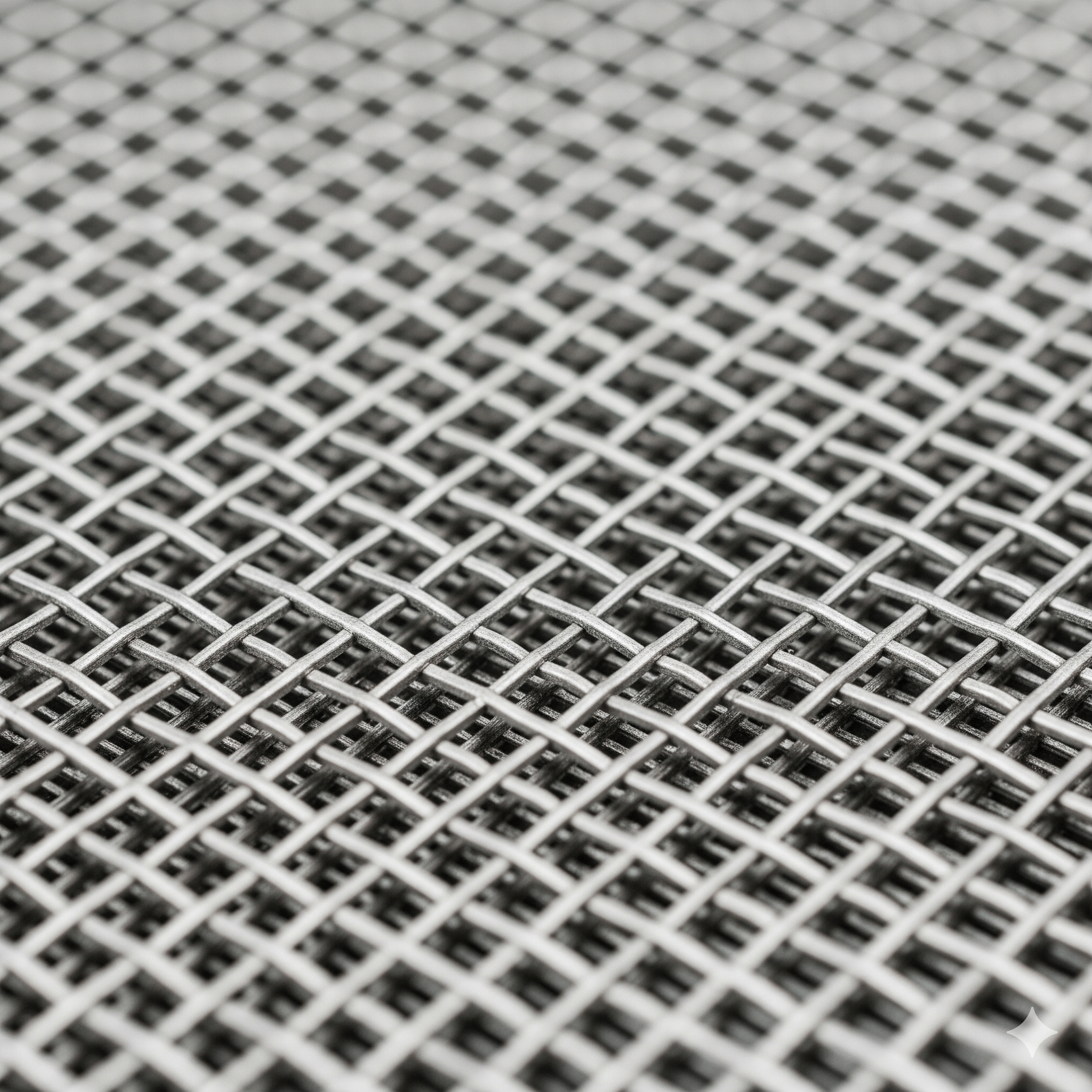
Industrial metal wire meshes are foundational components that dictate the operational reliability of modern automated systems and protective housings. When overseas procurement directors evaluate these materials for massive infrastructure, they are not merely purchasing hardware. They are investing in the long-term structural integrity and functional safety of their final product assemblies.
Treating custom metal components as off-the-shelf commodities often leads to hidden costs, such as integration failures on the assembly line or severe deformations during transoceanic shipping. Mass-producing these components requires strict adherence to international dimensional tolerances, certified material traceability, and scalable fabrication methods to keep unit costs manageable.
This guide provides an authoritative, data-driven breakdown of bulk wire mesh procurement for the global B2B market. We will examine the exact mathematical parameters that influence wholesale costs, evaluate metallurgical properties for extreme environments, and dissect the complexities of high-volume custom fabrication.
Our objective is to equip global supply chain managers and engineers with actionable insights to eliminate quality control risks. At YISHANG, we believe that transparency in manufacturing processes helps our partners streamline their procurement cycles. Whether you are engineering solar battery enclosures or heavy-duty machinery, understanding these core principles ensures a resilient supply chain.
Decoding Technical Specifications and Bulk Cost Drivers
Every successful procurement cycle begins with a precise evaluation of fundamental technical specifications according to international standards. In global wholesale sourcing, the performance of any metallic mesh relies entirely on exact mathematical dimensions rather than commercial names. These parameters govern fluid dynamics and the feasibility of using wire meshes in specific high-stress industrial environments.
The Financial Impact of Mesh Count (ASTM E2016)
The foundational metric in this industry is the mesh count, often governed by standards such as ASTM E2016. In engineering terminology, this refers to the exact number of openings per linear inch, measured systematically from the center of one wire to the next parallel wire.
While it serves as the primary determinant of macro-filtration precision, it is also a major cost driver for bulk orders. Specifying the exact mesh count dictates the final material weight and freight feasibility for international shipments. A minor deviation of even one wire per inch across thousands of square meters drastically alters the total tonnage of a bulk order.
This mathematical shift immediately impacts both the raw material wholesale pricing and the volumetric weight calculations for ocean freight logistics. For large-scale projects, procurement teams must ensure the manufacturer utilizes automated counting equipment to maintain batch-to-batch consistency and avoid costly installation delays.
Wire Diameter and Aperture Size Calculations
The wire diameter acts as the definitive factor governing the tensile strength and mechanical impact resistance of the final component. When engineers finalize a specific mesh count, the chosen wire diameter directly dictates the resulting aperture size. This aperture is the actual, measurable clear space between intersecting wires.
Selecting a thicker wire diameter while maintaining a constant mesh count inevitably decreases the physical aperture size. This inverse relationship simultaneously increases the raw material cost and the overall structural rigidity of the mesh fabric. Calculating this precise aperture size helps prevent premature fatigue failure when the mesh is subjected to continuous abrasive wear or heavy mechanical loads.
Open Area Percentage and Thermal Dynamics
For fluid dynamics and thermal management, the open area percentage is an indispensable design parameter for engineering teams. This metric represents the proportion of the mesh surface that consists of completely unobstructed empty space. A higher open area percentage facilitates a minimal pressure drop, which is critical for preventing heat accumulation.
This is particularly vital in a sealed climate controlled enclosure or an electrical meter box where internal components generate significant heat. However, maximizing the open area inherently reduces the volume of solid metal present per square inch. This can severely compromise the load-bearing capacity and burst strength of the fabricated component during operational stress.
Micron Ratings for High-Precision OEM Demands
When industrial applications require microscopic filtration, standard mesh counts become obsolete. Engineers then rely exclusively on the micron rating, defining the absolute maximum particle diameter that can pass through the apertures. Precision is non-negotiable for medical or pharmaceutical grade wire mesh applications.
Ensuring your manufacturing partner utilizes advanced optical comparator equipment to verify these micron ratings across massive batches is a crucial quality assurance step. Wholesale buyers should always request material inspection certification electrical documents to confirm that the filtration performance aligns with the original engineering specifications.
Manufacturing Types: Evaluating Woven vs. Welded Architectures
Once the theoretical parameters are established, the focus shifts to how metal wire meshes are industrially made for high-volume orders. The specific manufacturing method defines the fundamental structural rigidity, pliability, and long-term longevity of the product. Choosing the correct structural type directly impacts the feasibility of high-volume secondary fabrication.
The Versatility of Woven Wire Fabrics
Woven wire fabrics are manufactured on highly calibrated industrial looms that interlace wires over and under one another without extreme heat. This resulting structure possesses a unique degree of flexibility and dimensional adaptability. This characteristic makes woven meshes the premier choice for OEM manufacturing processes involving deep drawing or complex progressive stamping operations.
Within the woven category, different intersection patterns serve specific requirements:
- Plain Weave: Wires alternate over one and under one adjacent wire. It is the most cost-effective solution for standard sieving.
- Twill Weave: Each wire passes over two and under two adjacent wires, allowing for heavier wire diameters that distribute mechanical stress evenly.
- Dutch Weave: Utilized for high-pressure liquid filtration, creating a tortuous path for fluids that offers unparalleled resistance to particle blinding.
- Reverse Dutch Weave: Featuring a high density of warp wires and thinner weft wires, this weave provides exceptional high-pressure resistance for polymer and chemical filtration.
Heavy-Duty Crimped and Industrial Hardwire Mesh
For applications requiring substantial wire diameters where standard looming is impossible, the pre-crimped wire mesh process is employed. Individual wires pass through gear-like machines that impart permanent corrugations before assembly. When woven together, these pre-crimped wires lock into each other’s grooves with immense friction.
This method provides incredible stability for industrial hardwire mesh and hex netting mesh applications. It is commonly used in mining and construction where the mesh must maintain its shape under massive impact forces. Procurement managers should evaluate these options for any project requiring extreme structural durability and high light transmittance.
The Absolute Rigidity of Welded Wire Meshes
When an application demands unyielding, permanent structural rigidity across large spans, galvanized and welded meshes are superior. In this automated process, intersecting longitudinal and transverse wires are fused together at every junction using electrical resistance welding. This localized application of heat creates a permanent metallic bond.
The primary advantage of a welded mesh is its absolute dimensional stability and resistance to shear forces. Unlike woven fabrics, welded intersections remain rigidly fixed under continuous heavy vibration. For wholesale buyers, specifying welded mesh reduces defect rates during high-speed robotic framing, as the material does not fray when subjected to automated CNC cutting.
Material Selection: Metallurgy for Extreme Environments
The most impeccably specified wire mesh will inevitably suffer premature failure if the underlying base material is poorly suited to its environment. Material selection is a critical discipline that matches alloys to chemical, thermal, and physical extremes. Understanding these metallurgical differences directly influences the ROI for bulk sourcing contracts.
Stainless Steel: The 304 vs. 316 Procurement Debate
Stainless steel remains a dominant force in the industrial mesh sector due to its inherent, self-repairing passive chromium oxide layer. This layer provides exceptional corrosion resistance without requiring secondary surface coatings. However, distinguishing between the standard 304 grade and the specialized 316 grade is critical for cost management.
Type 304 stainless steel is the universal workhorse alloy, offering excellent baseline resistance to atmospheric oxidation. It represents a highly cost-effective choice for standard industrial and domestic applications. Conversely, Type 316 incorporates molybdenum, which drastically enhances its resistance to localized pitting in severe marine or chemical environments.
Specialty Alloys and Performance Metals
When physical properties beyond mere tensile strength are demanded, specialty alloys are deployed to solve specific engineering problems.
- Aluminum Alloy: Utilized when extreme weight reduction is the priority, such as in aerospace or lightweight electronics enclosures.
- Copper and Brass: Unparalleled in electrical conductivity, making them the superior choice for custom electromagnetic interference (EMI) shielding.
- Inconel and Monel: Specified for extreme heat resistance or high-acid chemical processing where standard stainless steel would succumb to stress corrosion.
Cost-Efficiency in Bulk: Carbon and Galvanized Steel
For massive-scale structural projects where extreme chemical exposure is not a primary concern, specifying stainless steel can be prohibitively expensive. In these scenarios, carbon steel enclosures provide extraordinary tensile strength and formability at a highly economical bulk price point.
Because bare carbon steel is susceptible to rapid oxidation, it necessitates robust surface treatments. This introduces the immense engineering value of galvanized steel enclosures. By coating the carbon steel core with a sacrificial layer of zinc, the mesh gains a robust defense against environmental degradation, ensuring decades-long outdoor longevity for infrastructure.
| Base Material | Primary Engineering Advantage | Ideal Bulk Sourcing Applications | Compliance |
|---|---|---|---|
| Low Carbon Steel | High tensile strength, extremely formable | Indoor machinery guards, structural framing | RoHS |
| Galvanized Steel | Excellent outdoor rust resistance | Fencing, heavy-duty architectural screens | RoHS, ASTM |
| 304 Stainless Steel | Superior general corrosion resistance | Food processing, washdown electrical enclosures | RoHS, REACH |
| 316 Stainless Steel | Maximum resistance to chlorides/salts | Marine equipment, medical sterilization baskets | RoHS, REACH |
| Aluminum Alloy | Exceptional strength-to-weight ratio | Aerospace components, lightweight electronics | RoHS, REACH |
Custom Fabrication: Shaping Mesh for Precise Assembly
A fundamental reality of international industrial procurement is that raw rolls of wire mesh are rarely deployable directly into a final assembly line. The true test of a manufacturing partner lies in their advanced custom fabrication capabilities. The wire mesh is cut and shaped to the desired size using sophisticated CNC machinery.
Precision Cutting and Edge Stability
Sizing the material to exact dimensional tolerances across thousands of units is the first major fabrication challenge. Traditional mechanical shearing often results in severe edge deformation and frayed wire ends. To achieve the exacting tolerances demanded by modern automated assembly, high-wattage sheet metal laser cutting processes are predominantly utilized.
This non-contact thermal cutting process imparts absolutely zero mechanical stress to the surrounding delicate mesh structure. It ensures that the critical open area percentage remains perfectly consistent right up to the edge of the cut profile. This process effectively guarantees that every single piece fits flawlessly into machined metal housings, eliminating costly manual rework.
Complex Forming and Deep Drawing
Transforming flat mesh profiles into complex three-dimensional geometries requires immense technical expertise and specialized tooling. Wire mesh bending and deep drawing are complex due to the unpredictable spring-back effect of tensioned woven wires. Utilizing calibrated CNC press brakes equipped with custom, non-marring polyurethane tooling prevents the metallic threads from snapping.
Robotic Welding and Structural Framing
A piece of cut wire mesh often lacks essential edge stability and requires robust metal framing before final assembly. In a high-volume manufacturing environment, this integration relies heavily on automated robotic welding cells. Utilizing precision CNC spot welding ensures that the delicate mesh wires are securely fused to thicker sheet metal frames.
This rigorous integration process safely encapsulates all hazardous sharp edges and significantly amplifies the overall structural rigidity of the component. Partnering with a comprehensive source factory that handles this entire fabrication process internally—much like the integrated systems we utilize at YISHANG—eliminates the need for third-party subcontractors, drastically reducing lead times and consolidating quality control.
Cross-Industry Applications and Procurement Scenarios
Understanding how wire meshes integrate into specific products helps buyers evaluate a supplier’s engineering competence. Custom industrial mesh applications are as diverse as the global manufacturing sector itself.
Renewable Energy and Enclosure Ventilation
In the rapidly expanding renewable energy sector, optimal thermal management and physical security are critical. For solar battery enclosures, custom-fabricated wire mesh panels must provide an optimal open area percentage. This ensures maximum cooling airflow while preventing the intrusion of dust and vermin into sensitive internal battery cells.
Telecommunications and Public Infrastructure
The telecommunications and public infrastructure sectors also rely heavily on these integrated mesh solutions. Ventilation panels for outdoor telecom enclosures or street light junction box enclosures must withstand years of harsh weather. Utilizing properly treated galvanized or 316 stainless steel meshes ensures these critical infrastructure nodes remain operational globally without frequent maintenance.
Industrial Automation and NEMA Ratings
Protecting sensitive internal components is a primary concern within industrial automation. Whether you are outfitting an electrical meter box, a specialized NEMA 4X enclosure, or a heavy-duty control cabinet enclosure, the integrated mesh must meet strict ingress protection standards. The mesh must be flawlessly welded to the frame to prevent any structural gaps that could compromise the IP rating.
Similarly, an EV charger enclosure outdoor unit requires robust mesh integration to protect charging components while allowing operational heat to dissipate. The right wire mesh for your specific application will always depend on these unique operating conditions, carefully balancing the need for massive airflow with the necessity of absolute physical security and EMI shielding.
Maintenance, Care, and Sustainability of Metal Wire
Understanding the operational lifecycle of the product adds significant value to your procurement strategy. Proper maintenance and care of metal wire meshes are essential to ensure long-term performance, especially in demanding industrial environments where equipment downtime is incredibly costly for the end-user.
Preventative Maintenance and Cleaning
Establishing a routine for regular cleaning is the first line of defense against material degradation. In harsh industrial settings, airborne particulates and corrosive vapors can quickly accumulate on the mesh surface. If left unaddressed, these contaminants can compromise the passive oxide layer of stainless steel and accelerate structural wear on galvanized coatings.
Avoiding Rust and Chemical Corrosion
Avoiding rust is a primary concern for any facility manager overseeing massive infrastructure deployments. While materials like 316 stainless steel offer excellent baseline resistance, they are not immune to harsh chlorides if completely neglected. Implementing professional maintenance schedules that include inspecting the mesh for localized pitting helps prevent catastrophic field failures.
Sustainability and the Circular Economy
The sustainability of metal wire is an increasingly dominant factor in modern corporate procurement mandates. Metal wire meshes are inherently eco-friendly components, as base materials like steel, aluminum, and copper are infinitely recyclable without losing their core physical properties. Prioritizing these considerations empowers procurement teams to significantly extend the operational lifespan of their investments.
When dealing with massive bulk inventory shipments, proper storage of your metal wire meshes before final installation is vital. Procurement directors should mandate that raw materials and finished mesh components are stored in climate-controlled environments. Keeping them elevated off the concrete floor prevents potential galvanic corrosion before the items are even deployed.
Quality Control, Certifications, and Global Logistics
Ensuring engineering perfection is safely and precisely replicated across massive international orders requires an uncompromising obsession with quality assurance. Rigorous QA protocols serve as the ultimate risk mitigation strategy for overseas buyers dealing with high-volume OEM manufacturing.
Raw Material Traceability and MTRs
Trust in global procurement begins with strict raw material validation. Reputable manufacturers supply comprehensive Mill Test Reports (MTRs) for every single batch of alloy utilized. This absolute traceability ensures that buyers are receiving the precise chemical composition they paid for, preventing failures caused by substandard or counterfeit base metals.
First Article Inspection (FAI) and SPC
Before commencing mass production of any custom OEM component, elite manufacturers execute a rigorous First Article Inspection (FAI). Once the initial prototype is mathematically approved, factories employ statistical quality control process methods during the entire mass production run. This ensures that tool wear or machine drift does not compromise dimensional tolerances.
Navigating International Certifications
Navigating international certifications is another critical aspect of secure global sourcing. Partnering with a supplier holding an ISO9001 certificate guarantees that the factory operates under a rigorously audited quality management system. Wholesale buyers should also verify compliance with REACH and RoHS standards to ensure their brand remains protected against regulatory fines and product recalls.
Advanced Packaging for Transoceanic Transit
The final hurdle is logistics and ensuring safe transoceanic transit. A perfectly manufactured batch is worthless if it arrives crushed or severely warped. Experienced export manufacturers employ advanced packaging engineering, utilizing custom-built fumigated pallets and dense foam separation layers to prevent abrasive scratching during heavy container stacking.
Furthermore, premium suppliers seal massive bulk orders in heavy-duty VCI (Volatile Corrosion Inhibitor) protective bagging along with industrial desiccants to combat extreme humidity during shipping. This proactive logistics approach guarantees that your fabricated components arrive in pristine, install-ready condition, supporting your global just-in-time (JIT) manufacturing schedules.
Sourcing Checklist for Procurement Managers
To streamline the communication between your engineering team and the factory, ensure your initial inquiry includes the following critical data points. Providing these parameters upfront drastically reduces the time to quote and ensures technical alignment.
- Material Grade: Specify exactly (e.g., 304 vs 316 Stainless Steel, Carbon Steel, Aluminum).
- Mesh Count or Aperture: Provide the openings per inch or the exact clear space required.
- Wire Diameter: Define the thickness in decimal inches or millimeters.
- Overall Dimensions: Flat panel dimensions or 3D drawings for fabricated parts.
- Construction Type: Woven, Welded, or Crimped.
- Surface Finish: Bare, Hot-Dip Galvanized, Powder Coated, or Passivated.
- Quantity: Total linear feet, square meters, or number of fabricated pieces.
- Compliance Requirements: ISO9001, RoHS, REACH, or specific ASTM standards.
Expert Procurement FAQs for Wire Mesh Sourcing
We address some of the most technical inquiries regarding wholesale wire mesh sourcing to assist supply chain directors and engineering teams.
Q: How do tooling costs work when ordering custom fabricated mesh components in bulk? A: Tooling costs for custom stamping dies or welding jigs are typically a one-time Non-Recurring Engineering (NRE) expense. While they require an initial upfront investment, they allow the factory to fully automate the production line, drastically lowering the individual unit price. For large wholesale orders, this tooling cost is quickly amortized, resulting in massive long-term financial savings.
Q: What is the most reliable way to verify the exact mesh count upon receiving a bulk shipment? A: For standard meshes, a specialized “mesh counter” magnifying glass is utilized over a calibrated space. However, for ultra-fine meshes with high micron ratings, procurement teams should request an inspection report resource catalog from the manufacturer, which includes data generated by automated optical comparators and laser scanning equipment.
Q: Can you perform structural welding on extremely fine woven wire mesh without damaging it? A: Yes, but it requires highly specialized automated techniques. Standard manual arc welding will incinerate fine woven wires. Elite factories utilize low-amperage robotic TIG welding or precision CNC resistance spot welding to safely fuse fine woven meshes to heavy structural frames without degrading the delicate wire structure.
Q: How do you prevent bulky wire mesh components from inflating ocean freight costs? A: Wire mesh often has a high volume-to-weight ratio. To mitigate shipping costs, expert packaging engineers utilize “nested packing” strategies for formed components like deep-drawn baskets. For flat panels, we design extremely dense, palletized stacking configurations that maximize container space utilization while preventing structural crushing during transit.
Send Your Inquiry Today
Securing a resilient supply chain for custom metal wire meshes requires a manufacturing partner who truly understands the exacting demands of bulk OEM production. By collaborating with a source factory capable of managing everything from rigorous DFM analysis to complex transoceanic logistics, you can permanently reduce your overall unit costs while maintaining exceptional quality standards. If you are ready to optimize your procurement strategy, send your inquiry today, and let YISHANG provide the expert engineering solutions your next project demands.