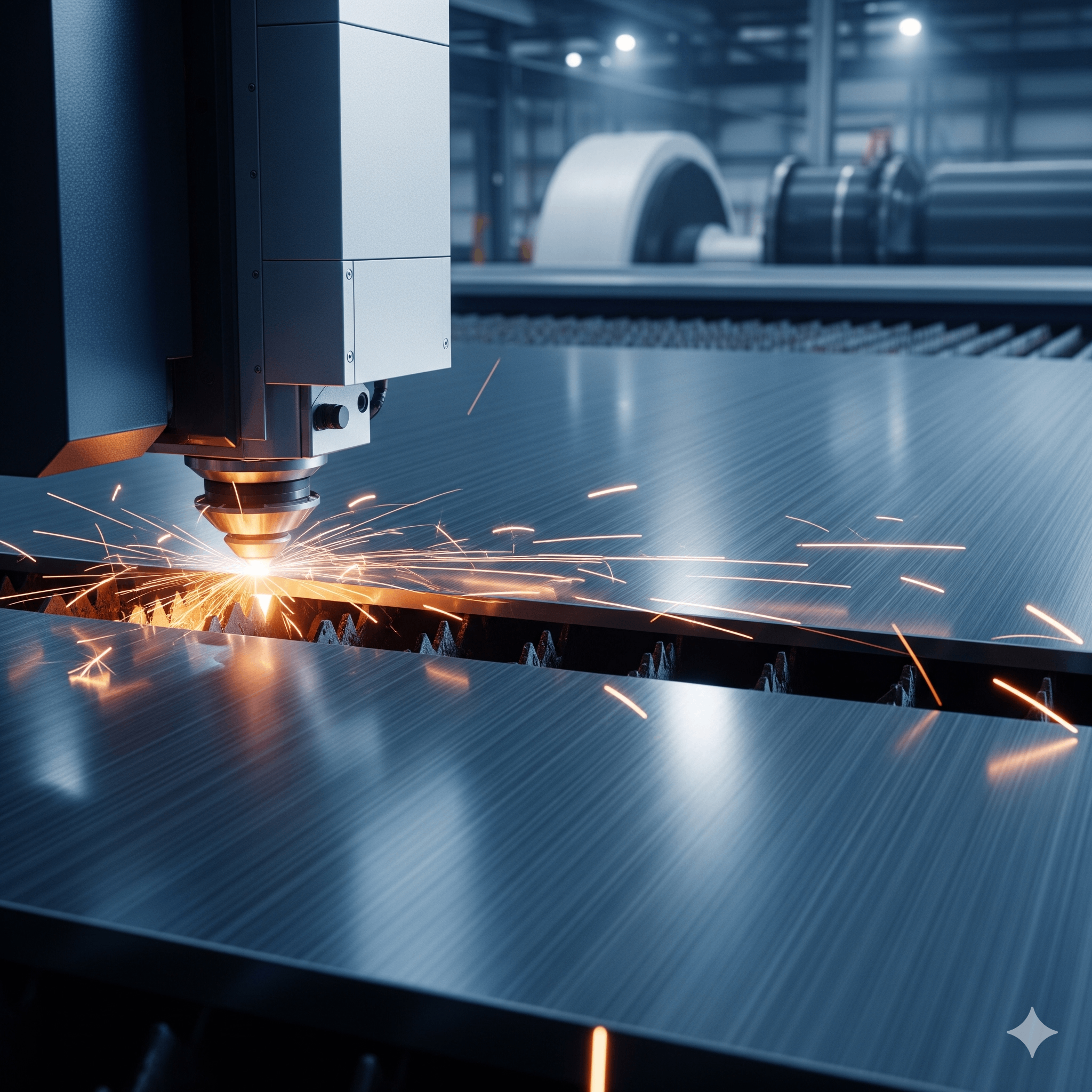
What are Metal Processing Services? In industrial manufacturing, custom metal processing services refer to the strategic sequence of cutting, forming, joining, and finishing raw metals into precise industrial components. For B2B buyers, these services provide a bridge between engineering design and mass production, ensuring high-volume consistency, structural integrity, and global regulatory compliance.
Securing reliable metal processing services is a fundamental risk management strategy for global supply chain directors. When sourcing wholesale metal components across borders, minor manufacturing discrepancies do not just ruin a single batch; they disrupt automated assembly lines and inflate total landing costs.
Wholesale buyers face distinct procurement challenges. You require highly engineered, strictly toleranced, and environmentally compliant components delivered with absolute consistency. Evaluating a manufacturing partner demands looking beyond their equipment list to understand their engineering methodology and supply chain resilience.
Key Procurement Insights You Will Gain from This Guide:
- How proactive Design for Manufacturability (DFM) drastically reduces bulk production costs.
- The engineering mechanisms behind consistent precision cutting, stamping, and CNC machining.
- Strategies to mitigate “tolerance stack-up” and assembly failures in large-scale wholesale orders.
- Navigating global compliance (RoHS, REACH) through advanced metal finishing.
- Essential packaging and logistics considerations for protecting overseas metal shipments.
YISHANG Core Metal Processing Capabilities Matrix
To help procurement engineers quickly evaluate our technical fit, the following table summarizes the primary technical thresholds for our metal processing capabilities:
| Process Type | Materials Handled | Thickness Range | Precision/Tolerance |
|---|---|---|---|
| Fiber Laser Cutting | Stainless Steel, Aluminum, Carbon Steel, Copper | 0.5mm – 25mm | +/- 0.05mm |
| CNC Bending | All Formable Alloys | Up to 12,000mm length | +/- 0.2° |
| Deep Drawing | Low Carbon Steel, Aluminum, Stainless Steel | 0.5mm – 6.0mm | High Repeatability |
| CNC Machining | Aluminum, Brass, Stainless Steel, Steel | N/A | +/- 0.01mm |
| Welding | Robotic TIG/MIG, Spot Welding | 0.5mm – 20mm | Structural Integrity |
Phase 0: Design for Manufacturability (DFM) and Cost Reduction
The most critical phase of any wholesale manufacturing project occurs before physical production ever begins. Proactive Design for Manufacturability (DFM) is the exact mechanism where structural integrity is maximized and actual cost savings are secured.
Industry data frequently indicates that up to 70% of a product’s final manufacturing cost is permanently locked in during this initial CAD design phase. Executing a comprehensive DFM review ensures that your blueprints are optimized for high-volume production, eliminating hidden inefficiencies.
How DFM Secures Your Procurement Budget:
- Part Consolidation: Engineers actively look to combine multi-part welded assemblies into a single deep-drawn or precisely bent component. This eliminates labor-intensive welding, reduces inspection times, and drastically lowers your per-unit cost.
- Material Optimization: Adjusting specific geometric features to maximize raw material yield per sheet, directly shielding your budget from steel market volatility.
- Tolerance Rationalization: Identifying and relaxing unnecessarily tight tolerances on non-critical dimensions, which speeds up production rates and reduces scrap generation.
Furthermore, integrating this DFM process with rapid prototyping creates a highly effective validation loop. By executing a small-batch run, teams can verify exact form, fit, and functional tolerances under real-world conditions. This ensures your transition into full-scale contract metal manufacturing is seamless, preventing costly tooling modifications down the line.
Phase 1: Precision Metal Cutting and Material Yield Optimization
The physical manufacturing lifecycle initiates with precision metal cutting. For procurement teams managing large-volume orders, this phase is intimately tied to raw material expenditures and long-term budget predictability. The objective is to maximize material yield while negating secondary, labor-intensive machining operations.
The precision achieved during these initial cutting phases establishes the strict baseline for all subsequent automated assembly. Advanced metal processing capabilities now handle complex geometries at extraordinary speeds, easily surpassing the tolerance limits of traditional fabrication methods.
Fiber Laser Cutting and Thermal Distortion Management
Multi-kilowatt fiber laser technology operates as the backbone of modern wholesale sheet metal fabrication facilities. These advanced systems offer immense optical cutting power, effortlessly processing highly reflective materials such as aluminum alloys and austenitic stainless steels.
However, the true procurement value lies in how a supplier manages the thermal dynamics of the laser. Uncontrolled laser heat generates a severe Heat-Affected Zone (HAZ) along the cut edge. This localized metallurgical hardening makes subsequent CNC bending highly unpredictable.
YISHANG engineers meticulously regulate cutting speeds, focal lengths, and assist gases (like high-pressure nitrogen) to prevent this thermal alteration entirely. Additionally, we deploy AI-driven nesting software to optimize part geometries across standard sheet metal formats, often yielding up to 15% in direct raw material savings.
Heavy-Duty Stamping for High-Volume Consistency
For buyers continuously sourcing millions of identical hardware components or structural brackets, bulk metal stamping parts offer unparalleled economic advantages. Stamping operations utilize massive mechanical presses (often ranging from 45 to 800+ tons) to instantly shape material in a fraction of a second.
While engineering progressive die tooling requires a calculated initial capital investment, amortizing this tooling cost across a massive production run yields exceptional procurement value. However, the critical metric for successful stamping is die maintenance.
Worn tooling predictably creates burrs and severe edge rollover, which will inevitably jam your automated integration lines. To guarantee defect-free rates, premier metal processing services utilize in-die acoustic sensors and rigorous lifecycle maintenance schedules to proactively detect tool wear long before out-of-tolerance parts are manufactured.
CNC Machining for Micron-Level Tolerances
Specific industrial applications demand dimensional accuracy that traditional sheet metal processing simply cannot guarantee alone. In these scenarios, seamlessly integrating precision CNC machining services into the broader fabrication workflow is highly recommended.
Multi-axis CNC milling and turning centers remove material to achieve micron-level precision (often +/- 0.01mm) for critical mating surfaces. This integrated capability is exceptionally beneficial for procurement managers looking to consolidate their vendor lists and reduce logistical overhead.
By executing both distinct processes under one roof, YISHANG eliminates the severe logistical bottlenecks of transporting parts between fragmented subcontractors. This unified approach reduces your inbound freight costs, eliminates cross-vendor tolerance discrepancies, and provides a single, reliable point of accountability.
Phase 2: Metal Forming and Shaping Technologies
Transitioning flat sheet metal into rigid three-dimensional structures brings us to the forming phase. This step relies on complex plastic deformation, requiring a deep, practical understanding of metallurgy. Managing subtle physical variations across material lots is crucial for maintaining strict consistency.
If a manufacturing partner misjudges the tensile strength or the elongation percentage of a specific alloy batch, the material will either fracture or fail to hold its precise shape. Inconsistent forming translates to components that refuse to align correctly during your final assembly phase.
Press Brake Bending and Springback Compensation
CNC press brake bending is the fundamental operation for creating everything from robust structural brackets to intricate telecom server chassis. The primary challenge in high-volume production is managing a physical metallurgical phenomenon known as “springback.”
After the heavy bending force is released, the metal naturally attempts to revert slightly to its original flat state. If springback is not accurately calculated and compensated for, the final bend angle will be fractionally out of tolerance. Across an order of ten thousand units, this minor variation compounds exponentially.
YISHANG engineers utilize predictive software to calculate precise bend deductions and K-factors long before physical production commences. We also deploy laser-assisted angle measurement systems directly on our press brakes. This technology automatically compensates for material thickness variations in real-time, ensuring unit-to-unit consistency.
Deep Drawing for Seamless Industrial Enclosures
Products such as specialized medical device housings, automotive fluid reservoirs, or heavy-duty motor covers often require complex, seamless structures. Deep drawing is the precise manufacturing solution for these demanding applications.
The physics involved in deep drawing are aggressive; the metal can easily wrinkle, buckle, or tear if the applied blank holder force is miscalculated. Experienced press operators meticulously control the material flow dynamics, utilizing specific lubricants to ensure a uniform surface finish free of structural defects.
The aggressive nature of the deep drawing process actually increases the tensile strength of the finished enclosure through strain hardening. For procurement buyers, this means receiving a highly durable, impact-resistant component that significantly enhances the operational lifespan of your final assembled product.
Phase 3: Metal Joining and Structural Assembly
With individual components precisely cut and accurately formed, the focus shifts to creating a unified, rigid structure. Industrial metal joining is strictly about ensuring the final assembly can withstand dynamic mechanical loads, severe vibrations, and harsh environments over its intended operational lifecycle.
The assembly phase serves as the critical moment of truth where all preceding manufacturing tolerances either align perfectly or fail. Securing highly reliable joining processes translates directly to reduced field warranty claims and significantly higher end-user satisfaction.
Advanced Welding Techniques and Structural Consistency
Tungsten Inert Gas (TIG) and Metal Inert Gas (MIG) welding represent the dominant methodologies for structural metal joining. TIG welding offers precision heat control for aesthetic, clean beads, while MIG welding is favored for heavy-duty structural frames due to its exceptionally high deposition rates.
The primary engineering obstacle in any continuous welding process is controlling thermal distortion. The intense localized heat causes the metal to expand rapidly and contract upon cooling, which can severely warp the entire assembly out of specified tolerances.
To deliver absolute dimensional consistency on wholesale orders, metal processing capabilities at YISHANG include custom-designed precision welding jigs and automated robotic welding cells. Robotic automation completely eliminates human fatigue and guarantees uniform weld penetration across massive production batches.
Managing Tolerance Stack-up in Assembly
Tolerance stack-up is a critical engineering issue that occurs when minor, acceptable dimensional deviations in individual parts accumulate excessively during final assembly. This specific scenario causes major, expensive disruptions on a buyer’s final assembly line, leading to wasted labor hours.
Elite manufacturing partners actively prevent this by employing strict Geometric Dimensioning and Tolerancing (GD&T) standards exceptionally early in the design phase. By intentionally designing self-locating features—such as tab-and-slot configurations—engineers ensure complex multi-part assemblies fit together flawlessly.
This thoughtful upfront engineering provides true plug-and-play functionality, drastically reducing your internal integration times. It shifts the burden of assembly precision from your labor force to our engineering department, lowering your overall production costs.
Phase 4: Metal Finishing and Global Compliance
A perfectly cut, formed, and welded metal component requires adequate surface protection to survive in industrial settings. Custom metal surface treatment forms the primary barrier against severe oxidation, chemical attack, and daily mechanical abrasion.
For procurement teams, specifying the right finish proactively reduces field failures and safeguards brand reputation. Furthermore, navigating complex international environmental regulations makes surface treatment a critical legal compliance issue for global supply chains.
Corrosion Resistance for Harsh Operating Environments
Robust, highly durable corrosion-resistant finishes are non-negotiable for components deployed in outdoor or chemically aggressive environments. Powder coating and hot-dip galvanizing are the most common solutions.
- Industrial Powder Coating: Firmly established as the industry standard for durable protection. The electrostatically applied dry powder cures into a hardened shield that resists wear, impact, and severe UV degradation.
- Hot-Dip Galvanizing: For heavy infrastructural applications. The molten zinc creates a permanent metallurgical bond with the steel, actively acting as a sacrificial anode to protect the underlying metal from rust.
Quality-focused manufacturing facilities independently validate these coatings through rigorous empirical testing, such as extended ASTM B117 salt spray exposure. This verified data guarantees your products will perform reliably in the field for decades.
Navigating Strict RoHS and REACH Compliance
In today’s highly interconnected global market, mechanical durability must align seamlessly with strict international environmental regulations. For B2B exports targeting the European Union or North American markets, achieving fully compliant metal finishing is a mandatory requirement.
Directives such as RoHS 3 and the REACH framework tightly restrict hazardous substances, particularly legacy anti-corrosion treatments containing hexavalent chromium and lead. Modern facilities have successfully transitioned entirely to eco-friendly trivalent chromium processes and advanced nano-ceramic conversion coatings.
Suppliers equipped for international trade guarantee that all applied surface treatments are fully compliant and comprehensively accompanied by certified material declarations. This proactive compliance management ensures uninterrupted global market access and protects your brand from severe legal liabilities.
Phase 5: Targeted Industries and Application Scenarios
Our metal processing capabilities are tailored to meet the rigorous demands of specific industrial sectors. Understanding these industry-specific requirements is essential for high-volume contract success.
- Energy Storage Systems (ESS): Providing precision metal enclosures and internal brackets with high heat dissipation properties and environmental sealing (IP-rated).
- Self-Service & Vending: Manufacturing secure, anti-vandalism chassis and internal mechanisms for ATMs, kiosks, and vending machines.
- Medical Equipment: Delivering high-precision, non-corrosive components made from medical-grade stainless steel with superior surface finishes.
- Automotive & Hardware: Producing high-strength structural frames and decorative hardware with strict adherence to automotive-grade quality standards.
Phase 6: Overseas Logistics and Packaging Optimization
An often-overlooked phase in metal processing guides is the critical journey from the factory floor to your global destination. For wholesale procurement managers, overseas logistics present significant risks, including moisture damage and physical deformation.
Top-tier contract metal manufacturing partners treat packaging as a highly engineered process. We utilize Volatile Corrosion Inhibitor (VCI) bags and specialized desiccants for ocean freight to chemically protect bare metal surfaces from saltwater humidity.
We also design custom wooden or fumigated pallets that perfectly match the geometric profile of your bulk metal stamping parts. Engineering the packaging dimensions to maximize the cubic volume of standard shipping containers directly reduces your per-unit freight costs, optimizing your overall landing price.
The Intersection of Material Science and Purchasing Decisions
The success of any wholesale metal processing project is tied to the raw materials selected. For buyers, choosing the correct alloy is a strategic balancing act between physical performance, component weight, and unit cost limitations.
- Austenitic Stainless Steels (304/316): The absolute standard for medical devices and food processing. These metals are tough and require specialized carbide tooling to prevent work hardening during mass production.
- Aluminum Alloys (5052/6061): Crucial for lightweighting in the EV and aerospace sectors. Aluminum requires precision AC TIG equipment to manage its high thermal conductivity and oxide layers.
- Carbon and Galvanized Steel: Economical choices for indoor telecom enclosures and vending machine frames, offering excellent strength-to-weight ratios when properly finished.
Quality Assurance, Traceability, and ISO 9001 Execution
The absolute most advanced manufacturing machinery available is entirely ineffective without a formalized, rigorous quality management system backing it up. For global supply chains, trust is built on a manufacturer’s proven ability to deliver consistent production across thousands of units.
For wholesale buyers, exclusively partnering with an ISO 9001-certified facility provides a quantifiable, auditable metric of reliability. Quality assurance begins with absolute supply chain transparency and strict incoming material inspections.
Before wholesale mass production begins, a rigorous First Article Inspection (FAI) validates the initial prototype against the CAD blueprint. Once the wholesale run officially starts, Statistical Process Control (SPC) is implemented on the factory floor to monitor machine drift long before parts actually fall out of tolerance.
Frequently Asked Questions (FAQ) for Procurement Managers
Q: What is the true Total Cost of Ownership (TCO) advantage of single-source metal processing services? A: A single-source supplier—capable of cutting, forming, welding, and finishing under one roof—drastically reduces TCO. It eliminates the margin stacking that occurs when multiple vendors mark up their services and eradicates the freight costs associated with transporting semi-finished goods between subcontractors.
Q: How do you guarantee dimensional consistency across an annual blanket order of 50,000 units? A: Consistency at this scale is achieved through robust progressive tooling, robotic welding cells, and active Statistical Process Control (SPC). Elite factories monitor tool wear through sensors and track production metrics in real-time, stopping machinery for maintenance before a single part falls out of the specified tolerance curve.
Q: Why should our procurement team care about DFM if our engineers already provided the CAD files? A: Your engineers design for functionality; specialized fabrication engineers design for production efficiency. DFM reviews often uncover minor geometric adjustments that do not affect function but can eliminate entire manufacturing steps, yielding massive cost savings over the lifespan of a wholesale order.
Q: What specific documentation should we request to ensure our imported metal components are globally compliant? A: For environmental compliance, you should request certified RoHS 3 and REACH declarations. For material integrity, demand EN 10204 3.1 Material Test Reports (MTRs) to trace the exact chemical composition back to the original steel mill.
Conclusion: Securing Your Global Supply Chain
The advanced technical capabilities of a metal processing facility must directly translate into supply chain security and measurable economic value for your organization. True cost optimization in high-volume B2B sourcing requires evaluating the comprehensive Total Cost of Ownership and proactively mitigating risk.
By partnering with a strategic factory like YISHANG that offers integrated capabilities, robust quality assurance, and a deep understanding of overseas logistics, procurement directors can dramatically reduce their operational friction. This strategic vendor alignment deeply insulates your automated assembly lines from sudden global supply chain shocks.
Reach out to our engineering and export teams today to discuss how we can actively optimize the risk and cost profile of your next bulk order. Let us directly help you streamline your global supply chain with our comprehensive wholesale metal processing capabilities.