
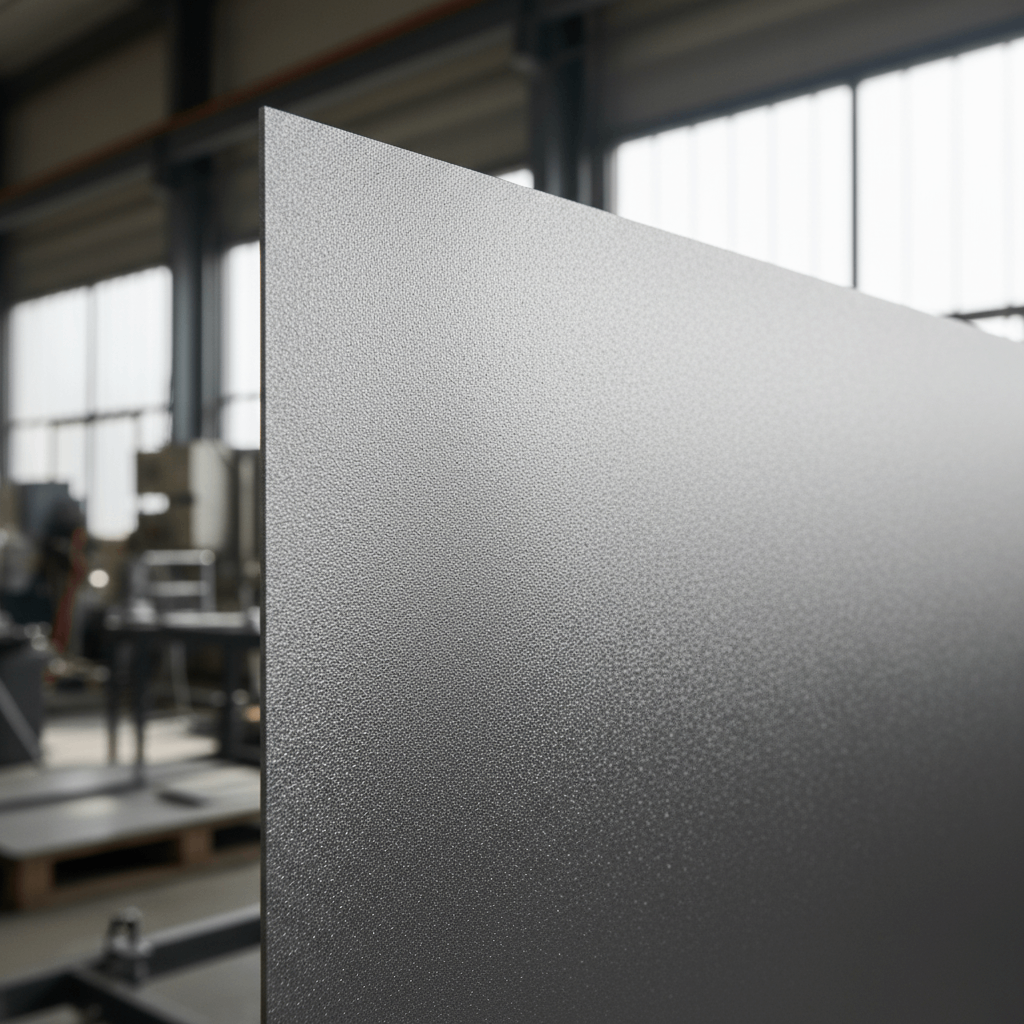
I. The Strategic Importance of Surface Engineering in B2B Procurement
In the high-stakes world of international metal fabrication, the longevity of an industrial component is rarely determined by its final aesthetic brilliance. For global procurement managers and structural engineers, the true fate of a complex assembly—be it a solar battery enclosure or a high-voltage transformer enclosure—is decided in the microscopic landscape of the substrate. This initial stage of preparation is the single most significant factor in preventing long-term operational liability and ensuring the structural integrity of the electrical enclosure raw material.
In a professional B2B context, surface preparation is far more than a “cleaning step.” It functions as a critical risk-management strategy designed to protect the buyer from the catastrophic costs of field failure. Consequently, when sourcing at scale, the primary engineering objective is to eliminate the unpredictable variables that lead to premature coating delamination. Such failures in a NEMA 3R enclosure deployment can lead to massive warranty claims, localized corrosion, and permanent damage to a brand’s reputation for reliability in harsh outdoor environments.
Industry data from global coatings experts suggests that over 70% of premature finish failures are directly rooted in inadequate mechanical bonding at the metal interface. Without a precision-engineered “Anchor Pattern,” coatings are essentially floating on a layer of microscopic oxides and contaminants. Therefore, YISHANG transcends traditional cleaning by treating the metal surface as a dynamic canvas, creating a foundational “DNA” that ensures every batch meets the same rigorous durability standards required for a 20-year service life in the field.
By mastering the technical nuances of surface morphology, YISHANG provides more than just fabricated parts; we provide long-term peace of mind. Specifically, increasing the effective surface area by up to 300% through high-velocity kinetic impact allows for a molecular-level mechanical lock between the substrate and the primer. This level of meticulous preparation is the mandatory prerequisite for products destined for extreme service, such as an IP66 enclosure or a high-grade stainless steel enclosure, where maintenance accessibility is often limited and expensive.
Key Takeaways for Procurement Professionals:
- Risk Mitigation: Precision shot blasting reduces coating failure rates by approximately 85% compared to basic cleaning methods.
- Batch Consistency: Automated wheel systems ensure 100% uniformity across high-volume wholesale orders, maintaining the quality control process enclosure standards.
- Standards Compliance: Essential for meeting NEMA 4X, IP66, and IP67 enclosure standards in diverse industrial applications.
- TCO Reduction: Significantly lower maintenance costs over the 20-year lifecycle of the enclosure through superior surface preparation for coatings.
II. The Physics of Impact: Mastering Kinetic Energy and Fatigue Resistance
From a purely mechanical perspective, shot blasting is a sophisticated exercise in kinetic energy transfer. The process is strictly governed by the fundamental physics principle: Kinetic Energy (Ek) = 1/2 * Mass (m) * Velocity (v) squared. In this industrial application, the mass of the abrasive media and the velocity of the propulsion system dictate the intensity of the surface transformation. For a wholesale buyer, understanding this physics is essential because it determines the consistent “Roughness Profile” for items like a galvanized steel enclosure or a carbon steel enclosure.
1. Harnessing Compressive Residual Stress
Beyond mere oxidation removal, professional-grade shot blasting induces a beneficial state known as “Mechanical Cold Working.” Specifically, this high-speed impingement creates compressive residual stress within the surface layer of the metal component. This is critical for enhancing the fatigue resistance of metal components. For heavy-duty frames and high-vibration push button enclosure mounts, this induced stress inhibits the initiation and propagation of fatigue cracks, effectively extending the operational life of the equipment.
Furthermore, enhancing the fatigue resistance of metal components is a key technical differentiator that sophisticated OEM partners prioritize during the vendor audit process. It shifts the procurement conversation from a simple “price per unit” to a “performance per lifecycle” metric. As a result, the structural reliability of the assembly is significantly bolstered against the stresses of transportation and long-term deployment.
2. Surface Morphology and Coating Integration
The resulting surface morphology depends heavily on the media geometry. Spherical steel shots produce a “dimpled” texture, which is ideal for stress relief and descaling without removing significant base material from an enclosure aluminum enclosure. Conversely, angular steel grits are used to “etch” the surface, creating the sharp, jagged peaks necessary for high-viscosity industrial coatings.
In addition to this, YISHANG calibrates these physical variables to ensure the “Peak-to-Valley” height is precisely matched to the dry film thickness (DFT) of the specified finish. Proper calibration prevents “Peak Pocking,” where sharp metal peaks protrude through the paint, acting as initiation points for “bleeding” rust on an electrical meter box or an electrical meter enclosure. Consequently, the synergy between the morphology and the coating determines the ultimate environmental resistance of the product.
III. The Mechanical Ecosystem: Ensuring Batch Consistency at Scale
For a high-volume wholesale procurement manager, the greatest challenge is not the quality of a single prototype; it is the consistency of a production run spanning thousands of units. Therefore, a professional shot blasting line at YISHANG is treated as a closed-loop mechanical ecosystem. It is engineered to eliminate human error and maintain absolute process stability for every steel enclosure carbon we manufacture, ensuring that the 1,000th unit is identical to the first.
1. Centrifugal Wheel Dynamics and Automation
The heart of this high-capacity system is the centrifugal blast wheel. This technology provides far greater uniformity and throughput than manual air blasting, which is crucial for meeting tight manufacturing capacity timelines and delivery schedules. Specifically, by mechanically controlling the abrasive flow rate and the wheel rotation speed, we ensure a predictable energy delivery. As a result, every square centimeter of a mount electrical enclosure receives a uniform impact, resulting in a consistent surface texture that manual processes cannot replicate.
Moreover, the integration of automation allows for real-time monitoring of the blast pattern. This constant oversight ensures that even complex geometries are treated with 100% coverage, leaving no areas vulnerable to future corrosion. Consequently, the precision of the wheel dynamics directly correlates with the long-term reliability of the enclosure packaging inspection results.
2. Advanced Filtration and Media Separation
A critical, yet frequently overlooked, component of this ecosystem is the dust collection systems. During continuous operation, abrasive media inevitably breaks down into “fines”—microscopic dust particles and debris. If these fines are not effectively removed from the cycle, they act as a buffer, absorbing kinetic energy and clogging the surface profile. This leads to poor adhesion on junction box NEMA assemblies and a significant decrease in the efficiency and cost-effectiveness of the coating stage.
To prevent this, a high-efficiency, multi-stage separator ensures that only the optimized “Operating Mix” of media is recycled into the stream. This mechanical purity is what allows YISHANG to maintain a consistent Ra (Roughness Average) across various product lines. Furthermore, environmental compliance and worker safety are paramount for modern global supply chains. Advanced lines integrate high-efficiency cartridge filtration and maintain negative pressure within the blasting chamber to prevent hazardous dust leakage.
IV. Abrasive Media Engineering: Preventing Cross-Contamination in Enclosures
The selection of abrasive media is an engineering decision rooted in metallurgy, chemical purity, and sieve analysis. For the majority of standard carbon steel enclosure projects, high-carbon cast steel shots are the industry choice for speed and cost-effectiveness. However, the media selection becomes a strategic “make-or-break” point when dealing with high-value alloys.
1. Metallurgical Compatibility and Purity
A common failure in lower-tier fabrication facilities is the “Carbon Contamination” of a stainless steel enclosure. Specifically, using carbon steel shots on a stainless steel substrate embeds microscopic iron particles into the surface. This creates thousands of tiny galvanic cells that lead to “bleeding rust” spots, even on premium rust-proof materials. To safeguard the integrity of non-ferrous products, YISHANG utilizes specialized Stainless Steel Cut Wire or ceramic beads.
Furthermore, while the initial media cost is higher, it is the only viable method to preserve the corrosion resistance and material stainless properties required for food-grade or medical applications. Therefore, procurement officers must verify the media type used for their by material stainless projects during the technical drawing material review. Failure to enforce this can lead to catastrophic field failures in enclosures solar battery deployments.
2. Managing the Ideal Operating Mix
In addition to compatibility, the “Operating Mix” must be managed via rigorous sieve analysis. A balanced mix ensures large particles provide the energy for deep cleaning, while smaller particles provide the coverage density needed for a uniform “Satin” texture. Specifically, this prevents the formation of “dead zones” on the surface where the anchor pattern might be too shallow for effective coating adhesion.
Moreover, consistent media replenishment is necessary to maintain the hardness profile of the mix. As shots wear down, their kinetic energy potential decreases. Consequently, YISHANG employs automated dosing systems to introduce fresh media at precise intervals. This technical rigor ensures that every steel enclosure galvanized project meets the highest industry standards for surface preparation for coatings.
| Media Category | Material Chemistry | Geometry | Key Advantage for Wholesalers | Typical B2B Application |
|---|---|---|---|---|
| Cast Steel Shot | High-Carbon Steel | Spherical | High recyclability; lower per-unit cost | NEMA 1 enclosure, heavy frames |
| Steel Grit | Heat-Treated Steel | Angular | Maximum coating adhesion (High Anchor) | NEMA 4 enclosures, solar battery |
| SS Cut Wire | Cr-Ni Steel | Cylindrical | Zero carbon contamination; high purity | SS304/316 push button enclosure |
| Aluminum Oxide | Fused Alumina | Jagged | Fast etching on sensitive non-ferrous | Control station enclosures |
| Glass Beads | Soda-Lime Glass | Spherical | Aesthetic “Satin” finish; no metal loss | Electrical enclosure wire drawing |
V. Strategic Comparison: Shot Blasting vs. Alternative Preparation Methods
To assist procurement professionals in choosing the optimal process, it is essential to compare shot blasting with other common surface preparation methods in terms of efficiency and cost-effectiveness.
1. Throughput and Operational Efficiency
For high-volume wholesale orders, shot blasting is the most cost-effective method. Specifically, while the initial equipment investment is higher, the per-unit cost decreases significantly due to the recyclability of the media and the automation of the process. In contrast, manual sandblasting or chemical pickling often requires significant labor and results in higher waste management costs.
Furthermore, this efficiency allows YISHANG to provide competitive pricing without compromising the technical integrity of the enclosure carbon steel or steel enclosure galvanized components. As a result, the production cycle is shortened, allowing for faster time-to-market for your critical infrastructure projects.
2. Quality and Lifecycle Impact
| Feature | Shot Blasting (Mechanical) | Sandblasting (Pneumatic) | Chemical Pickling (Acid) |
|---|---|---|---|
| Throughput Speed | Extremely High (Automated) | Moderate (Manual) | Moderate (Batch dipping) |
| Surface Profile | Precise & Consistent | Variable | Smooth (No mechanical key) |
| Environmental Impact | Low (Closed-loop recycling) | High (Single-use dust) | High (Hazardous waste) |
| Coating Adhesion | Superior (Mechanical Anchor) | Good | Moderate (Chemical bond) |
| Fatigue Resistance | High (Peening effect) | Low | None |
Beyond the immediate cost, the impact on product lifecycle is profound. Specifically, the mechanical anchoring provided by shot blasting can extend coating life by up to 50% compared to chemical alternatives. Therefore, the long-term value for the end-user is significantly higher, reducing the need for costly field repairs or replacements.
VI. Advanced Techniques: Precision for Complex Geometries and Thin Gauges
Modern industrial metal fabrication often involves intricate geometries and ultra-thin materials that demand a nuanced approach. Matching the blasting technique to the geometry is where the 26 years of engineering experience at YISHANG becomes a competitive advantage for our clients.
1. High-Volume Wheel Blasting for Wholesale Efficiency
This is the preferred method for repetitive OEM production and large-scale manufacturing. Specifically, it is ideal for flat sheet metal panels, vending machine cabinets, and standard NEMA 12 enclosure frames where throughput speed is a priority. By utilizing automated roller conveyors, we can process thousands of units with minimal manual handling. Consequently, this significantly reduces labor costs and ensures that every part is treated to a standardized Sa 2.5 cleanliness level.
2. Pneumatic Precision for Intricate Designs
In contrast, for custom enclosures with deep internal recesses or complex internal baffles, Pneumatic Air Blasting is required. Specifically, using specialized Boron Carbide nozzles, our operators or robotic arms can target internal corners that a centrifugal wheel cannot reach. This ensures that the interior of a custom solar battery enclosure is as well-protected from corrosion as the exterior, which is a vital requirement for telecommunications enclosures transformer projects.
3. Vapor Honing for Ultra-Thin Substrates
Moreover, one of the most delicate challenges in metalwork is blasting thin-gauge metal (0.5mm – 1.5mm). Standard dry methods can cause “Oil-Canning” or warping. Therefore, through Wet Blasting (Vapor Honing), we introduce water as a lubricant and dampening agent. This significantly reduces frictional heat and softens the impact force, allowing us to achieve a beautiful matte finish on an enclosure push button or a delicate control station enclosure.
VII. Global Standards and Quality Assurance: Sa 2.5 and Beyond
In international procurement, quality is not a matter of subjective opinion; it is a matter of measurable, verifiable standards. Specifically, YISHANG relies on the ISO 8501-1 standard to quantify surface cleanliness for every batch. For most industrial and outdoor applications, the benchmark is Sa 2.5 (Very Thorough Blast Cleaning). At this level, the surface must be 95% free of all visible rust and mill scale, providing an optimal “clean slate” for coatings.
1. Navigating Visual Cleanliness Standards
Understanding how European ISO standards align with North American NEMA enclosure requirements and SSPC standards is critical for accurate compliance on international projects. Therefore, we provide a cross-reference for our clients to ensure full alignment with their local regulations.
| ISO 8501-1 Standard | SSPC / NACE Equivalent | Visual Requirement | Typical B2B Application |
|---|---|---|---|
| Sa 3 | SSPC-SP 5 (White Metal) | 100% clean; uniform metallic color | IP68 enclosure, Subsea, Chemical |
| Sa 2.5 | SSPC-SP 10 (Near-White) | 95% clean; slight staining only | NEMA 4x enclosure, Solar, Auto |
| Sa 2 | SSPC-SP 6 (Thorough) | 66% clean; noticeable stains | NEMA 1 enclosure, Indoor furniture |
| Sa 1 | SSPC-SP 7 (Brush-Off) | Only loose rust/scale removed | Temporary transit protection |
2. Quantifying Roughness with Profilometers
Beyond visual cleanliness, we adhere to ASTM standards for coating thickness and use calibrated Profilometers to measure Ra (Roughness Average) and Rz (Mean Roughness Depth) in real-time. By certifying that a batch has a consistent profile of 45-55 microns, we provide the empirical proof that the surface is perfectly engineered for the specific dry film thickness of the chosen powder coat.
Furthermore, this adherence to standards is essential for achieving a durable enclosure ip68 enclosure rating or any ip enclosure requirement. Specifically, the data collected during this stage is archived in our quality control process enclosure database. As a result, our clients can audit the production history of their orders at any time, ensuring absolute transparency.
VIII. The “Engineer’s Log”: Solving High-Risk Fabrication Challenges
Factory-floor experience is what differentiates a standard vendor from a technical engineering partner. Specifically, at YISHANG, we focus on the “Failure Points” that often go unaddressed in generic marketing materials. These specific details directly impact the long-term reliability of metal components and the fatigue resistance of the final assembly in the field.
1. Warping Prevention in Thin Sheet Metal
Warping is the single greatest risk when blasting thin-gauge sheet metal for an electrical meter box or an enclosure push button. Specifically, the kinetic energy that cleans the metal also stretches it, causing thermal expansion and distortion. Therefore, we solve this by strictly managing “Dwell Time” and using a lower turbine RPM combined with a finer, rounder media. Consequently, this allows us to reach Sa 2.5 while maintaining a flatness tolerance within +/- 0.5mm for every electrical enclosure bending.
2. Eliminating the “Flash Rust Window”
Furthermore, a freshly blasted surface is in a high-energy, chemically reactive state. In humid climates, “Flash Rust” can begin in as little as 30 minutes, compromising the integrity of the quality control process enclosure. Specifically, our protocol mandates a strict “Four-Hour Window” between shot blasting and the first stage of powder coating. As a result, this rapid-response workflow minimizes exposure to environmental moisture during transit, ensuring a pure, oxide-free bond.
3. Pre-Blasting Degreasing Quality Gate
Moreover, many factories use shot blasting as a shortcut to “hide” oil and grease. This is a critical error for a high-quality stainless steel enclosure or carbon steel enclosure galvanized project. Specifically, high-velocity impact will actually embed oils into the microscopic pores of the metal. Therefore, our QC protocol requires a chemical pre-clean to ensure the mechanical bond is 100% pure. This is a key step in our electrical enclosure cleaning and electrical enclosure foaming process.
IX. Safety, Maintenance, and Sustainability: The B2B Compliance Matrix
For a procurement manager, a supplier’s safety record and maintenance protocols are key indicators of supply chain reliability. Therefore, YISHANG’s shot blasting lines are maintained according to a rigorous preventive maintenance schedule to ensure zero downtime for large wholesale orders. This aligns with modern safety considerations associated with shot blasting, reducing the risk of respiratory issues and factory fires through advanced dust collection systems.
1. Sustainability as a Competitive Edge
Sustainability is another core pillar of our operational strategy. Specifically, shot blasting is fundamentally more “Green” than traditional chemical methods. It eliminates the need for hazardous acid pickling tanks and the resulting toxic sludge. Moreover, the steel media is recycled thousands of times in our closed-loop systems, significantly reducing the carbon footprint of each solar battery enclosure project.
In addition to this, the mechanical nature of the process means that water consumption is minimized. Unlike wet chemical processes that require extensive rinsing and neutralizing, shot blasting is a dry process. Consequently, the overall environmental impact is drastically reduced, helping our clients meet their corporate social responsibility (CSR) goals while maintaining high quality.
2. Economic ROI of Green Manufacturing
Furthermore, this reduction in material consumption contributes to a lower per-unit cost for large wholesale orders of steel enclosure carbon. Specifically, a more durable product requires fewer replacements, leading to long-term savings for your clients. By choosing a partner who prioritizes environmental and safety considerations, wholesalers ensure they are sourcing from a responsible facility that meets modern ESG (Environmental, Social, and Governance) standards.
Moreover, we provide a full material inspection certification with every shipment. This document ensures full traceability and compliance with international standards. Consequently, this level of corporate responsibility reduces long-term supply chain risk and ensures that your enclosures solar battery are produced in an ethical and sustainable manner, enhancing your market positioning.
X. Strategic FAQ: Critical Insights for Procurement Professionals
Q: Why is shot blasting preferred over sandblasting for large wholesale orders? A: Efficiency and cost-effectiveness. Specifically, shot blasting is an automated process, offering 5x the throughput of manual sandblasting. Furthermore, steel shot is recycled up to 3,000 times, making it much more economical for high-volume orders of carbon steel enclosure or galvanized steel enclosure.
Q: Can we effectively shot blast a galvanized steel enclosure? A: Yes, through a specialized technique called “Sweep Blasting.” Specifically, it requires low pressure and non-metallic media to create a “key” for the paint without damaging the underlying zinc protection. This is essential for NEMA 3RX enclosures that require 25+ years of life in harsh outdoor environments.
Q: How does the selection of abrasive media impact the outcome of the shot blasting process? A: The media choice determines the final Ra/Rz values. Specifically, harder media creates deeper profiles for heavy-duty industrial coatings, while softer media is used for delicate electrical enclosure polishing. Does the selection of abrasive media impact the fatigue resistance? Yes, using spherical shot is the most effective way to enhance the fatigue resistance of metal components through surface peening.
Q: What types of materials can be effectively treated using shot blasting at YISHANG? A: We effectively treat stainless steel, carbon steel, galvanized steel, and aluminum. Each material requires a specific media type to avoid cross-contamination. For example, our by material stainless projects always use dedicated stainless steel media to prevent galvanic corrosion.
Q: How do you certify the surface profile and cleanliness for my RFQ? A: We provide a detailed QC report for every production batch. Specifically, this includes visual cleanliness certification (Sa standard) and digital profilometer readings. This ensures all coating specifications, NEMA 13 enclosure requirements, and IP enclosure ratings are fully met, matching the technical drawing material exactly.
XI. Conclusion: Choosing an Engineering Partner, Not Just a Vendor
In the competitive global marketplace, the quality of your product is only as good as its foundation. Therefore, shot blasting is the bridge between raw steel and a high-performance industrial asset. It is a process that requires a harmony of physics, metallurgy, and 26 years of operational discipline. At YISHANG, we treat every NEMA 4x enclosure and enclosures nema 3rx as a testament to our engineering rigor and commitment to excellence.
By choosing a partner who understands the “Flash Rust Window,” the physics of kinetic energy, and the nuances of carbon contamination, you are eliminating hidden procurement risks. Surface mastery is not just a factory process; it is the ultimate benchmark of manufacturing excellence. Consequently, we invite you to experience the YISHANG difference in your next project, from enclosure nema 6p to enclosures nema 12 and beyond.
For a detailed technical consultation or a quote on your custom electrical enclosure requirements, please contact our engineering team. Specifically, whether you need a simple push button enclosure or a complex solar battery enclosure for a renewable energy project, we look forward to helping you build a more durable and reliable future. Your inquiry today is the first step toward a more efficient supply chain and superior product performance in the field.
Compiled by the Engineering & Global SEO Strategy Team at YISHANG. Specialized in high-volume OEM/ODM sheet metal fabrication and ISO 9001/RoHS certified surface engineering for over 50 countries. Our resource catalog download and technical drawing material support are available upon request to assist with your next procurement cycle. We support manufacturing capacity electrical for all NEMA and IP rated projects.