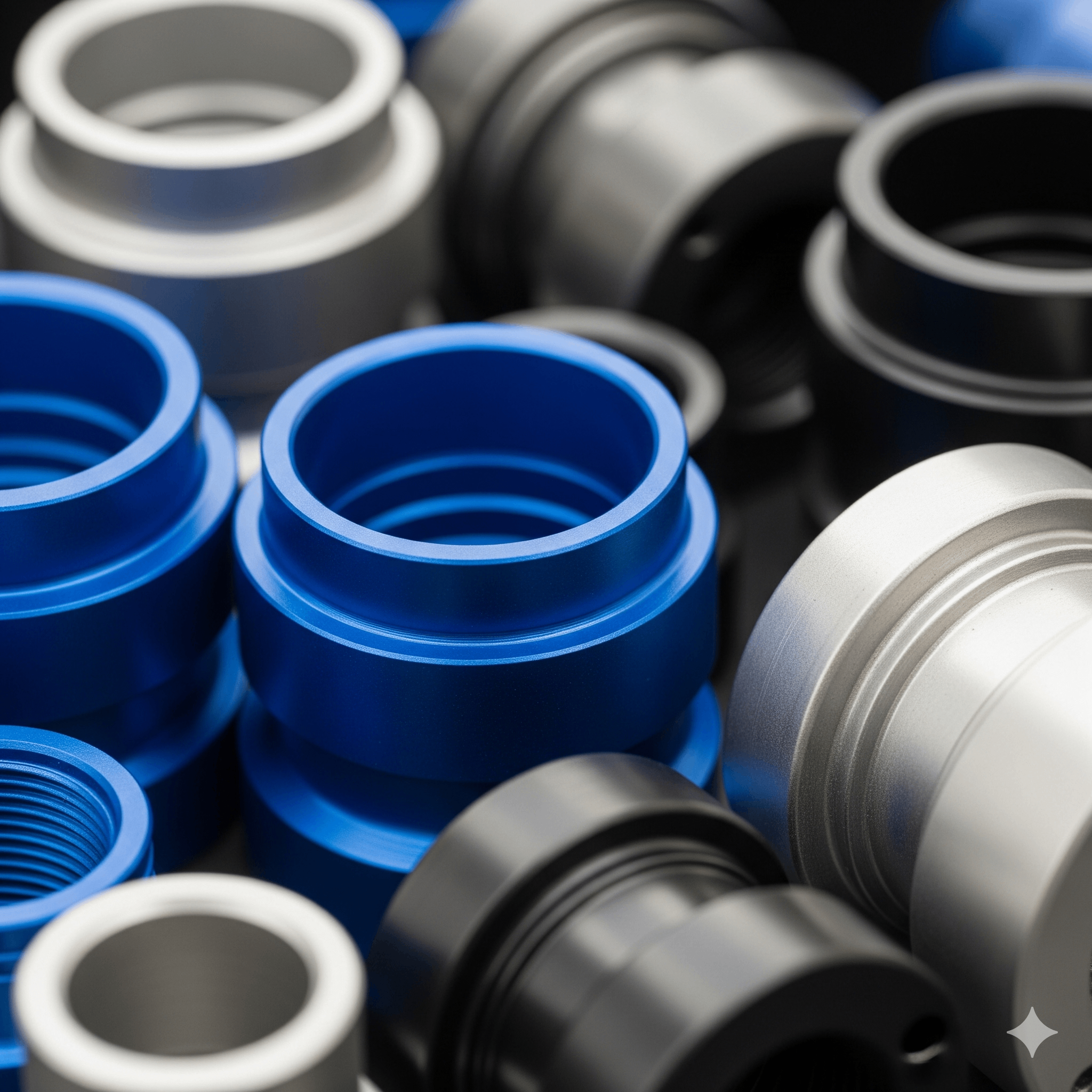
Quick Summary for Procurement: Anodizing is an electrochemical process. It converts an aluminum surface into a durable, corrosion-resistant, anodic oxide finish. Unlike plating or painting, this oxide layer integrates with the underlying aluminum substrate. Therefore, it cannot peel or flake. For B2B applications, it remains the premier choice for enclosures and structural components requiring extreme longevity in demanding industrial environments.
1. The Strategic Pivot: B2B Sourcing and Risk Mitigation
In the high-stakes world of global metal fabrication, selecting the right metal finishing process is a critical strategic maneuver. Procurement managers and high-volume wholesalers recognize that this choice dictates product longevity and supply chain resilience. Whether you source a solar battery enclosure for a desert power plant or a precision electrical meter box for a coastal smart grid, the finish determines the survival of your product.
Industry experts widely consider anodizing the gold standard for aluminum and other metals. This preference stems from its fundamental electrochemical transformation. Traditional coatings, such as painting or simple electroplating, rely on surface adhesion. In contrast, the anodizing process grows anodic films from the substrate itself. At YISHANG, we recognize that professional buyers prioritize options that mitigate risk. Consequently, anodizing provides improved corrosion resistance. It converts the surface into a ceramic-like barrier that stays physically inseparable from the metal.
From a B2B sourcing perspective, choosing to anodize is a proactive approach to risk management. In industrial settings, raw aluminum often becomes a liability. It remains prone to surface oxidation and galvanic degradation. By opting for a controlled metal finishing process within your Sheet Metal Fabrication workflow, you secure a stable surface. This surface resists scratching and chemical exposure. As a result, custom components—from solar battery enclosures to NEMA junction boxes—achieve professional-grade protection.
Building a reliable supply chain requires a partner who understands the intersection of CNC machining and chemistry. Many firms offer a range of metal finishing arrays. However, few possess the technical depth to bridge the gap between 3D design electrical enclosure requirements and final batch consistency. This guide serves as your technical roadmap. It helps you make informed procurement decisions that balance cost-effectiveness with extreme industrial performance.
2. Morphology & Physics: The Science of the “Grown” Layer
To evaluate a supplier’s technical capability, a procurement manager must grasp the science behind the process. Anodizing accelerates a natural oxidation process through an electrolytic cell. In this setup, the aluminum part serves as the anode. When YISHANG applies a precise electric current within a regulated acid bath—typically sulfuric acid or chromic acid—water molecules split. This action releases oxygen ions (O2-) that migrate to the metal surface.
These ions react with the metal substrate. They form a highly ordered, hexagonal honeycomb of cells composed of aluminum oxide (Al2O3). This reaction is self-limiting. As the layer grows, it becomes an electrical insulator. This unique property allows us to dictate thickness with micron-level accuracy. The sulfuric acid concentration and voltage dictate the cell size and nanopore diameter, typically ranging from 10-25 nm. These factors are essential for products needing specific strength and friction coefficients.
The resulting morphology defines the core of the process. It creates an oxide layer that integrates into the crystalline structure of the base material. Other coatings on aluminum might peel under thermal stress. This happens because they have different expansion rates. Conversely, anodized films fuse at a molecular level. Before we seal the pores, they offer better adhesion for paints and dyes. This allows for a vibrant range of colors that penetrate deep into the structure.
For wholesalers, this “Honeycomb” structure provides the technical foundation for electrical insulation. When you design an aluminum enclosure for power electronics, this dielectric barrier is vital. It provides a breakdown voltage that can exceed 500V. Anodizing is an electrochemical conversion rather than a spray-on layer. Understanding this distinction helps you recognize why it is the most durable option for high-traffic industrial applications.
3. Decoding MIL-SPEC: Selecting Technical Standards for Scalability
In international sourcing, vague terminology often leads to costly batch rejects. High-authority procurement relies on the MIL-A-8625 military standard to provide a universal language for quality. At YISHANG, we emphasize that selecting the correct type of anodizing determines the success of your supply chain.
Type I: Chromic Acid Anodizing (CAA)
Chromic acid anodizing represents the historical bedrock of the aerospace industry. It produces a thin film, typically ranging from 1/1000 inch to 0.0001″. This type offers a primary technical advantage for B2B buyers: it has a minimal impact on fatigue life. Chromic acid (H2CrO4) is less aggressive than sulfuric acid. Therefore, it remains the best option for complex assemblies or welded parts where chemical entrapment might occur.
Type II: Sulfuric Acid Anodizing
Sulfuric acid anodizing (Type II) serves as the commercial workhorse for automotive and electronics sectors. It provides a thickness between 2.5 microns and 25 microns. This thickness offers an ideal equilibrium between aesthetics and atmospheric protection. For wholesalers managing diverse products, Type II ensures compliance with global RoHS standards. Moreover, it provides a vibrant variety of colors and textures.
Type III: Hard Anodizing (Hardcoat)
If your application involves extreme abrasion, hard anodizing (Type III) is non-negotiable. This process utilizes sulfuric acid (H2SO4) at low temperatures. It creates a dense, hard, and slippery surface. The film thickness can reach 100 microns (0.004″). This results in a hardness of 60-70 HRC. Such durability makes aluminum suitable for demanding sports, recreation, or agricultural equipment.
| Technical Specification | Type I (Chromic) | Type II (Sulfuric) | Type III (Hardcoat) |
|---|---|---|---|
| Primary Electrolyte | H2CrO4 | H2SO4 | H2SO4 (Cold) |
| Standard Thickness | 0.00002″ – 0.0001″ | 0.0001″ – 0.001″ | 0.001″ – 0.004″ |
| Pore Structure | Fine / Compact | Regular / Porous | Dense / Thick |
| Best Application | Fatigue-critical aerospace | Decorative / Standard protection | Extreme wear & abrasion |
4. Engineering “Gotchas”: Dimensional Growth Dynamics
The most significant financial drains in metal procurement often hide in the technical drawing specifications. For wholesalers, understanding the 50/50 Rule of Dimensional Growth is paramount. Unlike paint, which is entirely additive, an anodized layer grows 50% into the metal and 50% outward. Consequently, a standard 0.001″ finish increases the part’s total external diameter by exactly that amount.
In a high-precision CNC Machining workflow, failing to account for this build-up leads to assembly line stoppages. For instance, when YISHANG fabricates a galvanized steel enclosure, we manage tolerances through coating thickness. However, with aluminum, the dimensional change is integrated. Therefore, designers must specify “pre-anodize” tap sizes for threaded holes. This ensures the final fit remains perfect after the oxide growth.
Precision Geometry Challenges
Internal features often present quality issues for procurement managers. In complex control station enclosures, deep blind holes create a risk of electrolyte entrapment. If the acid isn’t rinsed properly, it can slowly leach out over months. This creates unsightly “acid bleed” spots that ruin the finish. To avoid this, we recommend designing drainage holes. Alternatively, ensure that the hole depth-to-diameter ratio remains below 2:1 for optimal bath circulation.
Furthermore, sourcing managers must account for the “Faraday Cage Effect.” In deep U-channels, the electrical field may not reach recessed corners. As a result, you might see an uneven finish or bare spots. A factory-verified best practice involves designing parts with generous radii of at least 0.5 mm. This ensures uniform current distribution. It also prevents “Edge Burn,” a brittle defect caused by excessive current concentration at sharp points.
Threaded Features and Critical Tolerances
Threaded features require careful planning. For an M3 thread, the build-up of a Type III hardcoat can prevent bolt engagement. Consequently, we suggest that engineers specify masking for critical threads. Another option involves adjusting the tap diameter to Class 3B tolerances to compensate for growth. This level of technical foresight defines anodizing mastery in a professional B2B context.
Finally, consider the placement of rack marks. Because every part needs an electrical contact point, a small un-anodized area is inevitable. Professional B2B buyers work with YISHANG to identify non-critical surfaces. For example, we hide marks inside a junction box or on the back of an electrical meter box. Proactive planning ensures that the 10,000th part maintains the same aesthetic integrity as the first prototype.
5. Material Compatibility: The Supply Chain Perspective on Alloys
Raw material knowledge drives batch consistency. For wholesalers, sourcing the correct alloy is the first step toward a successful outcome. Not every aluminum series responds the same way to the process. For instance, the 6061 and 6063 series remain the favorite for high-volume anodizing. They offer stable results and excellent receptivity to dyes.
However, high-strength needs might require 7075 aluminum. This series has a high zinc content, which can lead to a yellowish tint. Consequently, color matching across large batches becomes a technical challenge. This requires a supplier with a robust quality control process. Moreover, the impact of recycled content is growing. Recycled billets often contain trace amounts of iron or silicon. These elements can interfere with the transparency of the film.
Managing Castings and Non-Ferrous Alloys
The “Die-Casting Dilemma” often surprises procurement managers. Cast parts sometimes emerge from the tank looking “dirty” or black. High silicon content (often over 10%) in common alloys does not anodize. Instead, it remains as gray smut on the surface. For decorative cast products, we recommend specialized “Anodizable Grade” alloys. Alternatively, you can pivot to CNC machined aluminum enclosures to avoid aesthetic failure.
When comparing a galvanized steel enclosure to other finishes, aluminum offers a unique edge in weight reduction. However, the procurement team must ensure the alloy series appears in the material inspection certification. Whether you use carbon steel or stainless steel enclosures, each material requires a specific strategy. For aluminum, the material choice determines the film’s transparency and hardness.
6. Color Engineering: Ensuring Brand Consistency Across Batches
For a professional wholesaler, color variance is the greatest risk. This is often measured as the Delta E value. The vibrant colors of anodized aluminum stay trapped within the nanopores of the oxide layer. This creates a metallic depth that liquid coatings cannot replicate. However, achieving uniformity across different production runs requires rigorous process control.
A slight shift in bath temperature (+/- 2 degrees C) or immersion time can alter a shade significantly. Consequently, YISHANG utilizes spectrophotometers and strict chemical monitoring. We ensure that your corporate colors remain consistent. When sourcing a large order of solar battery enclosures, the first unit must match the last. This consistency maintains the professional appearance of the final installation.
The Physics of Light and Pigment Stability
The perceived color results from light reflecting off the aluminum substrate through the transparent film. Therefore, a “Matte” vs. a “Satin” pre-finish will change the final look. Professional sourcing teams should specify the mechanical pre-finish to ensure the optical depth matches their brand guidelines.
For outdoor infrastructure, we often recommend electrolytic coloring (Two-Step Anodizing). This process deposits metal salts into the pore base. It creates UV-stable colors like bronze and black that resist fading. In a B2B environment, ensuring that components sourced today match those sourced next year is the ultimate test of a supplier’s quality assurance protocol.
7. Failure Analysis: Mitigating Risks in Mass Production
When a wholesale batch fails inspection, it rarely results from a single variable. A high-authority supplier must diagnose and prevent specific failure modes. At YISHANG, our quality control process catches defects like “Chalking.” This white residue indicates a seal failure. If the hydration seal is incomplete, the oxide layer will degrade over time.
Diagnosing Contamination and Thermal Shock
Chloride contamination in the tanks often causes “Pitting.” Even a small increase in tap water minerals can lead to microscopic holes. Furthermore, “Over-Etching” occurs if parts stay in the alkaline bath too long. This results in a dull appearance that obscures the metal’s natural grain. A professional supplier must have real-time bath monitoring to prevent these issues.
“Crazing” presents another common defect. It appears as a network of fine cracks. This often results from thermal shock. Aluminum and its oxide layer expand at different rates. This creates a particular risk for hard anodized finishes in high-heat environments. Mismanagement of temperatures during the assembling process can ruin a perfect batch of precision parts.
Current Density and Structural Defects
“Burning” occurs when the current density exceeds the cooling capacity of the bath. This leads to dark and brittle areas on the edges. Often, this signifies that a factory is pushing lead times at the expense of quality.
A robust ISO 9001 environment utilizes eddy current thickness testers for every batch. Consistency is the primary product we deliver. By identifying potential failure points early—such as air pockets in blind holes—we help you avoid hidden costs. This ensures that every shipment meets international standards for industrial safety.
8. The Economics of Procurement: Labor Intensity and Racking Costs
Procurement managers must look beyond the per-piece price. Instead, consider the Total Cost of Ownership (TCO). While different processes might seem cost-effective initially, true value lies in longevity. Anodizing is more cost-effective than painting because it eliminates the risk of field failures due to peeling or UV degradation.
A significant portion of the cost in high-volume orders comes from racking labor. For complex geometries, standard racks might not suffice. Designing the part with integral racking features can reduce handling time by 30%. Consequently, these savings pass directly to the wholesaler. At YISHANG, we consult on these small design tweaks early in the 3D design phase.
Logistics and Batch Consolidation
We offer a “One-Stop Advantage” by sourcing fabrication and finishing from a single facility. This includes laser cutting, foaming, and CNC machining. This approach eliminates the risk of shipping fragile raw aluminum between different vendors. Consequently, it reduces surface scratching and simplifies the quality control process.
When a single partner handles the technical drawing and final assembly, the accountability remains clear. This vertical integration is especially beneficial for projects like control station enclosures. Furthermore, batch consolidation lowers the unit price for high-volume wholesalers. Anodizing is a batch-intensive process. Maximizing tank density through strategic ordering allows us to offer competitive pricing.
9. Sustainability & Global Compliance (RoHS/REACH)
Sustainability serves as a prerequisite for entry in today’s global market. Anodizing is an inherently “green” process. Unlike electroplating, sulfuric acid anodizing is water-based. Consequently, it aligns with the “Circular Economy” goals of many modern corporations and government projects.
Compliance with REACH regulations is a requirement for products exported to 50+ countries. Anodizing provides a non-toxic finish that allows aluminum to be 100% recycled. This is a powerful selling point for brands in the automotive and medical industries. They must document their environmental impact for ESG reporting.
Ethical Sourcing and Thermal Benefits
Beyond compliance, anodizing offers thermal benefits. Anodized surfaces have a high thermal emissivity (up to 0.8). This means they radiate heat more effectively than raw metal. For a solar battery enclosure, this means internal electronics run cooler. As a result, you extend their operational life and reduce energy consumption.
YISHANG is committed to these global standards. Our quality control process includes a thorough review of chemical compliance. We ensure that every solar energy enclosure we produce is safe for the international market. By choosing a partner who prioritizes these certifications, you protect your brand from legal risks.
10. Maintenance and Longevity: Protecting Your Investment
Wholesalers often ask how to ensure the finish lasts 20 years. While anodized surfaces are incredibly durable, they are not indestructible. For B2B buyers, providing a simple maintenance guide can significantly reduce warranty claims.
Best Practices for Cleaning
- Use Neutral pH Cleaners: Avoid aggressive acidic or alkaline cleaners. A mild soap and water solution is the best option.
- Avoid Abrasives: Scouring pads or steel wool will scratch the film. Consequently, this leads to premature corrosion.
- Rinse Thoroughly: Ensure all soap residue is removed with clean water to prevent spotting over time.
For components in the architecture and construction industry, annual cleaning is usually sufficient. By managing the post-purchase lifecycle, procurement managers guarantee that their electrical enclosures maintain their structural integrity for decades.
FAQ: High-Authority Insights for Procurement Professionals
Q: Can I anodize stainless steel or steel? A: No. Anodizing is an electrochemical process specifically for aluminum, titanium, and magnesium. For steel, the best option for corrosion resistance is usually galvanizing.
Q: Does anodizing change the dimensions of the part? A: Yes. Following the 50/50 rule, the part grows outward by half the thickness of the anodic film. This is critical for 3D design planning.
Q: How does anodizing affect electrical conductivity? A: Anodized aluminum is an electrical insulator. If your aluminum enclosure requires grounding, you must mask specific areas before the process.
Q: Is anodizing more expensive than powder coating? A: For small batches, anodizing is often more cost-effective. For large enclosures, powder coating might have a lower initial price. However, anodizing offers a lower TCO over 20 years.
11. Conclusion: Partnering for Professional Authority
Anodizing is the bridge between raw material and a high-performance industrial asset. For the wholesale procurement community, success depends on technical foresight. With over 26 years of experience, YISHANG understands that the most reliable products result from the synergy of machining and finishing.
Whether you design a NEMA junction box or a sleek aluminum enclosure, the finish is the final seal of quality. Sourcing teams can guarantee durability and consistency by mastering the MIL-SPEC standards. Precision in the tank leads to performance in the field. Consequently, this secures your position in the global supply chain.
We invite you to send your inquiry today. Explore how our integrated services can optimize your supply chain. Let YISHANG determine the best option for your next project.