
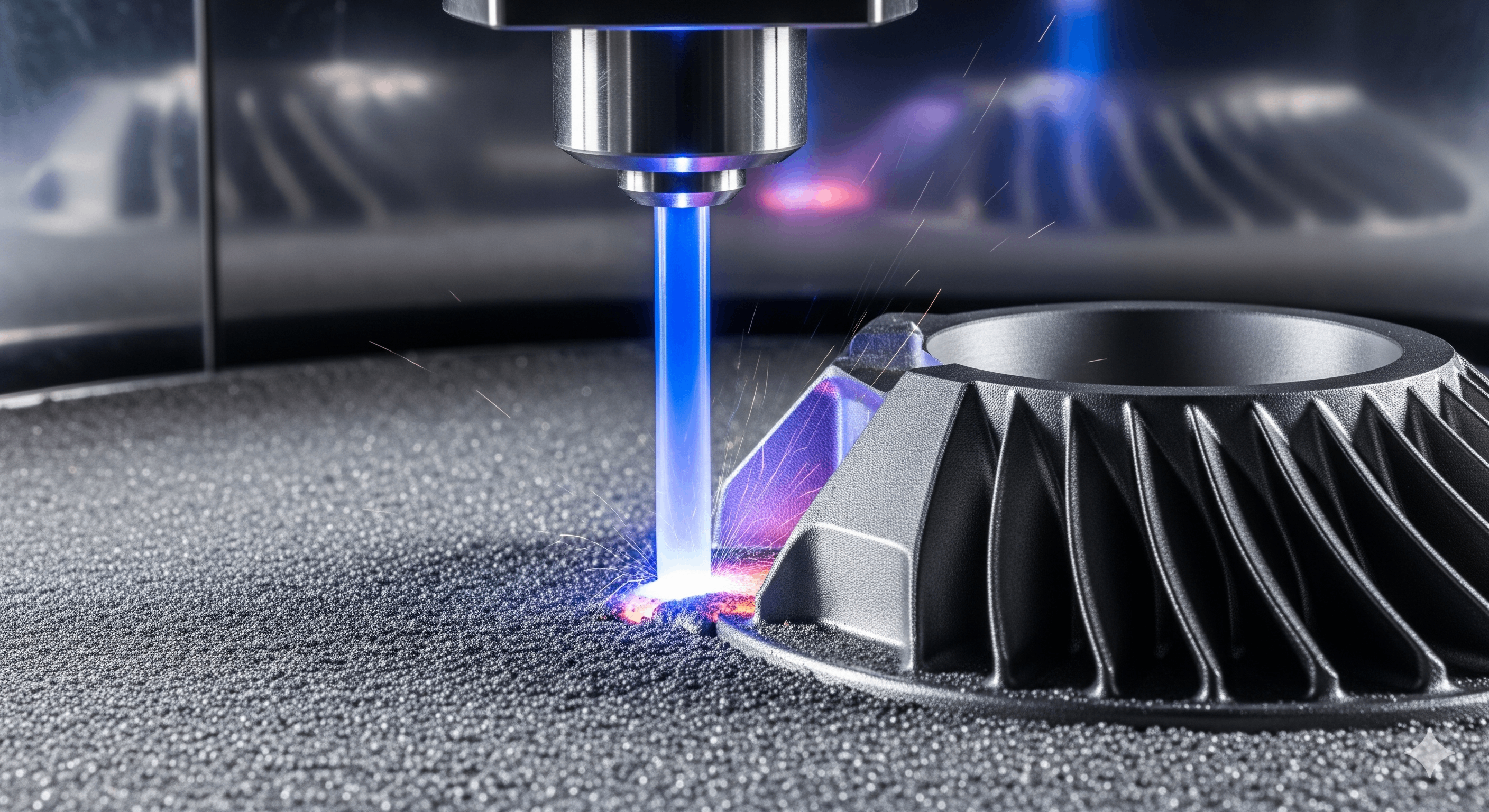
In the current global industrial procurement landscape, the transition to high-performance metal fabrication has moved beyond simple experimentation. For overseas wholesale buyers and procurement managers, the priority is no longer just the innovative nature of technology, but the strategic balance between mechanical integrity and supply chain predictability.
Electron Beam Melting (EBM) has emerged as the definitive solution for high-integrity components where traditional casting or laser-based systems fail to meet quality-to-cost ratios. This guide, curated by YISHANG, provides a strategic deep-dive into EBM technology, focusing on metallurgical stability, economic scalability, and industrial compliance for 2026 and beyond.
Our objective is to assist B2B decision-makers in navigating the complexities of metal powder bed fusion, ensuring that your manufacturing strategy aligns with future global standards. Whether you are in aerospace, medical, or high-end hardware, understanding EBM’s unique value is the key to de-risking your supply chain.
1. The Strategic Shift: Why Tier-1 Procurement is Moving to EBM
The historical bottleneck of metal fabrication has been the “complexity trap.” Traditional investment casting offers volume but requires months of tooling development. CNC machining offers precision but suffers from low material yield when geometries become intricate. EBM 3D printing bridges this gap by offering a digital-first, tool-less manufacturing path that supports serialized production.
For wholesale buyers, EBM facilitates a Digital Inventory model. Instead of tying up millions in physical stock for spare parts or niche components, you can store CAD files and print on-demand. This responsiveness is a major competitive advantage for distributors facing volatile market fluctuations.
Recent data from YISHANG’s technical center shows that clients switching from casting to EBM for Ti-6Al-4V components see a 40 percent reduction in developmental lead times. This speed-to-market is often the difference between winning and losing a tier-1 contract in competitive sectors like aerospace and medical devices.
The demand for Near-Net Shape (NNS) production is the primary economic driver. In EBM, the material waste is significantly lower than subtractive methods. When dealing with expensive reactive metals, every gram of powder saved directly improves your bottom line and contributes to corporate sustainability and ESG goals.
2. High-Energy Fusion Physics: The Vacuum Mandate and Power Density
At its physical core, EBM technology is distinguished by its high-energy electron beam. Unlike photons used in laser systems, electrons are accelerated by an electron beam gun to approximately half the speed of light. This creates a high energy source with power densities exceeding one million Watts per square centimeter, capable of melting refractory metals like tungsten and niobium.
From a procurement perspective, higher power density translates into faster build rates of 80 to 120 cubic centimeters per hour. This is critical for large-scale wholesale orders where machine-hour cost is the primary variable in piece-price calculation. Faster melting reduces the cost per part, making EBM viable for larger production batches.
The vacuum enclosure is perhaps the most critical trust factor in the entire process. Operating at a high vacuum level of 10 to the power of negative 4 to negative 5 mbar, the vacuum chamber creates an environment free from atmospheric oxygen and nitrogen. For reactive alloys, this vacuum is an absolute necessity, not an optional feature.
Interstitial gas absorption is the silent killer of titanium parts, causing premature fatigue failure. While laser-based systems use argon gas to protect the melt pool, the purity levels of a vacuum are exponentially higher. This ensures that every batch of parts maintains a chemical purity that meets the most stringent aerospace and medical standards.
The beam steering mechanism also offers a reliability advantage. EBM uses electromagnetic lenses to steer the beam at speeds exceeding 8,000 meters per second. With no moving mechanical mirrors or galvanometers, there is no risk of mechanical drift or wear over long production runs, ensuring that your 1,000th part is as accurate as the 1st.
3. Advanced Metallurgy: Mastering Isothermal Equilibrium
The most significant technical differentiator of EBM is its hot bed philosophy. Unlike selective laser melting, which prints on a cold or lukewarm bed, EBM maintains the entire build chamber at temperatures between 600 and 1000 degrees Celsius. This creates an isothermal environment that effectively eliminates thermal gradients.
This constant high temperature serves as a powder bed fusion based in-situ heat treatment. By maintaining the parts at an elevated temperature during the entire 3D printing process, EBM naturally anneals the material. This process releases the internal tensions that would typically lead to warping or cracking in other additive processes.
For a wholesale buyer, stress-free manufacturing means higher yields and better dimensional stability. Laser-printed parts often require complex and expensive secondary stress-relief cycles in a separate vacuum furnace. EBM integrates this step into the build process, reducing post-production processing time and lowering the total cost of ownership.
The resulting grain structure is a force multiplier for your product’s performance. EBM creates a highly stable alpha plus beta phase distribution in titanium alloys. Experienced technicians can manipulate the scan strategy to produce columnar or equiaxed grains, tailoring the mechanical properties to the specific application, whether it be high-impact or high-fatigue resistance.
YISHANG engineers emphasize that mastering the cooling rate is as important as the melting itself. By controlling the power descent after the build, we can ensure that the metallurgical properties are consistent throughout the part’s cross-section, which is a major concern for safety-critical components in industrial applications.
4. The Sintered Cake and Economic Design for Additive Manufacturing
A unique operational feature of EBM is the formation of the sintered cake. Before melting, the beam pre-heats the powder bed, semi-sintering the metal powder into a solid-state block. This block provides universal support, allowing for part orientations that would be impossible in laser-based systems.
For the wholesale buyer, this is a massive cost-saving feature. EBM reduces the need for traditional support structures by up to 90 percent. Removing supports is a labor-intensive, manual process that drives up the final price. By minimizing these structures, EBM lowers the labor cost per part and reduces material waste significantly.
Vertical nesting is the key to wholesale scalability in EBM. Because the sintered cake supports the parts, we can stack and nest components vertically within the build volume. Instead of printing one layer of parts, we can print a 3D grid, effectively maximizing the build envelope and lowering the unit cost through high-density production.
However, the design for additive manufacturing (DfAM) must account for the characteristic coarse surface finish of Ra 25 to 50 microns. This texture is a benefit for orthopedic implants as it promotes bone ingrowth, but it requires a strategic machining allowance for functional mechanical interfaces in high-precision hardware.
YISHANG bridges this gap by integrating additive designs with traditional custom metal fabrication workflows. We print the complex core of a component via EBM and then use precision milling for mating surfaces. This hybrid approach ensures that your high-integrity components meet tight tolerances while benefiting from the complexity allowed by additive layers.
5. Decision Matrix: EBM vs SLM for Strategic Sourcing
Choosing between EBM and Selective Laser Melting is a strategic trade-off. While SLM is ideal for small, intricate jewelry manufacture or dental components, EBM is the undisputed winner for large-scale industrial components. Procurement managers should use the following data to guide their technology selection.
| Performance Metric | Electron Beam Melting (EBM) | Selective Laser Melting (SLM) | B2B Procurement Impact |
|---|---|---|---|
| Volumetric Build Rate | 80 to 120 cubic cm per hour | 20 to 40 cubic cm per hour | Faster lead times for volume orders. |
| Residual Stress | Near Zero (In-situ Annealing) | High (Requires Post-Heat Treat) | Lower risk of part warping and failure. |
| Atmospheric Purity | High Vacuum (10 to the -5 mbar) | Inert Gas (Argon or Nitrogen) | Superior for reactive metals like Titanium. |
| Part Density | Over 99.5 percent density | Over 99.5 percent density | Equivalent structural integrity. |
| Surface Finish | Ra 25 to 50 microns (Coarse) | Ra 5 to 15 microns (Fine) | EBM usually requires CNC finishing. |
The human capital factor is another differentiator. EBM systems require highly qualified operators to prevent the smoke effect—a powder bed disruption caused by improper electrostatic charge management. At YISHANG, our engineering team simulates the thermal history of every build to mitigate this risk.
For B2B buyers, the decision often comes down to the material. If your part requires pure copper or titanium aluminide, EBM is often the only viable additive process. Its ability to melt reflective metals that lasers struggle with makes it a unique tool in the advanced manufacturing toolkit for high-conductivity applications.
6. Machine Architecture: Ensuring Stability in Production
An industrial beam melting machine is a convergence of high-voltage electronics and vacuum engineering. The stability of the machine control system is paramount for production accuracy and resolution. Unlike laser systems, the beam path in EBM is entirely controlled by electromagnetic fields, which are not subject to mechanical wear.
Key components like the focus lens and the deflection coils must be calibrated to micron-level accuracy. Any deviation in the electron beam focused spot size can lead to lack-of-fusion defects. At YISHANG, we utilize automated beam calibration routines before every build to ensure the highest levels of consistency.
The temperature monitoring system is another critical part of the EBM 3D hardware. Using infrared cameras or backscattered electron detectors, the machine ensures that the isothermal environment is maintained across the entire build plate. This level of feedback is the buyer’s guarantee that the 1,000th part is identical to the 1st.
Vacuum maintenance is a daily operational reality. The turbomolecular pumps must be serviced regularly to maintain the high vacuum pressure required for reactive metal processing. A supplier who neglects machine maintenance will inevitably suffer from batch-to-batch quality fluctuations, which is why YISHANG maintains a rigorous preventive maintenance schedule.
7. Integrated Manufacturing: The YISHANG Hybrid Advantage
One of the greatest mistakes in modern procurement is treating EBM as a standalone process. Most additive service bureaus can print a part, but they lack the industrial infrastructure to finish it. This is where YISHANG, a comprehensive metal products company, offers a distinct advantage to wholesale buyers.
We view EBM as part of a hybrid manufacturing ecosystem. While the electron beam provides the internal geometries, its rough surface finish requires high-precision part finishing. Our deep expertise in traditional metal fabrication—CNC machining, polishing, and assembly—allows us to deliver a ready-to-use product.
We specialize in integrating EBM components into larger assemblies. For example, a wholesale buyer may require a high-end junction box NEMA or a custom stainless steel enclosure with integrated cooling channels. We can EBM-print the internal heat exchanger and assemble it into a precision-fabricated carbon steel enclosure or galvanized steel enclosure.
This one-stop approach significantly reduces the total landed cost. Instead of managing three different vendors for printing, machining, and assembly, you deal with one partner. This eliminates logistics risks, communication gaps, and the disagreements that occur when quality issues arise between different stages of production.
Whether you need a push button enclosure with EBM-printed high-wear components or an enclosure solar battery unit with optimized thermal management, YISHANG has the integrated capacity to scale your production from one to 10,000 units seamlessly.
8. Quality Control and E-E-A-T Compliance
In the B2B sector, trust is built on verifiable data. EBM-manufactured parts must adhere to rigorous global standards to be accepted in aerospace or medical sectors. The primary benchmark for Ti-6Al-4V is ASTM F2924. At YISHANG, we provide complete material inspection certification and traceability for every batch.
Our quality control suite includes advanced Non-Destructive Testing (NDT) such as Micro-CT scanning and X-ray inspection. Proving internal density and the absence of lack-of-fusion defects is the key to fostering a long-term partnership based on technical drawing material compliance.
We adhere to the following international standards to ensure total compliance:
- ISO 9001:2015 Quality management systems requirements.
- ISO 13485 Medical devices quality management systems requirements.
- AS9100 and AMS 4999 gold standards for aerospace grade additive components.
- ASTM F3001 Standard Specification for Additive Manufacturing Titanium alloys.
Traceability starts with the raw metal powder. We monitor particle size distribution and chemistry to ensure that no cross-contamination occurs. Every EBM build includes test coupons printed alongside the parts, which are then destructively tested to verify that the mechanical properties meet the client’s specifications.
9. Troubleshooting and Process Reliability: The Expert Perspective
True expertise in EBM is demonstrated not when the machine runs perfectly, but when an operator manages the inherent challenges of high-energy physics. One of the primary hurdles in EBM is the smoke effect—an electrostatic phenomenon where the charged electron beam causes powder particles to repel each other, creating a dust cloud that interrupts the build.
To prevent this, YISHANG utilizes a precise multi-stage pre-heating cycle. By semi-sintering the powder bed before the full melting scan, we increase the electrical conductivity of the powder, allowing charges to dissipate safely to the build plate. This experience-driven calibration is what allows us to maintain 24/7 production cycles without failure.
Another challenge is thermal mass management. Large, bulky parts retain more heat than thin-walled structures. Without dynamic beam adjustment, this can lead to over-melting or dimensional inaccuracy. Our proprietary scan strategies account for these thermal gradients, ensuring that complex assemblies remain within specified tolerances regardless of their position on the build plate.
10. The B2B Buyer’s Checklist: Evaluating an EBM Partner
For a procurement manager, the difference between a successful contract and a costly delay often lies in vendor qualification. When auditing an EBM service provider, use the following checklist to ensure they meet the standards required for wholesale scaling:
- Vacuum Integrity: Does the vendor monitor vacuum levels in real-time? Fluctuations above 10 to the -4 mbar can compromise material purity.
- Powder Recyclability Protocols: Ask for their powder refresh rate. Oversized particles must be sieved out to prevent raker streaks during powder layering.
- In-House Metrology: Do they have CMM and CT-scanning capabilities on-site? Outsourcing quality control adds lead time and risk.
- Post-Processing Capacity: Can they provide CNC finishing, Hot Isostatic Pressing (HIP), and assembly? A print-only shop is rarely sufficient for wholesale requirements.
- Data Traceability: Request a sample of their Build Report. It should include gas analysis, beam calibration logs, and thermal monitoring data for every layer.
By asking these detailed questions, you demonstrate a high level of industry knowledge, ensuring that the vendor understands they are being held to professional, tier-1 manufacturing standards.
11. FAQ: Common Queries for EBM Wholesale Procurement
Can EBM process copper for high-conductivity applications?
Yes. Unlike laser systems which suffer from high copper reflectivity, EBM’s energy absorption rate for copper is nearly 80 percent. This makes it the preferred method for high-performance induction coils and electric vehicle cooling plates.
What is the typical surface finish of an EBM part?
EBM parts have a rougher texture of Ra 25 to 50 microns compared to SLM at Ra 5 to 15 microns. This is due to the larger powder particle size. However, for most industrial applications, critical surfaces are machined to final tolerance via CNC.
Is EBM cost-effective for medium production volumes?
Absolutely. Due to high build rates and the ability to vertically nest parts without extensive support structures, the cost per part drops significantly for batches of 50 to 500 units compared to traditional low-volume CNC or casting.
Does EBM require heat treatment after the build?
Generally, no. Because EBM operates in a hot bed environment, the parts are naturally annealed during the build. This eliminates the need for secondary stress-relief, though Hot Isostatic Pressing may still be required for absolute density in aerospace parts.
12. Conclusion: Finalizing Your Strategic Procurement Decision
As we enter the 2026 manufacturing era, the boundaries between traditional fabrication and additive layer manufacturing are blurring. Electron beam melting has proven to be a robust, scalable, and highly reliable technology for the mass production of high-performance metal products.
For the overseas procurement manager, adopting EBM is a move toward higher material purity, lower residual stress, and a more responsive supply chain. While the initial technical barrier may seem high, the long-term return on investment in terms of reduced weight, better performance, and shorter lead times is undeniable.
The future of metal fabrication is fused by high-energy electrons in a vacuum of absolute purity. At YISHANG, we are more than just a factory; we are your technical partner in this transition. We offer the expertise needed to turn complex CAD designs into certified, industrial-grade components ready for global markets.
If you are looking to enhance your industry competitiveness and reduce the risk in your metal fabrication supply chain, feel free to send a quick inquiry now. Our engineering team is ready to provide tailored solutions based on your specific requirements and help you lead the market with EBM technology.
Technical Standards and Compliance Reference:
- ASTM F2924 and ASTM F3001: Core standards for Titanium additive manufacturing.
- ISO 13485: Mandatory standard for medical implant procurement.
- AS9100 and AMS 4999: Benchmark for aerospace-grade components.
- ISO 9001:2015: Basic factory quality system requirements.
- AMS 4999: Standard for Titanium Alloy Additive Manufactured Parts.