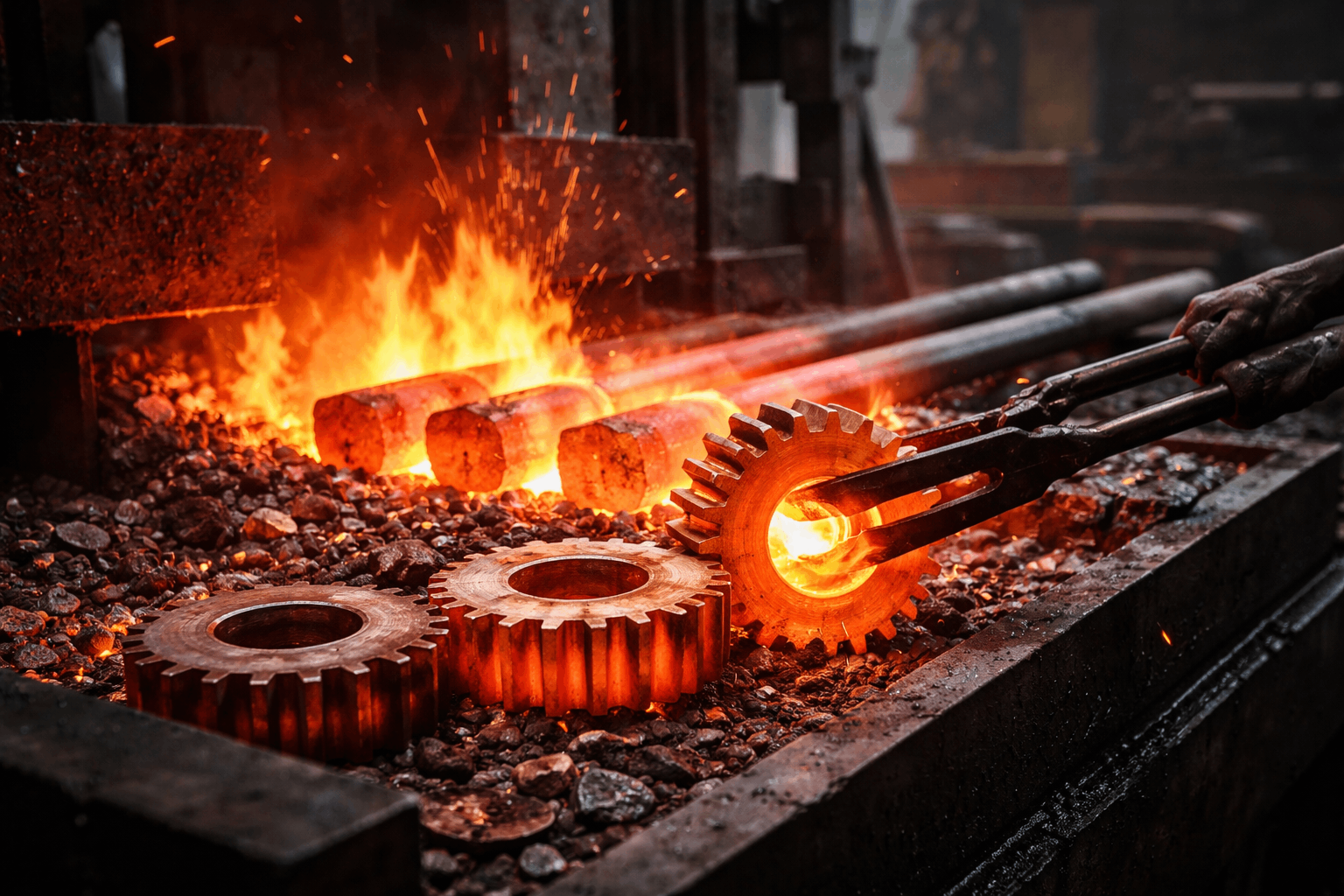
For overseas wholesale buyers, steel components are rarely evaluated only by appearance or material grade. A bracket, enclosure housing, shaft, or structural frame may look identical on paper, yet perform very differently after months of real industrial use. The difference often comes from how the steel was processed after fabrication.
Steel hardening is a heat treatment process that improves hardness, wear resistance, and fatigue performance by controlled heating, quenching, and usually tempering. For procurement teams sourcing fabricated steel parts in volume, this process directly affects service life, dimensional stability, and long‑term reliability. For a technical overview of heat treatment principles, organizations such as the American Society for Metals provide detailed metallurgical resources.
In many industrial applications—such as electrical enclosures, control station structures, mounting brackets, machine housings, and structural frames—poor heat treatment can lead to early wear, deformation, or fatigue cracks. Understanding steel hardening therefore helps buyers evaluate supplier capability and predict how well components will perform after installation.
This guide explains how steel hardening works, what happens inside the steel during heating and cooling, the main hardening techniques used in manufacturing, and how procurement teams can evaluate heat treatment quality when sourcing industrial components.
Why Steel Hardening Matters in Industrial Purchasing
In industrial supply chains, component durability affects more than a single part. A shaft that wears too quickly can cause alignment issues. A mounting bracket that loses rigidity can introduce vibration. A weak enclosure support structure can shorten the service life of an entire system. Because of this, experienced procurement managers often evaluate mechanical properties rather than focusing only on fabrication quality.
Steel hardening plays a key role in improving those mechanical properties. Hardened steel surfaces resist abrasion and contact wear much better than untreated steel. This is particularly important for parts exposed to friction, such as hinges, mounting hardware, mechanical supports, and moving interfaces in industrial equipment.
Another critical improvement is fatigue resistance. Many industrial components operate under repeated loading cycles. Over time, small cracks may develop in softer steel structures. Hardened steel slows crack propagation, allowing components to survive significantly more cycles before failure occurs.
For buyers managing long‑term procurement programs, these improvements reduce maintenance costs and replacement frequency. A slightly higher manufacturing cost at the beginning can often translate into lower total lifecycle cost. That is why heat treatment capability has become an important evaluation factor when comparing suppliers of fabricated steel parts and custom metal fabrication services.
What Happens Inside Steel During Hardening
Steel hardening works because the internal structure of steel changes when temperature and cooling speed are carefully controlled. Steel consists mainly of iron and carbon, and the arrangement of these atoms determines how easily the metal deforms under stress. The transformation of structures such as austenite and martensite plays a central role in the heat treatment process.
Austenite Formation During Heating
The hardening process begins when steel is heated to a temperature where its internal structure transforms into austenite. In this phase, carbon atoms dissolve uniformly in the iron lattice. This transformation typically occurs between about 850°C and 900°C, depending on the steel grade.
Uniform heating is essential. If the outer surface reaches temperature much earlier than the core, the final properties may vary across the part. Industrial furnaces therefore use controlled temperature zones and appropriate soaking times to ensure the entire component reaches thermal equilibrium.
Martensite Formation During Quenching
Once the steel has transformed into austenite, it is rapidly cooled. This rapid cooling stage is called quenching. During quenching, carbon atoms do not have enough time to move back into softer structures. Instead, the steel forms martensite, a distorted crystal structure that significantly increases hardness.
Martensite is responsible for the improved wear resistance and strength of hardened steel. However, it also introduces internal stress. To balance hardness and toughness, most industrial components undergo tempering after quenching.
Why Cooling Speed Matters
Cooling speed strongly affects the final microstructure of steel. If cooling is slow, the steel forms softer structures such as pearlite or bainite. If cooling is fast enough, martensite forms instead.
However, excessively rapid cooling can introduce distortion or cracking. This is why manufacturers select quenching media carefully based on steel grade, part geometry, and target hardness.
The Role of Carbon and Alloying Elements
Carbon content determines how hard steel can become after heat treatment. Medium carbon steels and alloy steels generally respond well to hardening.
Alloying elements such as chromium, nickel, molybdenum, and vanadium improve hardenability. Hardenability refers to the ability of steel to develop uniform hardness through thicker sections rather than only at the surface.
The Steel Hardening Process in Manufacturing
Although the metallurgical mechanisms behind steel hardening are complex, the manufacturing workflow follows a relatively clear sequence: heating, soaking, quenching, and tempering.
Heating Stage
During heating, components are gradually raised to the required austenitizing temperature in a heat treatment furnace. Controlled heating prevents thermal shock and ensures uniform expansion throughout the component.
Modern heat treatment systems may use controlled atmospheres or vacuum environments to reduce oxidation and protect surface quality.
Soaking Stage
Once the correct temperature is reached, components remain in the furnace during the soaking stage. This allows the entire cross section of the material to reach thermal equilibrium.
Thicker components require longer soaking times. Without sufficient soaking, the interior of the part may not transform fully into austenite, leading to inconsistent hardness.
Quenching Stage
After soaking, steel components are rapidly cooled. Different quenching media provide different cooling speeds and therefore different mechanical results.
| Quenching Medium | Relative Cooling Speed | Typical Application |
|---|---|---|
| Water | Very fast | Simple carbon steel parts |
| Oil | Moderate | Alloy steel components |
| Polymer solution | Adjustable | Precision industrial parts |
| Air or gas | Slow | Certain alloy steels |
Selecting the correct quenching medium allows manufacturers to achieve the desired hardness while controlling distortion.
Tempering Stage
After quenching, many components undergo tempering. In this stage the steel is reheated to a lower temperature and then cooled again. Tempering reduces brittleness and relieves internal stress while maintaining useful hardness levels.
Major Steel Hardening Techniques
Different industrial applications require different hardness distributions. As a result, manufacturers apply several steel hardening techniques depending on the functional requirements of the component.
Through Hardening
Through hardening strengthens the entire cross section of a component. The part is heated, quenched, and tempered so that both the core and surface gain strength.
This technique is often used for shafts, structural fasteners, machine elements, and load‑bearing components where strength is required throughout the entire part.
Case Hardening
Case hardening produces a hard surface layer while maintaining a tougher core. Processes such as carburizing and nitriding introduce carbon or nitrogen into the surface layer before final heat treatment.
This technique is widely used for gears and components that experience significant surface wear.
Induction Hardening
Induction hardening uses electromagnetic induction to heat selected areas of a component. Only targeted regions are hardened, which minimizes distortion and improves efficiency.
This technique is commonly applied to rotating mechanical parts and localized wear surfaces.
Flame Hardening
Flame hardening uses an oxy‑fuel flame to heat specific areas of a steel component before quenching. It is often used for larger components where induction equipment may not be practical.
Austempering
Austempering creates a bainitic structure rather than martensite. Bainite offers a balanced combination of strength, toughness, and dimensional stability.
How to Choose the Right Hardening Method for a Component
Selecting a hardening method depends on how the component will be used rather than simply choosing the strongest option.
When a component must resist overall mechanical stress, through hardening may be appropriate because it strengthens the entire cross section.
If wear occurs mainly at the surface while the interior must remain tough, case hardening is often the better solution.
When only specific areas experience friction or stress, induction hardening may provide the most efficient and controlled treatment.
For large industrial parts where localized treatment is needed, flame hardening can provide a practical balance between cost and performance.
Understanding these trade‑offs helps buyers and engineers select heat treatment methods that match real service conditions.
How Buyers Evaluate Heat Treatment Capability
For overseas buyers, the key question is not simply whether a supplier performs heat treatment, but whether the process is controlled well enough to deliver consistent results.
Process Control
Reliable suppliers maintain clear heat treatment procedures, controlled furnace environments, and batch traceability. These controls help ensure consistent hardness levels across production runs.
Inspection and Verification
Hardness testing is commonly used to verify heat treatment results. Metallographic inspection may also be used to confirm microstructure and case depth.
Quality Systems
Many manufacturers operate under quality management systems such as ISO 9001, which provide structured documentation and process monitoring. While certification alone does not guarantee quality, it often indicates that manufacturing processes follow defined procedures.
Common Problems in Steel Hardening
Even with controlled processes, heat treatment can introduce challenges.
Distortion occurs when parts cool unevenly, causing dimensional changes. Cracking may occur if cooling rates are too severe. Residual stress may remain within the material after quenching.
Manufacturers manage these risks through careful process design, appropriate quenching media, and proper tempering practices.
Where Steel Hardening Matters in Fabricated Products
Steel hardening is not only relevant for gears or shafts. Many fabricated assemblies include load‑bearing steel parts that benefit from improved hardness and fatigue resistance.
In products such as electrical enclosures, control station housings, push button enclosure systems, and solar battery enclosure frames, supporting brackets, hinge components, mounting hardware, and reinforcement members may require specific heat treatment depending on design requirements.
For buyers sourcing fabricated assemblies—such as custom sheet metal parts—understanding where hardening improves durability helps ensure that the final product meets performance expectations.
Emerging Technologies in Heat Treatment
Advances in manufacturing technology continue to improve steel heat treatment processes. Laser hardening enables highly localized surface treatment with minimal distortion. Vacuum heat treatment provides better atmosphere control and reduces oxidation.
Digital monitoring systems allow manufacturers to track temperature curves and cooling rates during production, improving consistency across large batches.
Comparison of Steel Hardening Methods
| Method | Hardening Depth | Main Advantage | Typical Use |
|---|---|---|---|
| Through hardening | Full section | High overall strength | Structural components |
| Case hardening | Surface layer | Excellent wear resistance | Gears and wear surfaces |
| Induction hardening | Localized surface | Precise treatment | Rotating mechanical parts |
| Flame hardening | Surface layer | Suitable for large parts | Heavy machinery |
| Austempering | Full structure | Balanced strength and toughness | Fatigue‑resistant parts |
Conclusion
Steel hardening significantly improves the performance of industrial metal components by increasing hardness, wear resistance, and fatigue strength. When heating, quenching, and tempering are properly controlled, steel parts become more durable and reliable in demanding service environments.
For wholesale buyers sourcing fabricated metal components, understanding steel hardening provides useful insight into supplier capability and product quality.
If you are evaluating suppliers for custom steel components or fabricated assemblies, the engineering team at YISHANG can provide technical support on material selection and manufacturing options for your project.