
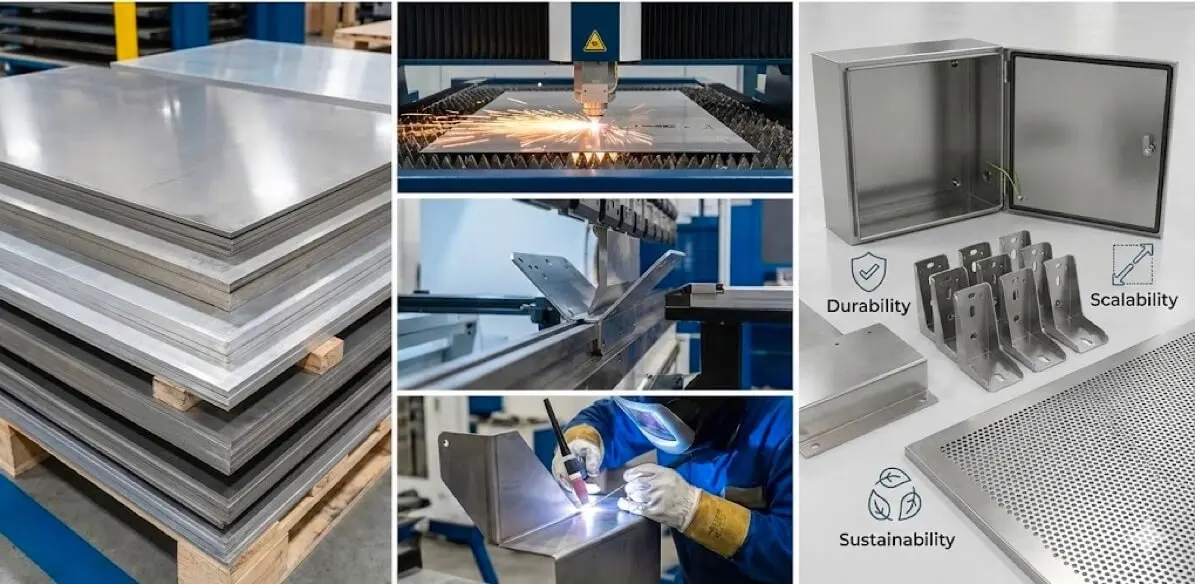
In the landscape of modern infrastructure and global industrial procurement, the term “rust-proof” is an oversimplification. Consequently, seasoned engineers and procurement managers treat this term with caution. For high-volume wholesale buyers, corrosion is not merely a chemical reaction. Instead, it is a significant financial liability that costs the global economy an estimated 2.5 trillion dollars annually. Therefore, selecting the correct material is a strategic decision. This choice impacts the Total Cost of Ownership, brand reputation, and long-term supply chain stability.
At YISHANG, we understand that our wholesale partners are not just looking for a cheapest metal that doesn’t rust. Instead, they are seeking a reliable technical partnership. We guarantee material integrity across thousands of units. Furthermore, this guide provides a deep technical analysis of corrosion-resistant metals. It is specifically tailored for B2B procurement professionals and industrial designers. These professionals manage large-scale product lines, ranging from a mount electrical enclosure to a complex solar battery enclosure.
We move beyond surface-level definitions to explore the molecular mechanics of passivation. Additionally, we analyze the critical impact of alloying elements and rigorous manufacturing standards. These standards ensure that high-grade raw materials retain their integrity during mass production. For organizations managing large-scale infrastructure, understanding these metallurgical nuances is essential. This knowledge helps in mitigating risk and maximizing return on investment in highly competitive global markets.
I. The Macro-Economics of Corrosion: A Procurement Perspective
From a strategic sourcing standpoint, corrosion is the primary driver of unscheduled downtime. It is also the leading cause of premature asset replacement. Furthermore, when a wholesale buyer evaluates a supplier’s metal products, they are evaluating the supplier’s ability to control the electrochemical environment. The natural tendency of refined metals is to return to their lowest energy state. This usually involves forming oxides or sulfides. Consequently, engineering for longevity requires a proactive intervention in this thermodynamic process to avoid catastrophic financial losses.
Wholesale buyers must distinguish between predictable uniform corrosion and the catastrophic risks of localized attacks. While uniform thinning can be managed through design thickness, localized phenomena are often the result of hidden defects. These include Pitting, Crevice Corrosion, and Stress Corrosion Cracking. In a B2B context, a single failure in a batch of thousands can lead to costly recalls. Moreover, it can damage the distribution partnership. Therefore, the goal is consistency across high-volume production runs.
The global procurement of corrosion-resistant metals is increasingly governed by international standards. These include ISO 9223 and ISO 12944. These standards classify atmospheric corrosivity from C1 to CX. For a wholesaler exporting to over 50 countries, understanding these classifications is vital. For example, a component designed for a C2 inland environment will fail rapidly if deployed in a C5 coastal zone. This guide establishes the technical baseline required to match material performance with global environmental categories.
To facilitate your project planning, YISHANG provides a technical quick inquiry service. This service helps you align your material composition with the intended application. Consequently, this ensures that the mount electrical enclosure or junction box NEMA rated enclosure you procure meets exact exposure factors. We believe that professional material selection is the first step in avoiding future replacement considerations. Additionally, it helps in maintaining high corrosion resistance ratings for your long-term success.
II. The Science of Passivity: The Molecular Defense Mechanism
To achieve industrial-grade durability, we must rely on the kinetics of the passive film. For stainless steel, aluminum alloys, and titanium, the resistance is provided by a dense, self-healing oxide layer. This layer forms instantaneously upon exposure to oxygen. Furthermore, this film, typically Chromium Oxide (Cr2O3), acts as a barrier to ion diffusion. It effectively chokes the electrochemical circuit required for corrosion to proceed. Therefore, the integrity of this film determines whether a product lasts for two years or twenty.
In professional metallurgy, the performance of an alloy is dictated by its chemical composition. This is usually verified by Mill Test Certificates. Chromium is the foundational element that provides the baseline stainless property. However, Chromium alone is insufficient for industrial environments involving chlorides. These include sea salt or aggressive chemical cleaners. In these cases, Molybdenum becomes a strategic asset. It stabilizes the passive film against localized breakdown, particularly in acidic or high-chloride environments.
Nitrogen is increasingly utilized in high-performance alloys to enhance both pitting resistance and mechanical yield strength. From a manufacturing perspective, the precise balance of these elements is crucial. It allows for the thinning of wall sections without compromising structural integrity. Consequently, procurement managers should always request detailed chemical analysis. This ensures the alloy meets the specific Pitting Resistance Equivalent Number required for their specific industrial application.
Understanding the PREN Calculation
The Pitting Resistance Equivalent Number, or PREN, is the most reliable predictor of a metal’s performance in aggressive environments. It is calculated using the formula: PREN = Cr + 3.3(Mo + 0.5W) + 16N. This index allows engineers to rank alloys objectively. For instance, Grade 304 stainless steel offers a PREN of 18-20. In contrast, Grade 316 rises to 23-26. Therefore, understanding this formula is essential for wholesalers. It helps them verify they are paying for the correct level of chemical defense.
Beyond chemistry, the ASTM G48 test is the industry standard for determining resistance. It specifically measures the relative pitting and crevice corrosion resistance of stainless steels. This test involves exposing the metal to a ferric chloride solution to simulate accelerated corrosion. For high-stakes applications like subsea sensors, demanding a G48 report is vital. It ensures that the metal surface and micro-structure can withstand the harshest chloride attacks without failure. Thus, it provides peace of mind for bulk purchasers.
III. Material Hierarchy: Matching Metallurgy to Application
A strategic selection process requires categorizing metals by their specific defensive strengths. However, no single metal is ideal for every scenario. Instead, the choice depends on the balance between environmental severity and mechanical requirements. Additionally, budget constraints play a significant role. When selecting a metal that doesn’t rust, wholesalers must consider the intended application. They must also analyze the specific stressors it will face during its service life.
1. The Stainless Steel Spectrum (Austenitic, Ferritic, Duplex)
Austenitic stainless steels are the global workhorse for the majority of industrial applications. Grade 304L and 316L are preferred for welded assemblies because they prevent intergranular corrosion. However, the rise of Duplex Stainless Steels has revolutionized the oil and gas sectors. By combining austenite and ferrite, Duplex alloys offer nearly double the strength. Furthermore, they provide superior corrosion resistance. This allows for material savings and improved durability in large-scale structural projects.
2. Aluminum Alloys: Strength-to-Weight Efficiency
Aluminum is the material of choice for aerospace and marine infrastructure. This is due to its legendary strength-to-weight ratio. The 5000-series and 6000-series are the mainstays of wholesale procurement for enclosures. While aluminum alloy is excellent in neutral pH environments, it is susceptible to alkaline attack. Therefore, procurement professionals must ensure that aluminum components are protected. For example, they must avoid direct contact with wet concrete or mortar during construction to prevent premature failure.
3. Copper and Nickel: Specialty Resilience
Copper and its alloys offer a unique advantage in marine environments. They provide excellent biofouling resistance. Unlike stainless steel, copper-based metals naturally inhibit the growth of marine organisms. Consequently, they are ideal for heat exchangers and subsea components. For the most extreme industrial conditions, Titanium and Nickel-base alloys provide near-total immunity. While these materials represent a higher initial cost, they eliminate maintenance and replacement considerations in harsh environments.
NEMA 4X and IP Ratings: The B2B Standard for Enclosures
For wholesale buyers of electrical components, corrosion resistance is often codified by NEMA ratings. A NEMA 4X enclosure is the gold standard for corrosion protection. It requires that the metal is more resistant to environmental factors. Furthermore, the enclosure design must withstand hose-directed water and internal condensation. This is a critical requirement for food processing and chemical facilities.
| Rating | Corrosion Resistance Required? | Typical Environment | Material Recommendation |
|---|---|---|---|
| NEMA 3R | Basic Rust-Resistant | Rain, sleet, snow | Galvanized Steel (Powder Coated) |
| NEMA 4 | Moderate | Dust, splashing water | Carbon Steel / Aluminum |
| NEMA 4X | High (Corrosion-Resistant) | Saltwater, corrosive acids | 316L Stainless / Aluminum 5052 |
| IP66/67 | High (Ingress Protection) | Heavy washdown, submersion | 304 or 316L Stainless |
IV. Fabrication Integrity: The YISHANG Quality Standard
For a wholesale buyer, the biggest risk lies in the Fabrication Gap. This refers to the loss of material properties during the manufacturing process. At YISHANG, we recognize that high-quality raw material is only the starting point. Instead, the integrity of the final product is determined by the precision of the manufacturing floor. When metal is subjected to laser cutting or welding, its properties can be compromised. Therefore, these processes must be handled with expert care.
Welding is the most critical operation in metal fabrication. If the heat input is not strictly controlled, stainless steel can undergo Sensitization. This occurs when chromium carbides form at the grain boundaries. Consequently, this leaves the surrounding areas depleted of chromium. This Heat-Affected Zone becomes a corridor for intergranular corrosion. Professional fabrication at YISHANG utilizes TIG welding with precise pulse control. This ensures the HAZ remains as resistant as the base metal, preventing future structural failure.
A common cause of premature failure in exported metal goods is iron contamination. This happens if a stainless steel enclosure is manufactured in proximity to carbon steel. Without strict segregation, microscopic iron particles can become embedded in the surface. These particles rust immediately upon exposure to humidity. Consequently, they create a localized acidic environment that drills through the passive film. Wholesale buyers should audit their suppliers for Clean Shop certifications. We strictly maintain this standard to avoid the reuse of contaminated tools.
The topography of a metal surface significantly influences its pitting resistance. A rough surface contains microscopic valleys where moisture and corrosive ions can stagnate. This initiates crevice corrosion. For pharmaceutical wholesalers, a surface finish of Ra less than 0.8 micrometers is often mandatory. At YISHANG, we follow fabrication with a chemical Passivation process. This removes surface impurities and re-charges the chromium oxide layer before your products are shipped.
V. Strategic Procurement: The Total Cost of Ownership Model
In the B2B sector, focusing on the per-unit price often leads to long-term financial loss. Therefore, a sophisticated procurement strategy evaluates the Total Cost of Ownership. This model includes initial capital expenditure, maintenance frequency, and downtime risks. It also considers residual value. When choosing corrosion-resistant metals, buyers must consider the service life. Furthermore, they must analyze the environmental stressors they will encounter in the field.
Consider a large-scale project for a mount electrical enclosure. A carbon steel enclosure with basic paint might be the cheapest option initially. However, it requires repainting every 3 years. Over a 15-year cycle, the maintenance and replacement costs will exceed the price of a high-quality stainless steel or aluminum enclosure. Wholesale buyers who prioritize TCO often find that stainless steel is the most cost-efficient choice. It ensures long-term supply chain stability and customer satisfaction.
Supply chain stability and lead times are also major factors for wholesale buyers. Standard grades like 304 and 316 are globally available with stable lead times. However, Super alloys can be subject to price volatility. YISHANG assists wholesale buyers by providing Material Substitution Analysis. We suggest alternative alloys such as galvanized steel enclosure. These offer similar corrosion resistance with better price stability and lead time advantages for high-volume orders.
The recycling and reuse of corrosion-resistant metals is another factor that impacts the TCO. Furthermore, it affects the environmental impact during production. Stainless steel and aluminum alloy are more resistant to degradation. They are also more easily recycled than coated carbon steel. For B2B clients concerned with sustainability, using metals with high recycled content can improve their green credentials. Meanwhile, it ensures the intended application remains durable in harsh environments like saltwater or acidic areas.
VI. Coatings and Treatments to Enhance Corrosion Resistance
Even the most naturally resistant metals can benefit from a Double-Barrier protection system. These coatings and treatments are essential for components deployed in extreme environments. In such cases, the metal surface and the environment are in constant conflict. At YISHANG, we offer several options to enhance corrosion resistance. Additionally, these treatments improve the aesthetic value of the final product while meeting strict industry standards for durability.
Powder coating is a process that applies a dry powder to the metal surface. This powder is then cured under heat. Consequently, it creates a durable, thick coating. This is important for outdoor solar battery enclosures or push button enclosures. Powder coating is an electrochemical process that provides excellent wear resistance and hardness. When applied over a galvanized steel substrate, it offers superior corrosion resistance compared to standard paint. Thus, it significantly extends the maintenance-free interval.
Anodizing is an electrochemical process that converts the surface of aluminum into a hard oxide layer. This is particularly useful for aluminum enclosure products used in architectural applications. Anodizing not only improves corrosion resistance but also allows for a variety of color options. Furthermore, it is an ideal choice for applications needing non-conductive surfaces. It also provides high aesthetic appeal in harsh urban or coastal architectural environments.
Other treatments include electroplating, where a metal surface and another metal are bonded. These metals often include copper, nickel, or chromium. Galvanizing, or coating iron or steel with zinc, is another common method. This is used for creating a galvanized steel enclosure. While less expensive than stainless steel, the zinc layer eventually sacrifices itself. Consequently, this leads to future maintenance needs. Wholesalers should choose metals and coatings based on the environmental exposure factors and the required lifespan of the project.
VII. Future Trends and Predictive Maintenance
As global manufacturing moves toward Industry 4.0, the science behind corrosion resistance is evolving. Wholesale buyers should be aware of several emerging trends in corrosion-resistant metals. These trends will define the next decade. Furthermore, these innovations focus on reducing environmental impact during production and use. They also improve the ability to detect potential issues before they lead to structural failure in the field.
Non-destructive testing methods for corrosion detection are becoming more sophisticated. Using ultrasonic or eddy current testing, engineers can identify internal pitting without damaging the component. This is particularly important for critical infrastructure. Examples include control station enclosures or solar battery enclosures. Monitoring and predictive maintenance systems are now being integrated into high-end metal enclosures. These systems provide real-time data on the operational environment.
The development of new alloys with improved corrosion resistance continues to push the boundaries of metallurgy. Additionally, nanotechnology is being used to create self-healing nanocoatings. These coatings contain micro-capsules of inhibitors. When the coating is scratched, these capsules rupture and seal the metal surface. Consequently, this ensures the environment and the substrate are separated once again. These materials will be suitable for the most extreme conditions, such as acid rain or high-salinity zones.
Recycling and reuse of corrosion-resistant metals has also become a priority for global procurement chains. As environmental impact becomes a key metric for B2B procurement, the ability to recycle 100 percent of an enclosure is a major advantage. At YISHANG, we are committed to reducing our carbon footprint. We achieve this by optimizing our material usage. Furthermore, we ensure that our production of corrosion-resistant metals has a minimal impact on the environment.
VIII. Case Studies: Strategic Engineering for Wholesale Success
To illustrate the importance of selecting the right metal, let us examine three common procurement challenges. These challenges were solved by YISHANG through technical expertise and strategic material composition. These examples show how we consider the intended application and environmental exposure. Additionally, we analyze cost factors to deliver superior corrosion resistance for our long-term wholesale partners.
Case 1: Coastal Solar Infrastructure A client required a solar battery enclosure for a project located 500 meters from the ocean. The environment was exposed to saltwater and high UV. Consequently, we recommended an aluminum enclosure with a high-performance powder coating. The natural corrosion resistance of the aluminum alloy combined with the powder coating resulted in a durable product. It achieved a 25-year lifespan in harsh coastal environments without structural degradation.
Case 2: Pharmaceutical Junction Boxes For a medical facility, the client needed a junction box NEMA rated for heavy cleaning. This environment involved acidic cleaning agents. We utilized Grade 316L stainless steel with an electropolished finish. Furthermore, the low carbon content and the addition of molybdenum ensured the metal is more resistant to chemicals. This choice reduced the risk of contamination. Additionally, it eliminated replacement considerations for the life of the building.
Case 3: Urban Electrical Meter Boxes In a crowded city with high pollution and acid rain, a client needed 5,000 electrical meter boxes. Consequently, we suggested a galvanized steel enclosure with an organic coating. This provided an optimal balance between cost and corrosion resistance. While not as durable as stainless steel, it was the most cost-effective solution. It successfully met the 15-year durability requirement for the intended urban application.
IX. Maintenance and Selection Framework for Wholesalers
A strategic procurement decision doesn’t end with the purchase order. For wholesalers, providing a clear maintenance framework to end-users is a value-add service. This service ensures the metal’s longevity and the distributor’s professional reputation. Furthermore, this framework focuses on selecting metals based on real-world maintenance capabilities and environmental stressors.
1. Routine Maintenance and Predictive Monitoring
Regular cleaning is the most effective way to maintain the passive layer of stainless steel and aluminum alloy. For enclosures in solar battery installations, removing salt crusts prevents the onset of crevice corrosion. Therefore, we recommend a scheduled wash with fresh water and mild detergents every six months for C3 environments. In contrast, for C4 and C5 environments, cleaning should occur every three months to ensure the passive film remains intact.
2. Monitoring and Predictive Maintenance
For critical control station enclosures, utilizing non-destructive testing methods during scheduled audits is vital. This can identify micro-pitting before it breaches the housing. Furthermore, this proactive approach reduces the likelihood of catastrophic failure. It also helps in planning future maintenance and replacement considerations. By understanding the science behind corrosion, wholesalers can help their clients optimize their service life and reduce operating costs.
3. Replacement and Recycling Considerations
When a metal that doesn’t rust finally reaches its end of life, recycling should be the final step. Stainless steel enclosure products and aluminum frames have high scrap value. Consequently, they provide a partial rebate to the client at the end of the project. This circular economy approach is a key selling point for modern B2B procurement. Additionally, it demonstrates a commitment to sustainable industrial practices.
X. FAQ: Expert Insights for Wholesale Procurement
What is the most cost-effective metal for marine environments? While initial material costs for stainless steel are higher, Grade 316L is the most cost-effective over its lifecycle. This is due to its resistance to chloride pitting in marine zones. Furthermore, for non-structural components, aluminum 5052 with a high-performance marine coating is a viable lightweight alternative for bulk distribution.
Does stainless mean a metal will never rust? No metal is completely immune. Instead, “stainless” indicates a high resistance to uniform corrosion. However, under stagnant electrolyte conditions or extreme heat leading to sensitization, even stainless steel can fail. Therefore, professional fabrication and passivation are required to maintain its corrosion-resistant properties over time.
How does YISHANG ensure material traceability? Every batch of metals used at YISHANG is accompanied by a Mill Test Certificate. This document verifies the material composition. Consequently, it ensures that the PREN and mechanical properties match your project specifications 100 percent. This traceability is essential for meeting international quality standards.
Can I use 304 stainless steel in a chemical plant? It depends on the concentration of the chemicals. Grade 304 is suitable for mild acids and food-grade alkaline solutions. However, for concentrated acids or chloride-based cleaners, Grade 316L or Duplex steel is required. This avoids stress corrosion cracking and localized failure in critical systems.
XI. Conclusion: Your Partner in Metal Durability
In the competitive world of wholesale procurement, quality is the only sustainable strategy. Corrosion resistance is not a commodity that is bought by the pound. Instead, it is a complex engineering outcome achieved through the synergy of material science and precise fabrication. Furthermore, rigorous quality control is essential. At YISHANG, we don’t just provide the metal. We provide the peace of mind that your assets will endure in the harshest environments.
For engineers and procurement leaders, the goal is to build a supply chain that values technical integrity. By partnering with a manufacturer that possesses deep metallurgical expertise, you ensure that your products outlast their environment. Furthermore, our 26-year track record of global exports proves our commitment to success. As global markets demand higher standards of durability, mastering the logic of corrosion resistance becomes the ultimate foundation for industrial success.
Strategic Procurement Consultation Are you planning a high-volume industrial project that requires 100 percent reliability? Our engineering team provides comprehensive material audits and ISO-certified fabrication services. These services help you choose metals that fit your budget and performance needs. Send your inquiry today to discuss your specifications and receive a technical quote for your project.