
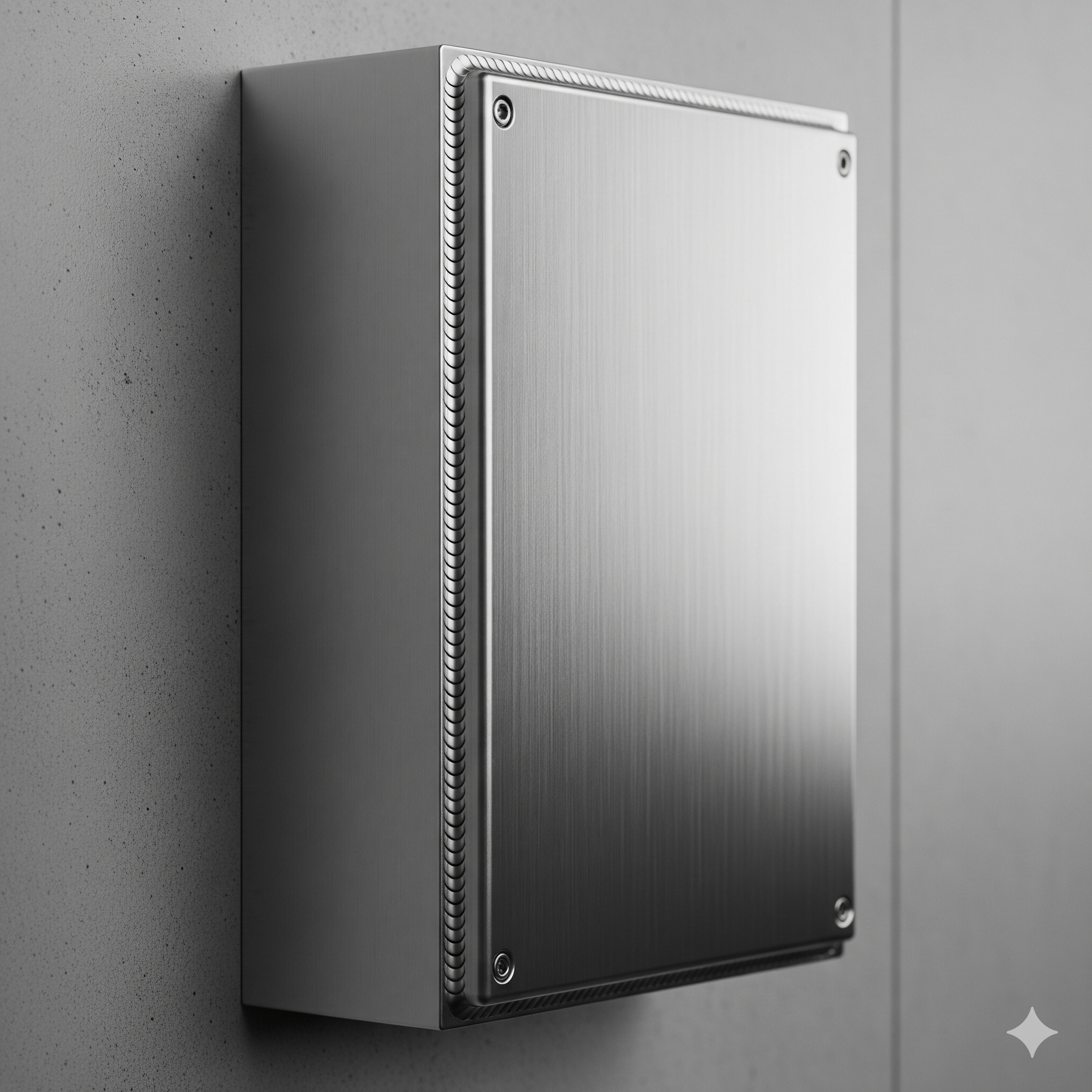
In the competitive landscape of Industry 4.0, a surface mount enclosure (SME) serves as a critical node in the reliability of a global infrastructure project. International wholesalers and procurement managers face a significant challenge today. They must do more than just source a “metal box.” They need a supply partner capable of delivering technical precision at a massive scale. As electronic integration becomes more complex, industries demand enclosures that function as active thermal regulators and electromagnetic shields. This guide explores the engineering depth required to manufacture enclosures that meet rigorous global market demands. We move beyond generic specifications into the realm of high-stakes industrial architecture.
At YISHANG, we recognize that procurement behavior has shifted toward long-term risk mitigation. A surface mount enclosure can dictate the difference between a system’s decades-long uptime and a catastrophic failure. Therefore, procurement teams must understand the intersection of material science, precision fabrication, and international compliance. This knowledge remains essential for any high-volume procurement strategy. The strategic transition toward surface mount geometry has accelerated due to the need for modularity and rapid deployment. Unlike traditional flush mount enclosures, these units offer significant advantages in retrofitting existing facilities and optimizing vertical space. This versatility ensures that the most suitable for a wide range of industrial control systems is often a surface mount design.
1. The Science of Material Longevity: Beyond Basic Metallurgy
For a wholesaler servicing diverse climates, material choice acts as the primary determinant of a product’s lifecycle. You might supply projects in humid shipyards or saline-heavy coastal wind farms. While Grade 304 stainless steel serves as a versatile industrial standard, it often reaches its limit in high-chloride environments. In these zones, pitting corrosion can compromise internal electronics in as little as 24 months.
1.1 The Advantage of Grade 316 Stainless Steel
The technical solution resides in a high-grade stainless steel enclosure, specifically Grade 316. This material incorporates 2.0% to 3.0% molybdenum. This chemical fortification provides a non-negotiable requirement for mission-critical infrastructure where “zero-downtime” is the target. By material stainless steel of this grade, YISHANG ensures the unit remains resistant to corrosion throughout its operational life. Our 316-grade units maintain a high Pitting Resistance Equivalent Number (PREN) above 24. This data provides wholesalers with the confidence to guarantee long-term performance to their end-users.
1.2 Structural Integrity and Material Gauge
The narrative of material quality extends into the precision of the gauge itself. In mass-market fabrication, subtle variations in sheet metal thickness lead to “oil-canning.” This structural instability occurs when large surfaces flex under minor pressure. In high-performance manufacturing, YISHANG maintains a strict 14-gauge or 16-gauge standard. This precision ensures that the enclosure door aligns perfectly with the gasket every single time. This alignment prevents seal fatigue and ensures long-term ingress protection.
1.3 Carbon Steel and Aluminum Alternatives
Beyond stainless, a carbon steel enclosure or a galvanized steel enclosure offers a cost-effective alternative for indoor environments. Carbon steel enclosure options remain the preferred choice for building management systems due to their durability and ease of powder coating. When you choose galvanized steel enclosure solutions, the zinc coating provides essential cathodic protection. This prevents the ingress of oxidation even if the surface suffers a scratch.
Aluminum enclosure options have also become a staple for the telecommunications sector. Aluminum enclosures are lightweight and provide inherent EMI shielding. These features make them ideal for wireless communication equipment. At YISHANG, we use specialized 5052-H32 alloys. These alloys make them most suitable for pole-mounted or mobile hardware. Weight reduction directly correlates to lower installation and shipping costs, which remains a key factor in international logistics.
2. Strategic Selection Guide: Matching Geometry to Wholesale Demand
A professional wholesaler manages a diverse portfolio. Each project requires a specific mount enclosures are designed to meet unique stressors. Procurement teams must provide targeted solutions that reduce the need for field modifications. This approach lowers the total cost of ownership (TCO) for their clients.
2.1 Wall-Mount Systems and Space Optimization
Wall-mount enclosures represent the most common geometry in industrial settings. These enclosures wall-mount enclosures facilitate vertical load distribution and rapid internal wiring. High-quality designs from YISHANG feature modular internal mounting plates. Technicians can prepopulate these plates before the enclosure is mounted. This workflow significantly reduces onsite labor costs for the end-user and speeds up the project timeline.
2.2 Specialized Solar and Energy Storage Housing
In the realm of power management, a solar battery enclosure or enclosures solar battery systems require specific venting and safety protocols. These enclosures must manage the thermal runoff of high-capacity cells while minimizing fire risks. At YISHANG, we integrate specific internal baffles and heat sinks. These components ensure these enclosures keep the components safe even under continuous high-load operations. For the wholesaler, this technical detail reduces the risk of liability and enhances brand reputation.
2.3 Metering and Interface Protection
Electrical meter box and enclosure electrical meter designs represent another massive segment for wholesale procurement. These units must remain tamper-resistant and weather-tight. They often require a NEMA 3R or 4X rating to handle outdoor exposure. Similarly, a push button enclosure or enclosure push button station requires absolute structural rigidity. The sheet metal around the cutouts must handle repetitive mechanical stress without deforming the seal over thousands of cycles.
2.4 Control Stations and HMI Integration
Control station enclosures serve manufacturing plants for HMI (Human-Machine Interface). These units must facilitate clear visibility and easy access. At the same time, they must maintain a high IP ingress protection rating. For wholesalers, stocking a versatile range of these geometries ensures they can meet rapid demands. Whether the project involves junction box NEMA variants or large freestanding racks, YISHANG provides the necessary diversity. By categorizing inventory according to these specific needs, wholesalers provide faster turnaround times for project-based orders.
3. Engineering of Ingress Protection: Sealing Dynamics and Standards
Ingress protection acts as a measurable promise of reliability. Every mount enclosure must pass rigorous evaluation before deployment. To achieve an IP66 or junction box NEMA 4X rating, the enclosure must block high-pressure water jets. It must also resist the invisible ingress of fine dust particles. Our engineers achieve this through a “knife-edge” flange design.
3.1 The Knife-Edge Flange Advantage
By tapering the enclosure opening, we concentrate the contact pressure against the gasket. This creates a superior seal compared to flat-surface designs. The geometry also creates a natural drainage path. It utilizes gravity to shed water away from the gasket seam before it can pool. This prevent the ingress of fluids even in the most torrential wash-down environments. This engineering choice ensures the antennas safe and internal electronics functional.
3.2 Advanced Gasket Chemistry
The chemical composition of the seal often dictates the failure point of low-cost units. While standard rubber might suffice for a few months, industrial-grade SMEs from YISHANG utilize EPDM or Silicone gaskets. We select these materials for their “low compression set.” This term refers to their ability to return to their original shape after years of compression. This “elastic memory” remains vital for maintaining a liquid-tight seal during temperature fluctuations.
3.3 Managing Condensation and Impact
Without this material memory, temperature fluctuations cause the enclosure to “breathe.” This draws in moist air during cooling cycles, leading to internal condensation. For wholesalers, sourcing units with standards such as IP67 or NEMA 4X provides a key selling point. This level of protection remains essential for outdoor electrical box metal applications. In these settings, rain, snow, and ice act as constant environmental factors.
Furthermore, high-impact environments require mount enclosures to meet IK10 standards. YISHANG achieves this through strategic reinforcement of the sheet metal. We use CNC-formed stiffeners and gussets to strengthen the structure. This ensures that the mount enclosure can withstand a 20-joule impact without deforming the sealing surfaces. For a wholesaler, providing products that meet both ingress and impact standards reduces the likelihood of damage during shipping. This ensures that the end-customer receives a flawless product every time.
4. Thermal Architecture: Protecting the Electronic Heart
Wholesalers must consider the longevity of internal components. High-performance electronics generate waste heat. This heat can reduce the lifespan of a PLC or inverter by half if the temperature rises by just 10 degrees Celsius. To protect the electronic components from thermal degradation, engineers must integrate a sophisticated cooling strategy into the initial design.
4.1 Calculating Thermal Transfer
Our engineers calculate the thermal transfer capacity using specific heat equations. We determine the dissipated heat based on the transfer coefficient, surface area, and temperature difference. This data-driven approach allows YISHANG to provide accurate recommendations to our clients. For the wholesaler, this means selling a solution that truly fits the application’s thermal requirements.
4.2 Material Conductivity and Ventilation
Aluminum enclosures offer a natural advantage due to their high thermal conductivity (approximately 205 Watts per meter-Kelvin). They effectively act as a massive heat sink. However, steel enclosure carbon variants have much lower thermal conductivity. For these units, the integration of breather vents or CNC-precision louvers becomes essential. These features of surface mount design ensure air pressure equalization without allowing moisture to enter.
4.3 Breather Vents and Active Cooling
Breather vents utilize semi-permeable ePTFE membranes. These membranes allow air molecules to pass for pressure equalization while blocking liquid water. This prevents the pressure differentials that lead to gasket failure—a common issue in enclosures solar battery applications. For high-density power applications, YISHANG integrates active heat exchangers or thermoelectric cooling units. These Peltier coolers ensure the internal environment remains within optimal parameters regardless of external ambient heat.
4.4 EMI Shielding and Component Safety
As IP ingress ratings must remain intact, we seal these cooling units perfectly against the mount electrical enclosure body. We use custom-machined interface plates to achieve this. Protecting the electronic components from both heat and EMI (Electromagnetic Interference) remains a dual challenge. Aluminum enclosure aluminum designs provide better EMI shielding due to their electrical conductivity. For steel units, YISHANG applies specialized conductive coatings. These ensure that antennas safe and signals stay clear.
5. Manufacturing Excellence: Ensuring Batch Consistency for Wholesalers
True B2B value exists in the precision of the fabrication process. At the factory level, YISHANG leverages a 26-year legacy in sheet metal. We possess a deep understanding of material springback and grain direction. By using high-precision fiber laser cutting and CNC press brakes, we ensure that every bend remains accurate.
5.1 Laser Precision and Tolerances
Our fiber lasers maintain tolerances within 0.05 millimeters. This precision ensures repeatability across thousands of units. For a wholesaler, this translates into “Batch Consistency.” You receive a guarantee that every enclosure in a 1,000-unit shipment will fit its mounting brackets perfectly. Precise mounting brackets act as the unsung heroes of the installation process. If they align perfectly, the installation time for the end-user remains low.
5.2 Welding Integrity and Corrosion Resistance
Welding remains another critical area where technical expertise dictates long-term performance. For “wash-down” environments in the medical sector, YISHANG utilizes TIG (Tungsten Inert Gas) welding. This creates a seamless, crevice-free bead. This prevents the formation of a Heat Affected Zone (HAZ). A large HAZ can compromise the stainless steel’s properties, leading to localized sensitization and subsequent corrosion. Our refined welding process eliminates these risks at the source.
5.3 Surface Treatment Science
The surface treatment—typically an electrostatic powder coating—undergoes a multi-stage chemical pre-treatment. This process includes phosphating and deionization to ensure maximum adhesion. We validate our coatings using Salt spray testing (ASTM B117 standards). Our units often exceed 1,000 hours of exposure without flaking or peeling. This level of quality control ensures that the right surface mount enclosure arrives at the customer’s site in perfect condition every time.
5.4 Automation and Cost Efficiency
YISHANG’s investment in automation allows us to offer a compact design and performance surface mount product at a competitive price. We optimize the manufacturing workflow through Design for Assembly (DFA) principles. This achieves a reduced manufacturing cost without sacrificing building management systems compliance. Our industrial control systems durability remains the standard that global clients depend on. For the procurement officer, this means a lower risk profile and a higher margin for profit.
6. Strategic Logistics: Optimizing the Wholesale Supply Chain
A major pain point for international wholesalers involves the cost of “shipping air.” Shipping large, empty metal boxes across oceans can destroy profit margins. YISHANG addresses this by designing high-performance surface mount enclosures for “Flat-Pack” shipping or high-density nesting.
6.1 Reducing Freight Costs
This innovation can reduce international freight costs by up to 30%. This savings directly impacts the wholesaler’s bottom line. It provides you with a significant competitive pricing advantage in your local markets. Beyond logistics, a supply partner must provide full compliance documentation. This ensures smooth customs clearance and rapid market entry for your inventory.
6.2 Compliance and Global Standards
ISO 9001 certification ensures a consistent quality management system at YISHANG. Furthermore, RoHS and REACH compliance remain essential for legal sale in European and North American markets. These enclosures are important for global trade because they meet engineering standards recognized by insurers and regulatory bodies. Our documentation package simplifies the procurement process for your team.
6.3 Design for Manufacturability (DFM)
From the procurement perspective, YISHANG provides valuable DFM (Design for Manufacturability) support. Our engineers review your designs during the prototyping phase. We identify minor adjustments—such as standardizing hole diameters—that can reduce production time. This collaborative engineering approach separates a world-class supply partner from a mere vendor. Wholesalers often face unpredictable field conditions. We help you prepare for them.
6.4 Knowledge Center and Technical Support
YISHANG empowers procurement managers by providing a comprehensive material knowledge center. We offer detailed technical data sheets to help you make informed decisions. The right surface mount selection depends on balancing internal capacity and size with environmental resilience. Ultimately, our goal remains ensuring that the performance surface mount units are available exactly when you need them. Whether you supply building management systems in Dubai or industrial control systems in Germany, YISHANG’s global supply chain supports your success.
7. Procurement Logic: A 4-Step Decision Framework for Professionals
Selecting the right surface mount enclosure requires a systematic approach. Wholesalers must start by assessing the environment. Will the unit stay outdoors or in a corrosive chemical plant? Will the mount enclosures be exposed to high-pressure washing? Answering these questions early prevents the risk of system failure and high-cost field repairs.
7.1 Determining Capacity and Dimensions
The second step involves determining the internal capacity and size required. The enclosure should allow for proper airflow and wire bending radii. However, it must remain compact enough for restricted installation spaces. Over-specifying size leads to unnecessary material costs and shipping fees. YISHANG helps wholesalers choose the suitable size using 3D simulation data and thermal load modeling.
7.2 Prioritizing Installation Efficiency
Wholesalers must also consider the ease of installation. Precise mounting brackets and modular internal plates represent the advantages of surface mount enclosures that end-users value most. If an enclosure proves difficult to mount, it increases labor costs and the potential for error. YISHANG designs every unit with the installer in mind, ensuring a seamless fit and rapid deployment in every project.
7.3 Verifying Legal and Industrial Standards
Understanding standards such as IP ratings and NEMA classifications remains non-negotiable for professional procurement. You must verify a junction box NEMA rating against the project specifications. This ensures the product meets legal and insurance requirements. At YISHANG, our knowledge center contact us for detailed guidance. We match international standards to local requirements, ensuring compliance and high marketability for your inventory.
7.4 Evaluating Material and Lifecycle Costs
Finally, evaluating material choices based on the budget and required lifecycle remains the most important part of the cycle. You might choose a stainless steel enclosure for its 25-year life or a carbon steel enclosure for an indoor warehouse. Regardless of the choice, YISHANG ensures uncompromising quality across every batch. We focus on providing high-durability products that lower the long-term TCO for the end-user.
8. Industrial FAQ: Solving B2B Procurement Challenges
How do surface mount enclosures differ from flush mount enclosures?
Surface mount enclosures install directly onto the wall or machinery surface. This makes them ideal for retrofitting and maintenance access. Flush mount enclosures recess into a wall cavity. They offer a cleaner aesthetic but require complex structural preparation. For industrial control systems, surface mount remains the preferred choice due to maintenance ease and cable entry flexibility.
Can surface mount enclosures be used outdoors?
Yes, provided the mount enclosures handle the IP66 or NEMA 4X rating. To function outdoors effectively, the enclosure must resist corrosion and UV radiation. Stainless steel 316 and aluminum are the most suitable for these environments. These materials prevent the ingress of water even during heavy storms or snow accumulation.
How do I choose the suitable surface mount enclosure size?
First, calculate the total volume of your internal components. Then, add a 20-30% buffer zone for cable management and airflow. Protecting the electronic components from overheating requires sufficient space for heat to dissipate. YISHANG provides custom sizing to ensure your equipment fits perfectly without wasting material.
Can surface mount enclosures be used for wireless equipment?
Yes, but you should choose an aluminum enclosure or a mount enclosure with non-metallic windows. Aluminum enclosures are lightweight and provide excellent EMI shielding. This protects the electronic components while RF-transparent windows allow antennas to function. This ensures antennas safe and wireless connectivity remains stable.
How to properly ventilate a surface mount enclosure?
Proper ventilation involves breather vents or louvers. These prevent the ingress of dust while allowing hot air to escape. In high-IP environments, YISHANG recommends breather vents that use semi-permeable membranes. This ensures the mount enclosure is important for maintaining internal pressure balance and preventing condensation.
What is the most common failure point for outdoor electrical box metal units?
The most common failure involves gasket degradation or “memory loss.” This usually stems from poor material choice or improper flange design. When the gasket fails to return to its original shape, it creates micro-gaps for moisture. YISHANG solves this by using high-memory silicone gaskets and knife-edge flange designs for a permanent seal.
In conclusion, the procurement of surface mount enclosures represents a strategic investment in infrastructure longevity. By prioritizing precision fabrication, material science, and thermal management, wholesalers provide their clients with products that withstand the test of time. At YISHANG, reliability remains our only true currency. We forge that reliability in every bend and weld of our manufacturing process.
Ready to optimize your enclosure supply chain and reduce your total cost of ownership? Contact YISHANG today to discuss your custom wholesale requirements. Discover how our 26 years of engineering expertise can solve your most complex protection challenges.