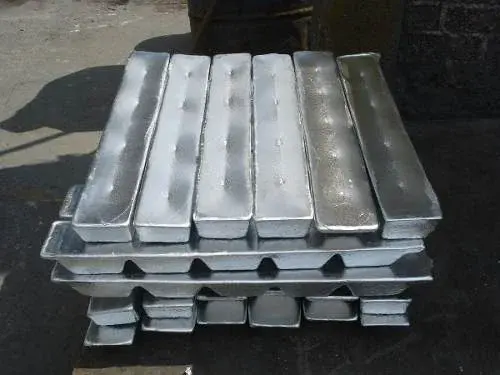
Selecting raw materials is a strategic risk management decision in global hardware procurement. It is much more than a simple technical choice. For overseas wholesalers and industrial buyers, Zamak 3 (ASTM AG40A) remains the premier industry workhorse. It offers an unparalleled balance of cost and precision. However, professional sourcing now requires a deeper understanding than a basic data sheet provides. This is especially true in a market defined by fluctuating metal tariff costs and stricter environmental mandates.
At YISHANG, we recognize your primary goal: ensuring batch-to-batch consistency while mitigating long-term liability. Zamak 3 is a high-performance zinc alloy designed for thin-wall casting and complex geometries. Manufacturers must understand its technical nuances—from its eutectic point to its vibration attenuation properties. These insights help optimize supply chain strategies for the post-2025 landscape.
I. The Chemistry of Reliability: Element Control and Defect Prevention
A precise metallurgical balance dictates the excellence of Zamak 3. Even a 0.01 percent deviation in trace elements can lead to catastrophic field failures. Special High Grade (SHG) Zinc with a 99.99 percent purity level makes up the majority of the alloy. This high purity is non-negotiable for manufacturers aiming to meet RoHS and REACH standards. Contamination from lead, tin, or cadmium can trigger intergranular corrosion. This defect compromises structural integrity over time.
Key Chemical Dynamics
Professional casting processes focus on specific chemical dynamics to ensure long-term stability:
- Aluminum (3.5 percent to 4.3 percent): This element drives superb castability. It reduces the melting point and allows for intricate, net-shape parts. These parts often require zero secondary machining. This fluidity makes zinc superior to other alloys for complex internal structures.
- Magnesium (0.02 percent to 0.05 percent): This acts as a critical stabilizer. It ensures the casting resists environmental degradation during long-term storage or sea transit. Without precise magnesium control, the alloy becomes susceptible to sub-surface oxidation.
- Copper Limits (less than 0.25 percent): Keeping copper low is vital for dimensional stability. It prevents the part from growing or warping after production. High copper content might increase initial hardness, but it often leads to instability in precision assemblies.
Risk Mitigation through Transparency
Chemical transparency serves as a vital risk mitigation tool. At YISHANG, we provide verified spectral analysis for every production batch. This ensures the accuracy of our quality reports. Our process prevents the aging issues common in substandard zinc alloys. By prioritizing chemical integrity, buyers reduce the risk of non-conforming material entering their global supply chain.
II. Engineering for Durability: Decoding Tensile Strength and Dimensional Stability
The tensile strength of Zamak 3 serves as a critical benchmark for product liability. It measures approximately 41 ksi. Unlike more brittle materials, Zamak 3 offers an excellent combination of strength, ductility, and hardness. This unique synergy allows the material to undergo minor deformation under extreme load rather than shattering. For industrial wholesalers, this resilience reduces warranty claims and enhances end-user safety.
Precision and Energy Absorption
Dimensional stability is a primary selling point for precision components. The electronics and medical sectors especially value this trait. Zamak 3 maintains exact measurements even under fluctuating operational temperatures. It is a preferred choice for optical housings and high-security lock mechanisms. Furthermore, this alloy absorbs energy effectively. This makes it ideal for high-speed industrial mechanisms requiring noise reduction and vibration attenuation.
Practical Trade-offs in the Field
Buyers comparing metal specifications should note practical trade-offs:
- Zamak 3 vs. ZA-12: ZA-12 offers higher strength but lacks superb castability for thin-walled sections. Zamak 3 remains the superior choice for high-volume yields in intricate components.
- Zamak 3 vs. Aluminum: Zinc offers tighter tolerances and significantly higher damping capacity. Zamak 3 outperforms standard aluminum alloys in applications where sensor accuracy is critical.
The balance of strength and yield strength allows for thinner walls. This reduces material volume and shipping weights. Lower logistics costs help international purchasers mitigate metal tariff impacts. By optimizing wall thickness, wholesalers effectively lower their landed cost per unit.
III. Manufacturing ROI: Hot Chamber Die Casting and Finishing Excellence
The compatibility with the hot chamber die casting process drives the commercial viability of Zamak 3. This method works significantly faster than cold chamber processes. It allows for higher cycle speeds and lower production costs.
Thermal Efficiency and Tooling Life
Lower processing temperatures (approximately 381 to 387 degrees Celsius) minimize thermal stress on steel molds. This results in an extraordinary tooling life that often exceeds one million cycles. For high-volume wholesale orders, this dramatically lowers the tooling amortization cost.
Finishing and Surface Affinity
Beyond raw casting, Zamak 3 provides a distinct market advantage through its finishing characteristics. This alloy is the premier substrate for high-adhesion finishes. It accepts plating, painting, chromate treatments, or advanced PVD coatings. Its surface affinity ensures that decorative treatments do not peel or blister. This makes it a preferred choice for luxury automotive trim and premium hardware.
Scalability: Die Casting vs. MIM
Zamak 3 die casting consistently offers better volume scalability for medium-to-large components. Metal injection molding (MIM) excels for ultra-tiny parts, but die casting delivers the net-shape manufacturing required for B2B supply. At YISHANG, we leverage 26 years of expertise to optimize every stage. We ensure your assembly remains cost-effective from the raw casting to the finished part.
IV. Global Standards and Risk Management for Post-2025 Sourcing
Navigating the Standardization Gap is a persistent hurdle in international procurement. A buyer in North America might specify ASTM B86, while a European engineer requests ZL0400. Supply chain resilience depends on understanding these equivalent specifications. Providing correct technical documentation is a commitment to quality. Global wholesalers demand this traceability from their manufacturing partners.
Regional Equivalencies Matrix
The following matrix provides a quick reference for regional standards:
- North America: ASTM B86 / B240 (Designation AG40A / Zamak 3). This is the global benchmark for technical data.
- Europe: EN 12844 / 1774 (Designation ZP3 / ZL0400). This standard focuses heavily on purity for EU compliance.
- Japan: JIS H5301 (Designation ZDC2). This is often optimized for high-end optical trim.
- China: GB/T 13818 (Designation YX040). This is the preferred standard for cost-efficient export manufacturing.
Strategic Partnering
Partnering with YISHANG gives you access to a team that prioritizes spectral analysis accuracy. Consider how a supplier can help you mitigate metal tariff costs as you evaluate post-2025 strategies. A reliable manufacturer should offer more than just parts. They should provide the technical depth to solve complex procurement challenges. We verify every batch of zinc alloy through rigorous batch traceability.
In conclusion, a successful supply chain built on Zamak 3 requires consistency and efficiency. By prioritizing these factors, you invest in the long-term reputation of your brand. YISHANG supports global wholesale partners with precision and industrial excellence.
If you are looking to optimize your manufacturing project or require a technical data sheet, please contact the YISHANG engineering team for a consultation.