
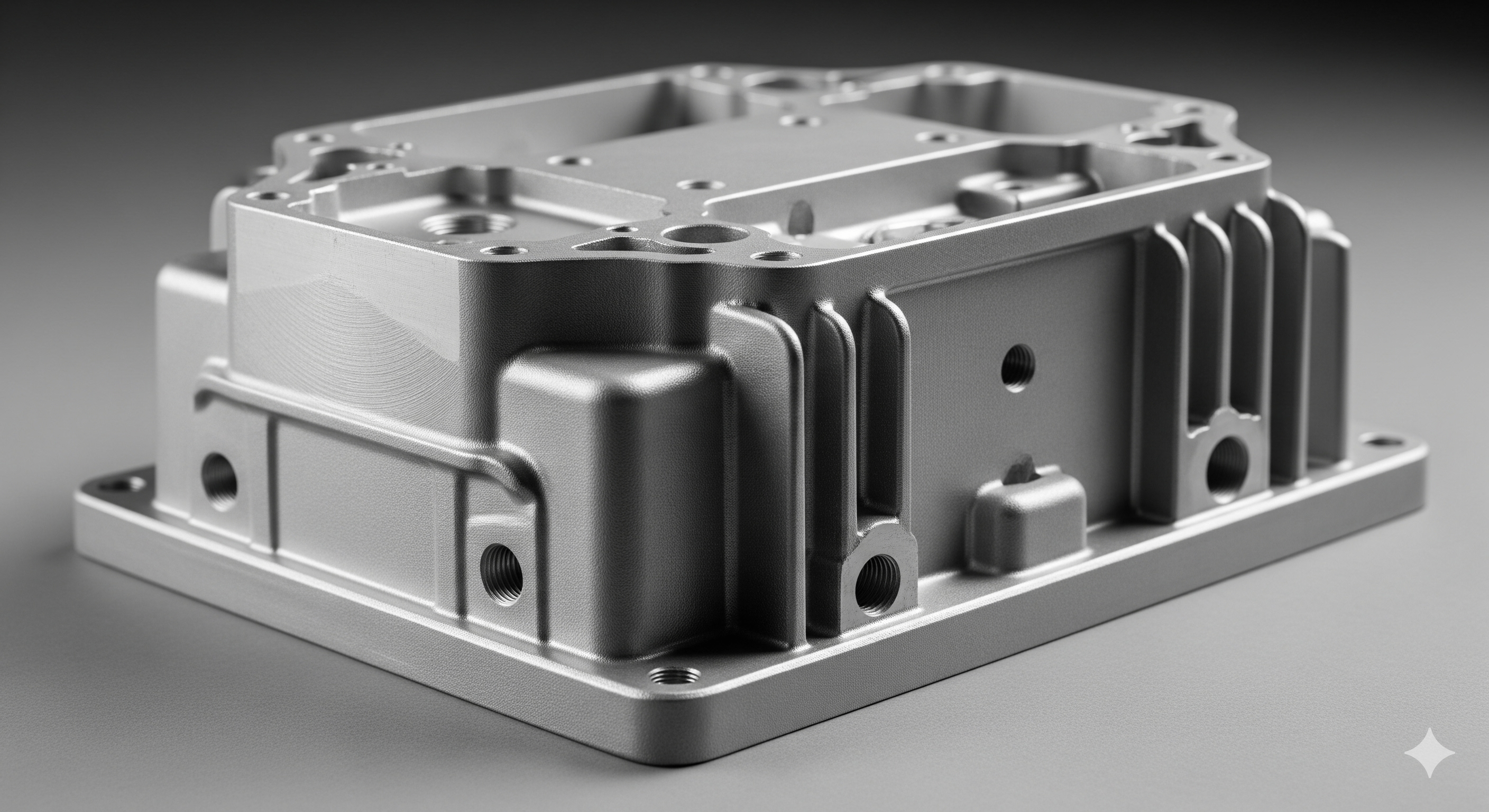
In today’s industrial landscape, picking a material is rarely a simple task. It is a strategic move that dictates the long-term reliability of your product line. We have found that everything you need to know about A356 aluminum usually starts with its role as a premier casting solution. Specifically, it is designed for high-stress applications where failure is not an option. At YISHANG, we realize that for our wholesale partners, choosing A356 is more about shielding the supply chain from risk than just buying metal.
For the seasoned procurement professional, identifying the specific properties of A356 is only the first step. Whether you are sketching out structural components or a complex aluminum enclosure, the real magic lies in the metallurgical balance. This guide is not just another dry technical manual. Instead, think of it as a roadmap for engineering and procurement success. This is essential in a market that is becoming increasingly demanding.
But before we dive into the weeds of metallurgy, it is worth asking a simple question. Why has this specific alloy become the “go-to” for engineers globally? Let us pull back the curtain on its characteristics. Consequently, we can see how it addresses the messy, real-world needs of modern industrial projects.
I. Metallurgy and Consistency: The Real Story Behind the “A” Prefix
In high-volume manufacturing, the biggest threat to your ROI is batch-to-batch variance. The price of raw materials is often secondary to this consistency. A356 aluminum sits within the Al-Si-Mg family. However, that “A” prefix is not just a label. It represents a standard of purity that is absolutely essential for structural integrity. For instance, knowing that the iron content is capped at 0.2 percent provides a crucial safety net. This prevents the kind of brittle failures that can derail a project.
Compared to other aluminum alloys, these lower iron levels significantly boost ductility. In our experience, maintaining this chemical precision ensures a solar battery enclosure or a junction box nema part keeps its shape. Instead of cracking under stress, the material remains reliable. Ultimately, this predictable behavior makes A356 the material of choice for mission-critical hardware. After all, when field reliability is on the line, consistency is everything.
There is also the matter of heat dissipation. The synergy between silicon and magnesium here is key, especially for the electronics industry. When you use a356 for complex castings, the 7 percent silicon content allows the metal to flow into thinner walls. Crucially, it does this without losing its “backbone.” This technical edge is a gift to wholesale distributors. It optimizes the weight-to-performance ratio. As a result, it keeps shipping costs from spiraling out of control.
II. Beyond the Pour: Mastering T6 Temper and Casting Methods
The true potential of a high-grade aluminum like A356 is only half-realized until it hits the heat treatment oven. We often tell our clients that the T6 temper is where the “alchemy” happens. By aligning magnesium silicide (Mg2Si) precipitates within the matrix, the material undergoes a fundamental transformation. Consequently, the yield strength can rival many structural steels. Furthermore, it achieves this at a fraction of the weight and with far better corrosion resistance.
At YISHANG, we are obsessive about the details. We control the melting point (roughly 555-615°C) and the aging duration with surgical precision. For the procurement pro, knowing how A356 stacks up against international equivalents like LM25 or AlSi7Mg0.3 is vital. This knowledge keeps global logistics moving smoothly. We do not just ship parts; we verify them. Specifically, we use hardness and tensile testing to ensure they perform exactly as expected.
Which Casting Method Wins?
While A356 is incredibly versatile, the process you choose dictates your final cost and quality. Here is a breakdown of the primary options:
- Permanent Mold Casting: This is often the sweet spot for medium-to-high volume enclosure aluminum enclosure projects. It offers a great surface finish and tight control over DAS (Dendritic Arm Spacing).
- Investment Casting: This method is best for intricate designs. If your project has “organic” geometries, a356 for investment casting delivers near-net-shape results. Most importantly, it saves you a fortune in secondary CNC machining.
- Sand Casting: This remains the most practical route for low-volume, massive structural frames. However, you must be comfortable with more generous draft angles.
Understanding how aluminum solidifies is precisely why so many engineers lean on A356 for investment casting. It creates a “pressure-tight” seal. This is non-negotiable for a junction box nema certified product. In essence, this reliability protects your solar battery enclosure or push button systems from the elements. As a result, it reduces the long-term maintenance headaches for your end-users.
III. The Decision Matrix: Weighing A356 Against the Alternatives
We are frequently asked whether a client should stick with 6061 or move to A356. The answer usually depends on the trade-off between complexity and the bottom line. While 6061 is the darling of extrusions, A356 is almost always the smarter bet for a complex push button enclosure. Moreover, it slashes material waste and hours of unnecessary machining. Even for something simple like a mount electrical enclosure, the lightweight nature of this alloy simplifies installation.
But what about steel? To be fair, a steel enclosure carbon option might offer more raw hardness. Nevertheless, the high strength-to-weight ratio of A356 is a game-changer for structural loads. When you are evaluating if aluminum a356 is the right move, look at the “total landed cost.” This includes shipping, installation, and the years you will not spend worrying about rust.
International Equivalent Reference Table
| Region | Standard | Equivalent Grade |
|---|---|---|
| USA | ASTM B26 | A356.0 |
| Europe | EN 1706 | EN AC-42100 (AlSi7Mg0.3) |
| Japan | JIS H5202 | AC4C |
| UK | BS 1490 | LM25 |
| ISO | ISO 3522 | AlSi7Mg |
If you are sourcing for outdoor infrastructure, you might be tempted by a galvanized steel enclosure. But beware of the risks. A steel enclosure galvanized after the fact can fall victim to “zinc rot” if the coating is scratched. In contrast, A356 is different. Its corrosion resistance is inherent. It forms a natural oxide layer that even a material stainless steel can find hard to beat. Therefore, it has become the preferred material in industries where longevity is the only KPI that matters.
IV. Quality Control: Because What You Can’t See Can Hurt You
In bulk procurement, the biggest fear is the hidden defect. You do not want to find it after a thousand units are integrated into a system. Hydrogen porosity is the usual suspect here. Molten aluminum has a habit of absorbing hydrogen from the air. Consequently, if it is not degassed properly, those gases turn into tiny voids. This eats away at your tensile strength. At YISHANG, we do not take chances. We use rotary degassing and X-ray inspection to make sure every electrical meter box is solid.
Over our 26 years on the foundry floor, we have found that managing DAS is critical. Faster cooling means smaller DAS. Smaller DAS means better fatigue life. It is that simple, yet many skip this step. This level of process control is exactly why is a356 aluminum a good investment. Furthermore, it is not just about the price of a356 per kilo. It is about the peace of mind that comes from avoiding expensive recalls later.
Beyond the internal structure, there is the finish. A356 plays very well with powder coating and protective anodizing. For an enclosure push button assembly, a high-quality powder coat adds value. It provides a layer of UV protection. This keeps that junction box nema rating intact for decades.
V. Strategic Sourcing: Your Questions Answered
Q: Why choose A356 over something like A380 for investment casting? A: To put it simply, A356 flows better. Crucially, it can also be T6 heat-treated. A380 is great for the speed of die casting. However, when you need ultimate structural strength, A356 is in a different league.
Q: What is the deal with the price of A356 for bulk orders? A: Of course, the price of aluminum per kg will always follow global markets. That said, at YISHANG, we focus on providing competitive wholesale pricing. We offer volume discounts that make sense for long-term supply partnerships.
Q: Is it really tough enough for high-vibration environments? A: Absolutely. Its fatigue properties and high strength-to-weight ratio make it a preferred material in the automotive world. This is particularly true for powertrain components where vibration is constant.
VI. Conclusion: More Than Just a Supplier
Choosing a material is a commitment to your brand’s reputation. Whether you are looking at a stainless steel enclosure or a bespoke a356 aluminum alloy casting, the goal is the same. You must minimize risk and maximize performance. At YISHANG, we combine our manufacturing experience with a deep understanding of the properties of a356. Consequently, we deliver components that set new standards.
Our job is to help you navigate the technical hurdles of aluminum a356 alloy. We ensure your projects stay on time and on budget. Send your inquiry today, and let us see how we can optimize your next production run. Consider your inquiry the first step toward a more reliable supply chain. This is the advantage of working with the technical mastery of YISHANG.