
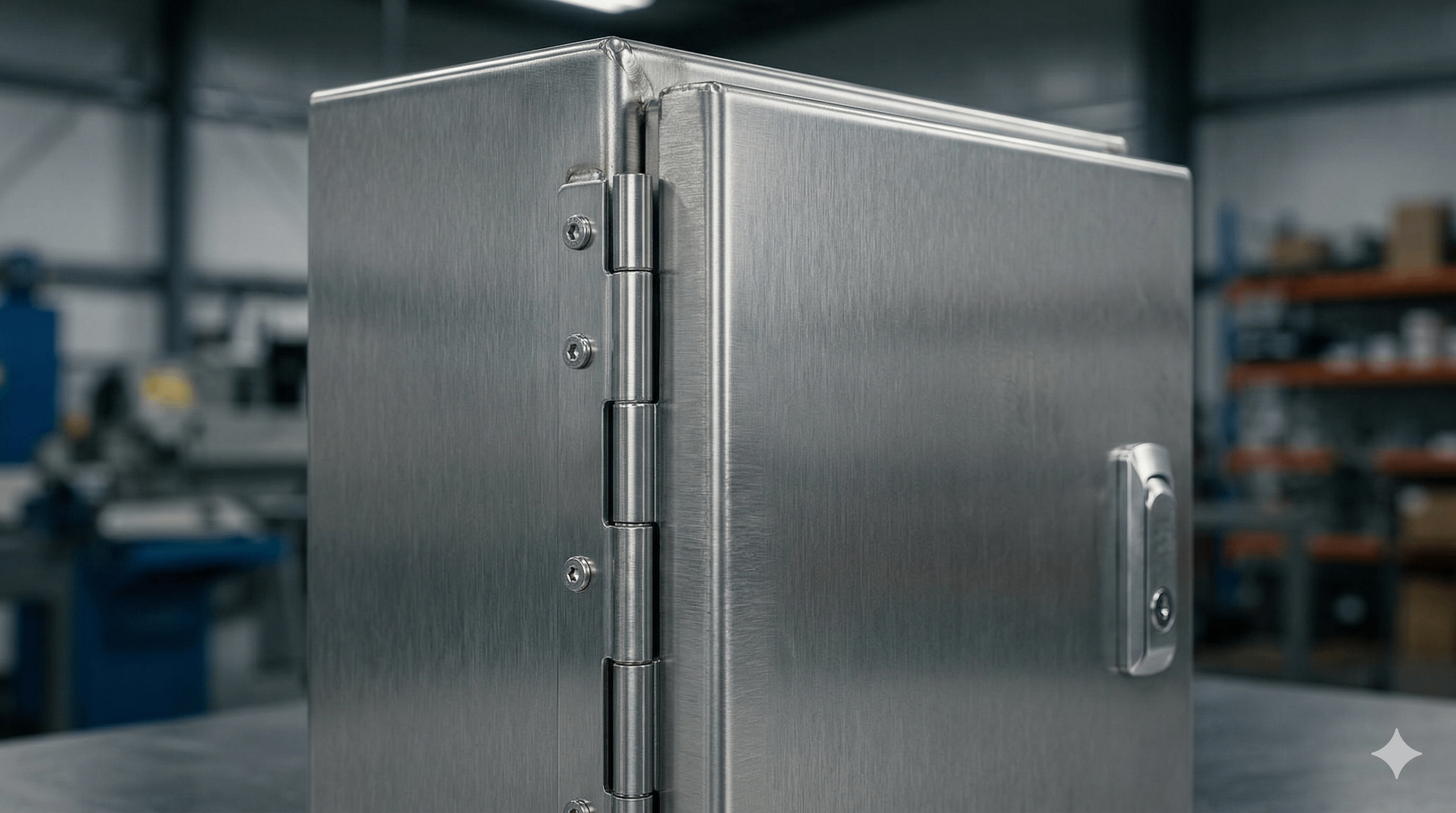
Industrial environments demand constant uptime. Consequently, an electrical enclosure acts as more than a passive container. It serves as a critical interface for maintenance efficiency. For B2B procurement managers and wholesale distributors, sourcing hinged electrical enclosures requires a shift in perspective. You are not just purchasing a box. Instead, you are managing operational risk.
A single hinge failure in a remote solar farm can lead to cascading costs. These expenses often exceed the initial price of the unit. Therefore, choosing a large electrical enclosure with a precision-hinged door is a calculated investment. At YISHANG, our 26 years of manufacturing expertise focuses on structural integrity and supply chain reliability. This guide analyzes how these technical choices impact your long-term procurement ROI.
I. Structural Precision: The Mechanics of Door Sag
The primary failure mode in heavy-duty industrial settings is “Door Sag.” This phenomenon occurs when gravity compromises the mechanical alignment between the door and the frame. Immense leverage exerts pressure on the pivoting points in modular electrical enclosures. This is especially true when doors house heavy gear or HMI screens. If hinges lack sufficient capacity, the door eventually tilts. Consequently, the locking mechanism binds and the environmental seal fails.
To mitigate this risk, engineering must prioritize the distribution of mechanical stress. Continuous (Piano) Hinges offer an excellent strategic choice for large electrical enclosure units. These hinges distribute weight along the entire vertical axis. This design eliminates the concentrated stress points found in standard butt hinges. As a result, the door remains perfectly squared with the frame over thousands of cycles.
Advanced Sealing Mechanics
Beyond load-bearing, the hinge system dictates the effectiveness of the environmental barrier. A vented electrical enclosure requires precise gasket compression to maintain its IP66 or NEMA 4 rating. YISHANG utilizes a knife-edge flange design to solve this problem. This design focuses the closing force onto the center of the PU foam-in-place gasket. Specifically, the seal remains watertight and dust-proof even in high-vibration control station enclosures.
Furthermore, a lockable hinged electrical design must balance easy access with robust tamper resistance. We ensure that locking points engage smoothly by using high-precision hinge-to-lock alignment. This precision reduces mechanical wear on the latches. Ultimately, it extends the enclosure’s service life in the field for your end-users.
II. Material Resilience: Strategic Selection for Longevity
For outdoor electrical enclosure projects, material specification is the most critical factor. Professional buyers look for Material Traceability as a core indicator of quality when sourcing from China. It is not enough to simply label a product as “stainless steel.” Instead, the specific alloy chemistry must match the environmental stressors of the site.
A stainless steel enclosure made from Grade 316 is mandatory for high-salinity coastal areas. The presence of molybdenum in material stainless steel 316 provides a molecular defense against pitting corrosion. In contrast, inferior alloys might allow moisture to breach a solar battery enclosure in less than 24 months. YISHANG maintains strict compliance with ISO 9001 and RoHS standards to ensure metallurgical accuracy.
Defensive Chemistry and Surface Treatments
Carbon steel or galvanized steel offers a cost-effective alternative for inland industrial settings. However, the surface chemistry must be handled correctly to prevent failure. Every steel enclosure carbon or steel enclosure galvanized unit must undergo a multi-stage phosphating pre-treatment. This process etches the metal surface. Consequently, it creates a superior bond with the powder coating. This bond prevents “rust creep,” where oxidation spreads beneath the paint after a scratch.
Additionally, procurement managers must consider the risk of Galvanic Corrosion. This occurs when an aluminum hinge is mounted on a steel enclosure carbon body without insulation. The electrochemical reaction accelerates rust at the pivot points. YISHANG engineers these interfaces to be chemically stable. This ensures that steel enclosure aluminum and galvanized components work in harmony for 20 plus years.
III. Manufacturing Consistency and ROI Analysis
Wholesale markets value consistency over single prototypes. Therefore, delivering modular electrical enclosures that are identical across 1,000 units is our priority. Advanced enclosure 3d design transitions from a creative tool to a quality control standard in our facility. We simulate the door’s swing radius and internal component fit during the design phase. This proactive approach eliminates field-fixes that inflate your installation labor costs.
Total Cost of Ownership (TCO) vs. Initial Price
Successful B2B procurement managers evaluate the Total Cost of Ownership (TCO) rather than just the initial price. A cheap box with a poorly aligned hinge carries hidden costs. These include emergency shipping, onsite labor, and damaged client relationships. You must include the lifespan of the electrical components wiring protected inside the enclosure in your formula. If the shell fails, the expensive electronics inside face immediate risk.
The TCO formula is straightforward: TCO = Purchase Price + Installation Cost + (Annual Maintenance x Expected Lifespan) + Downtime Risk Costs.
By sourcing direct-from-factory from YISHANG, you afford higher-grade materials that lower TCO. Specifically, investing in a large electrical enclosure with superior welding is a margin-protection strategy. It ensures your supply chain remains lean and your warranty claims stay at zero.
IV. Professional Integration of Systems and Wiring
Modern electrical systems require a deep understanding of thermal management. Electrical enclosures are used to house complex components wiring that generate heat during operation. YISHANG designs enclosure electrical meter and control units with optimized airflow paths. These paths manage heat dissipation without compromising the junction box nema seal.
Furthermore, the ease of maintenance and inspection is critical for field technicians. Our enclosures feature 180-degree door swings and removable internal mounting plates. This attention to detail reduces the time required for electrical components wiring setup. Consequently, YISHANG becomes the ideal choice for large-scale deployments where installation speed equals profit.
Whether you require a metal hinged electrical box or an enclosure aluminum enclosure, we match materials to specific stress levels. We understand that enclosures are protective barriers. Therefore, our goal is to make those barriers as resilient as possible for your equipment.
V. Technical FAQ for Procurement Teams
To assist your decision-making, we have addressed common technical questions regarding hinged designs:
1. Concealed Hinge vs. Continuous Hinge?
Concealed hinges provide high security by preventing tampering, which is ideal for self-service kiosks. In contrast, continuous (piano) hinges offer superior load distribution for heavy doors. They are the standard for large electrical enclosure units in high-vibration settings.
2. How do hinges affect NEMA 4X ratings?
The hinge must use corrosion-resistant material stainless steel 316. If alignment shifts, the gasket compresses unevenly. This creates a breach in the watertight seal. YISHANG uses precision-calibrated pivot pins to maintain the NEMA 4X seal for 10,000 plus cycles.
3. What maintenance is required?
Routine inspection should focus on gasket elasticity and hinge lubrication. For outdoor electrical enclosure deployments, we recommend checking the knife-edge flange for debris every 6 months. This ensures the wiring remains isolated from environmental moisture.
VI. B2B Quality Assurance Checklist
Before finalizing a wholesale order, ensure your supplier meets these criteria:
- Material Verification: Request Mill Test Reports (MTR) to confirm Grade 316 quality.
- Tolerance Testing: Verify that the enclosure 3d design matches the output within plus or minus 0.1mm.
- Seal Integrity: Confirm that the junction box nema rating was achieved via PU foam-in-place gaskets.
- Hinge Load Analysis: Ensure the hinge type prevents door sag after 12 months of intensive use.
- Surface Finish Standards: For carbon steel enclosure units, verify multi-stage phosphating pre-treatment.
Conclusion: A Partnership Built on Reliability
Selecting a hinged electrical enclosure is a decisive engineering step. Every detail, from load distribution to corrosion-resistant coatings, contributes to the final ROI. At YISHANG, we understand that our products are the silent guardians of your technological innovation.
With a footprint reaching 50 plus countries, we provide the design expertise necessary to scale your business. When you partner with us, you are not just purchasing metal. Instead, you are securing the operational future of your systems.
Inquiry now send for a technical design review and a competitive wholesale quote on your bespoke enclosure project.